Nintendo Sues U.S. Government Over “Unlawful” Tariffs, Request Refund With Interest

Japanese gaming company Nintendo has filed a lawsuit against the United States government, arguing that tariffs imposed on imported goods during the administration of Donald Trump were unlawful. The company is asking the court to refund the money it paid in tariffs, along with interest and legal costs.

The case was filed at the United States Court of International Trade and focuses on tariffs that were placed on a wide range of imported products, including electronics and components used in gaming hardware.

The duties were imposed using the International Emergency Economic Powers Act (IEEPA), a law that allows U.S. presidents to take economic actions during national emergencies.

However, Nintendo argues that the law does not authorize the president to impose sweeping import tariffs. The company’s argument gained strength after a recent decision by the Supreme Court of the United States, which ruled in February 2026 that the use of IEEPA to impose tariffs exceeded presidential authority.

Following that ruling, companies that paid the tariffs began exploring legal options to recover the money they were required to pay.

Nintendo is now asking the court to order the government to return those funds with interest, arguing that the tariffs were collected without proper legal authority.

Like many global electronics companies, Nintendo relies on manufacturing facilities in Asia for the production of its consoles and accessories.

Many of these products are then shipped to the United States, one of the company’s largest markets. The tariffs increased import costs on those goods, affecting supply chains and raising operational expenses.

Nintendo’s lawsuit is part of a broader wave of legal challenges from companies that were affected by the tariffs.

Since the Supreme Court’s decision, businesses across multiple industries, including retailers, manufacturers, and logistics firms have started filing cases seeking refunds.

Nintendo’s case will now proceed through the Court of International Trade, where judges will determine whether the tariffs were indeed imposed without legal authority and whether companies are entitled to refunds.

Showmax to Shut Down as MultiChoice and Canal+ Confirm Streaming Platform Will Be Phased Out

MultiChoice Group, Africa’s leading pay-TV company, now owned by the French media conglomerate Canal+, has officially confirmed that its streaming service Showmax will be phased out.

The announcement was made on March 5, 2026, following a comprehensive review by the Showmax board of the platform’s performance and its long-term sustainability in an increasingly competitive entertainment landscape.

According to the companies, the primary reason for the decision is financial. Despite years of heavy investment, including a major relaunch in 2024 that introduced new content offerings, improved user interfaces, and partnerships with both local and international studios, Showmax struggled to generate consistent profits.

The global streaming market has also become more competitive. International platforms such as Netflix, Disney+, and Amazon Prime Video continue to dominate the space, attracting massive audiences and securing significant shares of subscription and advertising revenue.

Another major challenge has been infrastructure. In several parts of Africa, inconsistent or limited internet connectivity still restricts the widespread adoption of streaming services, limiting the growth potential of platforms like Showmax.

While confirming the shutdown, MultiChoice and Canal+ emphasized that the decision is part of a broader strategy aimed at strengthening the company’s financial stability and long-term sustainability.

They also reassured employees and stakeholders that the closure will not result in job losses. Staff members affected by the shutdown will be offered alternative roles or projects within the company, reflecting a commitment to internal redeployment and employee retention.

For current subscribers, the immediate impact will be minimal. Showmax will continue operating normally for now, with users still able to stream content without interruption.

Although the company has not yet announced a final shutdown date, it said updates regarding subscription status, possible refunds, and timelines will be communicated directly to users through the app and email notifications.

Subscribers have been advised to monitor these channels for official instructions as the transition process unfolds.

Launched in 2015, Showmax quickly built a reputation for offering a diverse library of content. The platform featured a mix of African originals, international films and series, reality programming, and Nollywood titles.

Over the years, Showmax positioned itself as a homegrown alternative in a streaming market largely dominated by global platforms. It also provided an important distribution platform for African creators, helping bring local stories to audiences across the continent.

Apple Unveils MacBook Air M5 With Fela Kuti’s 1971 Classic “Let’s Start” Featured in Launch

Apple has officially unveiled a new generation of the MacBook Air powered by its latest M5 chip, introducing upgraded performance and expanded base storage to its most popular laptop line.

The new MacBook Air comes equipped with Apple’s M5 processor, delivering improved CPU and GPU performance over the previous generation. The company confirmed that the device maintains its fanless design while offering enhanced efficiency and extended battery life of up to 18 hours, depending on usage. Apple has also increased the base storage configuration to 512GB, doubling the previous entry-level capacity.

The laptop retains its slim aluminum build and Liquid Retina display and will be available in both 13-inch and 15-inch models. Pre-orders begin shortly after the announcement, with retail availability following days later in select markets.

During promotional materials and launch visuals tied to the unveiling, Apple featured “Let’s Start,” the 1971 Afrobeat track by Fela Kuti. The song was originally performed by Fela and his band Africa ’70 and appeared on the live album Live! released in 1971. The track is widely regarded as one of the early recordings that helped define the Afrobeat genre.

“Let’s Start” is known for its extended instrumental structure and rhythmic arrangement, characteristic of Fela’s early 1970s sound. Its inclusion in the MacBook Air M5 launch marks a notable intersection between global technology branding and African musical heritage.

The inclusion of a foundational Nigerian record in a global product unveiling comes at a time when Nigeria’s digital and cultural markets are expanding their international footprint.

Nigeria remains one of Africa’s largest smartphone markets, with recent rebounds in device shipments and sustained demand in the premium segment despite broader price sensitivity. While mass-market brands dominate by volume, premium devices  including Apple products maintain strong aspirational appeal among urban and affluent consumers. At the same time, Nigeria’s youthful population and mobile-first economy continue to drive high levels of app usage, digital content creation, and online engagement.

Culturally, Nigerian music and film have become major global exports. Afrobeat, once niche, is now mainstream worldwide. Featuring “Let’s Start” in the MacBook Air campaign situates the product within that broader cultural momentum.

Apple has not issued a specific statement explaining the selection of the song. However, the timing aligns with Nigeria’s growing relevance in global technology consumption and its expanding influence across music, media, and digital culture.

Instagram Debuts ‘Secret Friends’ Feature for Selena Gomez, Benny Blanco and Lil Dicky in Podcast Promotion Strategy

In the early hours of March 3, 2026, Instagram introduced a new Stories variation labeled “Secret Friends” and it did not roll out quietly.

The feature appeared exclusively on the accounts of Selena Gomez, Benny Blanco, and Lil Dicky, marked by a distinct yellow ring around their profile pictures. The timing was precise: the activation coincided with the promotional push for Friends Keep Secrets, the newly launched video podcast hosted by Blanco, Lil Dicky (Dave Burd), and Kristin Batalucco.

At first glance, the feature resembles Instagram’s existing Close Friends tool. In practice, however, it functions very differently.

Unlike the standard Close Friends list where users manually select who can view certain Stories, the Secret Friends version appears to operate as a mass-access promotional layer.

Key observations:

The Stories are highlighted with a yellow ring instead of green.

Followers do not need to be added to a curated list.

Anyone visiting the profiles can access the content.

The Stories directly funnel viewers toward Friends Keep Secrets.

The psychology is intentional. A different color ring signals scarcity. Scarcity triggers curiosity. Curiosity drives taps.

Instagram has not released a formal statement confirming whether the feature will expand to other creators. Early indications suggest this is a limited, campaign-specific activation, not a platform-wide product update.

Friends Keep Secrets positions itself as an intimate, multi-camera, conversational show filmed inside the hosts’ Los Angeles home. Produced in partnership with Jay Shetty’s media network Perfect Strangers, the podcast aims to blur the line between casual hangout and celebrity interview.

Early guest appearances reportedly include Ed Sheeran, Gwyneth Paltrow, Paul Rudd, and Selena Gomez herself.

In one of the first Secret Friends Stories, Gomez addressed viewers directly:

Hey guys, welcome to my Secret Friends. If you want more secrets, go here.”

The message was brief. The call-to-action was clear. The conversion funnel was seamless.

Instagram is no longer merely a distribution channel for celebrity promotion. In this case, the platform appears to have provided a customized storytelling mechanic designed to amplify a media product launch.

Reaction across social media has been mixed but engaged.

Some fans celebrated the perceived exclusivity:

Others questioned why the feature is restricted to only three accounts.

A few users dismissed it entirely, asking why it matters.

If expanded, Secret Friends could become a new tier of creator tools, positioned between Close Friends and subscription-based exclusives. It could offer brands and high-profile creators a controlled environment for limited-time campaigns.

Samsung Launches Galaxy S26 Ultra With World’s First Built-In Privacy Display

Samsung Electronics has unveiled the Galaxy S26 series, introducing what it calls the world’s first built-in Privacy Display on a smartphone, with the feature exclusive to the Galaxy S26 Ultra.

The announcement was made during Samsung’s 2026 Galaxy Unpacked event. The Privacy Display is designed to prevent people nearby from seeing a user’s screen content, offering protection in public spaces such as buses and offices. Unlike traditional stick-on privacy films, this technology is fully integrated into the phone’s display.

Samsung’s built-in privacy technology operates at the pixel level, dynamically controlling how light is emitted from the screen. In standard mode, the display functions like a typical flagship phone, offering wide viewing angles and full colour accuracy. In privacy mode, side angles are restricted, making the content visible only to the person directly in front of the screen.

The feature also allows users to: Toggle privacy mode manually from quick settings, Automatically activate privacy for selected apps or sensitive actions, such as entering PINs or passwords and Choose between partial privacy (hiding notifications or selected content) and maximum privacy, which blocks all side-angle viewing

The Privacy Display addresses “shoulder surfing” a common problem for smartphone users in public settings while maintaining the device’s premium display quality.

The Galaxy S26 series, including the S26, S26+, and S26 Ultra, is set to be released globally beginning March 11, 2026. The Ultra model, which includes the Privacy Display, comes with other flagship upgrades, including enhanced AI tools and camera improvements. Pricing for the Galaxy S26 Ultra starts around $1,299 in the United States per reports, with regional variations expected.

IXPN Deploys Critical Internet Infrastructure to Make Nigerian Websites Faster and More Resilient

The Internet Exchange Point of Nigeria (IXPN) has announced the deployment of new internet infrastructure aimed at significantly improving website loading speeds across Nigeria while strengthening the country’s resilience against cyber disruptions and global network outages.

The announcement was made during the organisation’s 2026 Annual Members Engagement Forum in Lagos, where IXPN executives outlined a strategic push to localise critical components of Nigeria’s internet architecture. At the centre of this upgrade is the deployment of an authoritative Domain Name System (DNS) server within IXPN’s local network; a move expected to reduce latency and enhance stability for millions of internet users.

DNS servers act as the internet’s address book, translating website names into numerical IP addresses that computers use to locate online resources. Until recently, many of these requests from Nigeria were routed to servers located abroad, increasing response times and exposing local connectivity to risks tied to international disruptions. By hosting key DNS infrastructure domestically, IXPN aims to keep more internet traffic within Nigerian borders, reducing delays and improving reliability.

IXPN’s Chief Executive Officer, Muhammed Rudman, described the development as a critical step toward digital sovereignty and operational efficiency. According to him, the newly deployed system is already processing thousands of DNS queries per second, indicating strong adoption and measurable performance improvements across connected networks.

The initiative was executed in collaboration with the Canadian Internet Registration Authority (CIRA), which provided hardware support for the deployment. The partnership ensures that global domain queries can now be resolved more efficiently from within Nigeria’s network ecosystem.

In addition, IXPN confirmed it has entered into a memorandum of understanding with Verisign to host primary DNS infrastructure for major global domains such as .com and .net locally. This arrangement is particularly significant, as it strengthens Nigeria’s ability to maintain access to widely used internet services even during international outages, undersea cable faults, or coordinated cyberattacks targeting overseas infrastructure.

For Nigeria’s growing digital economy, the implications are substantial. Faster DNS resolution translates into quicker website loading times, improved user experiences for streaming and online transactions, and more reliable access for businesses operating in e-commerce, fintech, media, and cloud services. By reducing reliance on foreign upstream providers, the country also lowers exposure to external vulnerabilities that could otherwise disrupt banking systems, government platforms, or critical communications.

Founded in 2006, IXPN operates as a neutral, non-profit interconnection hub that enables internet service providers, mobile network operators, content platforms, and enterprises to exchange traffic locally. Over the years, it has played a central role in keeping domestic internet traffic within Nigeria, cutting bandwidth costs and boosting network efficiency. The latest infrastructure upgrade signals an expansion of that mandate from traffic exchange to deeper control over core internet functions.

As Nigeria continues to position itself as one of Africa’s leading digital markets, investments in resilient infrastructure are becoming increasingly urgent. With cyber threats evolving and data consumption rising rapidly, the ability to localise critical systems is no longer just a technical upgrade, it is a necessity.

NDPC Probes Temu Over Alleged Data Protection Violations Affecting 12.7 Million Nigerians

Nigeria’s data privacy regulator has launched an investigation into fast-growing e-commerce platform Nigeria Data Protection Commission (NDPC) over alleged violations of the country’s data protection laws.

The commission confirmed that it has opened a formal probe into Temu, following concerns about how the platform collects, processes, and transfers personal data belonging to Nigerian users.

According to the NDPC, the investigation was prompted by concerns that Temu’s data processing practices may not fully align with the provisions of the Nigeria Data Protection Act (NDPA).

The commission is reportedly examining the scale and nature of personal data collection from Nigerian users, including whether the company complies with data minimisation principles and whether it maintains transparency in how user data is processed. Regulators are also reviewing issues surrounding cross-border data transfers and whether appropriate legal safeguards are in place, as well as the platform’s overall accountability and duty of care obligations under Nigerian law.

At the centre of the probe is the question of whether Temu collects more personal data than is necessary for its services and whether users are adequately informed about how their data is being used.

Preliminary reports suggest that Temu processes the personal data of approximately 12.7 million Nigerian users. If confirmed, that would make the case one of the most significant data protection investigations in Nigeria’s digital economy so far.

The scale of the platform’s operations has raised broader questions about how foreign-linked digital marketplaces comply with Nigerian regulatory frameworks, particularly in areas concerning privacy standards and cross-border data handling.

The NDPC’s National Commissioner and Chief Executive Officer, Vincent Olatunji, has consistently maintained that data controllers and processors operating in Nigeria must strictly comply with the NDPA.

Under the law, organisations found in violation of data protection requirements may face administrative penalties, regulatory sanctions, corrective compliance directives, and potential financial fines. The commission has also emphasized that third-party data processors are not exempt from liability and must independently verify compliance.

Since the enactment of the NDPA in 2023, authorities have signaled a more proactive enforcement approach aimed at protecting citizens’ personal data.

As e-commerce adoption grows across Nigeria, scrutiny of how tech platforms manage user data is expected to intensify. The outcome of the Temu investigation could set an important precedent for other multinational digital companies operating in the country.

For now, the NDPC says the investigation is ongoing. Temu has yet to issue a detailed public response regarding the allegations.

We will continue to monitor developments and provide updates as more information becomes available.

X Suffers Global Outage, Thousands Affected Worldwide as Social Media Platform Restores Service

The social media platform X experienced a widespread outage on Monday, leaving thousands of users across multiple countries unable to access the app and website.

Reports of the disruption began surfacing earlier on, with users complaining that their timelines would not refresh, posts would not load, and the platform displayed repeated error messages. In many cases, users encountered the message: “Something went wrong. Try reloading.”

Outage-tracking service Downdetector recorded a sharp spike in complaints from the United States, the United Kingdom, parts of Europe, Asia, and Africa, suggesting the issue was global rather than regional. Users in Nigeria also reported being locked out of the platform during the disruption.

According to reports from Reuters, thousands of outage reports were logged within a short window, indicating a significant service interruption. The exact cause of the outage has not yet been officially disclosed.

This marks another high-profile disruption for X under the ownership of Elon Musk. Since Musk acquired the platform in 2022 and rebranded it from Twitter to X, the company has experienced occasional technical outages, though most have been resolved within hours.

As of the time of filing this report, the app and website appear to be functioning normally again. Users are once more able to refresh feeds, post content, and access their accounts.

While temporary, the outage once again highlights the platform’s central role in global communication and how quickly disruptions are felt across regions when it goes offline.

We will update this story if X releases an official statement explaining the cause of the outage.

Google AI Tools Begin Blocking Disney Prompts Following Legal Warning

In a move that underscores the escalating battle between generative AI and intellectual property rights, Google has started blocking prompts related to Disney characters across its AI platforms, including its Gemini models. This change comes shortly after The Walt Disney Company issued a legal warning claiming that Google’s AI was producing unauthorized content featuring Disney’s iconic characters.

According to reports, Disney’s legal team argued that Google’s AI tools were capable of generating images, videos, and other content involving characters from franchises like Frozen, Marvel, and Star Wars without permission. The company described this as copyright infringement on a “massive scale,” warning that such content could mislead users and harm Disney’s brand reputation.

Since the warning, Google has adjusted its AI systems. Users attempting to generate content featuring popular Disney characters have reported receiving error messages or refusals from the AI, signaling at least a partial compliance with Disney’s demands. Attempts to generate images of Elsa, Iron Man, or other recognizable Disney and Marvel characters may now be blocked entirely.

While Disney is cracking down on unlicensed AI-generated content, the company is also taking a more collaborative approach with some AI firms. Disney recently struck a multi-million-dollar licensing deal with OpenAI, giving the company official access to Disney characters for AI applications. This contrast highlights a strategic dual approach: protecting intellectual property through legal enforcement while enabling controlled, licensed AI collaborations.

Experts see this development as a key moment in the ongoing debate over AI-generated content and copyright law. The restrictions from Google’s AI tools signal that tech companies may need to adapt their systems to respect intellectual property, while navigating the growing demand for AI creativity.

Google is not alone. Other AI companies, including image generators and character-based AI platforms, have received similar warnings. At the same time. 

Ifeyinwa Osime Appointed New Head of the Board at Access Bank

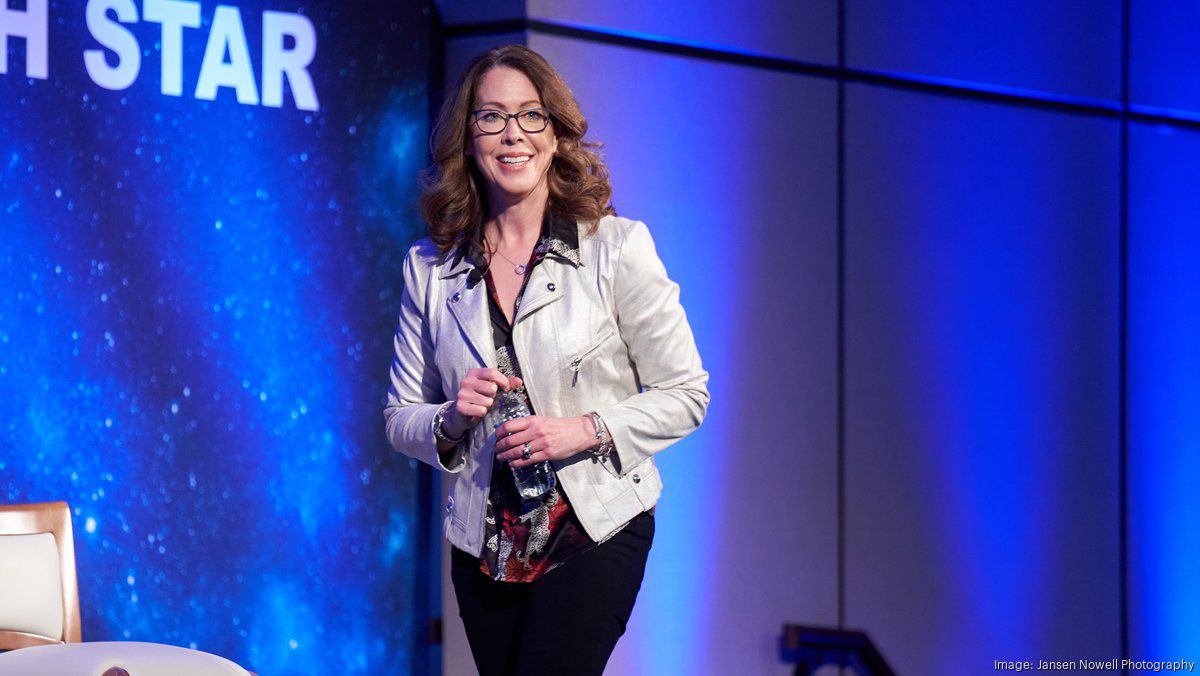
Access Bank Plc has announced the appointment of Ifeyinwa Osime as its new Chairman of the Board, confirming a key leadership transition at one of Nigeria’s most influential financial institutions.

The appointment follows the retirement of Paul Usoro, SAN, who stepped down after completing his regulatory tenure, in line with corporate governance requirements. The development was disclosed by Access Holdings Plc in a formal filing to the Nigerian Exchange Limited.

According to the disclosure, Osime’s appointment forms part of Access Bank’s broader succession and governance strategy, aimed at ensuring continuity at board level while maintaining regulatory compliance.

Group Chairman of Access Holdings, Aigboje Aig-Imoukhuede, described the transition as timely, noting that Osime’s experience and familiarity with the institution would support the bank’s long-term strategic objectives.

Her emergence as Board Chair comes at a period when Nigerian banks are navigating tightening regulations, evolving capital requirements, and increased scrutiny around governance and sustainability.

Ifeyinwa Osime is a seasoned legal practitioner with extensive experience in corporate governance and board oversight. She joined the Access Bank board in November 2019 as an Independent Non-Executive Director, giving her over six years of direct involvement in the bank’s governance structure.

During her time on the board, she chaired several critical committees, including the Board Human Resources and Sustainability Committee and the Board Governance, Nomination and Remuneration Committee; roles that placed her at the centre of leadership development, board evaluation, and succession planning within the institution.

Her committee work is widely viewed as a key factor in her elevation to the board’s highest leadership position.

Ifeyinwa Osime’s appointment signals Access Bank’s continued emphasis on institutional stability and governance continuity, rather than abrupt leadership shifts. As Chairman, she will oversee board strategy, risk oversight, and executive accountability at a time of growing competition within Nigeria’s banking sector and increased regional expansion by the Access brand.

Industry watchers note that her legal and governance background could strengthen board-level decision-making, particularly around compliance, sustainability frameworks, and long-term shareholder value.

With Ifeyinwa Osime now at the helm of the board, Access Bank enters its next phase of leadership with a chairman who combines institutional memory with governance expertise.

Scroll to Top