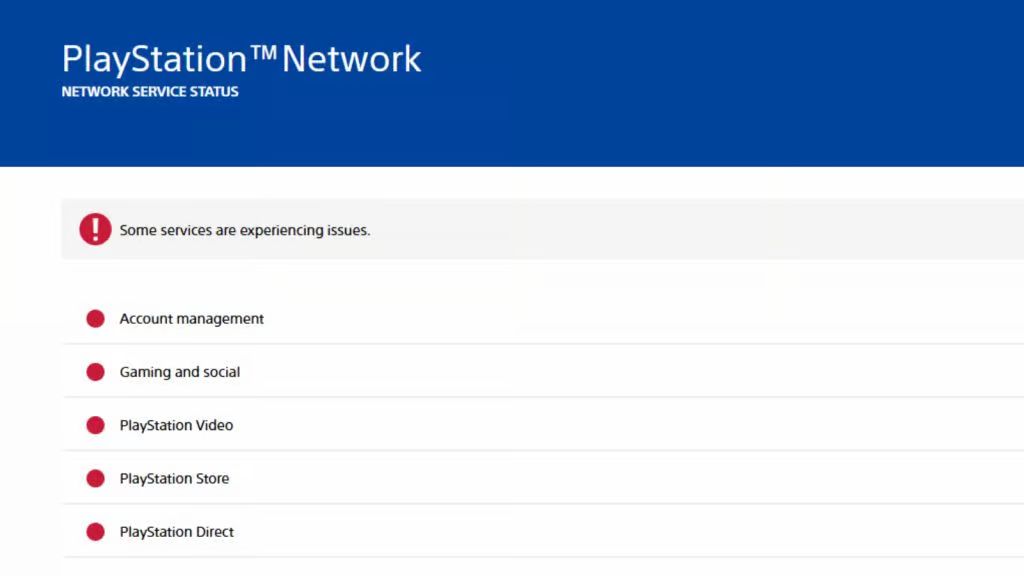
14 years ago, one of the worst occurrences in gaming history took place—we lost the PlayStation Network and sadly for 23 days. 14 years later, it will seem history is about to repeat itself.
The last time PSN was down, Sony said they were hacked, but this time around there’s been no indication on what could be the issue.
This can’t be labelled a “9/11” event for gamers; popular networks go down from time to time. This is the same for Sony’s PlayStation Network. It’s been over 15 hours since it was first reported that PSN was down, and players are getting worried.
Via X
The issues for the last few hours include the inability to access online functionality, sign in, check stores, or even boot up games that require an internet connection.
PlayStation via the @AskPlayStation Twitter/X account official response was: “We are aware some users might be currently experiencing issues with PSN. For more details: https://status.playstation.com.”
You’ve probably heard words like “Bitcoin,” “Ethereum,” or “cryptocurrency” floating around in conversations, social media, and news reports. While these terms are becoming part of everyday language, many people still don’t fully understand what they mean.
So, what exactly is cryptocurrency, and why it has gained so much attention over the years?
Defining Cryptocurrency
At its simplest, cryptocurrency is digital money. Unlike the cash in your pocket, it doesn’t have a physical form. It exists entirely in the digital world and can be used for buying goods, services, or even as an investment.
Key Characteristics
Completely Digital: No coins or paper bills involved.
Decentralized: It isn’t controlled by any single government, bank, or institution.
Secured by Cryptography: Advanced encryption techniques protect transactions and control the creation of new units.
How Does Cryptocurrency Actually Work?
The wonders behind cryptocurrency lies in a technology called the blockchain. Imagine a digital ledger that records every transaction ever made. But instead of this ledger sitting in one place, it’s shared across thousands of computers worldwide. This system makes it extremely difficult for anyone to tamper with the data.
Think of It Like This
Imagine playing a card game with friends, where everyone writes down each move. If someone tries to cheat by claiming they’ve won more rounds than they actually have, the group can check their notes and spot the lie. That’s how the blockchain maintains honestyby distributing the record to everyone.
What Makes Cryptocurrency Valuable?
You might ask, “If it’s just digital code, how does it have any value?” The answer is tied to several factors:
Limited Supply: Cryptocurrencies like Bitcoin have a cap on how many can exist, creating scarcity, which often increases value—similar to precious metals like gold.
Trust and Adoption: The more people and businesses that believe in and use a cryptocurrency, the more valuable it becomes.
Utility: Some cryptocurrencies offer unique features beyond just being money, such as enabling smart contracts or supporting decentralized apps.
Popular Cryptocurrencies You Should Know
While Bitcoin started the crypto revolution, many other digital currencies have since emerged, each with its own purpose:
Tether (USDT): Tether often acts as a medium for traders who move from a cryptocurrency to another.
Litecoin (LTC): Designed for faster, cheaper transactions compared to Bitcoin.
Ripple (XRP): Focuses on speedy, low-cost international money transfers.
Every cryptocurrency serves a different role within the digital ecosystem.
Why Are People Using Cryptocurrency?
People are drawn to cryptocurrency for various reasons:
Fast, Borderless Transactions: Send money globally in minutes without needing a traditional bank.
Lower Transaction Costs: Especially useful for international payments.
Greater Privacy: Offers a higher degree of anonymity compared to regular banking (though not completely private).
Investment Potential: Many see crypto as a way to grow their wealth, hoping its value will rise over time.
The Risks You Should Be Aware Of
While cryptocurrency offers exciting possibilities, it’s not without risks:
High Volatility: Prices can skyrocket one day and crash the next, making it a risky investment.
Limited Regulation: Since it’s not heavily regulated, there’s a higher chance of scams and fraud.
Security Concerns: If you lose your digital wallet’s access keys or fall victim to hacking, recovering your funds can be nearly impossible.
Is Cryptocurrency the Future of Money?
There’s a lot of debate on this. Some believe cryptocurrencies will completely transform the financial system, while others think they’re just a passing trend. The reality might fall somewhere in the middle.
What’s undeniable is that cryptocurrency has already made a significant impact on how we think about money, security, and technology. As it continues to evolve, understanding its basics is key whether you choose to invest, use it for transactions, or simply stay informed.
In essence, cryptocurrency is more than just digital money. It’s a revolutionary way to transfer value securely, quickly, and without middlemen. Whether it’s the future of finance or not, it’s already shaping the world in profound ways.
The creative director, Brian Horton, for one of the most anticipated games, Marvel’s Wolverine, will now work with the team making Perfect Dark for Xbox. In a report by Game File, Brian left Insomniac to work on the Perfect Dark reboot game, currently in development by Microsoft’s The Initiative and Crystal Dynamics.
Brian, who previously worked on Marvel’s Spider-Man: Miles Morales and 2015’s Rise of the Tomb Raider, hasn’t worked on Marvel’s Wolverine for some time. Meanwhile, Wolverine’s game director, Cameron Christian, will be working at Insomniac.
An Xbox spokesperson told Game File that Brian is “bringing his wealth of experience to the upcoming reboot of the classic Secret Agent series.”
A new creative director for Wolverine, Marcus Smith and game Director, Mike Daly are reportedly the new hires. Both Mike and Marcus are known for their work on the 2021 game Ratchet & Clank: Rift Apart.
Though Marvel’s Wolverine was first announced in 2021, neither game has an official release window. The Wolverine is to be released for PS5 and reportedly in the same universe as the Spider-Man game.
Ultimate Fighting Championship, UFC, has announced a new partnership with streaming platform Kick. This partnership also includes opening an official Kick account for global streaming.
According to UFC, its partnership with Kick is a direction for its global marketing partnership. UFC will have its own dedicated channel, which features “compelling original UFC content such as fight watchalongs, press conferences, behind-the-scenes access, athlete interviews, and more.” As a plus for KICK, it will be named an official partner of UFC and “will be integrated within a selection of UFC’s biggest events around the world.”
KICK is an on-demand video live-streaming platform and a large competitor to Amazon’s Twitch. During UFC matches globally, Kick will be offered high-visibility branding. UFC and Kick hopes to receive more visibility across hundreds of millions of households with their partnership.
“KICK will first activate the new partnership around this week’s action-packed UFC 308: TOPURIA vs HOLLOWAY in Abu Dhabi, a milestone that marks the 20th UFC event held in the UAE over the past 15 years,” UFC.
“We’re thrilled to begin our relationship with KICK by becoming a major element of their innovative streaming service, joining some of KICK’s most well-known streamers, including Westcol, and Adin Ross,” said Nicholas Smith, Vice President of Global Partnerships for TKO. “We’re looking forward to our KICK channel becoming a strong, reliable platform to drive awareness for all our live UFC events, while enhancing the UFC live experience with unique, compelling content for UFC fans around the world.”
“We are delighted to partner with UFC to bring amazing content and behind-the-scenes access to our audience on KICK,” said Akhil Sarin, Chief Marketing Officer at KICK. “We look forward to the launch of the UFC channel this week, with our branding set to appear on the canvas at UFC 308 in Abu Dhabi, our very own Max Holloway competing for the featherweight title, and unmissable UFC content streaming for the first time live on KICK. Make sure you tune in and engage in the chat.”
Microsoft recently made an announcement that has affected gamers in a good or bad way (you decide.) Games like Gotham Knights, Valheim, and Paw Patrol: Grand Prix will be leaving Xbox Game Pass.
Starting September 30th, 9 games will be leaving the Game Pass library. On September 15, Microsoft announced it would remove 6 games, bringing the total number of games leaving its Xbox Game Pass library to 15 this September.
All hopes are not lost, as Game Pass subscribers can get these games for a 20% discount before they are gone as part of their membership.
New games are also coming to Game Pass later this month, including Wargroove 2 (September 19), Frostpunk 2 (September 2), and Ara: History Untold (September 24).
In today’s rapidly advancing digital era, maintaining a competitive edge requires continuous evolution and adaptation to emerging technologies. Digital skills are no longer a nice-to-have; they are essential for anyone looking to thrive in the modern workplace. Whether you’re a seasoned professional or just starting your career, mastering the right digital skills can set you apart and open doors to new opportunities. This article will guide you through the top digital skills you need to stay ahead, from data analysis to cybersecurity, and how you can continuously keep your skills updated.
Essential Digital Skills for the Modern Professional
Data Analysis
Importance of Data Analysis
In a world driven by data, the ability to analyze and interpret data is crucial. Data analysis helps organizations make informed decisions, understand market trends, and improve business performance. Professionals who can harness the power of data are in high demand across various industries.
Tools for Data Analysis
To excel in data analysis, familiarize yourself with tools like Microsoft Excel, SQL, Python, and specialized software such as Tableau and Power BI. These tools enable you to process large datasets, visualize data effectively, and derive actionable insights.
Digital Marketing
Key Components of Digital Marketing
Digital marketing encompasses various strategies and techniques used to promote products or services online. Essential elements comprises of search engine optimization (SEO), social media marketing, content creation and marketing, email campaigns, and pay-per-click (PPC) advertising.
Tools for Effective Digital Marketing
Mastering digital marketing requires proficiency in tools like Google Analytics, Google Ads, Hootsuite, and HubSpot. These tools help you manage campaigns, track performance, and optimize your marketing efforts to reach a wider audience.
Cybersecurity
Why Cybersecurity is Crucial
As cyber threats become more sophisticated, cybersecurity has become a top priority for businesses. Protecting sensitive information and maintaining data integrity are essential to prevent financial losses and safeguard reputations.
Basics of Cybersecurity Practices
Start with understanding basic cybersecurity practices such as using strong passwords, recognizing phishing attempts, and implementing two-factor authentication. Advanced knowledge includes learning about firewalls, encryption, and network security protocols.
Programming and Coding
Popular Programming Languages
Programming is the backbone of the tech industry. Popular languages to learn include Python, JavaScript, Java, C#, and Ruby. Each language has its applications, from web development to data science and software engineering.
Benefits of Learning to Code
Coding skills enable you to create software, automate tasks, and solve complex problems. It also enhances your logical thinking and problem-solving abilities, making you a valuable asset in any tech-driven organization.
Cloud Computing
Understanding Cloud Computing
Cloud computing involves providing computing services via the internet, such as storage, processing power, and software a It allows businesses to scale resources efficiently and reduce infrastructure costs.
Leading Cloud Service Providers
Get acquainted with leading cloud service providers like Amazon Web Services (AWS), Microsoft Azure, and Google Cloud Platform. Understanding their services and certifications can significantly boost your career prospects in the tech industry.
Soft Skills Complementing Digital Expertise
Problem-Solving Skills Technical expertise is important, but the ability to solve problems effectively sets you apart. Employers value professionals who can approach challenges creatively and find practical solutions.
Adaptability and Continuous Learning The tech landscape is constantly evolving. Being adaptable and committed to continuous learning ensures you stay relevant and can quickly pick up new skills as needed.
Communication Skills Effective communication is vital, especially in tech roles where you often need to explain complex concepts to non-technical stakeholders. Strong communication skills help you collaborate better and enhance team productivity.
Emerging Digital Skills to Watch
Artificial Intelligence and Machine Learning
AI and machine learning are transforming industries by automating tasks and providing deeper insights through data analysis. Understanding these technologies can place you at the forefront of innovation.
Blockchain Technology
Blockchain technology provides a reliable method for recording transactions and handling data securely. Its applications are expanding beyond cryptocurrencies into areas like supply chain management and healthcare.
Internet of Things (IoT)
IoT involves connecting everyday devices to the internet, enabling them to collect and exchange data. This technology is revolutionizing sectors such as smart homes, healthcare, and manufacturing.
Virtual and Augmented Reality
Virtual reality (VR) and augmented reality (AR) are revolutionizing our interactions with digital content. These technologies have applications in gaming, education, real estate, and beyond, offering immersive experiences and innovative solutions.
How to Stay Updated with Digital Skills
Online Courses and Certifications
Platforms like Coursera, Udemy, and LinkedIn Learning offer a plethora of courses and certifications. These resources are invaluable for keeping your skills sharp and learning new technologies.
Industry News and Blogs
Stay informed by following industry news sites and blogs. Websites like TechCrunch, Wired, and The Verge provide updates on the latest trends and developments in the tech world.
Networking and Professional Communities
Join professional communities and networks, both online and offline. Engaging with peers and attending industry events can provide insights, share experiences, and help you stay ahead in your career.
Digital skills are the cornerstone of success in the modern professional world. By mastering essential skills like data analysis, digital marketing, cybersecurity, and programming, you can ensure your career remains dynamic and forward-thinking. Embrace continuous learning and stay updated with emerging technologies to maintain your competitive edge.
How can I improve my digital marketing skills?
Enhance your digital marketing skills by taking online courses, obtaining certifications, and using tools like Google Analytics and HubSpot. Staying updated with the latest trends and practicing your skills on real projects can also help.
What are some free resources for learning digital skills?
Free resources for learning digital skills include Coursera, Khan Academy, edX, and YouTube tutorials. Many tech blogs and websites also offer free guides and articles like this one.
Consumers of Startimes or MultiChoice’s DSTV and GOTV can watch all the Paris 2024 Olympic games on SportyTV and SuperSport (DStv ch 203 and GOtv ch 61) starting July 26, 6:30 pm. All the action will also be covered on the Olympics’ official Paris 2024 live blog, beginning July 24.
“As part of our commitment to delivering the best sporting action to Nigerians, we will broadcast across SuperSport channels with additional pop-up channels on DStv and GOtv. The Olympics is the largest gathering of athletes competing for honours. We will make the games available to customers on DStv Yanga and GOtv Jolli. offering them the opportunity to watch history unfold and follow our Nigerian athletes at the Games. In the spirit of the Olympics, each of the SuperSport channels will also be renamed as ‘Olympic Channel’ for the duration of the games,” executive Head of Marketing MultiChoice West Africa, Tope Oshunkeye made this announcement.
On Friday 26th, July 2024 Team Nigeria will make its 19th appearance at the Olympics. Representing Nigeria are 82 sportsmen and women in 11 sporting events.
The 2024 Olympics in Paris will officially begin from 24 July to 11 August 2024.
Team Nigeria is expected to compete in the following sports:
Athletics
Badminton
Basketball
Boxing
Canoeing
Cycling
Football
Table Tennis
Taekwondo
Weightlifting
Wrestling
Yesterday Team Nigeria Super Falcons played with Brazil but unfortunately lost its first game but hopes to recover in the next match. Follow @streamdorm on Twitter or Threads to stay updated on Nigeria’s Olympic progress.
EA Sports has released the top 25 teams in its upcoming College Football 25 game. This announcement was made on Friday 28th, June 2024. In comprising it doesn’t match the ESPN Power Index.
The teams’ ratings on this list in the upcoming video game use the overall ratings of both the offensive and defensive teams with parameters.
University of Georgia (UGA) has an overall rating of 95, which UGA was rated the top offensive team and second best defensive team (College Football 25). Next we are Ohio State (93 overall), Oregon (93 overall), and Alabama (92 overall).
Here is a look at the Top 25 teams in College Football 25.
Two weeks ago at Summer Gamefest, we saw the announcement of a new Killer Bean game, Star Wars Outlaws, Lego Horizon Adventures, and many more. This week, we’re experiencing new games coming to Nintendo.
We can finally agree that we’re entering a new season of gaming. With game publishers, consoles, developers, and media platforms hosting gaming events, we usher in a new age of gaming.
Games coming to Switch this year include Luigi’s Mansion 2 HD, Super Monkey Ball Banana Rumble, and Nintendo World Championships: NES Edition.
A new look at Metroid Prime 4: Beyond is confirmed for release in 2025. So far, there’s no mention of a new Nintendo Switch successor. Other interesting trailers include The Legend of Zelda: Echoes of Wisdom and Tales of the Shire: A Lord of the Rings Game.
An exciting announcement is that Switch now allows third-party support to support the release of new indie games released on it every week.
Check out the trailers for the games announced:
Mario & Luigi: Brothership
Set to release on November 7, 2024.
Nintendo World Championships: NES Edition
It will be available on July 18, 2024.
Fairy Tail 2
Fairy Tail 2 is coming in the winter of 2024
FANTASIAN: Neo Dimension
Coming this year, over the holidays.
MIO: Memories In Orbit
Coming in 2025.
Disney Illusion Island
The free Disney Illusion Island: Mystery in Monoth update will be available later today.
Metroid Prime 4: Beyond
Coming soon, 2025.
Other games include
Hello Kitty Island Adventure is coming to Switch
Looney Tunes: Wacky World of Sports
Among Us Update
Farmagia
Donkey Kong Country Returns HD
Dragon Quest III HD 2D Remake (plus, I & II)
Funko Fusion gameplay trailer
THE NEW DENPA MEN
Metal Slug Attack Reloaded
Darkest Dungeon II
Nintendo Switch Online and Expansion Pack releases
Phantom Brave: The Lost Hero
MARVEL vs. CAPCOM Fighting Collection: Arcade Classics
Meta’s Instagram is testing a new app experience that you may or may not like, brace yourself.
You know how on YouTube you have to watch the first 5 seconds of an ad or the full ad before watching the video you clicked on (premium users can’t relate), well Instagram is doing the same thing.
Instagram is calling this feature “ad-break,” and they are currently testing on a small number of audiences.
This feature might be a controversial one as many users are not onboard with it.
Source: @thedanlevy, X
An X user Dan Levy shared his experience of this feature:
“The app legit stopped me from scrolling past this ad which is just a bonkers move to me.”
“Got the Instagram “ad break” again & this time I clicked the info button to see their explanation”
“So abusive to their users to do this”
Managed to capture the Instagram Feed Ad Break briefly on video
Very short clip b/c Meta seems to limit Instagram Ad Break in Feed insertions to only ~10 seconds long (I think) making it difficult to really get them screen recorded in action but I did what I could 😁 pic.twitter.com/YJ91VJTcts
“Ad breaks are a new way of seeing ads on Instagram. Sometimes you may need to view an ad before you can keep browsing,” reads the description of the new feature.
Users have begun reacting to the news
An X user @BillPrinter00 noted “I’d just close the app and re-start it.”
Another @mrpyo1 said: “Social media apps fighting how to make the worst app possible challenge.”
Lastly another user @soursillypickle stated: “Instagram and YouTube are basically ads with some content.”