Ryan Coogler’s Sinners has officially entered the history books. The supernatural period thriller has earned 16 nominations at the 98th Academy Awards, making it the most-nominated film in Oscars history.
The feat sees Sinners surpass the long-standing record of 14 nominations, previously shared by All About Eve (1950), Titanic (1997), and La La Land (2016). With this milestone, Coogler’s film now stands alone at the top of the Academy’s nomination leaderboard.
Set in the 1930s American South, Sinners blends historical drama with supernatural horror, following twin brothers both portrayed by Michael B. Jordan as they confront racism, faith, and an emerging vampire threat within their community.
The film’s sweeping nomination haul reflects broad Academy recognition across acting, directing, writing, music, and technical craft, signaling rare consensus support from voters.
All 16 Oscar Nominations for “Sinners”
Sinners received nominations in the following categories:
Best Picture
Best Director — Ryan Coogler
Best Actor — Michael B. Jordan
Best Supporting Actor — Delroy Lindo
Best Supporting Actress — Wunmi Mosaku
Best Original Screenplay — Ryan Coogler
Best Casting
Best Costume Design
Best Production Design
Best Cinematography
Best Film Editing
Best Makeup and Hairstyling
Best Sound
Best Visual Effects
Best Original Score
Best Original Song — “I Lied to You”
The 98th Academy Awards will take place on March 15, 2026, at the Dolby Theatre in Los Angeles, with Conan O’Brien set to host. While final outcomes remain unpredictable, Sinners enters the ceremony as the clear frontrunner and the most talked-about film of the season.
Paris Fashion Week 2026 has once again reinforced the city’s position as the global capital of fashion, delivering a season defined by creative precision, heritage revival, and refined experimentation. The Fall/Winter 2026 menswear showcases brought together luxury houses, experimental designers, and industry insiders for a week that went beyond trends; pointing clearly toward where modern menswear is headed.
From immersive runway environments to collections rooted in craftsmanship, Paris Fashion Week 2026 reflected an industry in recalibration.
Louis Vuitton opened the week with one of the most closely watched shows of the season. Under Pharrell Williams, the brand presented its Fall/Winter 2026 menswear collection inside an architectural structure known as “Drophaus,” a transparent, house-like installation that blurred the lines between fashion, design, and spatial storytelling.
The collection itself leaned into discreet elegance. Long tailored coats, countryside-inspired textures, softened silhouettes, and muted colour palettes dominated the runway. Rather than relying on bold statements, the emphasis was placed on craft, proportion, and wearability.
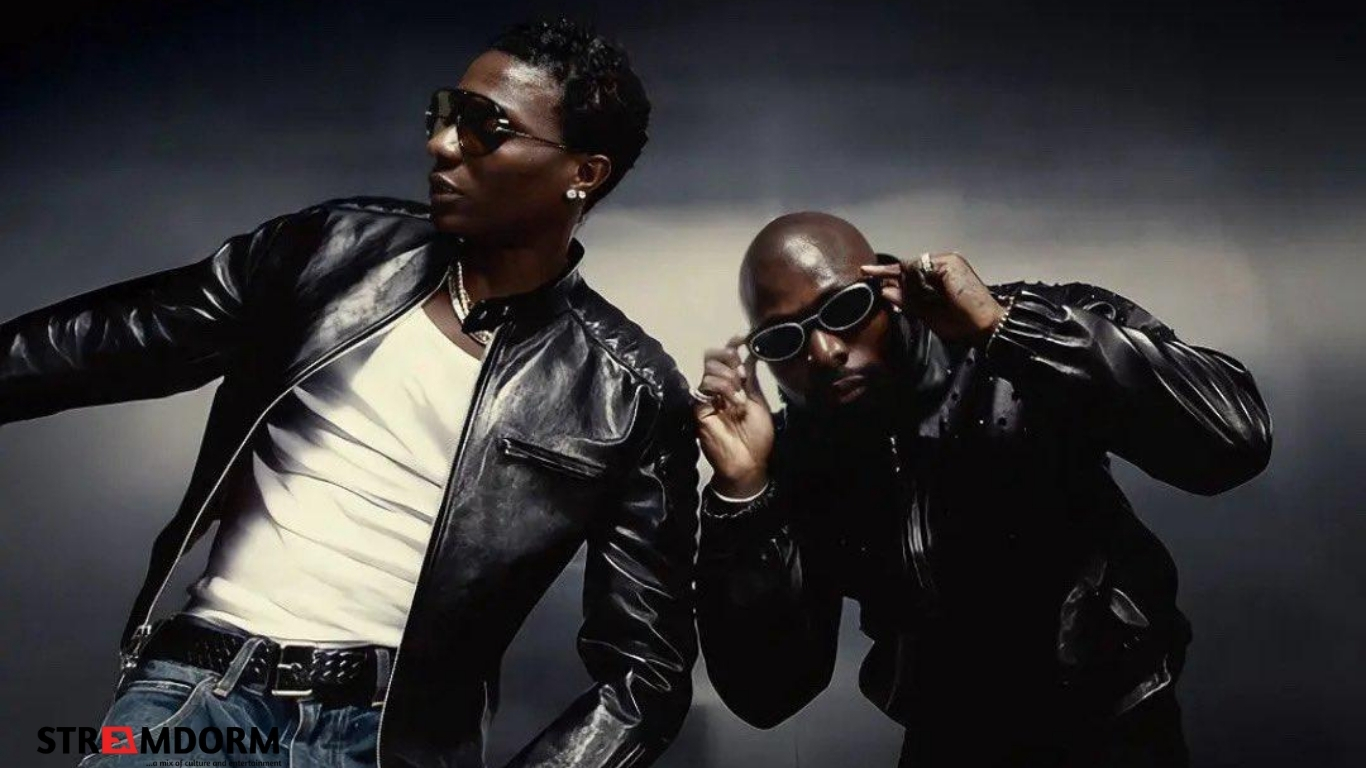
Davido and Phyno at Paris Fashion Week
Live orchestral and gospel elements added emotional depth, reinforcing the collection’s restrained yet expressive tone.
At Dior Homme, creative director Jonathan Anderson continued to push the house’s menswear evolution forward. His Fall/Winter 2026/27 collection balanced classic tailoring with artistic eccentricity, playing with proportion, texture, and historical references.
Structured outerwear, sculptural silhouettes, and layered compositions defined the runway. The collection suggested a return to formality without rigidity signaling traditional menswear codes can still feel contemporary, expressive, and intellectually engaging.
Dior’s presentation stood out for its confidence and clarity, reinforcing the brand’s status as one of the most creatively ambitious houses in Paris.
Across the runways and presentations, several clear themes emerged: Designers moved away from exaggerated proportions, favoring clean cuts, long coats, and refined silhouettes that emphasize structure and longevity.
Branding took a quieter approach this season. Muted tones, tactile materials, and thoughtful construction replaced overt logos and visual noise.
Paris Fashion Week 2026 signals a clear shift in menswear. The season reflects an industry moving away from shock value and trend-chasing, and toward intentional design, craftsmanship, and emotional resonance.
The Central Bank of Nigeria (CBN) has announced a sweeping, industry-wide offensive against the growing threat of digital fraud, introducing new measures aimed at slashing fraud response times across Nigeria’s financial system to under 30 minutes.
The initiative was unveiled at the Nigeria Electronic Fraud Forum (NeFF) Technical Kick-Off Session, bringing together regulators, commercial banks, fintech firms, payment service providers, and law enforcement agencies in a coordinated push to strengthen fraud prevention and response mechanisms nationwide.
At the heart of the new framework is speed. The CBN has directed financial institutions to significantly shorten the time it takes to detect, escalate, and respond to fraud incidents, warning that delays allow criminals to move stolen funds across multiple platforms before recovery efforts begin.
By enforcing a sub-30-minute response window, the apex bank aims to improve recovery rates, limit customer losses, and reduce systemic risk within Nigeria’s rapidly expanding digital payments ecosystem.
The initiative emphasizes deep collaboration across the financial ecosystem, requiring banks, fintechs, and payment processors to break down operational silos and share intelligence in real time. According to the CBN, coordinated monitoring and joint response protocols are now critical as fraud schemes become more sophisticated and cross-platform.
Stakeholders are also expected to align their internal systems with shared industry standards for fraud detection, reporting, and escalation.
Nigeria’s digital economy has expanded rapidly, driven by mobile banking, instant transfers, and fintech adoption. While recent reports indicate a moderation in electronic fraud cases, the CBN has stressed that cybercriminals continue to evolve, making proactive regulation and faster intervention essential.
The regulator reaffirmed its commitment to stronger identity verification frameworks, including the continued integration of Bank Verification Numbers (BVN) and National Identification Numbers (NIN), alongside advanced analytics and real-time transaction monitoring tools.
CBN officials signaled that compliance with the new response-time benchmark will be closely monitored. Banks and payment service providers are expected to invest in robust fraud prevention infrastructure and staff capacity to meet the regulator’s expectations.
The move reflects a firmer regulatory stance as the CBN seeks to protect consumer confidence, strengthen financial stability, and support long-term growth in Nigeria’s digital financial services sector.
By framing digital fraud as a collective industry challenge, the CBN’s latest initiative marks a strategic shift in how Nigeria confronts financial crime. If fully implemented, the sub-30-minute response target could redefine fraud management standards and significantly weaken the operating space for digital fraudsters.
Warner Bros. Discovery has officially announced a global 25th anniversary celebration for Harry Potter, marking 25 years since the release of Harry Potter and the Philosopher’s Stone, the first film in the iconic franchise.
The year-long celebration, scheduled for 2026, will feature cinema re-releases, global fan events, immersive experiences, special merchandise, and studio tour activations, reinforcing the franchise’s enduring cultural and commercial impact.
Released in 2001, Harry Potter and the Philosopher’s Stone introduced audiences to the wizarding world and went on to launch one of the most successful film franchises of all time. Over eight films, the series grossed more than $7.7 billion worldwide, becoming a defining cultural moment for an entire generation.
According to Warner Bros. Discovery, the 25th anniversary celebration is designed to honour both long-time fans and a new generation discovering the films for the first time.
As part of the anniversary rollout, Warner Bros. Discovery has outlined several global activations:
Butterbeer Season: A travelling Butterbeer experience will appear in select cities worldwide, offering themed drinks, merchandise, and fan activities.
Harry Potter’s Birthday (July 31): Official celebrations tied to Harry’s birthday will take place across Harry Potter retail locations and partner venues.
Back to Hogwarts Campaign: The annual fan celebration will be expanded in 2026 as part of the anniversary programme. These events are expected to run across North America, Europe, Asia, and other major markets.
One of the centre pieces of the celebration will be the global theatrical re-release of Harry Potter and the Philosopher’s Stone.
The film is scheduled to return to cinemas between August 27 and September 3, 2026, with screenings featuring previously unseen behind-the-scenes footage, offering fans a deeper look at how the original film was made.
In addition, selected locations will host “Shared Reality” immersive screenings, blending the movie with enhanced visual elements for a more interactive viewing experience.
Warner Bros. Studio Tour London – The Making of Harry Potter will also mark the milestone with a special anniversary feature running from May to September 2026.
Visitors will be able to explore original sets, props, and costumes from the first film, with new exhibits highlighting the early creative decisions that shaped the franchise.
Warner Bros. Discovery will roll out 25th anniversary-branded merchandise throughout 2026, featuring a commemorative logo inspired by the magical imagery of the films.
Major global brands, including LEGO, Loungefly, Crocs, Hallmark, and others, are set to release special collections. Exclusive items will also be available at official Harry Potter stores in cities such as London, Tokyo, and across the United States.
In a historic moment for the global digital community, IShowSpeed (Darren Jason Watkins Jr.) has officially surpassed 50 million subscribers on YouTube and he did it live on his 21st birthday while streaming from Nigeria. The milestone marks a defining moment not only for Speed’s career but also for Black creators on the platform.
Fans from around the world watched as the YouTube subscriber counter ticked past 50 million during his Africa tour livestream. Nigeria, one of the stops on his “Speed Does Africa” tour, became the backdrop for what many are calling a landmark achievement for Black creators in YouTube history. Social media exploded as viewers celebrated both his birthday and the historic milestone.
Social media reports confirms that IShowSpeed’s main channel now officially stands at 50,000,000 subscribers, cementing him as a true digital powerhouse.
One of the standout moments from Speed’s time in Nigeria was his verdict on Nigerian jollof rice live on stream, he declared Nigerian jollof the best he’d had so far in comparison with Senegalese jollof, a declaration that delighted viewers and reignited the long‑standing West African jollof debate.
Social posts from fans also echoed that sentiment, noting how the streamer reacted to the spiciness and flavour of local dishes during his livestream in Lagos.
Real‑time posts on community forums show Nigerians celebrating his presence, reacting positively to his content, and noting that he’s actively absorbing cultural experiences rather than just passing through. Many locals highlighted how he engages with audiences and talks about Nigerian culture to his millions of viewers live on stream.
The ongoing stream content indicates that Speed has been interacting with his surroundings, food, and local energy in Lagos; typical of how he’s been doing in other countries on the tour.
This milestone is more than just numbers; it’s a statement about the power of youth, global audiences, and cultural representation in the digital space.
Nigeria is emerging as one of the world’s most active users of artificial intelligence, according to a new Google-Ipsos study. The report reveals that 88% of Nigerian adults have used an AI chatbot, placing the country far ahead of the global average of 62%.
Titled Our Life with AI: Helpfulness in the Hands of More People, the study highlights how Nigerians are already integrating AI into education, work, and income-generating activities not as a future concept, but as a practical everyday tool.
The data positions Nigeria among the highest adopters of AI chat tools globally, with usage rising sharply over the past year. Google notes that chatbot adoption in Nigeria increased by 18 percentage points, a growth rate that outpaces most regions surveyed.
This level of engagement suggests that AI tools are no longer niche technologies in Nigeria. Instead, they are becoming mainstream digital utilities, used across age groups and professional backgrounds.
One of the strongest use cases identified in the report is learning.
According to the survey: 93% of Nigerians use AI to learn or understand complex topics, compared to a global average of 74%.
Students, professionals, and self-learners are increasingly turning to AI chatbots to:
Break down difficult subjects
Explain concepts in simpler terms
Support exam preparation and research
Learn new digital and professional skills
Beyond education, AI is playing a growing role in workplace productivity.
The report shows that: 91% of Nigerian respondents use AI to assist with work tasks
These tasks range from:
Writing and editing content
Research and information gathering
Planning and organising projects
Brainstorming ideas and presentations
Perhaps most notably, the report highlights AI’s role in entrepreneurship and side hustles, a critical part of Nigeria’s economy.
Google’s findings reveal that: 80% of Nigerians use AI to explore business ideas or career opportunities, nearly double the global average of 42%.
In a country where many people combine multiple income sources, AI is becoming a low-cost tool for experimentation and growth.
The Davido and Anu paternity saga has once again dominated conversations online and in the media. This time, the spotlight is on Deji Adeleke, Davido’s billionaire father, who has broken his silence regarding the long-running controversy. In a recent statement, Deji Adeleke emphasized the importance of truth, verification, and protecting minors, highlighting the family’s perspective amid years of public speculation.
Billionaire businessman Deji Adeleke, father of Afrobeats superstar Davido, addressed reporters this week for the first time regarding the controversy surrounding Anu Adeleke, a teenager claiming to be Davido’s daughter.
In his statement, Deji Adeleke said:
“I have 14 grandchildren. Family matters, especially those involving minors, should be treated with care. It’s important to verify claims with facts and evidence before making public statements.”
His comments come after renewed debates on social media, where the issue of Anu’s paternity resurfaced following her public plea for a DNA test as she approaches her 13th birthday.
The controversy began in 2014 when Anu’s mother, Ayo Labinjoh, claimed that Davido fathered her child following an encounter in Lagos. Over the years, the matter remained largely private, with occasional public statements and denials.
Recently, Anu, now 13 years old, posted on social media appealing for a DNA test, stating that she wanted clarity about her identity. Her appeal included emotional statements about the impact of growing up amid uncertainty and online scrutiny.
This plea reignited public interest, drawing thousands of comments and shares across platforms. Fans, media outlets, and social commentators weighed in, debating both the legitimacy of the claims and the emotional implications for Anu.
Davido has repeatedly denied paternity, stating that multiple DNA tests conducted over the years all returned negative results. According to reports, at least five separate tests were carried out; some by Davido’s team and others by the opposing side and every result reportedly confirmed non-paternity.
Deji Adeleke’s involvement behind the scenes has been significant. He has revealed that he has consistently pushed for scientific verification and proper communication, stressing the need to approach the matter responsibly and protect minors from public pressure.
Despite Davido’s denials, Anu and her mother continue to advocate for a fresh, independently verified DNA test.
Ayo Labinjoh, Anu’s mother, claims that previous tests were inaccurate or misrepresented. She insists that no officially verified test confirming non-paternity has been released, and she seeks independent verification for clarity.
The conflicting narratives have fueled online debate, with supporters on both sides voicing strong opinions. Some argue that repeated testing and official denials should suffice, while others stress that Anu’s rights and emotional wellbeing are the priority.
This is not the first time the paternity question involving Anu has emerged publicly:
2014: Initial paternity claim by Anu’s mother.
2015–2018: Media reports of DNA tests and family denials surfaced intermittently.
2019–2022: Davido reiterated his position on social media, denying paternity and emphasizing prior test results.
2026: Anu’s public plea reignites debate, leading to Deji Adeleke’s statement, which adds authority and perspective to the discussion.
Whether the matter will be conclusively resolved with a DNA test or fade into public memory depends on the next steps taken by all parties involved. Until then, the story remains a cautionary tale of family disputes in the public eye.
"I have 14 grandchildren…"
Davido's father, Deji Adeleke addresses the press regarding the controversies surrounding the paternity of Anu. pic.twitter.com/lsJnuePiIE
Fela Anikulapo Kuti, born in 1938 in Abeokuta, Nigeria, remains one of the most influential figures in African music and culture. Known as the pioneer of Afrobeat, Fela’s life was a blend of revolutionary music, outspoken activism, and fearless challenges to political authority. Even decades after his passing in 1997, his legacy continues to resonate across music, politics, and African identity.
The Birth of Afrobeat
Fela Kuti’s journey into music began at a young age. Raised in a politically active family; his mother, Funmilayo Ransome-Kuti, was a feminist and activist. Fela was exposed early to the struggles of ordinary Nigerians. He studied music in London at the Trinity College of Music, where he learned classical piano and trumpet. But it was upon his return to Nigeria that he fused traditional African rhythms with jazz, funk, highlife, and soul to create Afrobeat.
Afrobeat was more than a music genre; it was a vehicle for social commentary. Through extended compositions, intricate horn sections, and polyrhythmic percussion, Fela delivered sharp critiques of corruption, military rule, and social injustice in Nigeria and across Africa. Hits like “Zombie” and “Sorrow, Tears and Blood” were not only musical masterpieces but also acts of resistance.
Activism and Political Influence
Fela’s music was inseparable from his activism. His lyrics openly criticized Nigeria’s military regimes and exposed the harsh realities of life under oppressive governments. His Kalakuta Republic commune served as both a home and a political haven, where artists, musicians, and activists collaborated to resist authoritarianism.
Fela endured repeated arrests, raids, and physical assaults. Despite this, he remained steadfast, using his international fame to draw global attention to Nigeria’s political struggles. His activism inspired countless musicians and activists worldwide to use art as a tool for social change.
Cultural Impact
Beyond music and politics, Fela Kuti reshaped African cultural identity. He challenged colonial mindsets by promoting African traditions, attire, and language in his performances. His stage shows were theatrical, often including dancers, elaborate costumes, and improvisational elements that celebrated African heritage.
Today, Fela’s influence is evident in the global rise of Afrobeat, which has evolved into a worldwide phenomenon. Artists such as Burna Boy, Wizkid, and Tiwa Savage credit Fela as a major inspiration. The genre has also crossed borders, influencing international musicians from Beyoncé to Major Lazer, bridging African sounds with global pop culture.
Fela Kuti’s Family Legacy
Fela’s legacy extends through his family, many of whom are accomplished artists and activists. His children, including Seun Kuti and Femi Kuti, continue to perform Afrobeat with the same political passion. The Fela Shrine in Lagos, now a museum and live music venue, keeps his memory alive, drawing fans from across the world to celebrate his music and message.
Fela’s life and impact have been immortalized through multiple mediums. The Broadway musical Fela! brought his story to international audiences, combining music, dance, and storytelling. Documentaries, films, and books continue to explore his influence, while Nigerian festivals and global Afrobeat events celebrate his contributions annually.
Fela’s fearless stance against injustice, combined with his artistic genius, created a blueprint for generations of musicians and activists. His influence on culture, politics, and music remains unparalleled, making him a symbol of resistance, creativity, and African pride.
Fela Kuti’s relevance persists because the struggles he highlighted; corruption, inequality, and political oppression still exist. His life reminds us of the power of art as a force for change and the importance of staying true to one’s convictions. In an age where African music dominates global charts, remembering Fela ensures that the roots of this cultural revolution are not forgotten.
Fela Kuti’s legacy is a reminder that music is more than entertainment; it can be a catalyst for awareness, unity, and transformation. His story is a call to celebrate African heritage, challenge injustices, and inspire future generations to use their voices boldly and not to be chasing unnecessary clout on social media.
President Bassirou Diomaye Diakhar Faye has formally honoured the Senegalese national football team with national awards following their victory at the 2025 Africa Cup of Nations (AFCON) in Morocco.
The ceremony took place at the Presidential Palace in Dakar, days after the Lions of Teranga returned home as continental champions. Senegal defeated host nation Morocco in the final to secure their second AFCON title, reinforcing their status as one of Africa’s leading football nations.
During the official reception, President Faye decorated the players, coaching crew, and technical officials with Senegal’s national honours.
Head coach Pape Bouna Thiaw and members of the squad were elevated to the rank of Commander of the National Order of the Lion, one of the country’s highest civilian distinctions. The awards were presented in recognition of their sporting excellence and their contribution to national pride.
In addition to the national honours, the Senegalese government announced a comprehensive rewards package for the team and delegation.
Each player is to receive: 75 million CFA francs, and a 1,500 square-metre plot of land located along the Petite Côte.
Officials and members of the wider delegation will also benefit from financial rewards and land allocations. According to government sources, the total value of the rewards package is estimated at over 3 billion CFA francs.
Coach Pape Thiaw et les joueurs de l’équipe nationale ont été élevés au grade de Commandeur de l’Ordre national du Lion du Sénégal. pic.twitter.com/sxHfEwj7t1
The team earlier received a hero’s welcome upon their arrival in Dakar, with supporters lining major routes in the capital to celebrate the champions. The celebrations culminated in the formal state reception where the honours were officially conferred.
Senegal’s AFCON 2025 success adds to the country’s growing football legacy and sets the tone for upcoming international competitions, including World Cup qualifiers and future continental tournaments.
In a stunning celebration of Nigerian cuisine and cultural pride, celebrity chef Hilda Baci has officially carved her name into the Guinness World Records once again; this time for the largest serving of rice ever prepared. The record-breaking achievement was confirmed on Guinness’s official site under the title “Largest serving of rice”, following a monumental cooking event that took place in Victoria Island, Lagos, Nigeria on September 12, 2025.
This extraordinary feat builds on Hilda’s reputation as one of Nigeria’s most dynamic culinary ambassadors and continues a journey that has sparked global interest in Nigerian food culture.
According to the Guinness World Records, the largest serving of rice was achieved by Hilda Baci in partnership with Gino Nigeria, weighing an astonishing 8,780 kilograms (about 19,356 pounds). The massive total wasn’t just any rice, it was Nigerian-style jollof rice, the beloved West African dish celebrated across the continent and beyond.
To qualify for the record, the dish had to meet specific criteria set by Guinness including making sure rice made up at least 80 % of the total weight. After intensive preparation and coordination, Hilda and her team achieved exactly that and served the huge quantity to eager attendees during the event.
The cooking took place in a custom-built steel cauldron, designed just for the occasion, and required meticulous planning, logistics, and energy.
What made this record more than just a Guinness entry was the way the food was shared. After the jollof rice was cooked and weighed, it was distributed to those in attendance. Reports described over 16,600 plates being handed out to a thrilled crowd, turning a world record into a moment of community celebration and shared joy.
This isn’t Hilda Baci’s first brush with Guinness World Records. In May 2023, she captured international attention with a marathon cooking session that lasted 93 hours and 11 minutes, setting a record for the longest continuous cooking by an individual at the time. That achievement drew massive global interest and helped launch her into international fame.
Hilda Baci’s confirmation by Guinness World Records for the largest serving of rice is a celebration of food, community, and national pride. With 8,780 kg of jollof rice prepared, served, and shared, she has once again shown what passion and creativity can accomplish not just for a chef, but for a culture.