After over a decade of being a staple on Netflix, the iconic sitcom Friends has officially left the UK streaming platform. The departure comes as Netflix’s licensing agreement with Warner Bros. expired on 30 December 2025, leaving millions of UK fans searching for where they can continue to binge the beloved series.
The move marks a major shift in the UK streaming landscape, as Friends joins a growing list of shows returning to their parent companies’ own platforms amid the global streaming wars.
The decision to pull Friends from Netflix UK stems from content rights and licensing. Warner Bros. Discovery, the studio behind Friends, has opted to consolidate the show on HBO Max, the company’s own streaming service. In the United States and other regions, Friends has already been part of HBO Max’s library, making the UK transition a long-awaited but logical step.
This trend mirrors global shifts where major studios are reclaiming popular content to drive subscriptions to their own platforms rather than renting it to third-party services.
UK fans won’t have to wait long. HBO Max is officially launching in the UK and Ireland on 26 March 2026, and Friends is expected to be a cornerstone of its catalogue. This launch will give UK viewers access not only to Friends but also to other Warner Bros. Discovery titles.
Popular shows are increasingly tied to their production studios’ own services rather than third-party platforms. For fans, this may require juggling multiple subscriptions, but it also guarantees that shows like Friends remain readily available on platforms invested in long-term streaming access.
For those who’ve grown up on the misadventures of Ross, Rachel, Monica, Chandler, Joey, and Phoebe, the good news is that the laughs aren’t disappearing; they’re just moving to a new home.
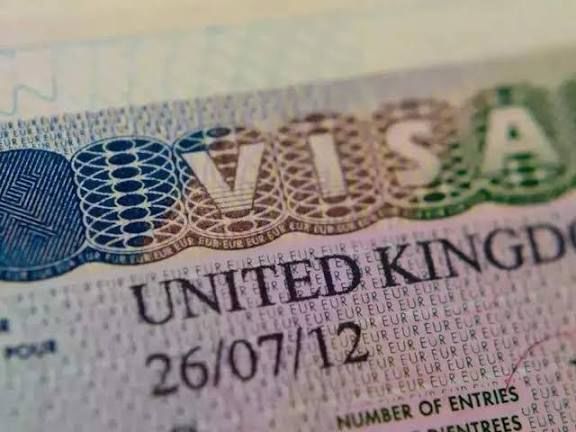
Nigeria has emerged as the fourth-largest source of international students granted UK study visas, according to official UK immigration data for the year ending September 2025.
The ranking places Nigeria behind India, China, and Pakistan, and ahead of countries such as the United States, Bangladesh, and Ghana, highlighting the country’s growing role in the UK’s international education pipeline.
UK Study Visas by Nationality (Year Ending September 2025)
Based on UK Home Office immigration statistics covering sponsored study visas issued to main applicants, the top nationalities are as follows:
- India – 101,229
- China – 89,656
- Pakistan – 39,497
- Nigeria – 36,839
- Nepal – 21,681
- United States – 16,702
- Bangladesh – 12,708
- Saudi Arabia – 6,256
- Turkey – 5,893
- Kuwait – 5,149
While exact figures may vary slightly across reporting summaries, the ranking order is consistent in official UK government data, confirming Nigeria’s fourth-place position globally for study visas issued during the period.
The figures refer specifically to sponsored study visas granted to main applicants. This means:
- Students must have received a Confirmation of Acceptance for Studies (CAS) from a UK institution
- The data excludes most dependants, following UK policy changes introduced in early 2024
- The numbers reflect approved visas, not just applications
Recent UK immigration reforms have reshaped student migration patterns:
- Restrictions on dependants reduced overall visa numbers but kept main applicant demand relatively stable
- Increased scrutiny of student sponsorship and compliance affected some institutions
- Greater emphasis on academic credibility and financial proof influenced application outcomes
Despite these changes, Nigeria maintained a strong presence in the rankings, indicating sustained interest and adaptability among Nigerian applicants to travel out.
Alongside India, China, and Pakistan, Nigeria is now firmly established as one of the core contributors to the UK’s international student population.
The United Kingdom has reaffirmed its commitment to deepening cybersecurity cooperation with Nigeria, pledging technical assistance, intelligence sharing, and strategic frameworks to address growing digital threats.
At the “Anticipatory, Cyber and Digital Diplomacy” seminar held in Abuja on September 2, 2025, UK officials emphasized the importance of safeguarding Nigeria’s digital landscape against cybercrime, disinformation, and emerging risks linked to artificial intelligence (AI).
British High Commissioner to Nigeria, Richard Montgomery, described the collaboration as “vital for strengthening national resilience,” noting that cyber threats have become increasingly sophisticated. He highlighted the potential misuse of AI to amplify disinformation and hate speech, warning that both nations must stay ahead of evolving risks.
Expanding the Cybersecurity MoU
The UK and Nigeria first signed a cybersecurity Memorandum of Understanding (MoU) in 2024. Under the expanded framework, cooperation now spans five key areas:
- Threat hunting
- Cyber threat intelligence sharing
- Protection of critical national infrastructure
- Digital forensics
- Incident response planning
This expansion reflects a shift from policy dialogue to more practical, technical, and operational cooperation.
Broader Security and Digital Initiatives
The partnership builds on several recent milestones:
- July 2025: The Third UK–Nigeria Security and Defence Partnership Dialogue in London prioritized cybercrime, disinformation, AI misuse, and hybrid threats.
- May 2025: Nigeria launched a Joint Case Team on Cybercrime with UK and Commonwealth support, bringing together agencies like the EFCC, Police, and Ministry of Justice to coordinate investigations and prosecutions.
- May 2025: A Fraud MoU was signed to improve fraud prevention and strengthen prosecutions.
- March 2025: The UK concluded a Cybersecurity Trade Mission in Nigeria, where experts and stakeholders worked on frameworks for a National Cybersecurity Architecture.
Both countries have pledged to continue their strategic partnership, with the next round of the UK–Nigeria Security and Defence Dialogue scheduled for 2026 in Abuja. Analysts say the success of these initiatives will depend on effective implementation, funding, and the ability to balance cybersecurity with digital rights.
“Cybersecurity is no longer a national challenge but a global one,” Montgomery stressed. “By working together, the UK and Nigeria can set a model for resilience and responsible governance in the digital age.”