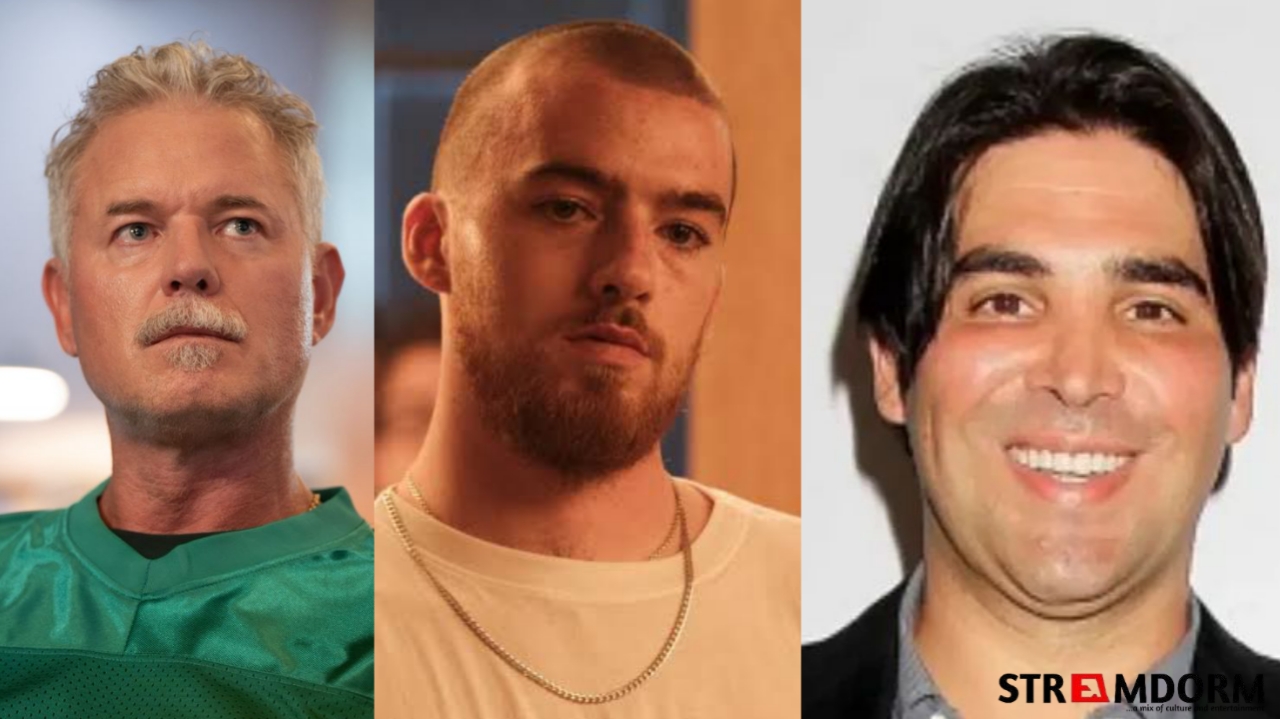
When Season 3 premiered on April 12, 2026, the episode opened and closed with tributes to three figures whose absence has deeply shaped the show’s journey: Angus Cloud, Eric Dane, and Kevin Turen.
The premiere began with a dedication to Eric Dane and closed with an “in memoriam” message honoring all three, subtle but weighty gestures that frame the episode in reflection.
Angus Cloud, who portrayed the fan-favorite Fezco, passed away in 2023, leaving a noticeable gap in the show’s emotional core. His performance had become one of the series’ most grounded elements; quiet, protective, and deeply human. The new season acknowledges that absence not with heavy exposition, but with a tone that feels altered, more aware of loss.
Eric Dane, known for his role as Cal Jacobs, also passed away in 2026. His character’s presence in the show had been complex and often unsettling, but undeniably central to its tension. The decision to open the premiere with a dedication to him signals just how significant his contribution was to the series’ identity.
Behind the scenes, Kevin Turen’s passing marked another major loss. As a producer, Turen played a key role in shaping Euphoria into one of television’s most visually distinct and culturally dominant shows. His influence is less visible on screen, but just as embedded in the show.
Series creator Sam Levinson had previously hinted that Season 3 would be shaped by grief. The premiere makes that clear without saying it outright. There’s a tonal shift less chaotic, more reflective as if the show itself is taking a moment to process everything it’s lost.
The third season of Euphoria premiered on April 12, 2026, introducing a major shift in the show’s direction. Set five years after the events of Season 2, the new season follows the characters as young adults dealing with the long-term consequences of their past actions.
The premiere episode centers on Rue, played by Zendaya, whose storyline takes a darker turn as she becomes involved in drug trafficking, marking a more intense and crime-driven narrative.
Season 3 is expected to run for eight episodes, released weekly, and is widely seen as a concluding chapter for the series, with a stronger focus on accountability, survival, and life beyond adolescence.
The world’s most iconic cartoon rivalry is returning to cinemas with a fresh twist.
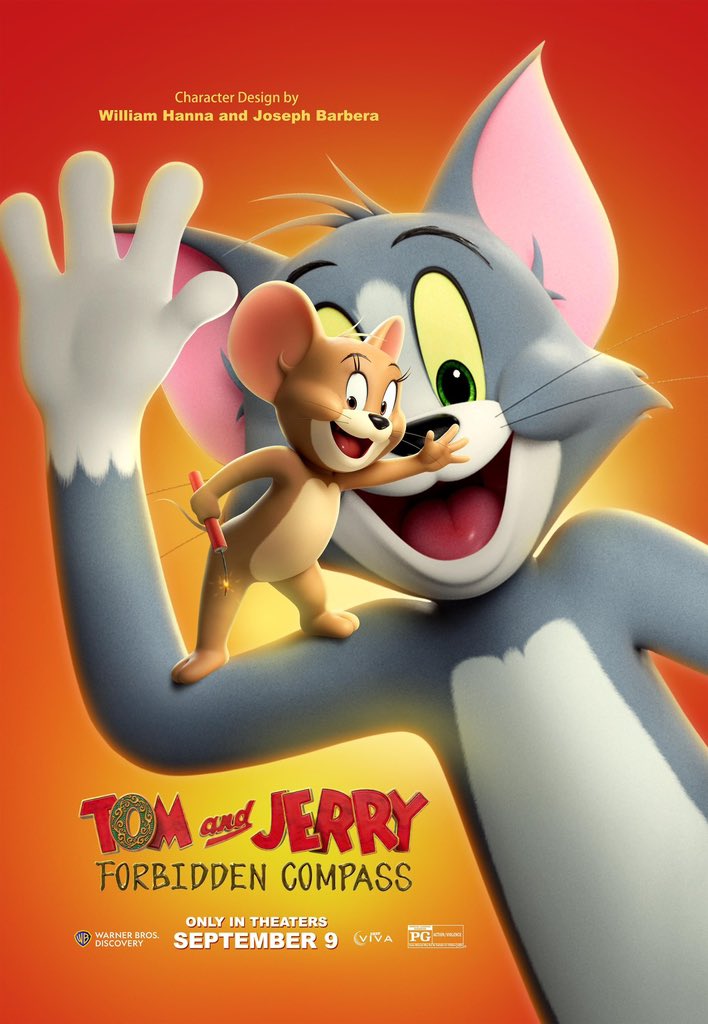
Tom and Jerry is back in a brand new feature film titled Tom and Jerry: Forbidden Compass, a fully animated adventure that reimagines the legendary cat and mouse duo for today’s audience. The film is scheduled for a wider theatrical rollout, including a September 9, 2026 release in the United States, following its earlier debut in Asia.
Originally created by William Hanna and Joseph Barbera, Tom and Jerry has remained a cultural staple for over eight decades. Known for its fast-paced slapstick humor and minimal dialogue, the franchise has thrived across multiple formats, from theatrical shorts to television series and feature films.
With Forbidden Compass, the franchise takes a more cinematic direction. The film is directed and written by Zhang Gang, and is produced in collaboration with Warner Bros. Pictures and China Film Co., pushing a strong international production effort.
The story begins in familiar territory, with Tom chasing Jerry inside a museum. However, the chase quickly takes a dramatic turn when they accidentally activate a mysterious magical compass. This device transports them into a completely different world, far removed from their usual suburban chaos.
In this new realm, Tom and Jerry encounter unfamiliar characters and become entangled in a larger conflict tied to the power of the compass. While their rivalry remains intact, the story introduces a stronger narrative arc, blending fantasy, adventure, and world-building with the franchise’s traditional comedic style.
One of the biggest changes in Forbidden Compass is its animation style. Unlike the hybrid live-action approach of Tom & Jerry, this film is fully computer animated.
The film features two distinct voice casts across different versions, including its original Chinese release and the English dub.
For the original version, the cast includes Zhang Wenjie, Tu Xiongfei, Li Baixin, and Jiang Wen, among others, voicing key characters in the film’s fantasy setting.
For the English dub, a wider ensemble of well-known voice actors has been confirmed. Eric Bauza and Benjamin Diskin take on the roles of Tom and Jerry respectively. Supporting roles include Travis Willingham, Janice Kawaye, Matthew Yang King, and Roger Craig Smith, alongside a broader ensemble cast contributing additional voices.
This dual-cast structure reflects the film’s international production strategy, allowing it to appeal to both regional and global audiences.
Tom and Jerry: Forbidden Compass first premiered at the Shanghai International Film Festival in June 2025 before receiving a theatrical release in China in August of the same year.
Rather than launching simultaneously worldwide, the film is following a staggered global rollout. Its U.S. theatrical release is set for September 9, 2026, with other regions expected to follow based on distribution plans.
Mercy is a very beautiful movie that tells the story of “how everybody makes mistakes” and the consequences and beauty of such mistakes. It reminds us not to place our full trust on AI and remember how humans are capable faults.
It prides itself in the grey area of our humanity. We are all capable of doing good and what’s right, we are also capable of doing the complete opposite.
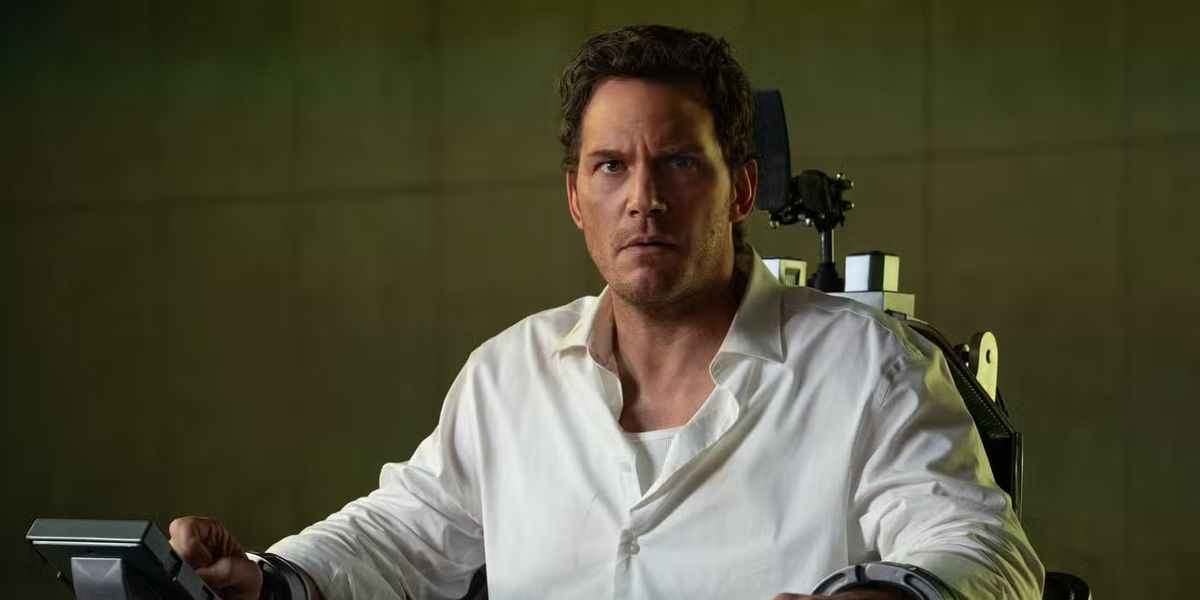
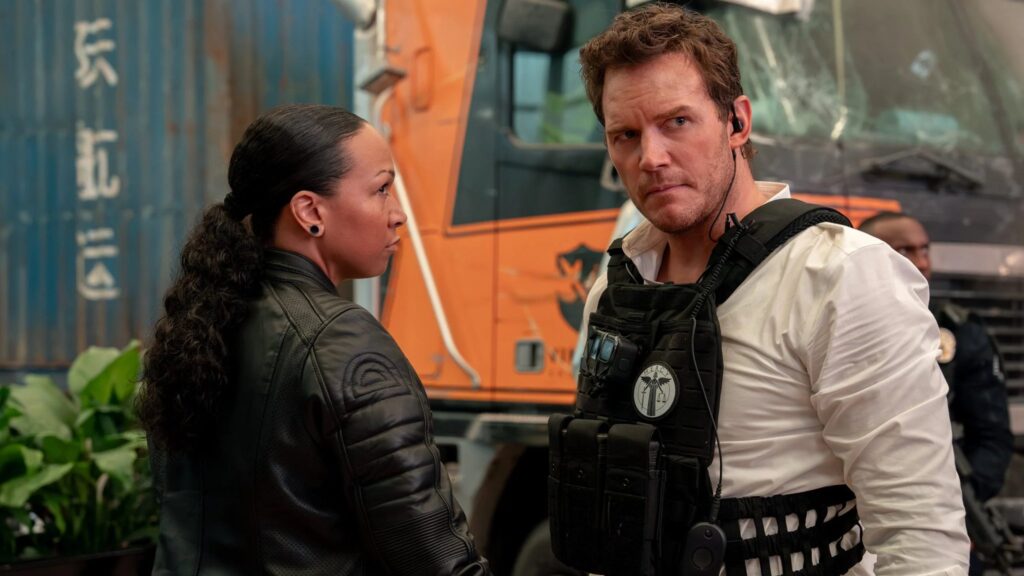
Kali Reis as Jaq, Chris Pratt as Detective Chris Raven
Chris Pratt plays a struggling detective in a failing marriage due to his habit of drinking, despite his fault he loves his family, but does family love itself?
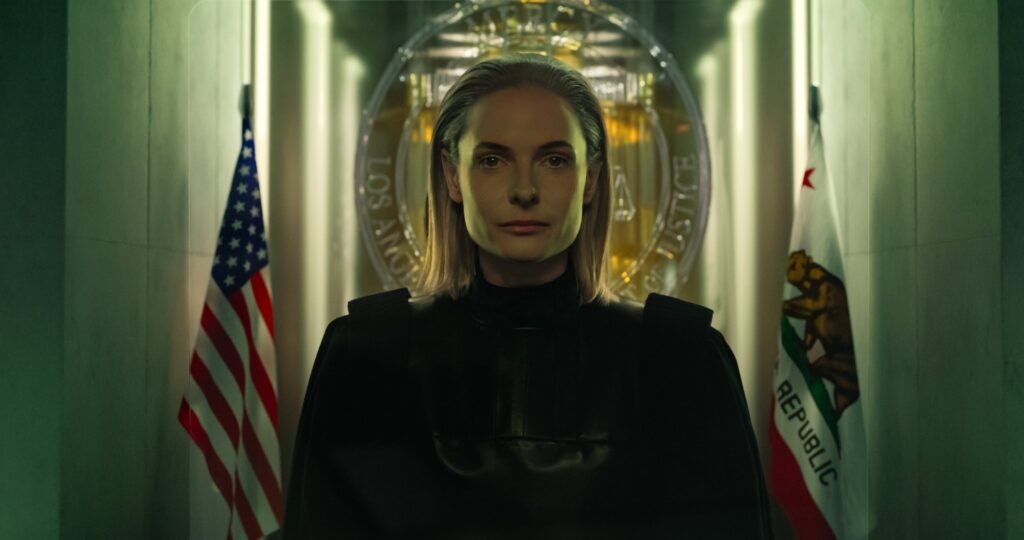
Rebecca Ferguson plays an AI judge that prides itself in the fact…but does it understand truth, mistakes and guts?
Rebecca Ferguson as Judge Maddox
Chris Pratt character stands trial in a court for murdering his wife and he has 90 minutes to defend himself using every and all available evidence.
This film while with good intentions reminded us that in the age of data and information, your data isn’t truly private. It also reminds us of how humans can let their emotions get the best of us. How we can twist and omit facts to our agenda.
No flying cars as predicted in 1999 yet but humans will still be humans doing what we know and do best.
The most noticeable fault in this movie is how the AI which supposed to operate as an AI behaves more human than AI. It claims it’s function is to be the judge, jury and executioner but it forgot to mention it is also your lawyer and your partner. The number of times it helped Chris Pratt point to the right direction, I could not count.
That said, ‘Mercy’ shows you mercy and delivers what ‘War Of World’ wish it showed. It’s a well written film that knows when and when not to use the over advertised sci-fi elements of a futuristic film.
Easter is one of the most important moments in the Christian calendar. It is not just a celebration, it is a story of suffering, sacrifice, doubt, and ultimately, resurrection.
And while the Bible remains the central source of that story, film has found powerful ways to bring these moments to life.
If you are looking for films that truly capture the spirit of Easter, not just visually, but emotionally these three stand out.
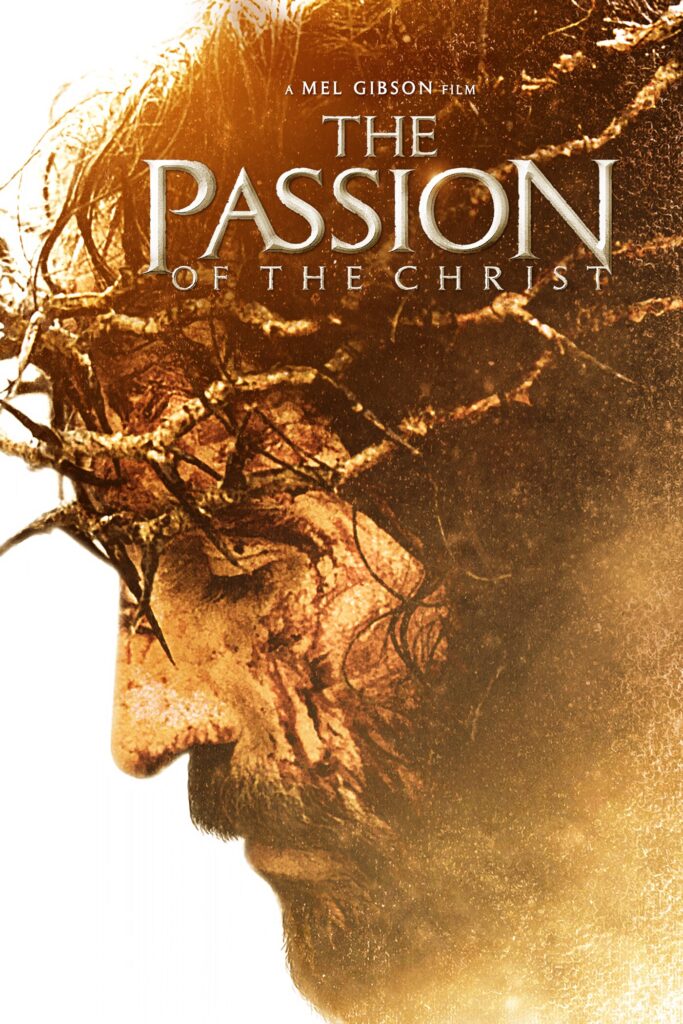
The Passion of the Christ
Directed by Mel Gibson, The Passion of the Christ focuses entirely on the final hours of Jesus Christ from His arrest in Gethsemane to His crucifixion.
On the night of Passover, Jesus prays in the Garden of Gethsemane while his disciples fall asleep. Betrayed by Judas Iscariot, who has been bribed by the religious leaders, Jesus is arrested and taken before the Jewish council. Despite false accusations and a divided court, he is condemned to death for claiming to be the Son of God.
As Jesus is beaten and humiliated, Peter denies knowing him out of fear, later overcome with guilt. Meanwhile, Judas, filled with remorse, attempts to return the money but is rejected and ultimately takes his own life.
Jesus is brought before the Roman governor, Pontius Pilate, who finds no wrongdoing in him. After briefly sending him to Herod Antipas, Pilate gives in to public pressure and allows the crowd to choose between freeing Jesus or a criminal named Barabbas. When the crowd demands Jesus’ crucifixion, Pilate orders him to be flogged and sentenced to death.
Jesus is tortured, mocked, and forced to carry his cross to Golgotha. Along the way, he receives moments of compassion, including help from Simon of Cyrene. He is then crucified alongside two criminals. Even in suffering, Jesus forgives his persecutors and promises salvation to one of the thieves.
After enduring intense pain, Jesus dies on the cross, triggering a powerful earthquake and symbolic events in the temple. His body is taken down and buried. Days later, he rises from the dead, marking his victory over death and fulfilling his divine mission.
What makes the film stand out is its refusal to dilute the story. It does not rush past the pain or soften the brutality. Instead, it slows everything down, exposing viewers to each moment.
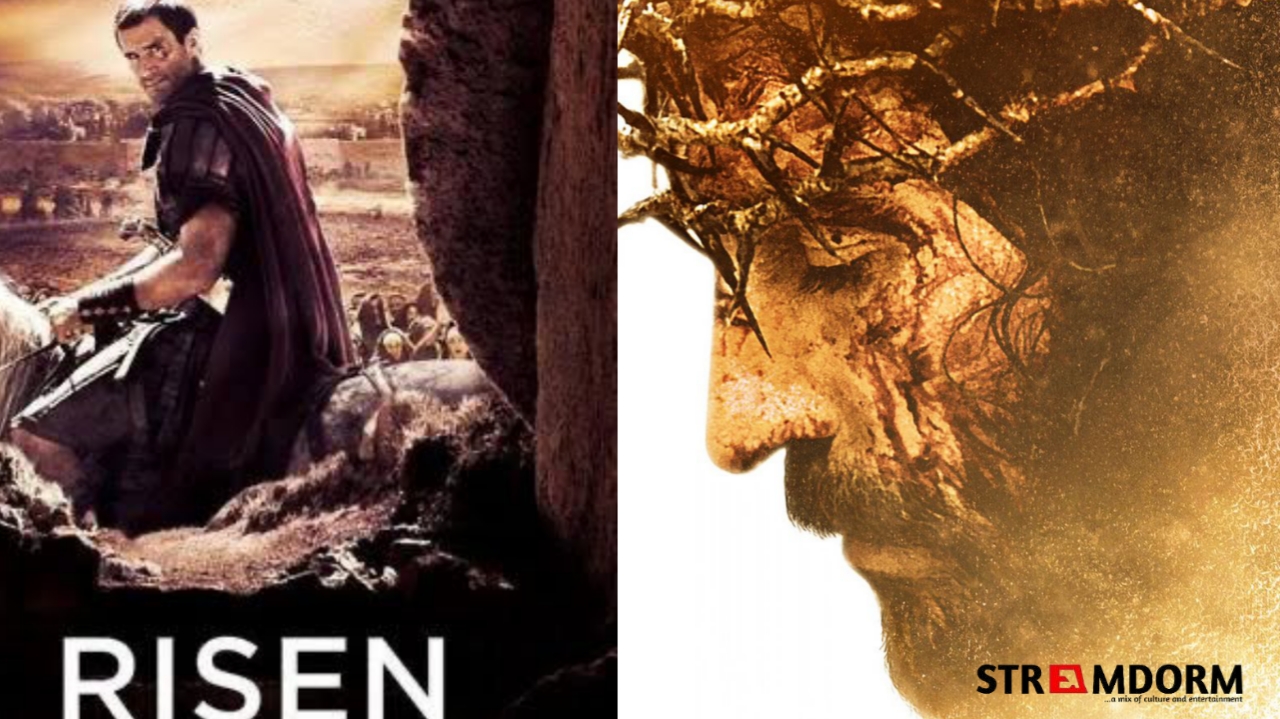
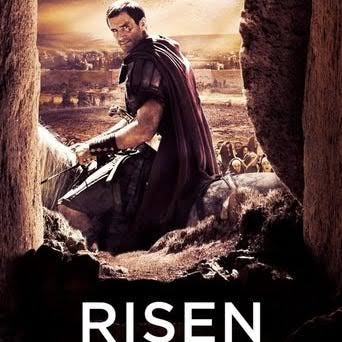
Risen
If The Passion of the Christ shows you the event, Risen more of like as the questions.
The film follows Roman tribune Clavius oversees the crucifixion of Jesus Christ and is tasked by Pontius Pilate to guard his tomb. When Jesus’ body mysteriously disappears, rumors spread that he has risen from the dead. Determined to prevent unrest in Jerusalem, Pilate orders Clavius to find the missing body.
Clavius begins a relentless investigation, questioning witnesses and followers such as Mary Magdalene and Bartholomew, but their cryptic answers only deepen the mystery. As reports of miraculous sightings grow, Clavius becomes increasingly unsettled. A disgraced Roman guard eventually describes a blinding, supernatural event at the tomb on the morning Jesus vanished, though Clavius initially dismisses it.
The case takes a dramatic turn when Clavius unexpectedly encounters Jesus alive, in the company of his disciples. Shocked by what he witnesses, he abandons his mission and begins to question everything he once believed. Turning away from his Roman allegiance, he secretly joins Jesus and his followers, seeking to understand the truth behind the resurrection.
As Roman forces, now led by his former aide Lucius, pursue him, Clavius helps the disciples evade capture. Along the journey, he witnesses miracles, including the healing of a leper, further strengthening his belief. Ultimately, Clavius sees Jesus ascend into heaven, confirming the reality of what once seemed impossible.
The disciples go their separate ways to continue their mission, while Clavius, forever changed, reflects on his journey, accepting that the truth he sought has transformed his life completely.
What makes Risen compelling is its perspective. Instead of telling the story from within the circle of believers, it tells it from the outside; from someone who does not believe, at least not at first.
It explores the confusion. The skepticism. The slow, reluctant shift from doubt to something that looks a lot like faith.
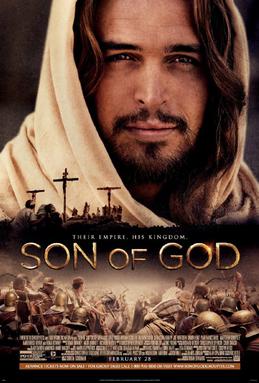
Son of God
Son of God takes a broader approach to the story of Jesus Christ, covering His life, ministry, crucifixion, and resurrection.
Unlike The Passion of the Christ, which focuses almost entirely on suffering, this film provides a more broader narrative. You see the teachings, the miracles, the growing following and then the eventual betrayal and sacrifice.
That wider scope makes it more accessible, especially for viewers who want to understand the full context of the Easter story.
The story follows the life, crucifixion, and resurrection of Jesus Christ, as recounted by his last surviving disciple, John. Born in Bethlehem to Mary and Joseph, Jesus is visited by wise men who recognize him as the future King.
As an adult, Jesus begins teaching in Galilee, gathering disciples including Peter, James, John, Matthew, and Mary Magdalene. Through miracles and sermons, he earns a large following but angers the Pharisees, who accuse him of blasphemy. Jesus predicts his own death and instructs his disciples to accompany him to Jerusalem for Passover.
During his triumphal entry, he is celebrated by the people but condemned by the Pharisees. Much later, Judas betrays him for thirty pieces of silver, and Jesus is arrested in the Garden of Gethsemane. Despite Pilate finding no fault, the crowd, swayed by Caiaphas, demands Jesus’ crucifixion. Jesus endures flogging, mockery, and the painful journey to Golgotha, where he is crucified. He forgives his persecutors, offers salvation to the repentant thief, and dies, triggering earthquakes and the tearing of the temple veil.
Three days later, Mary Magdalene discovers the tomb empty. Jesus appears to his disciples, proving his resurrection, and instructs them to spread his message worldwide. Forty days later, he ascends into Heaven, leaving his disciples to continue his work. John, the last surviving disciple, eventually lives in exile, recounting his story until Jesus appears to him one final time, promising his return.
Romance may dominate the movie industry, but it is far from the only genre capable of delivering powerful and unforgettable stories. While love stories often take center stage, many films explore deeper themes like psychological tension, hidden secrets, supernatural realities, and intense emotional struggles.
As a viewer looking to move beyond predictable love plots, there is an entire world of storytelling waiting to be explored. From mind bending narratives to suspense filled domestic conflicts, these genres offer experiences that are just as captivating.
Here are four movie genres that deserve your attention.
Domestic Thrillers
At first glance, everything seems normal; happy families, stable relationships, and quiet homes. But beneath that surface lies something far more unsettling.
Domestic thrillers focus on tension within everyday relationships. These stories often unfold in familiar settings like homes or marriages, where secrets, lies, and betrayal slowly begin to emerge. What makes this genre so effective is how it turns ordinary life into something suspenseful and unpredictable.
Rather than relying on explosions or high-speed action, domestic thrillers build tension through dialogue, emotional conflict, and shocking revelations. The danger feels closer and more realistic because it exists in spaces people trust the most.
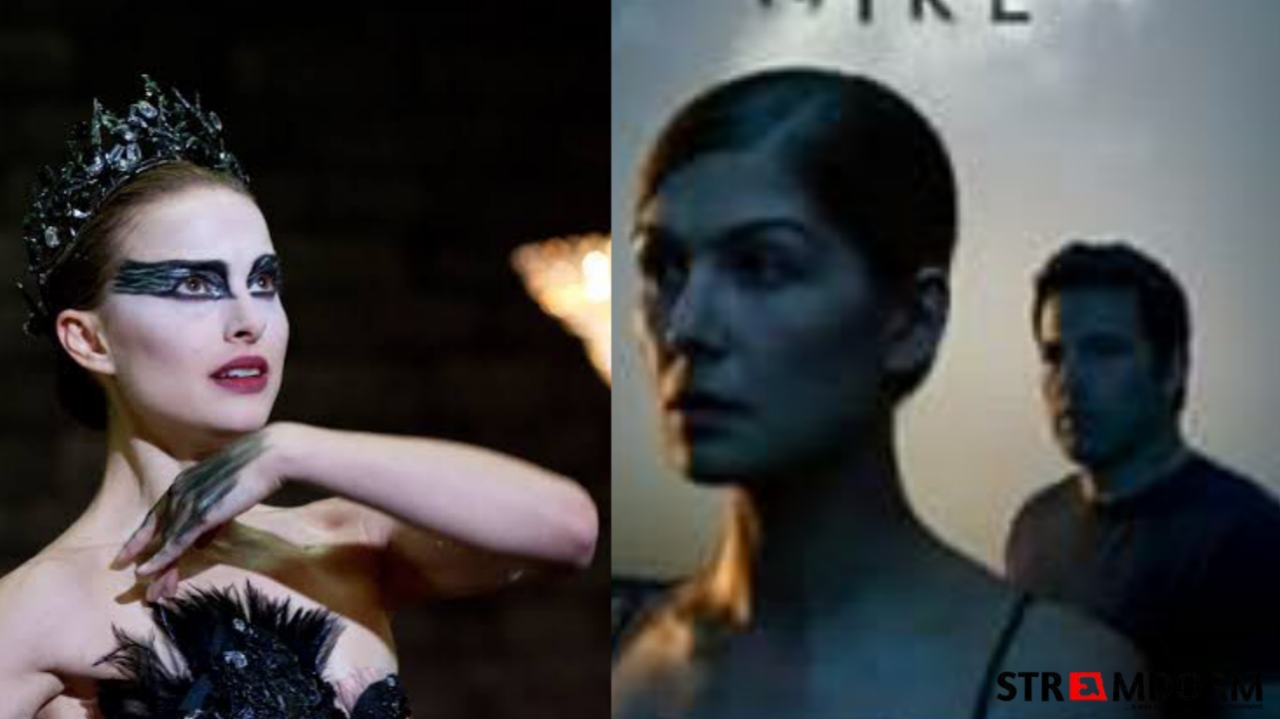
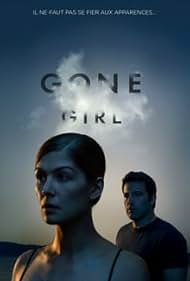
A perfect example is Gone Girl (2014), a film that explores the dark complexities of marriage, manipulation, and media perception. As the story unfolds, nothing is quite what it seems, keeping viewers constantly on edge.
Psychological Thrillers
Psychological thrillers take a different approach to suspense. Instead of focusing on external danger, they dive deep into the human mind.
These films explore themes like obsession, trauma, paranoia, and identity. Characters often struggle with their perception of reality, and viewers are pulled into that uncertainty. You are not just watching the story, you are trying to figure it out along with the characters.
What makes this genre stand out is its ability to create tension without relying heavily on physical action. The real conflict happens internally, making the experience more immersive and thought provoking.
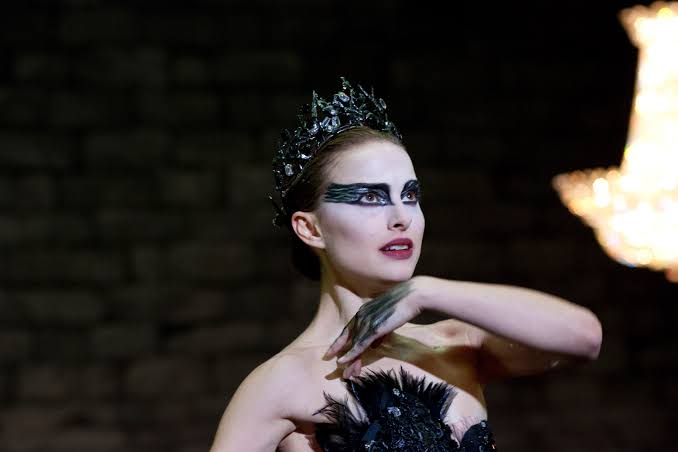
A standout example is Black Swan (2010), which follows a dancer whose pursuit of perfection begins to blur the line between reality and illusion. The film is intense, unsettling, and deeply psychological.
Psychological thrillers are perfect for viewers who enjoy stories that challenge their thinking and stay in their minds long after the movie ends.
Urban Fantasy
Urban fantasy answers the question of magic existing in everyday life by blending supernatural elements with modern city settings. Unlike traditional fantasy stories set in distant kingdoms, this genre brings magic into familiar environments like busy streets, offices, and neighborhoods.
The contrast between the ordinary and the extraordinary is what makes urban fantasy so captivating. It creates a world where hidden powers, mystical forces, or secret dimensions exist just beneath the surface of reality.
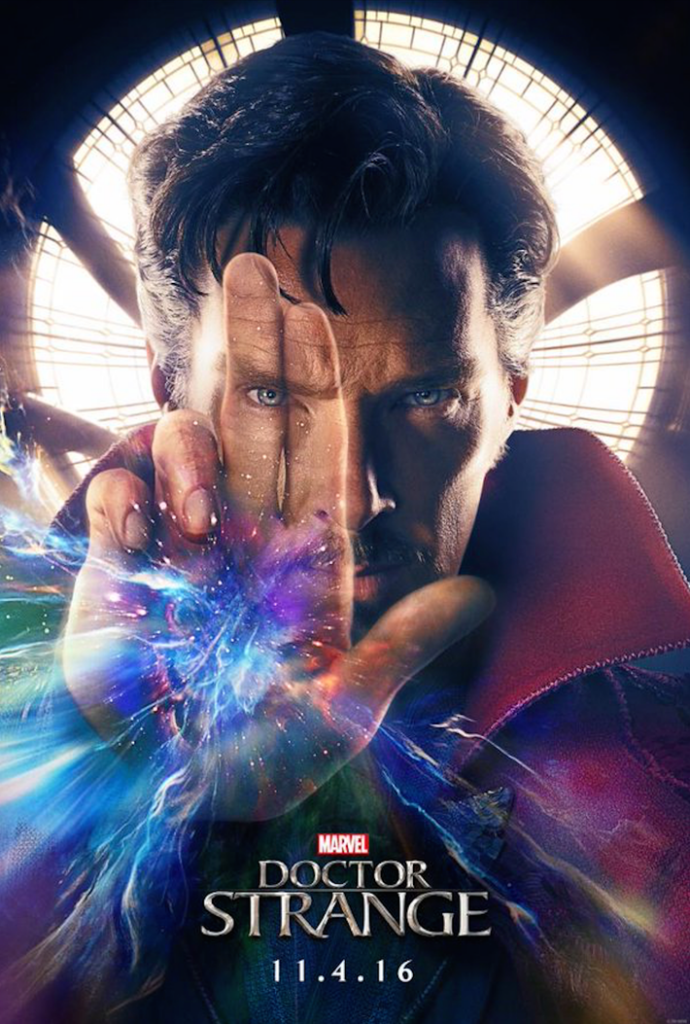
A popular example is Doctor Strange (2016), where a modern day surgeon discovers a hidden world of magic and alternate dimensions. The film combines action, philosophy, and stunning visuals to create a unique cinematic experience.
Urban fantasy is ideal for viewers who want a mix of imagination and realism, stories that feel grounded.
Psycho Drama
While some genres focus on action or spectacle, psycho drama takes a more intimate approach. It focuses on human emotion in its rawest form.
These films explore deep personal struggles such as identity, trauma, guilt, and mental health challenges. The storytelling is often slow-paced but emotionally intense, allowing viewers to connect deeply with the characters.
What sets psycho drama apart is its realism. The conflicts feel personal and relatable, even when the situations are extreme. Instead of big plot twists, the impact comes from character development and emotional depth.
A powerful example is Joker (2019), which presents a complex character study of a man struggling with isolation and societal rejection.
It begins like a familiar story. A couple, a wedding, and the quiet tension that comes with a life about to change.
What should have been a straightforward, performance-driven film led by Zendaya and Robert Pattinson has instead become one of the most talked-about and polarizing releases of the moment. Critics are split, audiences are debating, and the film’s most controversial choices are driving a conversation that goes far beyond its story.
On the surface, The Drama follows a couple in the final stretch before their wedding, navigating the emotional weight, expectations, and intimacy that come with committing to a shared future.
As the story progresses, a deeply personal revelation disrupts the relationship at its core. What initially feels like a romantic drama quickly shifts into something far more uncomfortable, forcing both characters into a psychological space defined by doubt, vulnerability, and emotional confrontation.
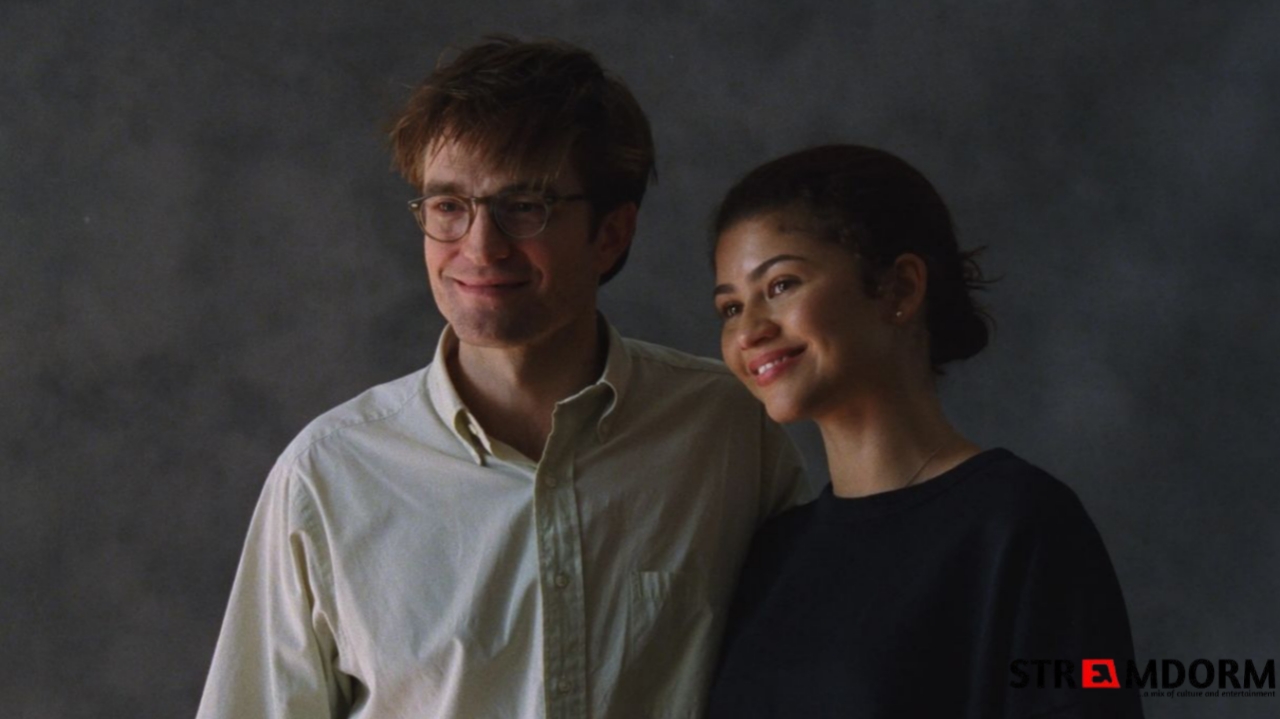
Emma, played by Zendaya, and Charlie, played by Robert Pattinson, are a couple preparing to get married. Their relationship appears stable, even slightly awkward in a charming way, as they move through the ordinary steps of building a life together.
During a casual social interaction, Emma reveals a deeply disturbing truth about something she did in her past. The confession is unexpected and immediately destabilizing not just for Charlie, but for the entire direction of the story.
From that moment, the film shifts.
What was once a romantic, slightly offbeat love story becomes something far more tense and psychologically driven. Charlie begins to question everything he thought he knew about Emma, and the foundation of their relationship starts to crack. Conversations grow more strained, reactions more unpredictable, and the emotional distance between them widens.
As the couple tries to process what’s been revealed, the film explores how a single truth can reshape intimacy. Trust becomes fragile. Love becomes complicated. And the idea of truly knowing another person starts to feel uncertain.
The story doesn’t move toward easy resolution. Instead, it lingers in the discomfort of its central conflict, focusing on how both characters respond to what has been uncovered and whether their relationship can survive it.
Zendaya delivers one of her more controlled and emotionally layered performances, balancing vulnerability with an unpredictability that keeps her character difficult to fully understand.
Robert Pattinson matches that energy with a quieter, more restrained approach, allowing tension to build beneath the surface rather than through overt expression.
Together, they create a dynamic that holds the film together, even as its narrative choices become increasingly uncomfortable.
— Streamdorm | Film & TV News (@Streamdorm_) March 30, 2026
The film’s central twist, which reframes the entire relationship, has become the most talked-about element. Some viewers have seen it as a bold narrative risk that elevates the film beyond a conventional romance. Others view it as unnecessarily provocative and that it pushes discomfort to a point that feels excessive.
Through its story, its performances, and its controversial choices, the film creates a space for debate rather than agreement.
The 12th Africa Magic Viewers’ Choice Awards (AMVCA 2026) has officially unveiled its nominees. The announcement came on March 29, 2026, ahead of the awards ceremony scheduled for May 9, 2026, in Lagos, Nigeria.
The AMVCA, which celebrates excellence across film, television, and digital content, has once again highlighted the best of African storytelling. This year’s edition includes 32 categories, recognizing not just blockbuster hits but also indigenous-language productions and streaming content, showing Nollywood’s expanding influence across Africa and beyond.
The Serpent’s Gift Lisabi: A Legend Is Born Labake Olododo Olorisha Aljana
East Africa
Inside Job Sayari Addis Fikir My Son Kimote
South Africa
Bet I Love You Sebata: The Beast Ben Made It Terra Of Queens And Kuma 2 Tlhaho Ya Mosadi
North Africa
The Omnipresent The Delivery The Hidden Voice This Is Portsaid Artal Alhanin: Our Memories
Central Africa
Mabanda Safou: A Gift From Nature Golden Spoon
Best Scripted & Unscripted TV / Series
Best Scripted M‑Net Original
Adam to Eve Mother of the Bride The Yard The Low Priest Bobo
Best Unscripted M‑Net Original
Nigerian Idol S10 Ultimate Girls Trip: Africa Chapa Chapa My Love Out N About (Harar) Undugu
Best Indigenous M‑Net Original
Inimba Kukoyi Undugu Out N’ About (Harar) Kampala Creme The Chocolate Empire Mgbuka
Best Short Film
Fleas Rise Telephone Hussaini My Body, God’s Temple
Acting Categories
Best Supporting Actor
Simileoluwa Hassan – The Yard Lateef Adedimeji – Gingerrr Gabriel Afolayan – Colours Of Fire Bucci Franklin – To Kill A Monkey Femi Adebayo – King Of Thieves 2 Lateef Adedimeji – Red Circle Femi Branch – Owambe Thieves Uzor Arukwe – Behind The Scenes
Best Supporting Actress
Linda Ejiofor – The Herd Olamide Kidbaby – Oversabi Aunty Bisola Aiyeola – Gingerrr Sola Sobowale – The Covenant Nadia Dutch – Aljana Amal Umar – The Herd Juliebrenda Nyambura – MTV Shuga Mashariki Funke Akindele – Behind The Scenes
Best Lead Actor
Mike Ezuruonye – Oversabi Aunty Lateef Adedimeji – Lisabi: A Legend Is Born William Benson – To Kill A Monkey Kanayo O. Kanayo – Grandpa Must Obey Khumbuza Meyiwa – Bet I Love You Uzor Arukwe – Colours Of Fire Wale Ojo – 3 Cold Dishes Femi Branch – Red Circle
Best Lead Actress
Linda Ejiofor – The Serpent’s Gift Bimbo Akintola – To Kill A Monkey Ifeoma Fafunwa – The Lost Days Ariyike Owolagba – Something About The Briggs Sola Sobowale – Her Excellency Scarlet Gomez – Behind The Scenes Genoveva Umeh – The Herd Gloria Anozie‑Young – Mother Of The Brides
AMVCA 2026 Nominees for Best Lead Actor: – Mike (Oversabi Aunty) -Lateef Adedimeji (Lisabi:) – William (To Kill A Monkey) – Kanayo O. (Grandpa Must Obey) – Khumbuza (Bet I Love You) – Uzor (Colours Of Fire) – Wale Ojo (3 Cold Dishes) – Femi Branch (Red Circle) pic.twitter.com/tXj7kes2oh
— Streamdorm | Film & TV News (@Streamdorm_) March 30, 2026
Craft & Technical Categories
Best Cinematography
Jermaine Edwards – My Father’s Shadow Kabelo Thathe – To Kill A Monkey Emmanuel Igbekele – The Herd Daanong Gyang – Finding Nina Emmanuel Igbekele – The Serpent’s Gift KC Obiajulu – Stitches Emmanuel Igbekele – Gingerrr
Best Editing
Kazeem Agboola – Cordelia Omar Guzman Castro – My Father’s Shadow Wanguma Peter Chidebere & Dele Doherty – Landline Asurf Amuwa Oluseyi – 3 Cold Dishes Winston Aig‑Ohioma – Osamede Daniel Anyiam – To Kill A Monkey
Best Sound Design
Pius Fatoke & CJ Mirra – My Father’s Shadow Tolu Obanro – Gingerrr Vaughan Phillips – Ben Made It Tolu Obanro – The Party Vaughan Phillips – Sebata: The Beast Fisayo Adefolaju – The Herd
Best Music Score
Duval Timothy & CJ Mirra – My Father’s Shadow Nissi Ogulu – 3 Cold Dishes Chubb Okobah – Osamede Tolu Obanro – Gingerrr Tolu Obanro – The Party Sofresh – MTV Shuga Mashariki Oscar Heman‑Ackah – To Kill A Monkey
Best Art Direction
Zainab Oladipupo – The Serpent’s Gift Omolade Abisola – The Herd Ajamolaya Bunmi – Colours Of Fire Olatunji Afolayan & Gideon Stephen – Aljana Victor Akpan – Suky Thabiso Senne – Inimba
Best Costume Design
Mary Chukwuma – The Serpent’s Gift Deola & Darey Art Alade – The Real Housewives Of Lagos Valerie Okeke – Colours Of Fire Yolanda Okereke – Something About The Briggs Ikechukwu Urum & John Joseph Angel – To Kill A Monkey
Best Makeup
Mojisola Imam – Behind The Scenes Adeola Bamgboye – Lisabi: A Legend Is Born Dablaq Artistry – Gingerrr Adeola Bamgboye – Abanisete Hakeem Effect – Warlord Ruth Harcourt – Suky Adeola Bamgboye – Labake Olododo
Writing & Production Categories
Best Writing (TV Series)
The Wives MTV Shuga Mashariki Our Husband Addis Fikir Baba Oh The Party Gizat
Best Writing (Movie)
The Herd My Father’s Shadow Blackout Cards On The Table Gingerrr Suky 3 Cold Dishes
Best Documentary
Beyond Olympic Glory The Good, The Bad of Afrobeat The People Shall Not Addressing This Anymore BOU
Series & TV
Best Scripted Series
To Kill A Monkey The Yard The Chocolate Empire Inimba Kash Money
Best Unscripted Series
The Real Housewives Of Lagos Nigerian Idol Ultimate Girls Trip: Africa Offair With Gbemi And Toolz Out N’ About (Harar)
Directing & Overall Movie
Best Director
Akinola Davies Jr – My Father’s Shadow Tunde Kelani – Cordelia James Omokwe – Osamede Daniel Etim Effiong – The Herd Yemi Filmboy Morafa – Gingerrr Asurf Amuwa Oluseyi – 3 Cold Dishes
Best Overall Movie
Gingerrr The Herd My Father’s Shadow 3 Cold Dishes The Serpent’s Gift Behind The Scenes
Production on the upcoming live-action Tomb Raider series has been temporarily halted following an injury sustained by its lead star, Sophie Turner.
The actress, who is set to play the iconic adventurer Lara Croft, is reported to have suffered a minor injury during the preparation and filming process.
Earlier reports had revealed that she had been undergoing intense physical training to embody Lara Croft, a role known for its action-heavy sequences and endurance requirements. The injury, believed to be related to strain from this preparation, prompted producers to temporarily shut down filming to allow for proper recovery.
At this stage, the shutdown is expected to be short-term, with production likely to resume once Turner is medically cleared. There has been no indication of long-term delays or changes to the project’s schedule.
The series itself marks a significant expansion of the Tomb Raider franchise, transitioning the globally recognized video game property into a live-action television format. It is being developed by Phoebe Waller-Bridge, best known for her work on Fleabag, adding further anticipation to the project.
Sophie Turner’s casting as Lara Croft had already sparked widespread conversation, placing her alongside previous portrayals by Angelina Jolie and Alicia Vikander, both of whom brought the character to life on the big screen.
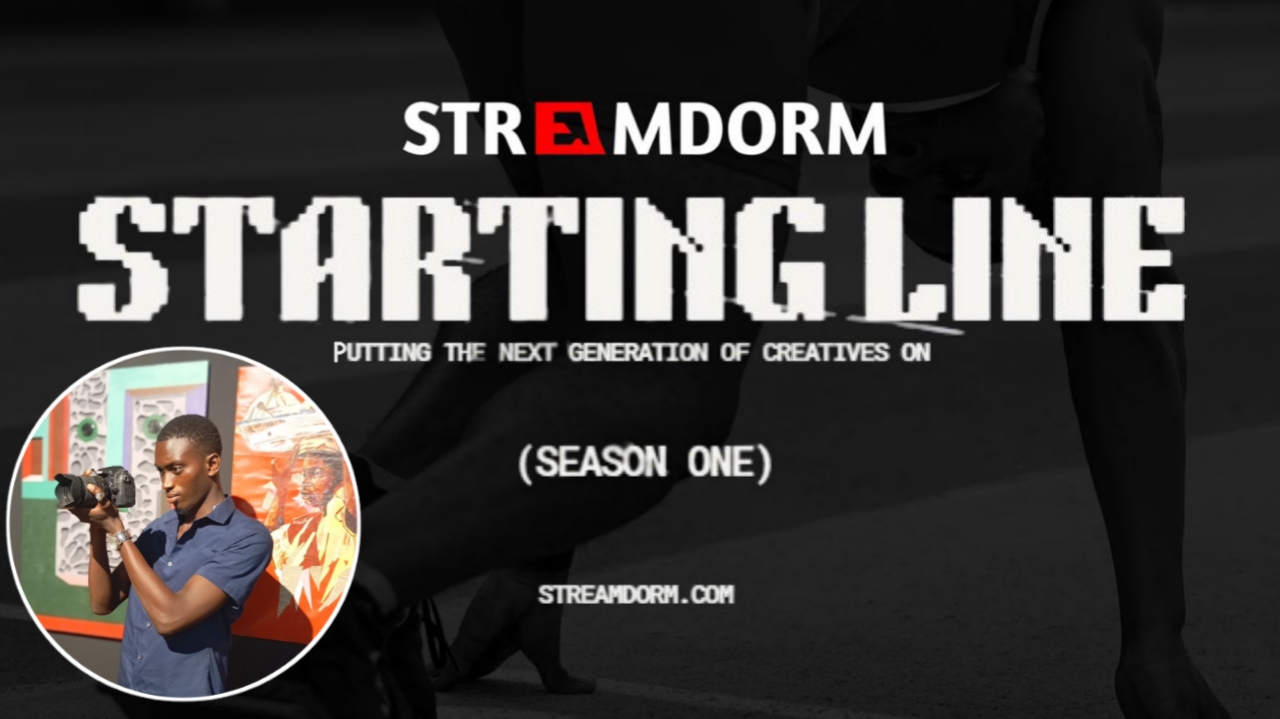
Lagos, Nigeria – 28, March, 2026 – Streamdorm is set to launch Starting Line, a new original interview series dedicated to highlighting emerging actors, musicians, and creators across the entertainment and cultural landscape.
The series is set to premiere on April 1, 2026, and is built to give rising talent a platform to share their stories, inspirations, and the projects shaping their careers. Starting Line will be released weekly, with each episode introducing a new creative voice and perspective.
At its core, Starting Line moves beyond traditional promotional coverage. Each interview is designed to explore the personal journeys behind the work, focusing on the creative process, challenges, defining moments, and ambitions that drive the next generation of artists.
Established creatives are already known and celebrated within the industry, but emerging talents often struggle for visibility. While some may eventually give up on their creative goals and never fully realize their ambitions, others go on to achieve the success they once envisioned thus becoming the celebrated names we recognize today.
With Starting Line, Streamdorm is creating a space where these rising creatives can be seen and heard. Our goal is simple: to document their journeys now, so that years from today, we can look back and see what they’ve become.
The series combines a polished production approach with a conversational interview style, resulting in content that is both professional and authentic. This format allows guests to speak openly, creating a more genuine connection between creatives and audiences.
With the launch of Starting Line, Streamdorm continues to expand its commitment to original content and cultural storytelling, positioning itself as a growing platform for discovering and documenting emerging talent.
New episodes of Starting Line will be released weekly on Streamdorm’s platforms like YouTube, Facebook, Instagram, TikTok, Audiomack and Apple Podcast, beginning April 1, 2026.
Season one is hosted by Adekugbe Adedayo (The Immortal Bolt)
About Streamdorm
Streamdorm is a digital media platform focused on entertainment, lifestyle, and culture, delivering original content, editorial features, and storytelling that highlights both established and emerging voices.
The road to the 12th edition of the Africa Magic Viewers’ Choice Awards is officially set, with organisers unveiling early details ahead of what is expected to be one of the big moments for African film and television this year.
Set against a rapidly evolving industry where cinema, streaming platforms, and digital content now intersect, AMVCA 2026 arrives at a time when African storytelling is expanding in both reach and influence.
The ceremony is scheduled to take place in Lagos, Nigeria, on May 9, 2026. As with previous editions, the main event will be preceded by a series of activities that typically shape the build-up, including the announcement of nominees and other industry-facing engagements that extend the awards beyond a single night.
A total of 32 categories will be awarded, covering film, television, and digital content. These categories are split between those decided by a jury and those influenced by audience voting.
The voting system remains hybrid. Submissions are first reviewed by a panel of judges who determine the nominees, after which selected categories are opened up for public voting. Final decisions are then made through a combination of jury input and audience participation, a format that has become central to how the awards position themselves within the industry.
One of the more notable developments ahead of this year’s ceremony is the appointment of Veteran Actress Joke Silva as Head Judge. Her role places her in charge of overseeing the judging process, particularly in categories determined by the jury.
The official nominees for AMVCA 2026 are expected to be announced on March 29, 2026.
Beyond the awards themselves, AMVCA continues to hold a unique position within African entertainment. In an era where streaming platforms and social media can rapidly elevate content and creators, the awards still function as a more structured form of recognition.
Note, this article is for informational and editorial purposes only and is not a promotional piece.