“Call Of My Life” Set for Nationwide Cinema Release as Uzoamaka Power Makes Feature Screenwriting Debut

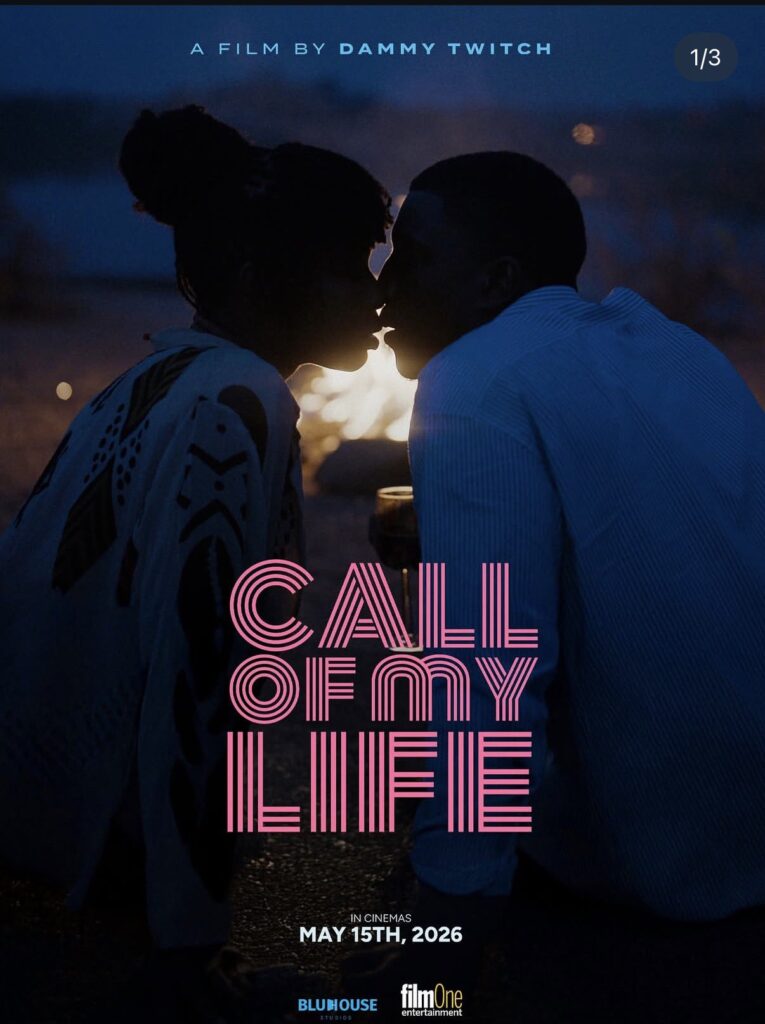
Nollywood actress and filmmaker Uzoamaka Power is stepping into the spotlight with her first feature screenplay, Call of My Life, a romantic comedy already generating strong early reactions ahead of its nationwide cinema release on May 15, 2026.

Produced by Bluhouse Studios and distributed by FilmOne Entertainment, the movie marks a major creative milestone for the Actress, who not only wrote the screenplay but also stars as the film’s lead character, Soluchi.

The film follows Soluchi, a hopeless romantic and call-center agent struggling to move on after being heartbroken by her ex-boyfriend Kalu, played by Zubby Michael. Her life takes an unexpected turn when a routine customer service call introduces her to Eli, portrayed by Andrew Yaw Bunting, sparking the possibility of a fresh start and a new kind of love story.

Blending humor, heartbreak, and emotional vulnerability, Call of My Life explores themes of love, healing, loneliness, and self-discovery. Early viewers at the Lagos premiere on May 10 have described the film as one of Nollywood’s most refreshing romantic comedies in recent years, praising its chemistry, dialogue, and feel good energy.

The movie boasts an impressive supporting cast featuring Nollywood veterans and fan favorites including Nkem Owoh, Patience Ozokwor, Broda Shaggi, Beverly Osu, and Justin UG.

Music lovers will also enjoy special live performances from Johnny Drille and Cobhams Asuquo, adding even more emotional depth to the cinematic experience.

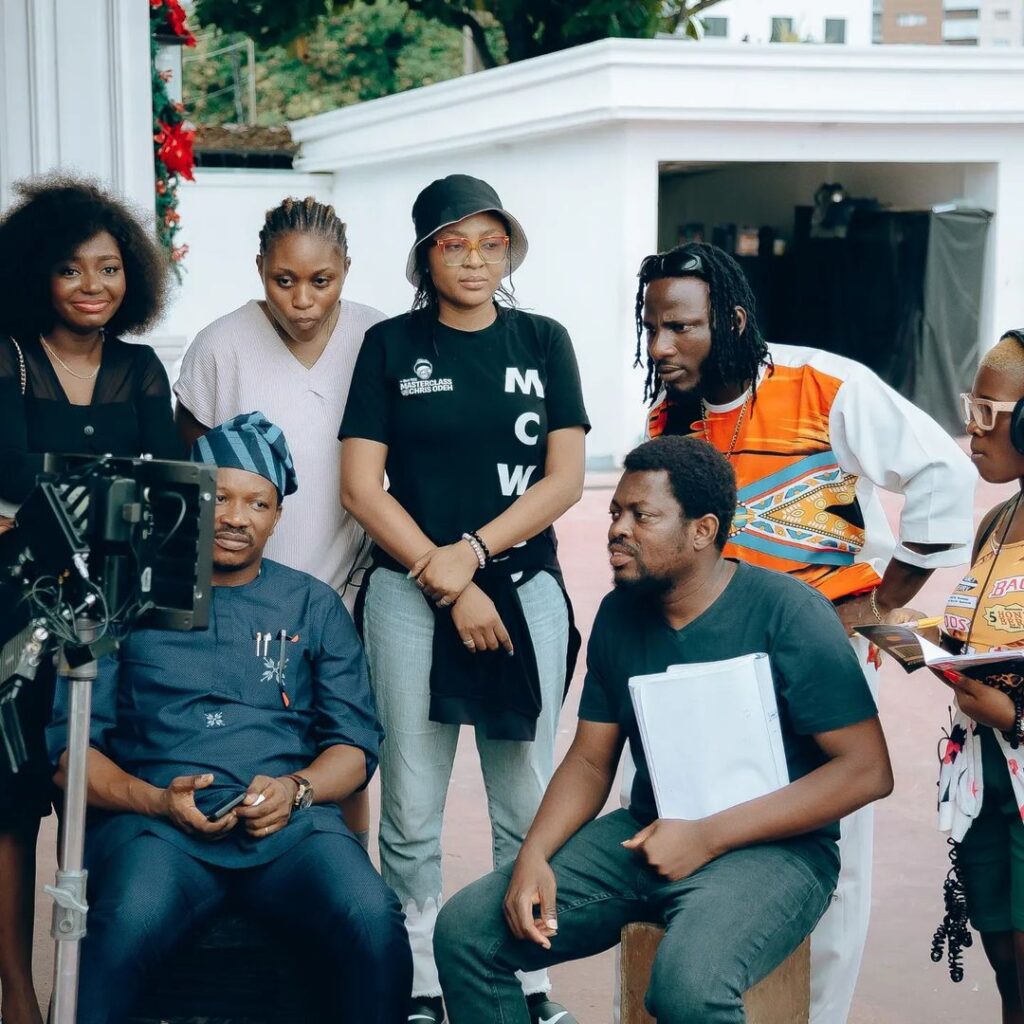
Directing the project is Apampa Oluwadamilola, popularly known as Dammy Twitch, who makes his feature film directorial debut after years of success in music video production. Filming took place across Lagos, Abuja, and Enugu, giving the movie a colorful and distinctly modern Nigerian atmosphere with touches of Ghanaian collaboration.
Speaking about the project, Uzoamaka Power revealed that the story was first conceived in 2018 while she was working at a call center. What began as a few pages written on Microsoft Word later evolved into a full feature after encouragement from producer Blessing Uzzi.

Power explained that while screenwriting felt more lonely and demanding than acting, the process became deeply fulfilling because it allowed her to tell an honest story about love in all its forms; the joy, the heartbreak, and the healing that follows.

With strong premiere reactions, a star-studded cast, and a heartfelt story, Call of My Life is shaping up to be one of Nollywood’s standout romantic comedies of 2026 which has picked my interest as an editor. 

Watch Call of My Life in cinemas starting tomorrow, May 15, 2026. 
Top 5 Nollywood Movie Releases for January 2026

For new nollywood release observers, January is rarely the loudest month but 2026 opened with some good films. Instead of chasing spectacle, Nigerian cinema leaned into range; romance, genre experimentation, cultural drama, and commercial heavyweights that refused to fade with the new year.

While streaming platforms stayed relatively quiet, cinemas carried the momentum. These are the five films that defined Nollywood’s cinema conversation in January 2026.

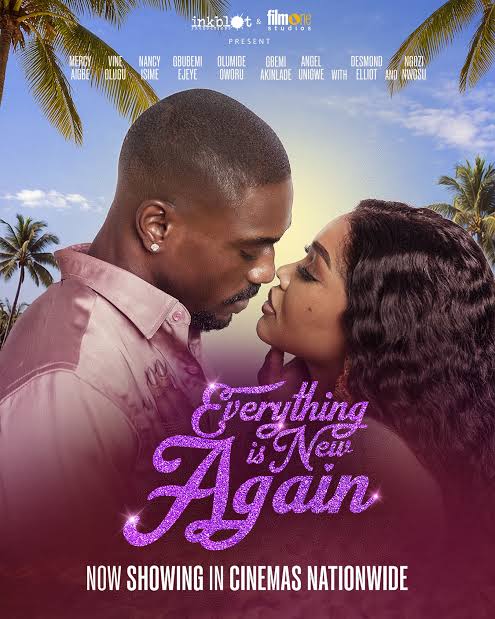
Everything Is New Again

Inkblot Productions and FilmOne Studios began the year with a romantic drama rooted in emotional familiarity rather than novelty. Everything Is New Again explores love through maturity, reflection, and timing; themes that resonate deeply with Nollywood’s core audience.

Storyline summary: The film follows two people forced to confront unfinished emotional business when their paths cross again. As past choices resurface, they must decide whether love deserves another chance and whether starting over is ever truly possible.

Released at the end of January, the film positioned itself as a steady, audience-friendly opener for the year, reinforcing Inkblot’s reputation for clean storytelling and commercial instincts.

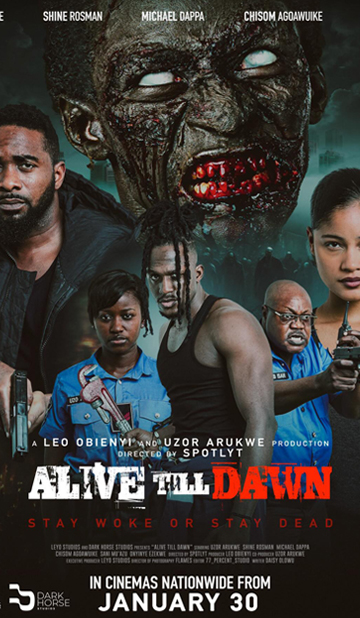
Alive Till Dawn

Few January releases generated as much curiosity as Alive Till Dawn. A zombie thriller led by Uzor Arukwe, the film marked another step in Nollywood’s gradual but deliberate embrace of genre filmmaking.

Storyline summary: Set over one terrifying night, the story follows a small group fighting to survive as a sudden outbreak throws their world into chaos. With danger closing in from every direction, survival becomes a test of instinct, trust, and endurance until daybreak.

Rather than playing it safe, the film leaned into tension and suspense, offering audiences something distinctly different from Nollywood’s traditional drama-heavy slate.

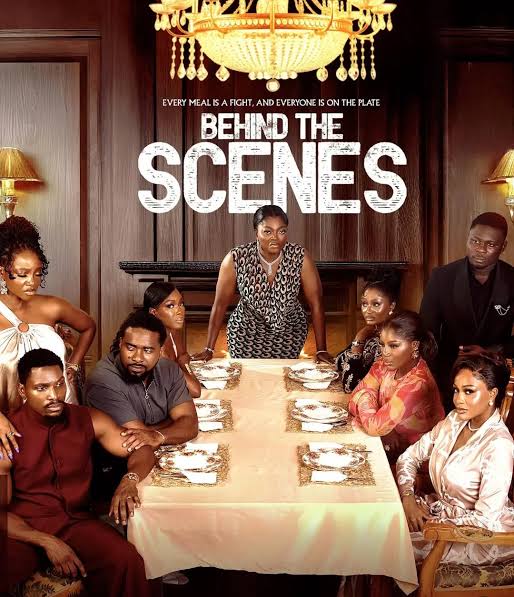
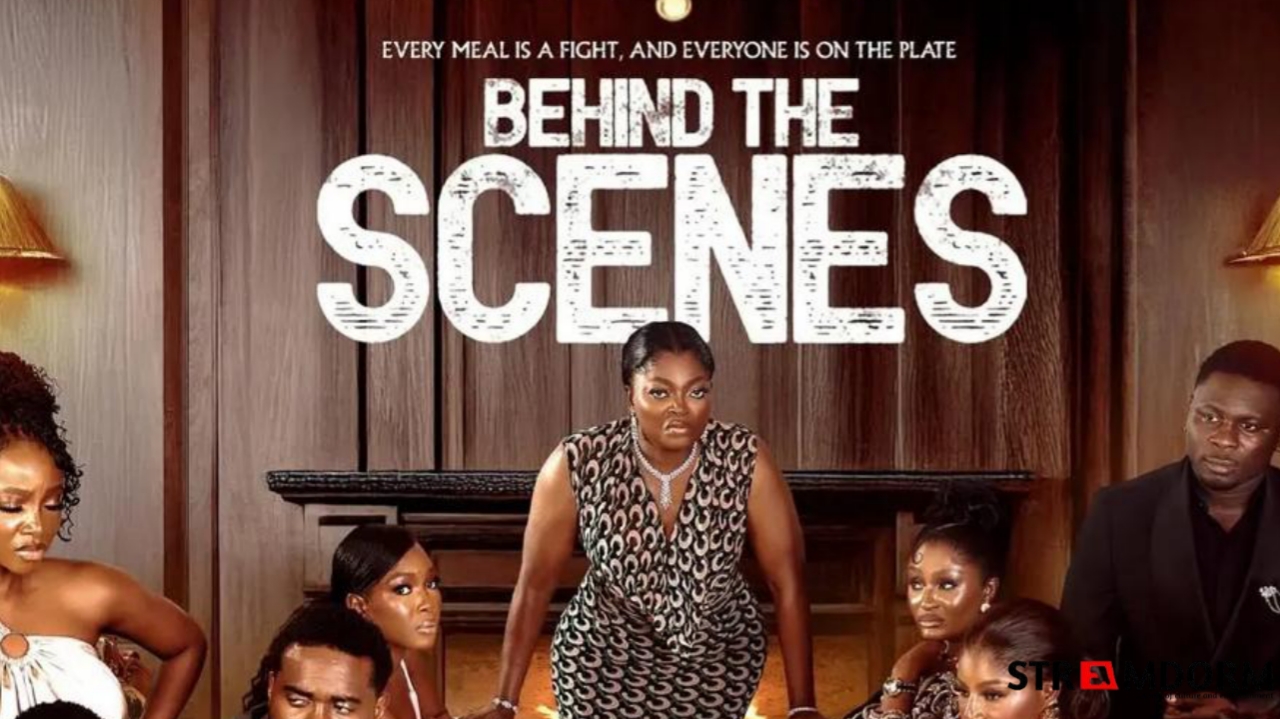
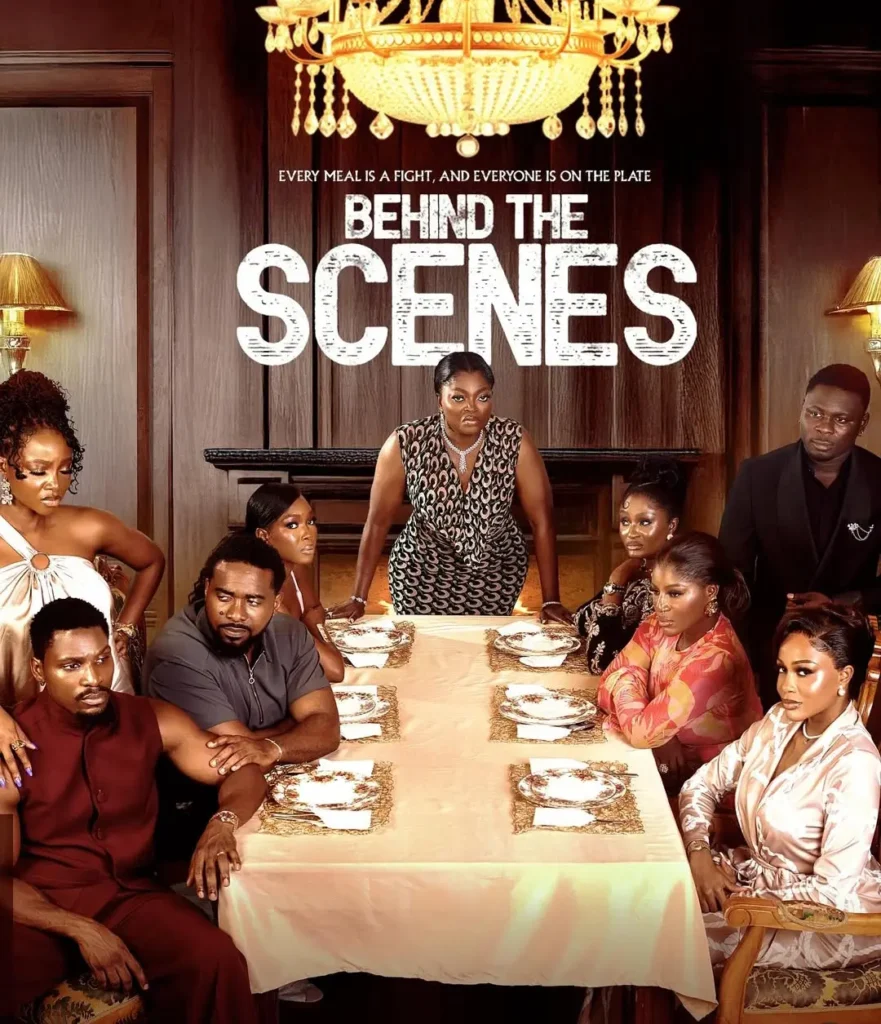
Behind The Scenes

Though released in December 2025, Behind The Scenes remained a dominant presence well into January 2026. Its extended cinema run and sustained audience interest made it one of the most visible Nollywood titles of the month.

Storyline summary: The film pulls back the curtain on ambition, power, and personal compromise within a high-pressure environment. As relationships fracture and hidden agendas emerge, the characters must confront the emotional cost of success.

Its continued relevance highlighted a larger trend: Nollywood hits no longer expire with the calendar year, but now carry cultural momentum across months.

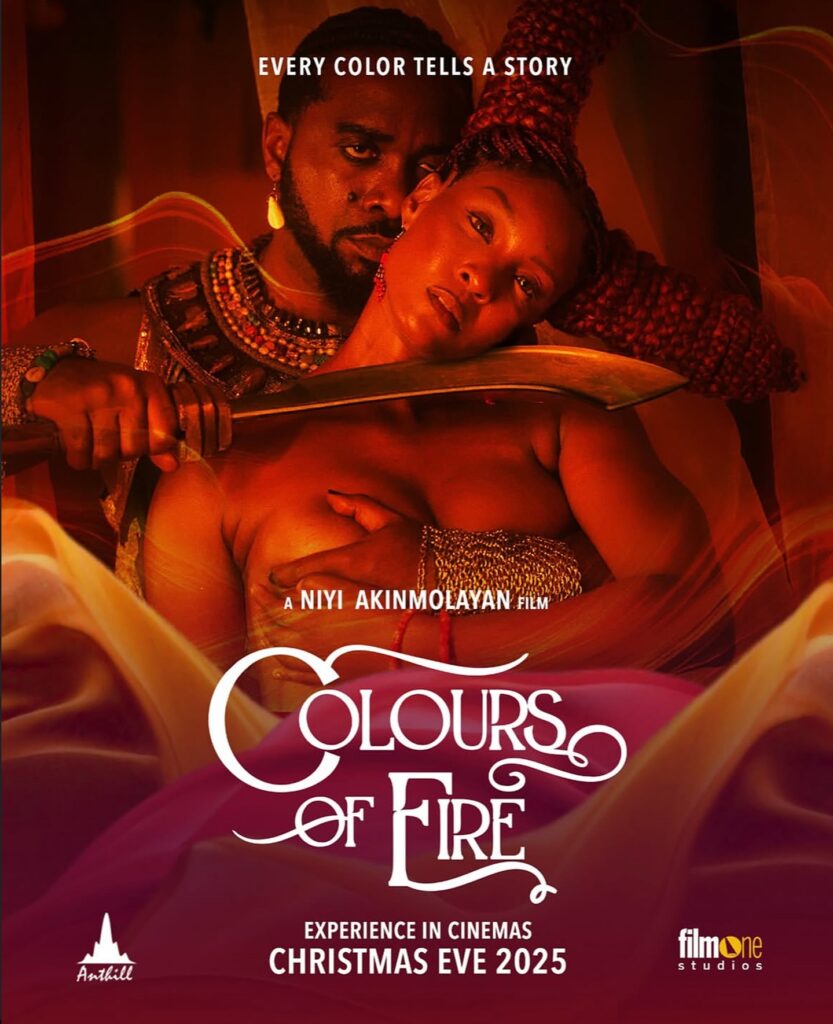
Colours Of Fire

Colours Of Fire leaned fully into Nollywood’s strength in epic, emotionally charged storytelling. Built around themes of forbidden love, tradition, and conflict, the film delivered scale without sacrificing intimacy.

Storyline summary: Against a backdrop of tradition and rivalry, two people fall in love where they are not supposed to. Their relationship ignites tension between families and communities, forcing difficult choices between duty, identity, and desire.

Released in late January, the film found its audience among viewers drawn to dramatic tension and culturally grounded narratives.

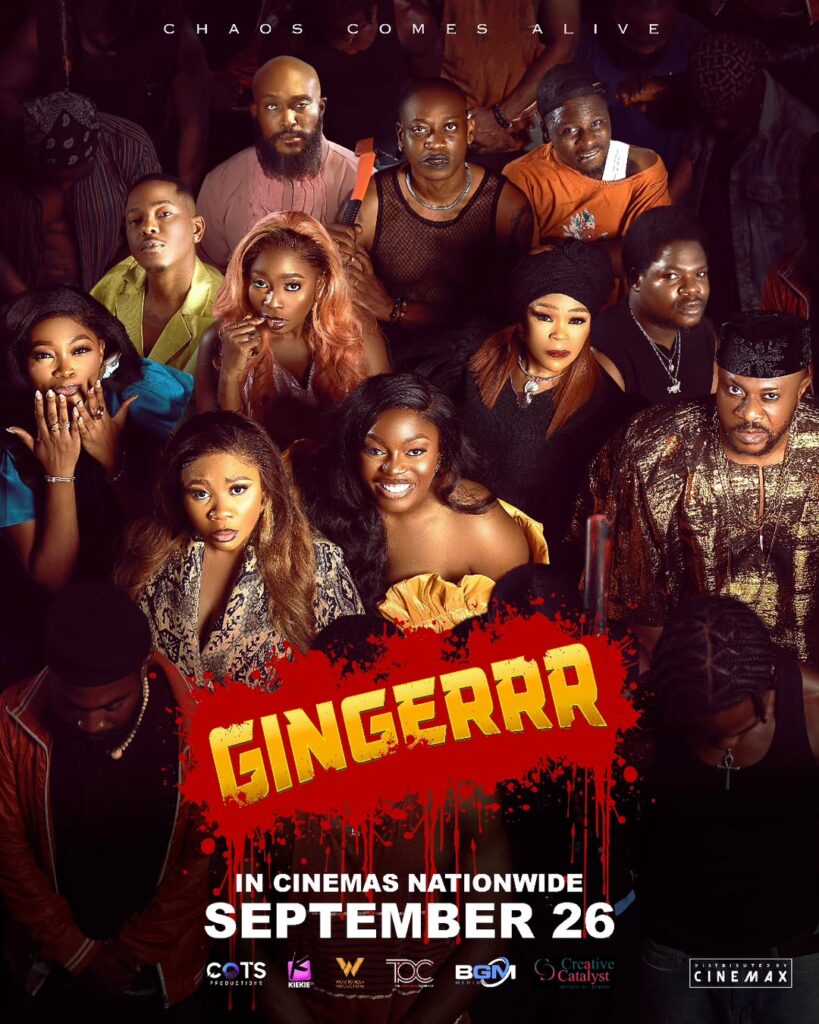
Gingerrr

Rounding out the list is Gingerrr, a stylish action-comedy heist film powered by an all-female ensemble cast. Fast-paced and playful, the film added levity to January’s cinema lineup.

Storyline summary: The story follows a bold, unconventional crew planning a risky operation. As the plan unfolds, personalities clash, loyalties are tested, and nothing goes exactly as expected, blending action with sharp humor.

Its inclusion reflects Nollywood’s growing interest in balance; films that entertain without heavy emotional weight, and stories that broaden the scope of mainstream Nigerian cinema.

Cinema vs Netflix: What the Funke Akindele–Kunle Afolayan Conversation Says About Nollywood’s Future

The Nigerian film industry is at a crossroads and the recent online conversation involving Funke Akindele and Kunle Afolayan has unintentionally brought that reality into sharp focus.

While social media see the moment as a personal “saga,” between the film makers, the substance of the discussion has little to do with rivalry. Instead, it exposes a fundamental divide in Nollywood’s production and release ecosystem: the growing tension between cinema-led filmmaking and streaming-first distribution, particularly via platforms like Netflix.

Funke Akindele and Kunle Afolayan represent two of Nollywood’s most successful yet structurally different approaches to filmmaking.

Funke Akindele’s recent run has been defined by cinema dominance. Her projects are built to thrive in theatres, relying on strong opening weekends, repeat viewership, and sustained audience attention over several weeks. This cinema-first model places heavy emphasis on visibility, demanding relentless promotion to keep films culturally relevant and commercially viable during their theatrical lifespan.

Kunle Afolayan’s recent body of work, by contrast, has leaned more toward platform-backed production, particularly through Netflix. In this system, films are often greenlit with clearer financial parameters, predefined distribution agreements, and a primary focus on content value rather than box-office optics. Promotion exists, but it is rarely as intense or personal as what cinema releases now demand.

At the centre of the debate is the burden of promotion.

Kunle Afolayan’s comments about the exhaustion that comes with modern film marketing echo a growing sentiment among filmmakers. 

It is draining. I want to make a film if you guarantee me that I don’t have to dance to sell that film

There’s no competition. I don’t want two billion in cinema, or even one billion, if I won’t make ten million from it.

Cinema releases in Nigeria increasingly require creators to act not just as directors or producers, but as full-scale digital entertainers  constantly producing skits, trends, behind-the-scenes content, and viral moments to sustain public interest.

Funke Akindele’s indirect response reframes the issue entirely. Her message is simple: every filmmaker must choose what works for them. Cinema success, in her case, is inseparable from aggressive marketing, audience engagement, and cultural presence. It is not a burden, it is the business.

If you can’t beat them or join them, create your own path. No allow jealousy burn you. The sky is so big for everybody to fly. Eyin Werey jojo!!!”

I’m not the one hindering your progress. Ka rin ka po, yiyeye ni n ye ni.” 

Go ahead and create alternative promotion or marketing strategies for promoting your business, or hire a company to handle it. You can do it! The opportunities are endless, and everyone has their own path. I’m focused on mine, and I have faith in God’s plan for me.” 

One reason this conversation resonates is because cinema and streaming measure success differently.

Cinema success is public and immediate: Ticket sales, Opening-weekend figures, Records broken and Audience turnout.

Streaming success is quieter and less transparent: Licensing value, Global reach, Completion rates and Long-term catalogue relevance.

Netflix productions do not need daily online performances from filmmakers to survive. Cinema films often do.

The Funke Akindele–Kunle Afolayan discourse highlights a larger shift happening across Nollywood. As streaming platforms reassess budgets and cinema costs continue to rise, filmmakers are being forced to make strategic choices earlier in the production process.

Neither path is wrong. But they are no longer the same road.

Nollywood is no longer unified by a single definition of success. The industry has matured into a space where cinema blockbusters and streaming originals coexist  sometimes uneasily under the same umbrella.

The current conversation is not about who is right or wrong. It is about what kind of industry Nollywood wants to be in the next decade.

The Funke Akindele–Kunle Afolayan moment matters because it captures Nollywood in transition. And how filmmakers respond to this divide may shape the future of Nigerian cinema more than any box-office record ever could.

Funke Akindele Breaks Box Office Record as Behind The Scenes Crosses ₦200 Million in Opening Weekend

Funke Akindele has once again reshaped the Nollywood box office landscape. Her latest film, Behind The Scenes, has reportedly crossed ₦200 million in cinema revenue within its opening weekend, setting a new benchmark for Nollywood releases in 2025.

According to FilmOne Entertainment, the distributor of Behind The Scenes, the movie crossed over ₦200 million at the Nigerian box office in its opening weekend, making it the biggest opening weekend of 2025 and breaking multiple box office records in just one weekend.  Behind The Scenes achieved the milestone in just three days of nationwide cinema screenings, placing it among the strongest opening performances in Nollywood history.

A Record-Setting Opening

Industry reports indicate that the film not only surpassed the ₦200 million mark but also recorded one of the highest opening weekend admissions of the year so far. While full audited box office rankings are still being compiled, early data suggests the movie has broken multiple opening weekend performance records within the Nigerian cinema space.

This performance further reinforces Funke Akindele’s position as one of Nollywood’s most commercially reliable filmmakers, the box office queen.

Funke Akindele’s Expanding Box Office Legacy

This latest achievement adds to a growing list of commercial milestones for Akindele, whose previous releases have dominated cinema charts and redefined what is financially possible for Nollywood films. Over the past few years, she has repeatedly delivered record-breaking openings, making her projects major events in Nigeria’s theatrical calendar.

With Behind The Scenes still in its early cinema run, industry observers expect the film’s total gross to continue climbing in the coming weeks.

The reported ₦200 million opening weekend underscores a broader shift in Nollywood’s commercial power. It signals increasing audience turnout, stronger distribution structures, and the ability of Nigerian films to generate blockbuster-level revenue within a short timeframe.

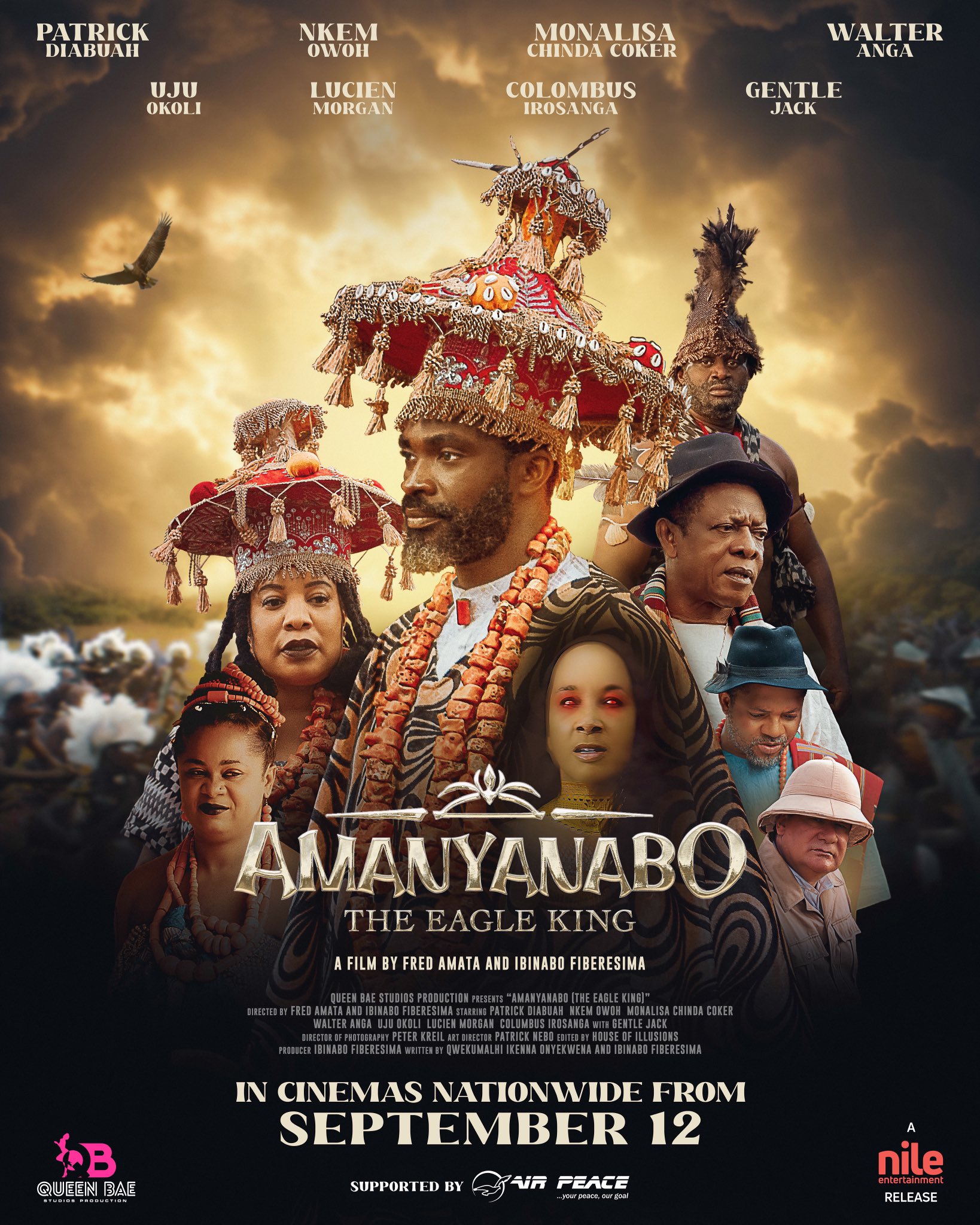
Amanyanabo: The Eagle King Set for Nationwide Cinema Release on September 12

Nollywood’s latest historical epic, Amanyanabo: The Eagle King, is officially set to hit cinemas across Nigeria on September 12, 2025, marking one of the year’s most anticipated theatrical releases.

The film, directed by Fred Amata and Ibinabo Fiberesima, brings to life the story of King Ibanichuka (Ado VI), a 19th-century warrior of Okrika in the Niger Delta who was chosen by the goddess Tamunoba to become king. Drawing from Dr. Alfred S. Abam’s book ‘King Ibanichuka (Ado VI) 1816-1896’, the movie blends history, mythology, and drama, exploring themes of leadership, cultural identity, colonial resistance, and personal sacrifice.

A Star Packed Cast

The epic features a rich ensemble of Nollywood veterans and rising stars. Patrick Diabuah leads as King Ibanichuka, supported by Nkem Owoh as Chief Ogan, Monalisa Chinda Coker as Queen Mboro, Walter Anga as Chief Okpokiri, and Gentle Jack as Igbanibo Will-Braide. International actor Lucien Morgan also appears as Consul Ralph Moor, representing colonial interests in the story.

Themes of Power and Conflict

Amanyanabo: The Eagle King dives deep into the political, spiritual, and cultural struggles of its era. It portrays the clash between indigenous traditions and Christianity, the influence of colonial powers, and the burden of leadership placed on Ibanichuka as he navigates loyalty, betrayal, and divine expectation.

Release and Distribution

Following its Lagos premiere, the film will now roll out to cinemas nationwide, with distribution handled by The Nile. Producers say the release is a milestone in Nollywood’s commitment to telling African historical stories on a grand cinematic scale, pairing elaborate costumes and set designs with powerful performances.

Early reviews from critics following its August 29 premiere in UK, have praised the film’s ambition and visual richness, though some noted its theatrical pacing. Nonetheless, many see the September 12 release as a defining moment for Nollywood, especially in elevating stories rooted in Nigerian history and culture.

‘One Night Guests,’ a Nigerian-Ghanaian Christmas comedy-drama, has wrapped up filming

Peter Sedufia’s upcoming Pan African comedy thriller, One Night Guest, has officially wrapped up filming and principal photography.

The movie is a collaboration between Ghanaian production studio, OldFilm Production, Sozo Films (Nigeria), and South Africa’s Gravel Road Studios.

The movie which began its production in 2022 will be released on Christmas Day.

It stars a diverse cast including; Yvonne Okoro, Majid Michel, Warri Pikin, Roselyn Ngissah, Ini Edo, Chidi Mokeme, James Gardiner, Lasisi Elenu, and Akah Nani.

The film was written and directed by Peter Sedufia and produced by Chris Odeh.

Silverbird has obtained national theatrical rights and Canal Plus for international rights.

Source: Shock

Scroll to Top