Kendrick Lamar Becomes the Most Awarded Rapper in Grammy History

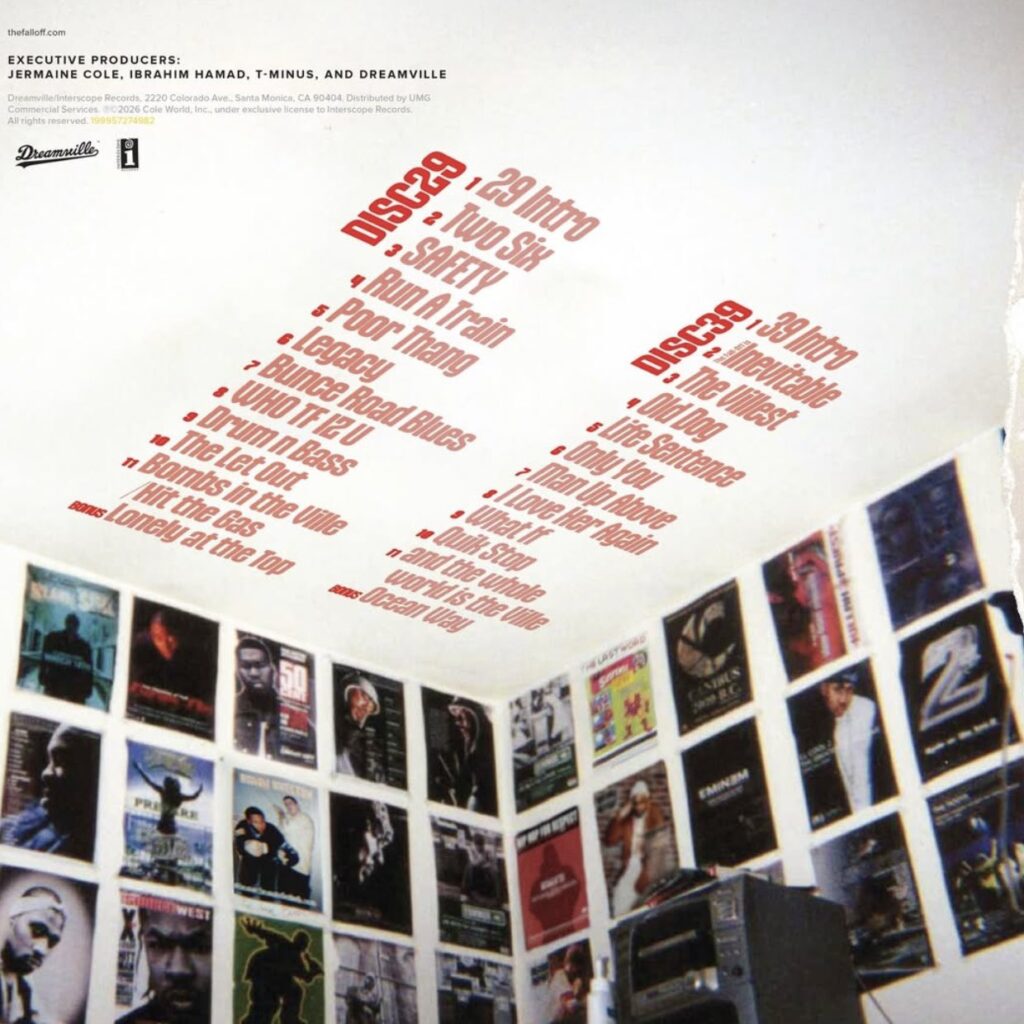
Hip-hop history was rewritten at the 68th Grammy Awards as Kendrick Lamar officially became the most awarded rapper in Grammy history, surpassing the long-standing record previously held by Jay-Z.

With multiple wins on the night, Kendrick Lamar pushed his career Grammy total to 27, moving him ahead of Jay-Z’s 25 and placing him alone at the top of rap’s all-time Grammy leaderboard. It is a landmark moment not just for Lamar, but for the genre itself.

The achievement capped off a dominant Grammy night for the Compton rapper, whose latest body of work GNX and its standout records continued his tradition of critical acclaim and industry recognition. 

His wins on the night included:

  • Best Rap Album for GNX
  • Record of the Year for “Luther” (with SZA)
  • Best Rap Song for TV Off
  • Best Melodic Rap Performance for “Luther”
  • Best Rap Performance for his feature on Chains & Whips by Clipse

Jay-Z’s record had stood for years as a symbol of longevity, influence, and commercial power in hip-hop. Kendrick Lamar surpassing it represents something slightly different: a career built on concept-driven albums, social commentary, and a willingness to challenge both the audience and the industry. From good kid, m.A.A.d city through To Pimp a Butterfly, DAMN., and now GNX, Lamar has consistently treated rap as literature, protest, and personal reflection. 

His rise to the top of the Grammy record books also signals how the Academy’s relationship with hip-hop has evolved. Once marginalized to a single televised category, rap is now regularly recognized across major fields, including general categories traditionally dominated by pop and rock. His repeated success in these spaces underscores that shift.

At 38, Kendrick Lamar is still very much in his creative prime. That reality makes the record even more significant. Unlike many historical milestones that mark the end of an era, this one feels ongoing. There is every indication that his total could grow further, especially as his work continues to balance cultural relevance with critical respect.

Importantly, Lamar’s achievement does not diminish Jay-Z’s legacy. Instead, it highlights a generational continuum in hip-hop from Jay-Z’s era of mogul rap and mainstream dominance to Kendrick Lamar’s era of introspection, narrative depth, and cultural critique. Both represent different peaks of the same mountain.

For fans, critics, and the industry alike, this moment stands as a reminder of what sustained artistic vision can achieve. In a genre defined by reinvention and competition, Kendrick Lamar has carved out a lane that rewards patience, substance, and intention.

Donald Trump Slams 2026 GRAMMYs and Threatens to Sue Trevor Noah Over Epstein Island Joke

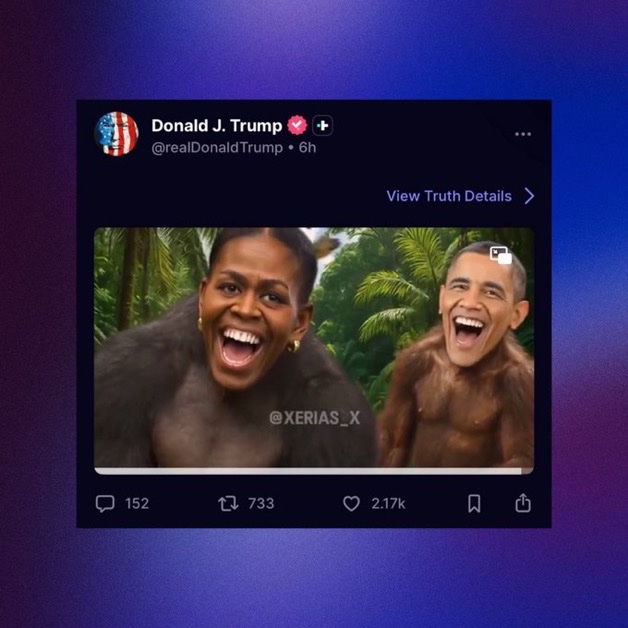
U.S. President Donald Trump has sharply criticized the 68th Annual GRAMMY Awards, branding the broadcast “virtually unwatchable” and threatening legal action against comedian and host Trevor Noah over a joke the President called false and defamatory. The unusual clash between a cultural event and national politics has quickly become one of the most talked‑about stories in entertainment and political news today. 

During the live telecast on February 2, 2026, Trevor Noah; hosting the GRAMMYs for the sixth and final time delivered a mix of music commentary and political humor. After Billie Eilish and Finneas won the Song of the Year award, Noah said:

There you have it, song of the year! Congratulations, Billie Eilish. Wow. That’s a Grammy that every artist wants… almost as much as Trump wants Greenland, which makes sense because Epstein’s island is gone, he needs a new one to hang out with Bill Clinton.” 

As the audience reacted with gasps and laughter, Noah added:

I told you, it’s my last year! What are you going to do about it?” 

Shortly after the broadcast ended, Trump took to his social platform Truth Social with a forceful reaction. He began by dismissing the awards show itself as:

the WORST, virtually unwatchable! CBS is lucky not to have this garbage litter their airwaves any longer.” 

Turning his attention to Noah’s joke, Trump wrote that the comedian “INCORRECTLY” claimed Trump and Clinton had spent time on Epstein’s island:

I can’t speak for Bill, but I have never been to Epstein Island, nor anywhere close, and until tonight’s false and defamatory statement, have never been accused of being there, not even by the Fake News Media.” 

“It looks like I’ll be sending my lawyers to sue this poor, pathetic, talentless, dope of an M.C., and suing him for plenty$. Get ready Noah, I’m going to have some fun with you!” 

Award shows like the GRAMMYs have long mixed humor with social commentary, but Noah’s line touched on a subject; Jeffrey Epstein and his connections to powerful figures that has been under renewed public scrutiny since large sets of Epstein files were released. 

Trump’s response continues a pattern of reacting strongly to commentary he deems inaccurate or unfair. In his post, he even referenced past legal settlements with major networks, suggesting precedent for how such disputes have played out previously. 

The 2026 GRAMMY Awards were already notable for politically charged moments, including artists wearing pins and referencing social and immigration policies during acceptance speeches. Amid that backdrop, Noah’s joke stood out as a comedic moment that crossed into political territory, prompting an unprecedented presidential reaction tied directly to an awards show broadcast. 

A line meant as playful satire at one of music’s biggest nights spiraled into a political story dominating headlines across news and social media. At the intersection of comedy, culture, and politics, the Grammy moment underscores how quickly entertainment can become part of national discourse especially when public figures respond in forceful fashion.

Ryan Coogler Named Creative of the Year by The Creative Collective

In a move that recognizes one of the most influential voices in contemporary cinema, Ryan Coogler has been named Creative of the Year by The Creative Collective, according to an exclusive report by Variety. This honor is a testament to Ryan Coogler’s remarkable career, which blends commercial success with cultural resonance, and underscores his role as a creative leader shaping the future of storytelling.

Ryan Coogler, a filmmaker who has consistently combined emotional depth with social relevance, first captured global attention with Fruitvale Station (2013), a harrowing, true-story drama about the last day of Oscar Grant’s life. The film premiered at Sundance and immediately established him as a storyteller unafraid to confront systemic injustice while maintaining a deeply human perspective.

He followed this with Creed (2015), a fresh take on the iconic Rocky saga, blending nostalgia with innovation. Creed not only revitalized a beloved franchise but also showcased Coogler’s skill in crafting character-driven narratives that resonate across generations.

Then came Black Panther (2018), a cultural phenomenon that became more than just a superhero blockbuster. Ryan Coogler transformed the Marvel film into a celebration of African heritage and identity, weaving themes of power, responsibility, and community into a narrative that captured hearts worldwide. The film’s success both critically and commercially established his reputation as a director capable of merging blockbuster appeal with profound social commentary.

Most recently, his directed Sinners (2025), which has been praised for its bold storytelling, rich character work, and willingness to explore complex social themes. The film’s creative team, including co-writer and producer Zinzi Coogler and producer Sev Ohanian, has been recognized alongside him for pushing boundaries in filmmaking.

The title of Creative of the Year from The Creative Collective is not just an award, it is a statement about Coogler’s influence. The Creative Collective celebrates individuals who push creative boundaries, redefine their industries, and inspire new ways of thinking. Ryan Coogler’s recognition is particularly significant in a landscape where representation, culture, and storytelling intersect with global influence.

For young filmmakers and creatives around the world, he now represents a model of how vision, cultural consciousness, and collaboration can elevate both art and society. His work is a reminder that commercial success need not come at the expense of authenticity or meaningful storytelling.

Beyond the box office, Ryan Coogler has shaped conversations about representation, identity, and social justice in media. Black Panther sparked global dialogue about African culture and the portrayal of Black excellence in mainstream cinema. His projects often highlight marginalized voices and explore nuanced narratives that challenge stereotypes, giving audiences stories that feel both relatable and revolutionary.

His approach extends to mentoring and collaboration, evident in his work on Sinners, which brought together emerging talent and experienced creatives to produce a film that is as socially engaging as it is artistically ambitious. These efforts reinforce the idea that creativity thrives not in isolation but through community and collaboration.

The Creative Collective is known for celebrating individuals who redefine their industries. Unlike conventional awards, it focuses on impact and innovation, spotlighting creators who influence culture, inspire peers, and push creative boundaries. Coogler’s selection highlights his status not just as a filmmaker, but as a cultural architect, someone shaping the narratives that define our era.

Recognition from such a body also signals the growing importance of filmmakers who balance artistry with social consciousness. In an era dominated by franchises, streaming platforms, and global audiences, creatives like Coogler show that meaningful storytelling still has the power to captivate and influence on a massive scale.

TikTok Says Outage Is Resolved After Week of Glitches and Censorship Claims 

Last week, millions of TikTok users in the United States and beyond faced a platform in chaos. Videos refused to upload, feeds stalled, and likes or view counts mysteriously dropped to zero. For many creators, it felt like a technical nightmare but for others, it sparked a deeper suspicion: had TikTok started censoring content?

On February 1, TikTok announced that the weeklong outage had been resolved. The company attributed the problem to a power outage at a U.S. data center, which triggered cascading failures across its servers. In a statement on X, TikTok emphasized that all services were fully restored and that no user content had been removed.

Yet the timing could not have been more sensitive. TikTok recently underwent a major U.S. ownership transition, handing 80% control of its American operations to Oracle, Silver Lake, and MGX, while ByteDance retained a 19.9% minority stake. Some users immediately connected the dots, suspecting the outage and glitches were a cover for content suppression, particularly around political topics like immigration enforcement.

While TikTok insists the disruptions were purely technical, the perception of censorship spread rapidly online. High-profile creators even deleted their accounts in protest, questioning whether algorithm changes under new ownership were quietly reshaping the platform’s content visibility.

The outage, while temporary, had tangible effects. Creators worried about lost engagement and interrupted monetization, advertisers questioned reach and analytics, and some users explored alternative apps in search of “uncensored” spaces. Despite the panic, broader usage metrics suggest TikTok remained resilient; daily engagement returned to normal once services were restored.

What this episode reveals is a delicate balancing act for global tech platforms. TikTok is not only navigating technical reliability but also public trust and political scrutiny. In today’s climate, even a simple data center failure can spark conversations about censorship and transparency, especially on platforms that influence culture and politics on a massive scale.

For now, TikTok is back online. But the questions raised during the outage about ownership, trust, and the nature of algorithms are most likely to stay. As millions of users scroll, like, and post, the platform’s challenge is clear: restoring faith in both the service and the system behind it.

Netflix, Apple, Sony, and Warner Bros. Sit Out Super Bowl Film Marketing — Here’s What That Means

As Super Bowl LX approaches on February 8, 2026, Hollywood’s usual Big Game marketing frenzy looks different this year. Some of the biggest names in film; Netflix, Apple Original Films, Sony, and Warner Bros. etc  are reportedly opting out of traditional Super Bowl advertising for their upcoming releases.

The move is striking because for decades, the Super Bowl has been the ultimate stage to debut movie trailers, with over 100 million viewers tuning in worldwide. Traditionally, a well-timed Big Game spot can spark massive social media buzz, drive trailer views, and generate early ticket sales. But this year, these studios are taking a different path.

Reports confirm that Netflix is skipping Super Bowl ad slots for its upcoming films, while Apple Original Films is also sitting out, favoring other promotional channels. Sony Pictures will not be buying movie ad space during the Big Game, and Warner Bros. is absent as well, despite its history of high-profile Super Bowl campaigns. Instead of spending millions on 30-second TV spots, these studios are focusing on digital-first marketing, using online trailers, social media campaigns, and targeted fan events to reach audiences without the massive price tag.

Not all studios are sitting on the sidelines. Disney, Universal, and Paramount are expected to lead the Super Bowl film marketing charge this year, with trailers for major blockbusters. Fans can anticipate promos for Toy Story 5, The Mandalorian & Grogu, and Super Mario Galaxy, among others. This split shows a strategic divide in Hollywood, with some studios viewing the Super Bowl as an essential launchpad while others are betting on digital-first campaigns and extended hype-building.

Several factors explain the shift. Skyrocketing costs make a 30-second Super Bowl ad increasingly expensive, with average prices hitting $8 million, not including production or talent fees. Digital platforms like YouTube and social media allow studios to reach their audiences more precisely. Meanwhile, many franchises are adopting strategies that favor sustained hype through social campaigns, trailers, and exclusive previews rather than relying on a single broadcast moment.

Even without Netflix, Apple, Sony, and Warner Bros. participating, the Super Bowl will still feature high-profile trailers and teasers. For studios that do advertise, the game remains a chance to set the tone for their biggest releases of the year. The takeaway is clear: Hollywood is experimenting with where, when, and how to reach audiences. The Super Bowl remains important, but it is no longer the automatic marketing must-have for every studio.

The Devil Wears Prada 2 Trailer Debuts at the GRAMMYs: What the Sequel Means for Fashion, Power, and Pop Culture

Nearly two decades after The Devil Wears Prada became a defining film about ambition, fashion, and power, the world finally got its first look at the highly anticipated sequel. The official trailer for The Devil Wears Prada 2 premiered during the 2026 GRAMMY Awards, turning the music industry’s biggest night into a global stage for cinema and signaling that this sequel is positioned as a cultural event rather than a simple continuation of the story.

The decision to debut the trailer during the GRAMMYs was more than a marketing move. The original film thrived at the intersection of fashion, celebrity, and cultural influence, and the sequel’s trailer release in this context highlights how the filmmakers are framing it as a conversation about relevance, legacy, and power in a modern, rapidly changing world. The trailer immediately made clear that the sequel is not just revisiting nostalgia; it is reflecting on what these characters and the world they inhabit have become.

The trailer confirms that the core cast is fully intact. Meryl Streep returns as the formidable Miranda Priestly, Anne Hathaway reprises her role as Andy Sachs, Emily Blunt is back as Emily Charlton, and Stanley Tucci returns as Nigel. Their presence cements the film as a direct continuation of the story rather than a reboot or spin-off. However, the dynamics have shifted. Whereas the original focused on a young assistant navigating the demands of a powerful editor, the sequel appears to explore a reversal of power and perspective. Runway magazine, once untouchable in its dominance, now faces a landscape shaped by declining traditional media, digital transformation, and a new set of challenges. Emily Charlton has evolved from a sharp-tongued assistant into a formidable executive with influence of her own, and Andy Sachs returns not as an outsider but as a seasoned professional who understands the inner workings of the industry she once aspired to join.

In addition to the returning cast, the sequel introduces new faces, including Kenneth Branagh, Lucy Liu, Justin Theroux, and Pauline Chalamet, suggesting a broader exploration of fashion, media, and corporate power beyond the walls of Runway. These characters, though still largely mysterious, hint at fresh tensions and alliances that could redefine the stakes of the story.

What makes this sequel particularly relevant is the timing. The world of fashion media has changed dramatically since 2006. Influence has shifted from editors and magazines to social media algorithms and global digital audiences. Authority is constantly being challenged by relevance. By revisiting these characters now, the film has the opportunity to explore not only personal growth but also how power, ambition, and culture intersect in an industry transformed by technology and shifting societal values.

The Devil Wears Prada 2 is scheduled for a theatrical release on May 1, 2026. Directed by David Frankel and written by Aline Brosh McKenna, the film promises to combine the sharp dialogue and character-driven storytelling that made the original a cultural touchstone with a contemporary lens on ambition and influence.

The trailer’s debut at the GRAMMYs makes one thing clear: this is not a film content to merely look back. By framing its characters as seasoned professionals navigating a new world rather than young assistants climbing a ladder, the sequel positions itself as a reflection on power, adaptation, and the pursuit of relevance in 2026. Miranda Priestly is back, Andy Sachs is back, Emily Charlton is back, and they all carry with them the weight of experience, ambition, and cultural authority. Whether the film fulfills its promise remains to be seen, but for now, the message is unmistakable: the world of The Devil Wears Prada has returned, sharper, smarter, and as stylish as ever.

GRAMMYs 2026: Major Winners and the Global & African Categories That Defined the Night

The 68th Annual GRAMMY Awards (2026) delivered a night that balanced mainstream dominance with a growing global outlook. While pop, rap, and songwriting heavyweights controlled the Academy’s biggest prizes, the Global Music and African categories once again reinforced the Grammys’ slow but steady shift toward cultural inclusivity.

Below is a list of major GRAMMY categories alongside the Global and African-focused awards. 

Major GRAMMY Categories (General Field)

Record of the Year

Winner: “luther” — Kendrick Lamar with SZA

Nominees:

  • “DtMF” — Bad Bunny
  • “Manchild” — Sabrina Carpenter
  • “Anxiety” — Doechii
  • “WILDFLOWER” — Billie Eilish
  • “Abracadabra” — Lady Gaga
  • “The Subway” — Chappell Roan
  • “APT.” — ROSÉ & Bruno Mars

Album of the Year

Winner: DeBÍ TiRAR MáS FOToS — Bad Bunny

Nominees:

  • SWAG — Justin Bieber
  • Man’s Best Friend — Sabrina Carpenter
  • Let God Sort Em Out — Clipse
  • MAYHEM — Lady Gaga
  • GNX — Kendrick Lamar
  • MUTT — Leon Thomas
  • CHROMAKOPIA — Tyler, The Creator

Song of the Year

Winner: “WILDFLOWER” — Billie Eilish & FINNEAS

Nominees:

  • “Abracadabra” — Lady Gaga
  • “Anxiety” — Doechii
  • “APT.” — ROSÉ & Bruno Mars
  • “DtMF” — Bad Bunny
  • “Golden” — HUNTR/X
  • “luther” — Kendrick Lamar with SZA
  • “Manchild” — Sabrina Carpenter

Best New Artist

Winner: Olivia Dean

Nominees:

  • KATSEYE
  • The Marías
  • Addison Rae
  • sombr
  • Leon Thomas
  • Alex Warren
  • Lola Young

Songwriting & Production

Producer of the Year (Non-Classical)

Winner: Cirkut

Nominees:

  • Dan Auerbach
  • Dijon
  • Blake Mills
  • Sounwave

Songwriter of the Year (Non-Classical)

Winner: Amy Allen

Nominees:

  • Edgar Barrera
  • Jessie Jo Dillon
  • Tobias Jesso Jr.
  • Laura Veltz

Global & African Categories

Best African Music Performance

Winner: “Push 2 Start” — Tyla

Nominees:

  • “Love” — Burna Boy
  • “With You” — Davido ft. Omah Lay
  • “Hope & Love” — Eddy Kenzo & Mehran Matin
  • “Gimme Dat” — Ayra Starr ft. Wizkid

Best Global Music Performance

Winner: “EoO” — Bad Bunny

Nominees:

  • “Cantando en el Camino” — Ciro Hurtado
  • “Jerusalema” — Angélique Kidjo
  • “Inmigrante Y Qué?” — Yeisy Rojas
  • “Shrini’s Dream (Live)” — Shakti
  • “Daybreak” — Anoushka Shankar ft. Alam Khan & Sarathy Korwar

Best Global Music Album

Winner: Caetano e Bethânia Ao Vivo — Caetano Veloso & Maria Bethânia

Nominees:

  • Sounds of Kumbha — Siddhant Bhatia
  • No Sign of Weakness — Burna Boy
  • Éclairer le monde – Light the World — Youssou N’Dour
  • Mind Explosion (50th Anniversary Tour Live) — Shakti
  • Chapter III: We Return to Light — Anoushka Shankar

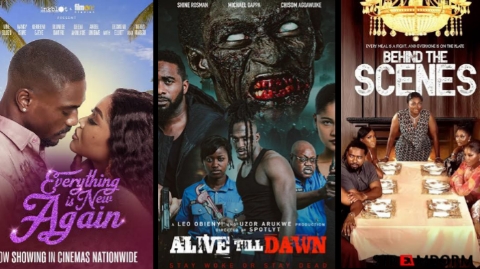
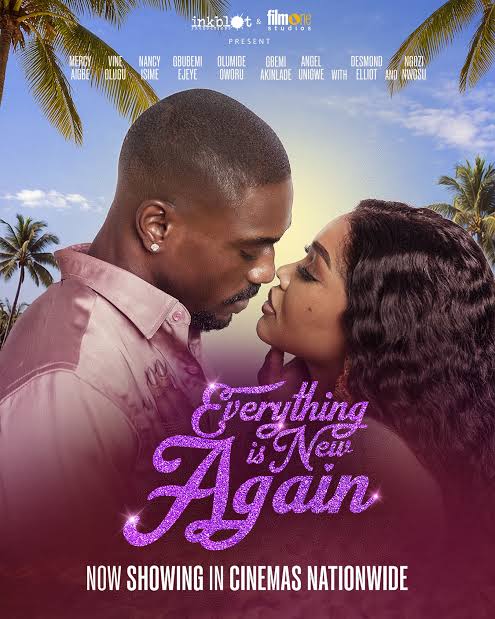
Cinema vs Netflix: What the Funke Akindele–Kunle Afolayan Conversation Says About Nollywood’s Future

The Nigerian film industry is at a crossroads and the recent online conversation involving Funke Akindele and Kunle Afolayan has unintentionally brought that reality into sharp focus.

While social media see the moment as a personal “saga,” between the film makers, the substance of the discussion has little to do with rivalry. Instead, it exposes a fundamental divide in Nollywood’s production and release ecosystem: the growing tension between cinema-led filmmaking and streaming-first distribution, particularly via platforms like Netflix.

Funke Akindele and Kunle Afolayan represent two of Nollywood’s most successful yet structurally different approaches to filmmaking.

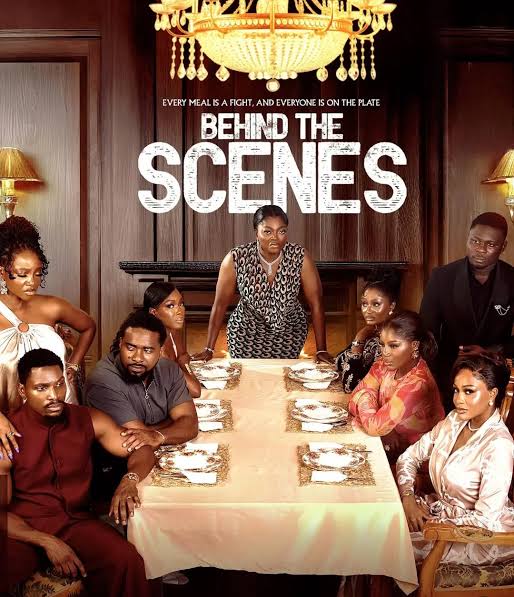
Funke Akindele’s recent run has been defined by cinema dominance. Her projects are built to thrive in theatres, relying on strong opening weekends, repeat viewership, and sustained audience attention over several weeks. This cinema-first model places heavy emphasis on visibility, demanding relentless promotion to keep films culturally relevant and commercially viable during their theatrical lifespan.

Kunle Afolayan’s recent body of work, by contrast, has leaned more toward platform-backed production, particularly through Netflix. In this system, films are often greenlit with clearer financial parameters, predefined distribution agreements, and a primary focus on content value rather than box-office optics. Promotion exists, but it is rarely as intense or personal as what cinema releases now demand.

At the centre of the debate is the burden of promotion.

Kunle Afolayan’s comments about the exhaustion that comes with modern film marketing echo a growing sentiment among filmmakers. 

It is draining. I want to make a film if you guarantee me that I don’t have to dance to sell that film

There’s no competition. I don’t want two billion in cinema, or even one billion, if I won’t make ten million from it.

Cinema releases in Nigeria increasingly require creators to act not just as directors or producers, but as full-scale digital entertainers  constantly producing skits, trends, behind-the-scenes content, and viral moments to sustain public interest.

Funke Akindele’s indirect response reframes the issue entirely. Her message is simple: every filmmaker must choose what works for them. Cinema success, in her case, is inseparable from aggressive marketing, audience engagement, and cultural presence. It is not a burden, it is the business.

If you can’t beat them or join them, create your own path. No allow jealousy burn you. The sky is so big for everybody to fly. Eyin Werey jojo!!!”

I’m not the one hindering your progress. Ka rin ka po, yiyeye ni n ye ni.” 

Go ahead and create alternative promotion or marketing strategies for promoting your business, or hire a company to handle it. You can do it! The opportunities are endless, and everyone has their own path. I’m focused on mine, and I have faith in God’s plan for me.” 

One reason this conversation resonates is because cinema and streaming measure success differently.

Cinema success is public and immediate: Ticket sales, Opening-weekend figures, Records broken and Audience turnout.

Streaming success is quieter and less transparent: Licensing value, Global reach, Completion rates and Long-term catalogue relevance.

Netflix productions do not need daily online performances from filmmakers to survive. Cinema films often do.

The Funke Akindele–Kunle Afolayan discourse highlights a larger shift happening across Nollywood. As streaming platforms reassess budgets and cinema costs continue to rise, filmmakers are being forced to make strategic choices earlier in the production process.

Neither path is wrong. But they are no longer the same road.

Nollywood is no longer unified by a single definition of success. The industry has matured into a space where cinema blockbusters and streaming originals coexist  sometimes uneasily under the same umbrella.

The current conversation is not about who is right or wrong. It is about what kind of industry Nollywood wants to be in the next decade.

The Funke Akindele–Kunle Afolayan moment matters because it captures Nollywood in transition. And how filmmakers respond to this divide may shape the future of Nigerian cinema more than any box-office record ever could.

Africa’s 10 Strongest Currencies in 2026 And Where Nigeria’s Naira Stands

Currency strength is often misunderstood in Africa. A strong currency doesn’t necessarily mean a country is richer or more developed; it simply reflects how much value one unit of a currency holds against the U.S. dollar.

Using that measure, here’s a breakdown of Africa’s 10 strongest currencies as of January 2026, why they rank so highly, and why Nigeria’s naira is notably absent from the list.

1. Tunisian Dinar (TND) — Tunisia

The Tunisian dinar remains Africa’s strongest currency by exchange value, trading at under 3 dinars to the dollar. Its strength is largely driven by strict currency controls, which tightly regulate access to foreign exchange and limit speculation. While Tunisia faces economic challenges, the central bank’s tight grip on the dinar has helped preserve its nominal value, even when broader economic indicators suggest fragility.

2. Libyan Dinar (LYD) — Libya

Despite years of political instability, the Libyan dinar continues to rank among Africa’s strongest currencies. Libya’s oil-driven foreign exchange inflows play a major role here, providing the central bank with dollar liquidity to support the currency. Like Tunisia, Libya operates a managed FX system, meaning the dinar’s strength is less about market confidence and more about controlled supply.

3. Moroccan Dirham (MAD) — Morocco

Morocco’s dirham reflects a more balanced story. Backed by a diversified economy; spanning manufacturing, agriculture, tourism, and exports to Europe, the dirham benefits from relative macroeconomic stability. Morocco has gradually liberalized its exchange regime without allowing sharp volatility, helping the dirham maintain steady strength against the dollar.

4. Ghanaian Cedi (GHS) — Ghana

Ghana’s presence in the top four is notable given its recent debt restructuring and IMF-backed reforms. The cedi’s ranking reflects currency redenomination history and monetary restructuring, rather than pure economic dominance. While the cedi has experienced sharp swings in recent years, policy tightening and external support have helped stabilize its nominal value enough to keep it among Africa’s strongest by unit value.

5. Botswana Pula (BWP) — Botswana

Botswana’s pula is one of Africa’s most respected currencies, supported by strong institutions, prudent fiscal management, and diamond exports. The country’s conservative monetary policy and low public debt have made the pula relatively stable over time. Unlike many peers, Botswana has avoided extreme FX volatility, reinforcing confidence in its currency.

6. Seychellois Rupee (SCR) — Seychelles

Seychelles’ rupee ranks high largely due to the country’s tourism-driven foreign exchange earnings. With tourism accounting for a significant share of GDP, steady inflows of dollars and euros help support the rupee. While the economy is small, its openness and reliance on foreign visitors give the currency a consistent FX lifeline.

7. Eritrean Nakfa (ERN) — Eritrea

The Eritrean nakfa’s strength is almost entirely policy-driven. Eritrea operates one of Africa’s most tightly controlled economies, with fixed exchange mechanisms and limited currency convertibility. As a result, the nakfa’s nominal value remains high; though this does not necessarily reflect market demand or economic openness.

8. South African Rand (ZAR) — South Africa

Africa’s most traded currency, the rand earns its place through deep financial markets and global liquidity, not tight controls. While the rand is volatile and sensitive to global risk sentiment, South Africa’s advanced banking system, capital markets, and export base help prevent extreme devaluation compared to many peers.

9. Lesotho Loti (LSL) — Lesotho

The Lesotho loti is pegged one to one with the South African rand, meaning it mirrors the rand’s movements almost exactly. Its ranking here is therefore less about Lesotho’s domestic economy and more about its monetary union with South Africa, which provides currency stability and predictability.

10. Namibian Dollar (NAD) — Namibia

Like Lesotho, Namibia’s dollar is also pegged to the South African rand, ensuring parity in value. This peg helps Namibia maintain currency stability, benefit from South Africa’s financial infrastructure, and avoid the FX shocks seen in more isolated economies.

Where Is Nigeria’s Naira?

Nigeria’s naira does not feature anywhere near Africa’s strongest currencies list.

As of late 2025 and early 2026, the naira traded around ₦1,400–₦1,500 to the U.S. dollar, placing it among the weaker currencies on the continent by exchange value.

Nigeria’s currency struggles reflect structural FX challenges, not economic irrelevance. Persistent dollar shortages, high inflation, heavy import dependence, and long-standing FX market distortions have weighed heavily on the naira. While recent reforms have improved transparency and reduced volatility, they haven’t yet translated into a stronger nominal exchange rate.

Some of Africa’s strongest currencies exist in tightly controlled or small economies. Meanwhile, larger economies like Nigeria and Egypt operate weaker currencies shaped by market forces, trade deficits, and reform cycles.

Cristiano Ronaldo and Georgina Rodríguez: Wedding After the 2026 World Cup?

Cristiano Ronaldo, one of football’s biggest icons, and Georgina Rodríguez, his longtime partner, are making headlines again and this time, it’s about marriage. Fans have been speculating for months, and now multiple reports suggest the couple plans to get married after the 2026 FIFA World Cup.

Ronaldo and Georgina made their engagement official in August 2025. Georgina shared a photo of her sparkling engagement ring on social media, writing, “Yes I do. In this and in all my lives.”

The announcement instantly went viral, with fans and media celebrating the news. It confirmed a relationship that has lasted nearly nine years, making it one of football’s most high-profile romances.

Reports suggest the couple wants to focus on Ronaldo’s World Cup 2026 campaign first. 

Portuguese outlets have even hinted at a Madeira wedding, Ronaldo’s hometown, possibly at a cathedral with celebrations at nearby luxury venues. It is important to note that the couple have not publicly confirmed a date or venue yet. Everything about the wedding location is based on press reports.

Ronaldo and Georgina are one of football’s most-followed couples who have been together since 2016, they share a family and frequent public appearances.

Scroll to Top