TikTok, ByteDance Agree to $400 Million Settlement Over Children’s Privacy Case

TikTok and its parent company, ByteDance, have agreed to pay $400 million to resolve a U.S. Justice Department lawsuit alleging that the platform violated federal children’s privacy protections by collecting and retaining personal information from users under 13 without the required parental consent.

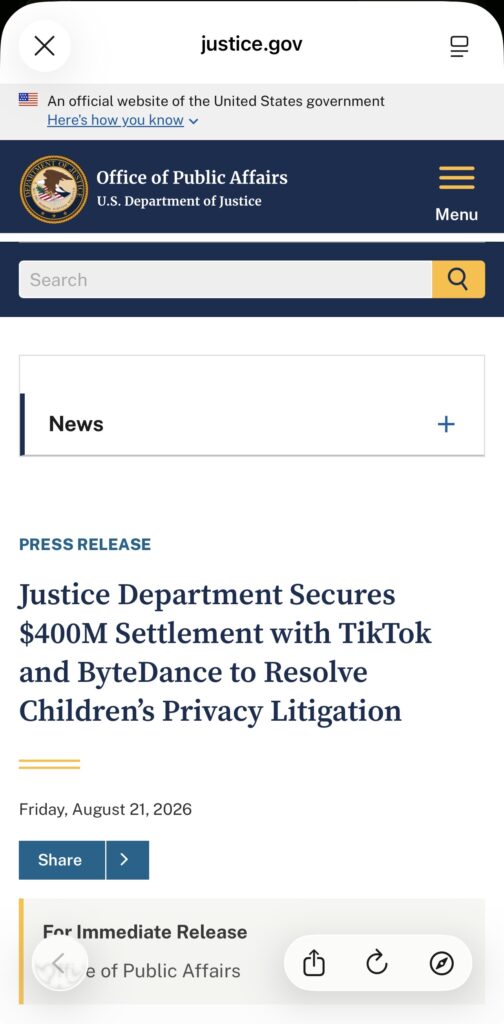
The settlement, announced by the U.S. Department of Justice on Friday, August 21, is described by the department as one of the largest recoveries ever obtained in a case involving the Children’s Online Privacy Protection Act (COPPA).

The lawsuit stems from a 2024 complaint filed by the Justice Department on behalf of the Federal Trade Commission (FTC) against TikTok, ByteDance and affiliated companies.

The government alleged that TikTok knowingly allowed millions of children under 13 to use the platform despite its minimum age requirement, and that the company collected and used their personal information without first providing the required notice to parents or obtaining verifiable parental consent.

The allegations went beyond ordinary TikTok accounts. Federal regulators also accused the company of collecting children’s information through TikTok’s Kids Mode, a version of the service designed with younger users in mind.

According to the FTC’s complaint, TikTok collected information about children’s activities on the platform and persistent identifiers that could be used to build profiles. The complaint also alleged that some information from Kids Mode users was shared with third parties, including Facebook and marketing analytics company AppsFlyer, for a practice TikTok called “retargeting less active users.” 

The FTC further alleged that TikTok had difficulty identifying and removing underage accounts and that parents often faced unnecessary hurdles when trying to have their children’s accounts and data deleted.

One of the more significant allegations in the 2024 complaint concerned accounts TikTok classified as “age unknown.”

The FTC alleged that children could bypass TikTok’s age gate by using credentials from third-party services such as Google and Instagram, allowing them to create accounts without providing their age or obtaining parental consent. According to the complaint, these “age unknown” accounts eventually numbered in the millions.

The FTC complaint also alleged that between February 2019 and July 2022, TikTok collected more than 300,000 problem reports from Kids Mode users that contained children’s email addresses and retained those addresses longer than reasonably necessary.

The settlement is structured in two parts.

$300 million will be paid immediately.

The remaining $100 million will be paid after a court enters an order vacating a previous consent decree involving TikTok’s predecessor, Musical.ly.

That earlier matter dates back to 2019, when Musical.ly agreed to a settlement with the FTC over allegations that it had collected personal information from children under 13 without obtaining the required parental consent.

The company agreed to pay $5.7 million at the time.

TikTok acquired Musical.ly in 2017 and subsequently integrated the service into TikTok.

The Justice Department said TikTok has undergone significant changes to its ownership, management, compliance operations and privacy practices since the 2024 lawsuit was filed.

The department specifically pointed to measures intended to strengthen safeguards for younger users, improve age-related controls and increase parental oversight.

Recent reporting also indicates that TikTok’s U.S. operation has strengthened its age-assurance systems, requires users to provide their birth dates when creating accounts and has employees trained to identify and remove users believed to be under 13.

The Justice Department said these changes contributed to its decision to resolve the case rather than continue with prolonged litigation. 

Despite the size of the settlement, it is important to note that the settlement is not a judicial finding that TikTok or ByteDance violated the law.

The Justice Department explicitly stated that the claims resolved by the settlement are allegations only and that there has been no determination of liability.

The agreement allows the government to secure a substantial financial recovery while bringing the 2024 litigation to an end.

Note: This report is based on filings and statements from the U.S. Department of Justice and Federal Trade Commission, alongside corroborating reporting from Reuters and other major outlets. The allegations described above were not judicially determined as part of the settlement.

Yu-Gi-Oh! and Jujutsu Kaisen Voice Actor Kenjiro Tsuda Sues TikTok Over AI Voice Replication

Kenjiro Tsuda, the acclaimed Japanese voice actor behind iconic anime characters like Seto Kaiba in Yu-Gi-Oh! and Kento Nanami in Jujutsu Kaisen, has reportedly taken legal action against TikTok over the alleged unauthorized use of an AI-generated replica of his voice.

According to reports emerging from Japan, Tsuda filed a lawsuit at the Tokyo District Court accusing the platform of allowing monetized content creators to distribute videos narrated with an AI voice that closely imitates his signature tone and delivery. 

The lawsuit claims that one TikTok account uploaded nearly 200 videos using the AI-generated narration. Tsuda’s legal team alleges that the account profited from the content, reportedly earning hundreds of thousands of yen monthly through monetization.

Lawyers representing the veteran actor argue that the AI voice imitation violates his publicity rights and unfairly exploits the years of work and recognition attached to his vocal identity. They also warned that unchecked AI replication could create long-term risks for voice actors and performers whose likenesses can now be digitally reproduced without consent.

TikTok’s Japanese operator has reportedly denied the claims, arguing that the narration in question was merely a “generic male voice” and not a direct reproduction of Tsuda’s performance or identity.

The lawsuit is already being viewed as a potentially landmark case in Japan’s growing conversation around artificial intelligence and intellectual property. As generative AI tools become more accessible, entertainment industries worldwide are increasingly grappling with questions surrounding consent, compensation, and ownership of digital likenesses.

Kenjiro Tsuda remains one of Japan’s most recognizable voice talents, widely celebrated for his performances in major anime franchises including Yu-Gi-Oh!, Jujutsu Kaisen, Tokyo Revengers, Chainsaw Man, and Attack on Titan. His deep, commanding voice has become a defining part of many fan-favorite characters over the years.

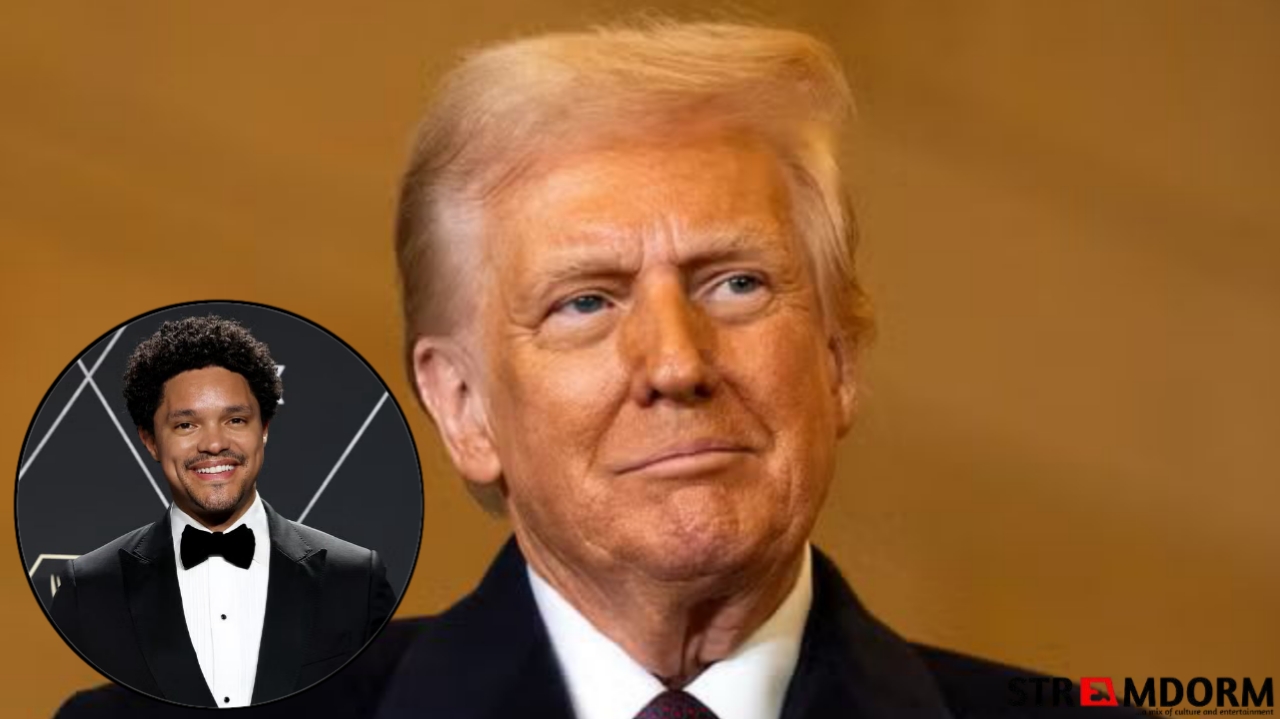
Donald Trump Slams 2026 GRAMMYs and Threatens to Sue Trevor Noah Over Epstein Island Joke

U.S. President Donald Trump has sharply criticized the 68th Annual GRAMMY Awards, branding the broadcast “virtually unwatchable” and threatening legal action against comedian and host Trevor Noah over a joke the President called false and defamatory. The unusual clash between a cultural event and national politics has quickly become one of the most talked‑about stories in entertainment and political news today. 

During the live telecast on February 2, 2026, Trevor Noah; hosting the GRAMMYs for the sixth and final time delivered a mix of music commentary and political humor. After Billie Eilish and Finneas won the Song of the Year award, Noah said:

There you have it, song of the year! Congratulations, Billie Eilish. Wow. That’s a Grammy that every artist wants… almost as much as Trump wants Greenland, which makes sense because Epstein’s island is gone, he needs a new one to hang out with Bill Clinton.” 

As the audience reacted with gasps and laughter, Noah added:

I told you, it’s my last year! What are you going to do about it?” 

Shortly after the broadcast ended, Trump took to his social platform Truth Social with a forceful reaction. He began by dismissing the awards show itself as:

the WORST, virtually unwatchable! CBS is lucky not to have this garbage litter their airwaves any longer.” 

Turning his attention to Noah’s joke, Trump wrote that the comedian “INCORRECTLY” claimed Trump and Clinton had spent time on Epstein’s island:

I can’t speak for Bill, but I have never been to Epstein Island, nor anywhere close, and until tonight’s false and defamatory statement, have never been accused of being there, not even by the Fake News Media.” 

“It looks like I’ll be sending my lawyers to sue this poor, pathetic, talentless, dope of an M.C., and suing him for plenty$. Get ready Noah, I’m going to have some fun with you!” 

Award shows like the GRAMMYs have long mixed humor with social commentary, but Noah’s line touched on a subject; Jeffrey Epstein and his connections to powerful figures that has been under renewed public scrutiny since large sets of Epstein files were released. 

Trump’s response continues a pattern of reacting strongly to commentary he deems inaccurate or unfair. In his post, he even referenced past legal settlements with major networks, suggesting precedent for how such disputes have played out previously. 

The 2026 GRAMMY Awards were already notable for politically charged moments, including artists wearing pins and referencing social and immigration policies during acceptance speeches. Amid that backdrop, Noah’s joke stood out as a comedic moment that crossed into political territory, prompting an unprecedented presidential reaction tied directly to an awards show broadcast. 

A line meant as playful satire at one of music’s biggest nights spiraled into a political story dominating headlines across news and social media. At the intersection of comedy, culture, and politics, the Grammy moment underscores how quickly entertainment can become part of national discourse especially when public figures respond in forceful fashion.

Spotify and Major Record Labels Sue Anna’s Archive for $13 Trillion Over Music Theft

In a staggering legal move, Spotify, alongside Universal Music Group, Sony Music Entertainment, and Warner Music Group, has filed a $13 trillion lawsuit against Anna’s Archive, the self-described “largest truly open library in human history.”

The lawsuit claims that Anna’s Archive has illegally distributed copyrighted music on a massive scale, including nearly 86 million music files scraped from streaming platforms. According to court filings, the platform not only shared the content but also made it easily accessible, violating U.S. copyright laws and agreements with artists and record labels.

The legal complaint describes Anna’s Archive’s operations as a “brazen theft of millions of files containing nearly all of the world’s commercial sound recordings.”

By applying statutory maximums of up to $150,000 per infringed track, the damages amount to the eye-popping $13 trillion figure, one of the largest ever sought in music industry history. Legal experts, however, caution that courts rarely award the full statutory damages, especially in cases involving international defendants.

The lawsuit was filed in late December 2025 and went public in mid-January 2026. Since then, a U.S. federal judge has issued a temporary restraining order and preliminary injunction, resulting in the suspension of several Anna’s Archive domain names, including .org and .se.

Spotify and the major labels have accused the platform of multiple violations, including:

  • Copyright infringement
  • Breach of contract
  • Violations of the Digital Millennium Copyright Act (DMCA)
  • Violations of the Computer Fraud and Abuse Act (CFAA)

Anna’s Archive has previously claimed that its content gathering is intended for preservation purposes, rather than commercial exploitation. However, the plaintiffs argue that making copyrighted works accessible without permission constitutes illegal distribution, regardless of intent.

The operators of Anna’s Archive remain anonymous, and their location outside the U.S. adds complexity to the legal process.

Industry analysts say the case could set a major precedent for online archives and music preservation projects, redefining what constitutes legal access to digital content.

The legal battle is still unfolding, with initial court hearings expected later in 2026. Analysts predict this lawsuit could reshape how digital content and open libraries operate, especially for music, which remains highly protected under copyright law.

For now, Anna’s Archive is under intense legal scrutiny, and the outcome could impact millions of users and the broader debate over free access versus copyright protection.

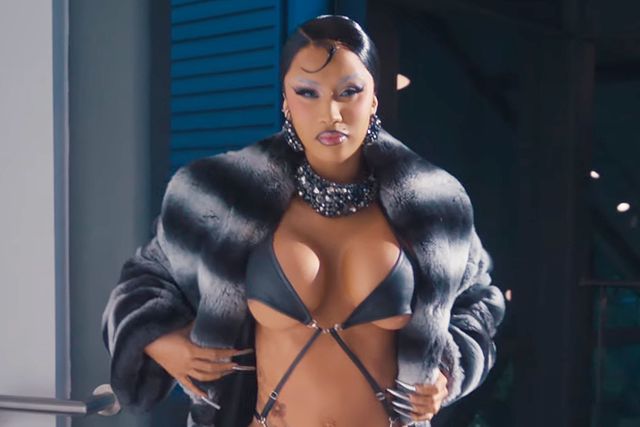
Cardi B Vows to Fight Non-Payment Lawsuit Levied Against Her and ex-husband Offset

Cardi B vows to fight the lawsuit against her and her now-divorced husband Offset. In the lawsuit, the property owner of the mansion used in the music video of her hit single “Like What’ claims she and her estranged husband Offset duped them into using their property for the music video “without paying full market value.”

In response, the Grammy winner has vowed to defend herself against the “greedy owners.”“The problem is people wanna find loopholes and get over but IRON YOUR BEST SUIT BITCH, I’ll see you in court!!!” the Grammy-winning rapper wrote on X.

In her statement on X, Cardi B claimed the property owners were paid $10,000 in cash to use the property for 24 hours “We paid those people $10,000 IN CASH to rent the property for a whole 24 hours that same day 6am to 6am the next morning and we went over by ONE hour which we paid overage fees to the realtor for in March.” She also claimed the owners are trying to get more money from there through legal loopholes: “Now they wanna finesse us trying to say we told them it was a TikTok video when that was nowhere in the contract and like they didn’t hear the whole song playing and see how long we was shooting….Why would it take us 24 hours to shoot a TikTok? The problem is people wanna find loopholes and get over…”

To add to her defence Cardi B claims the owners were on set when the shoot was taking place: “There was cameras all over and both the realtors and the owners was there the ENTIRE time… I got pics and videos of them on set!!

According to the mansion owner’s 11-page complaint, Cardi and Offset had their eyes set on using the property’s highly distinctive design and “devised a plan” to use it “without paying full market value.” The property owner, Bi LLC, alleged the ex-couple reached out through their representatives in late 2023 or early 2024 and booked the house anonymously “under the false pretense” it would be used for a TikTok video. The house was previously home to Justin Bieber.

The lawsuit was filed in Los Angeles County Superior Court, which included still photographs from the video shoot and noted that the music video produced during the shoot, “Like What,” had garnered more than 26 million views on YouTube since its release six months ago.

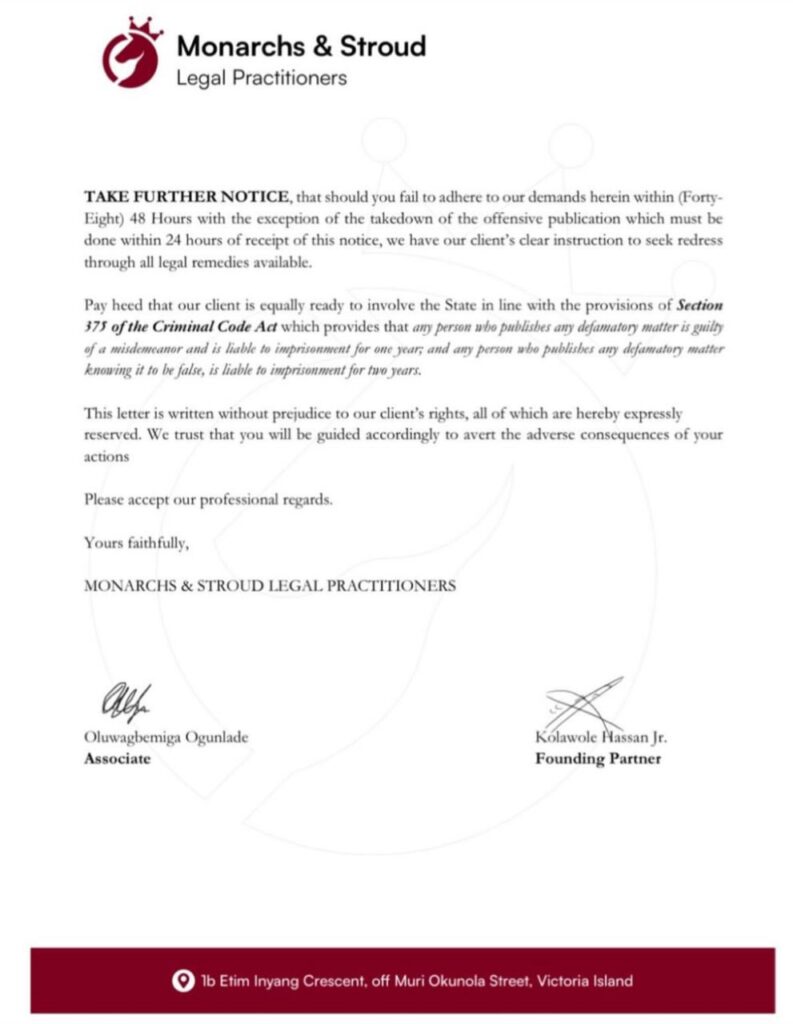
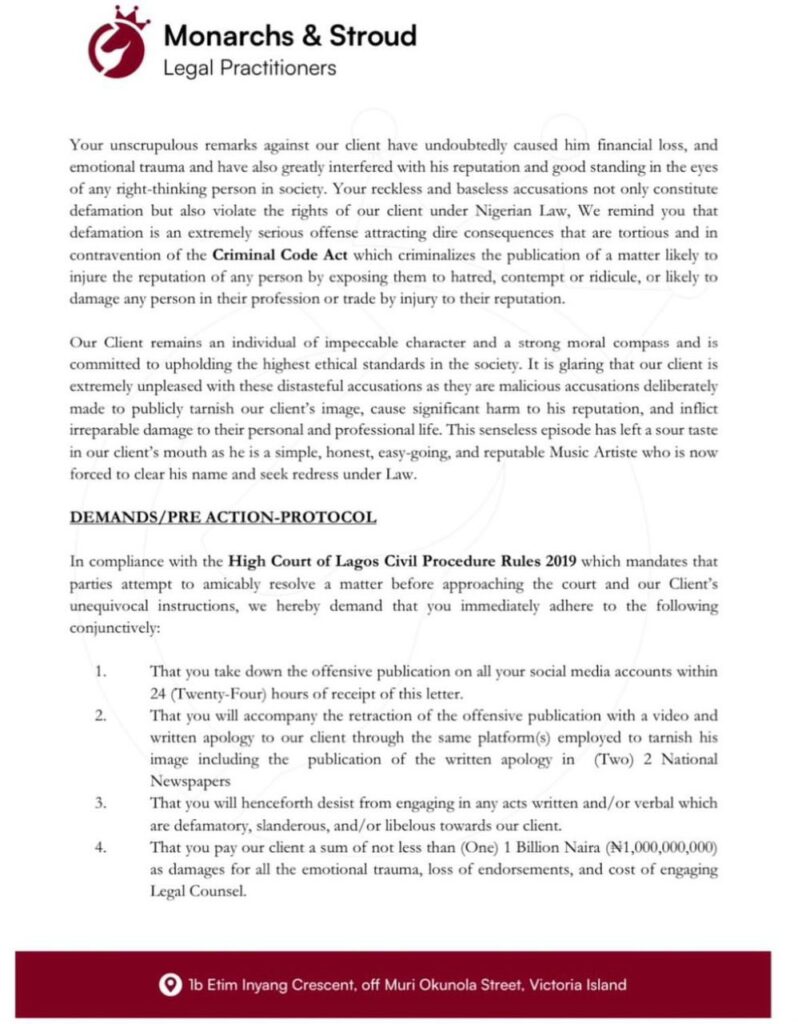
Mayorkun slams Tiktok influencer Nickie Dabarbie for a ₦1 billion lawsuit for Defamatory Statements

In response to claims made by TikTok influencer Dabarbie, Mayorkun sues the TikTok influence with Mayorkun slams TikTok influencer Nickie Dabarbie for a ₦1 billion lawsuit for defamatory statements.

Precious Kingsley, popularly known as Nickie Dabarbie, accused musicians Skiibii and Mayorkun of attempted murder for money rituals.

In a series of posts shared via her Instagram account, Dabarbie claimed both singers use multiple girls for rituals. In addition to her claims, she said the artists gave her dog poop to eat. On her Instagram live she also accused the musicians of sending soldiers after her.

In response to these massive claims, Mayorkun is suing the influencer.

Scroll to Top