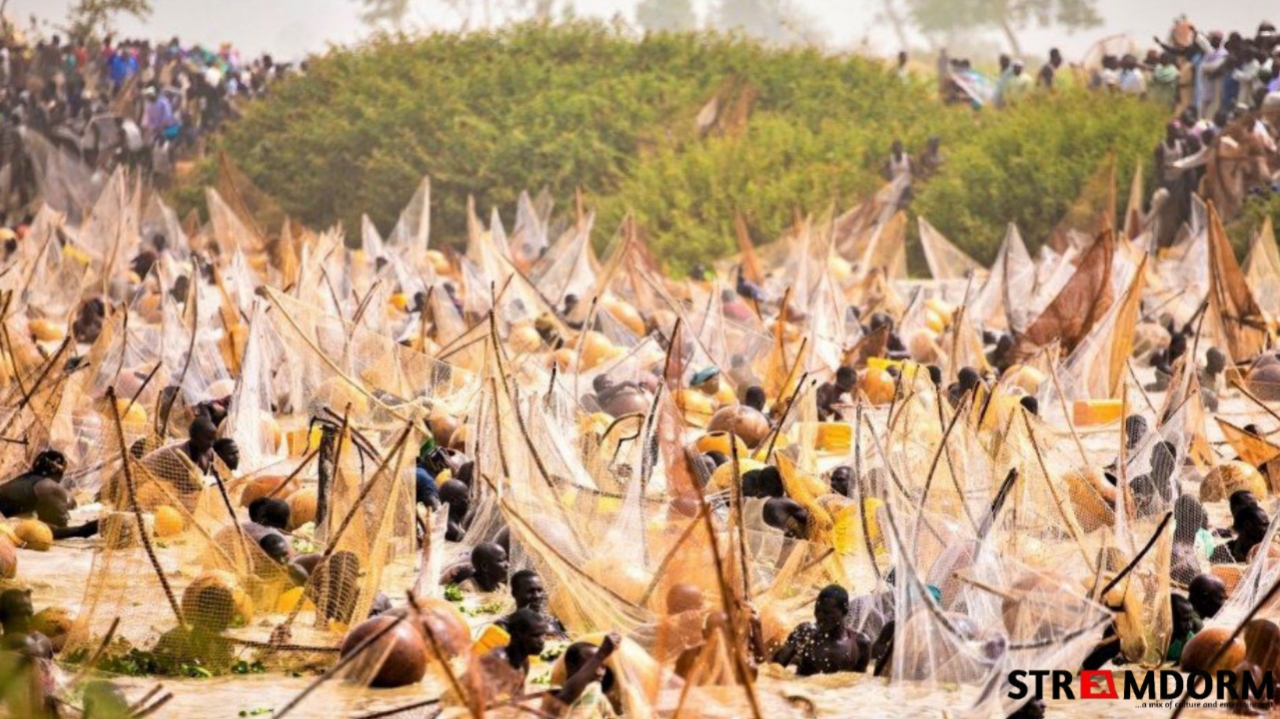
The 2026 edition of the Argungu International Fishing Festival delivered exactly what it has promised for decades; spectacle, heritage, and a winner whose name will now be etched into the festival’s modern history.
This year, that name is Mayama Abubakar Usman.
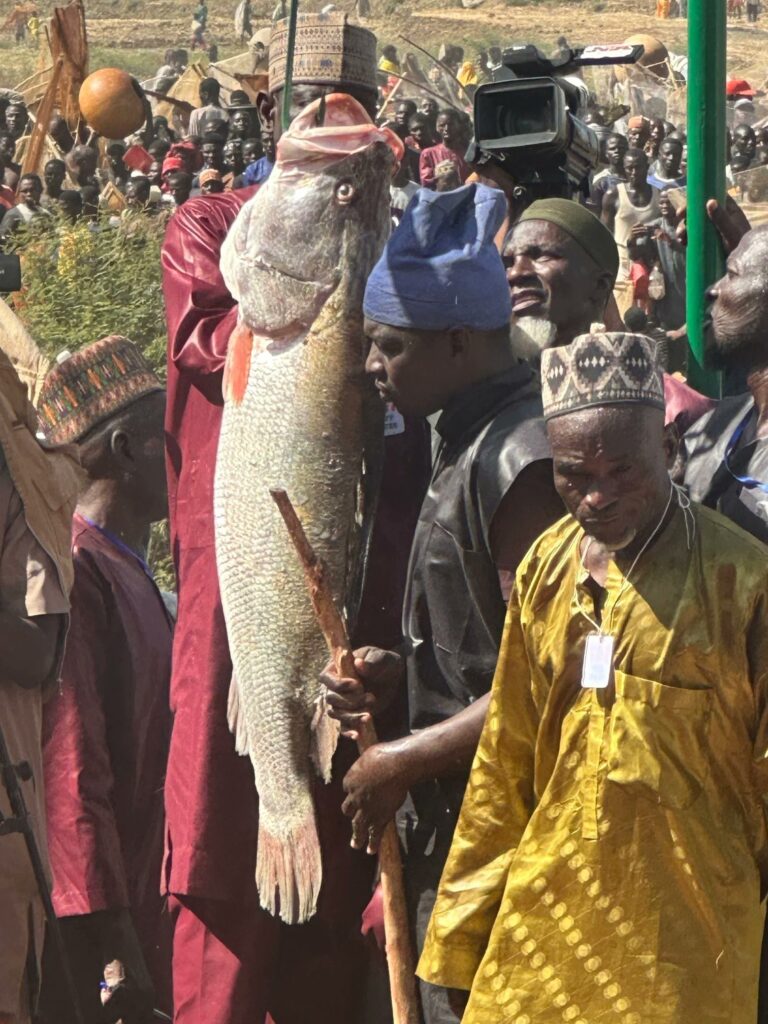
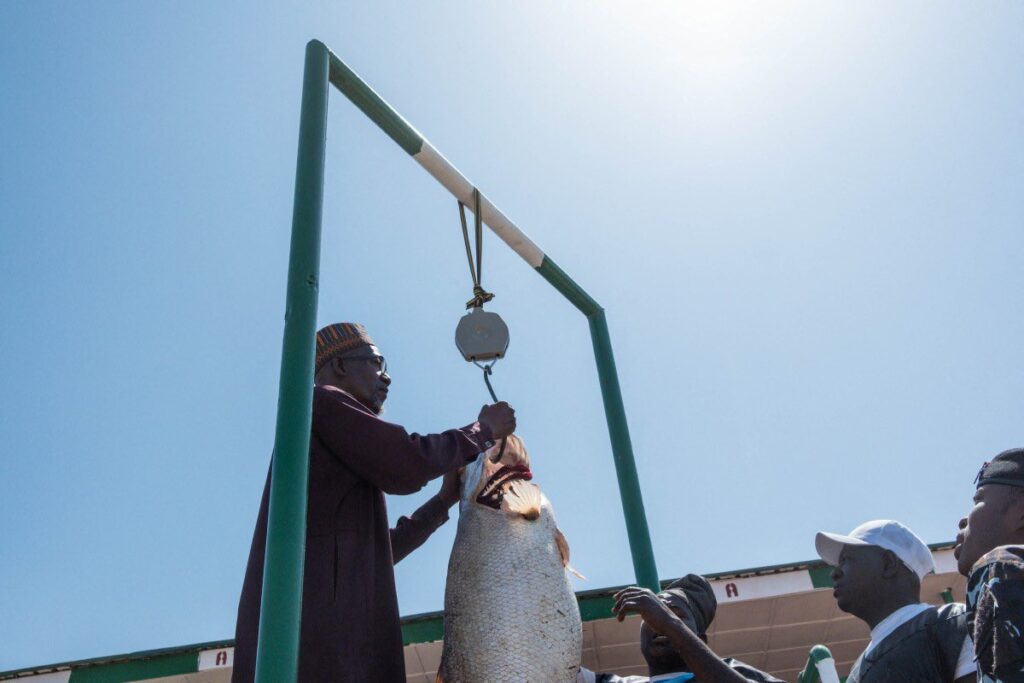
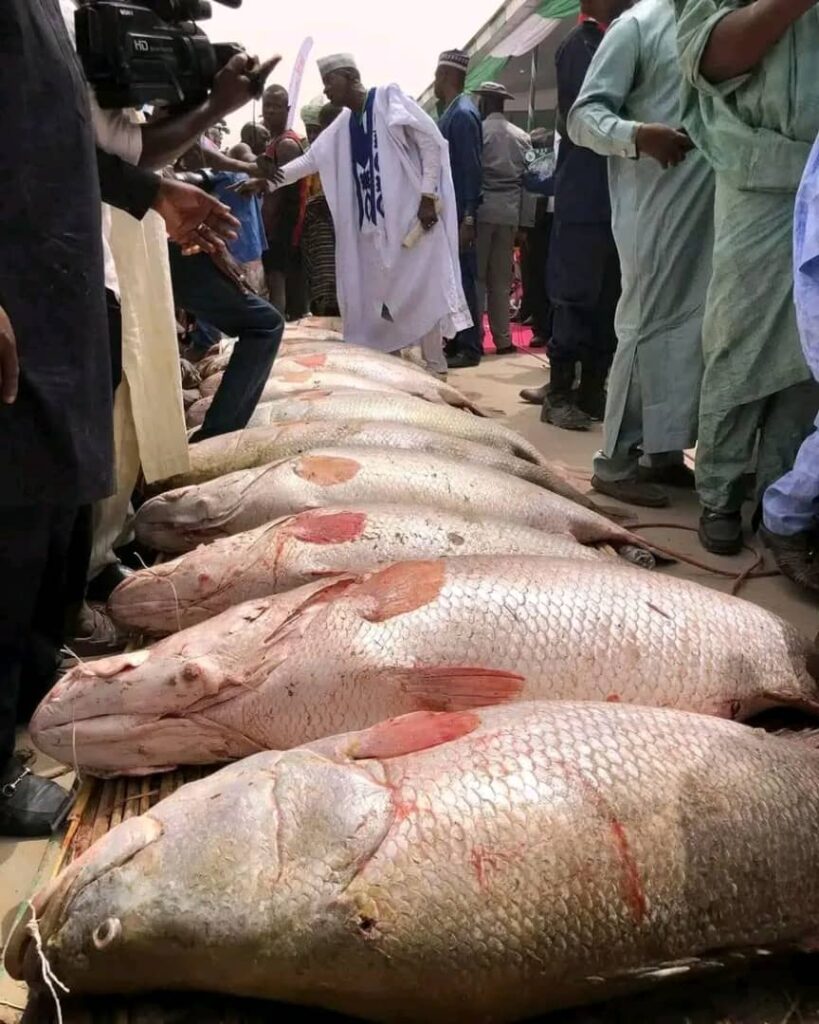
Competing alongside hundreds of fishermen in Argungu, Usman secured first place after landing a massive 59-kilogram fish, a catch heavier than a standard bag of cement and the defining image of this year’s competition.
Representing Maiyama Local Government Area in Kebbi State, Usman’s 59kg catch stood unmatched at the final weigh-in.
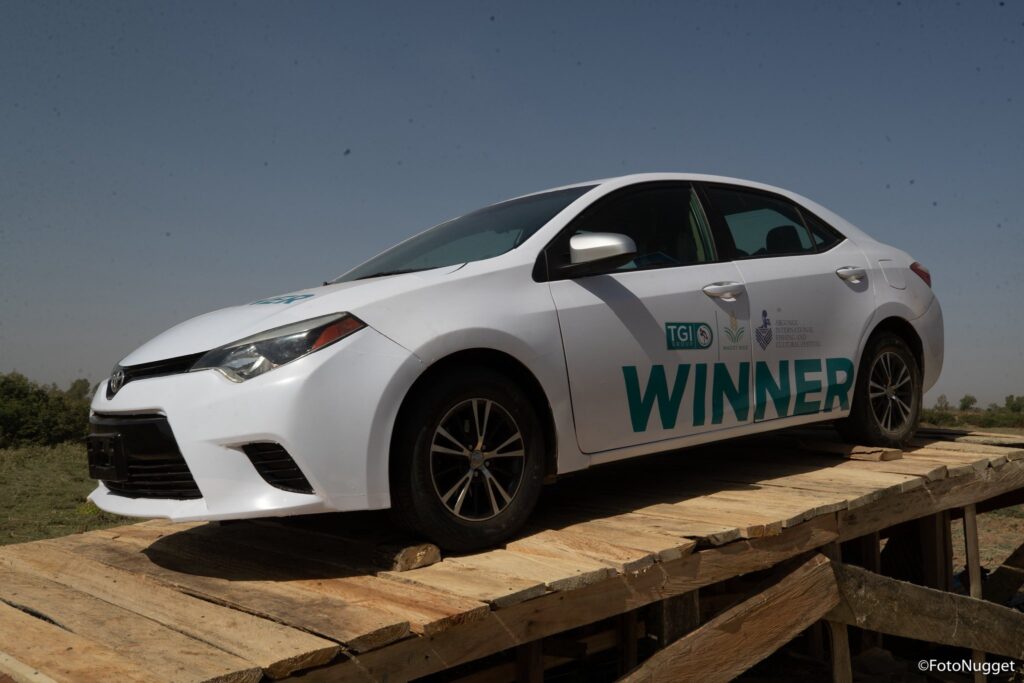
His reward reflected the scale of the achievement: ₦1 million in cash, Two brand-new cars and Official recognition as the 2026 champion.
The moment he hoisted the giant fish before cheering spectators quickly became the standout visual of the festival; a reminder of why Argungu remains one of Africa’s most iconic cultural sporting events.
The festival was attended by President Bola Tinubu, alongside state officials, traditional rulers, and thousands of visitors.
In a development that drew public attention, the first, second, and third-place fish were presented to the President during the ceremony. Event coverage indicated that the fish were to be handed over to Her Excellency, Remi Tinubu, to prepare what was described as “a special meal.”
While the winners retained their official prizes, the ceremonial presentation of the top fish added a symbolic layer to the event; blending sport, state presence, and cultural celebration.
The Argungu International Fishing Festival is not just about who catches the biggest fish. It is a longstanding cultural showcase that highlights northern Nigeria’s riverine traditions, boosts tourism in Kebbi State, and reinforces community identity.
For Mayama Abubakar Usman, it was a personal victory. For Argungu, it was another chapter in a tradition that refuses to fade.
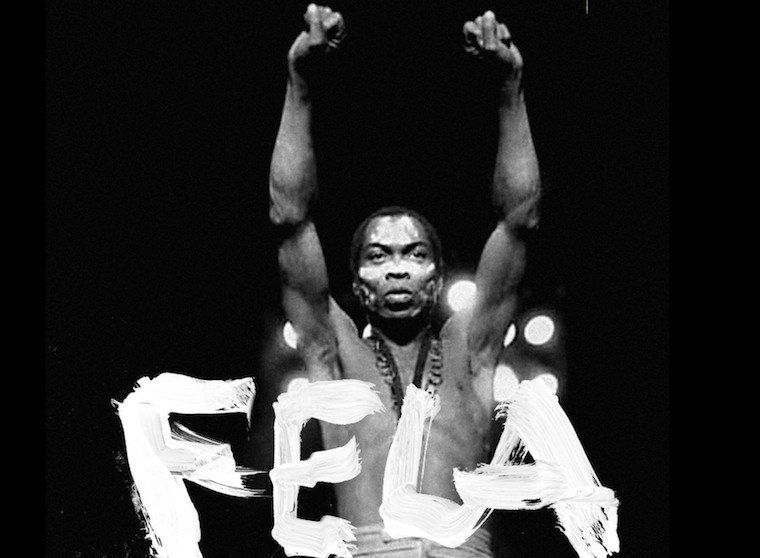
Fela Anikulapo Kuti, born in 1938 in Abeokuta, Nigeria, remains one of the most influential figures in African music and culture. Known as the pioneer of Afrobeat, Fela’s life was a blend of revolutionary music, outspoken activism, and fearless challenges to political authority. Even decades after his passing in 1997, his legacy continues to resonate across music, politics, and African identity.
The Birth of Afrobeat
Fela Kuti’s journey into music began at a young age. Raised in a politically active family; his mother, Funmilayo Ransome-Kuti, was a feminist and activist. Fela was exposed early to the struggles of ordinary Nigerians. He studied music in London at the Trinity College of Music, where he learned classical piano and trumpet. But it was upon his return to Nigeria that he fused traditional African rhythms with jazz, funk, highlife, and soul to create Afrobeat.
Afrobeat was more than a music genre; it was a vehicle for social commentary. Through extended compositions, intricate horn sections, and polyrhythmic percussion, Fela delivered sharp critiques of corruption, military rule, and social injustice in Nigeria and across Africa. Hits like “Zombie” and “Sorrow, Tears and Blood” were not only musical masterpieces but also acts of resistance.
Activism and Political Influence
Fela’s music was inseparable from his activism. His lyrics openly criticized Nigeria’s military regimes and exposed the harsh realities of life under oppressive governments. His Kalakuta Republic commune served as both a home and a political haven, where artists, musicians, and activists collaborated to resist authoritarianism.
Fela endured repeated arrests, raids, and physical assaults. Despite this, he remained steadfast, using his international fame to draw global attention to Nigeria’s political struggles. His activism inspired countless musicians and activists worldwide to use art as a tool for social change.
Cultural Impact
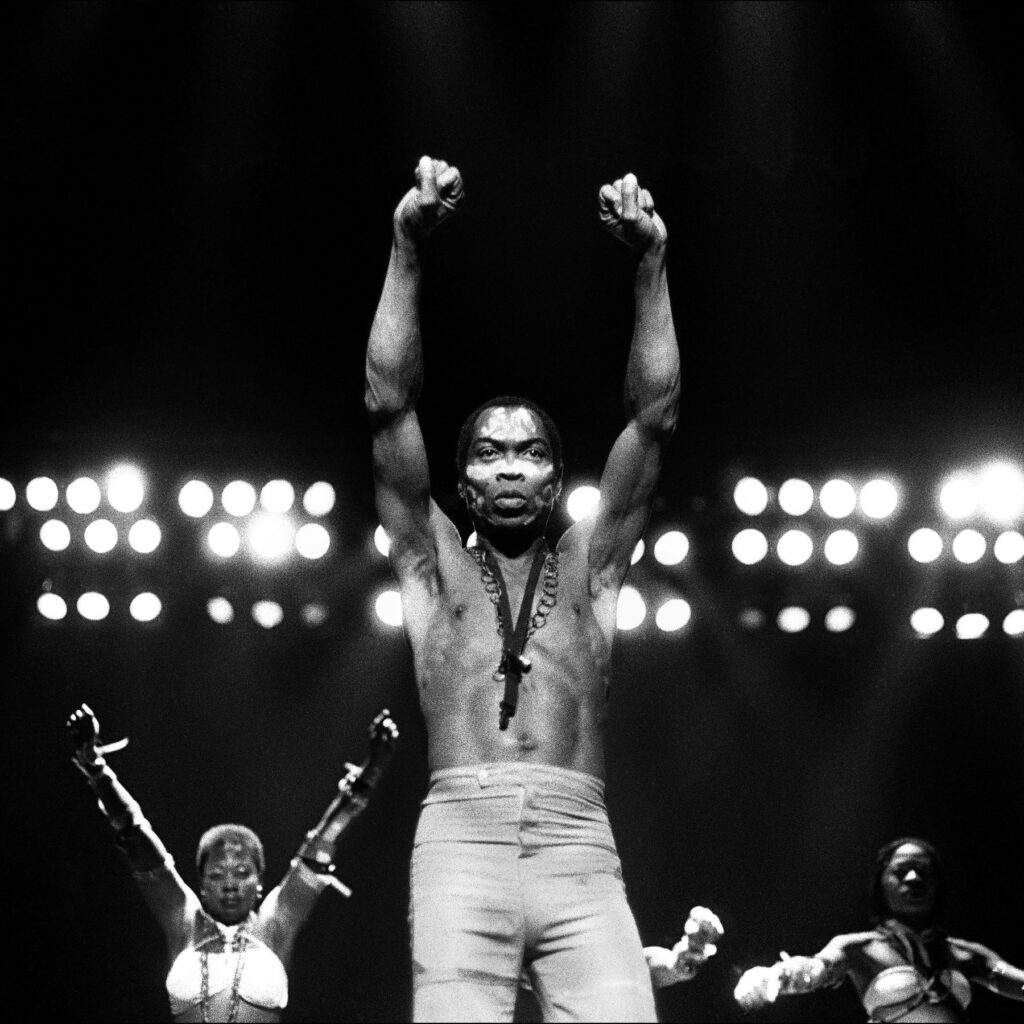
Beyond music and politics, Fela Kuti reshaped African cultural identity. He challenged colonial mindsets by promoting African traditions, attire, and language in his performances. His stage shows were theatrical, often including dancers, elaborate costumes, and improvisational elements that celebrated African heritage.
Today, Fela’s influence is evident in the global rise of Afrobeat, which has evolved into a worldwide phenomenon. Artists such as Burna Boy, Wizkid, and Tiwa Savage credit Fela as a major inspiration. The genre has also crossed borders, influencing international musicians from Beyoncé to Major Lazer, bridging African sounds with global pop culture.
Fela Kuti’s Family Legacy
Fela’s legacy extends through his family, many of whom are accomplished artists and activists. His children, including Seun Kuti and Femi Kuti, continue to perform Afrobeat with the same political passion. The Fela Shrine in Lagos, now a museum and live music venue, keeps his memory alive, drawing fans from across the world to celebrate his music and message.
Fela’s life and impact have been immortalized through multiple mediums. The Broadway musical Fela! brought his story to international audiences, combining music, dance, and storytelling. Documentaries, films, and books continue to explore his influence, while Nigerian festivals and global Afrobeat events celebrate his contributions annually.
Fela’s fearless stance against injustice, combined with his artistic genius, created a blueprint for generations of musicians and activists. His influence on culture, politics, and music remains unparalleled, making him a symbol of resistance, creativity, and African pride.
Fela Kuti’s relevance persists because the struggles he highlighted; corruption, inequality, and political oppression still exist. His life reminds us of the power of art as a force for change and the importance of staying true to one’s convictions. In an age where African music dominates global charts, remembering Fela ensures that the roots of this cultural revolution are not forgotten.
Fela Kuti’s legacy is a reminder that music is more than entertainment; it can be a catalyst for awareness, unity, and transformation. His story is a call to celebrate African heritage, challenge injustices, and inspire future generations to use their voices boldly and not to be chasing unnecessary clout on social media.
Education is the cornerstone of development, empowering individuals and societies to thrive. It is the process by which the younger generation are prepared for the future and the passing down of the moral values of the society from one generation to another.
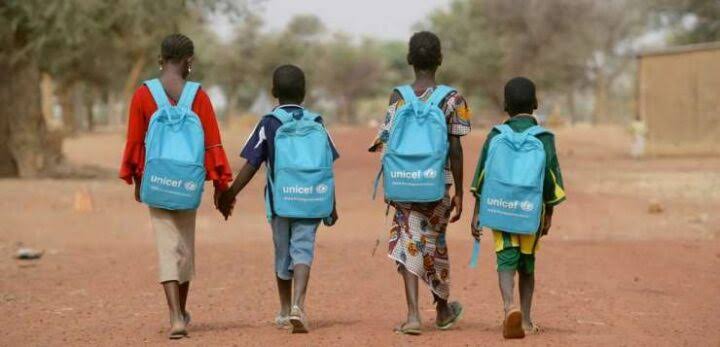
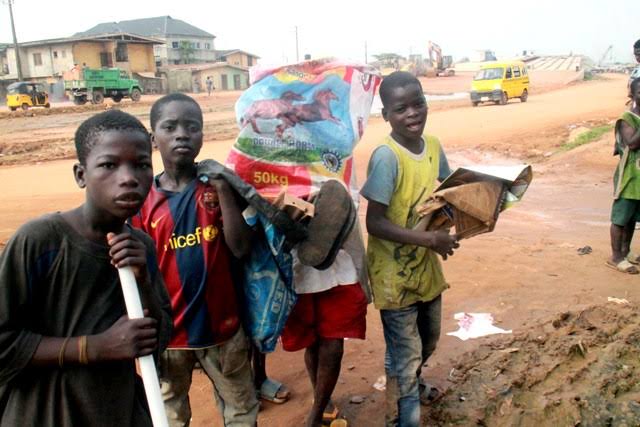
However, in Nigeria, the issue of out-of-school children poses a significant challenge to this fundamental right. Via this article, we will be looking into the state in Nigeria with the highest number of out-of-school children, exploring the factors contributing to this phenomenon and the efforts undertaken to address it.
Education plays a pivotal role in shaping the future of individuals and communities. It not only enhances cognitive abilities but also fosters critical thinking and problem-solving skills essential for socio-economic development.
Factors Contributing to Out-of-School Children
Several factors contribute to the high number of out-of-school children in Nigeria, including poverty, cultural norms, insecurity, and inadequate infrastructure. These challenges greatly affect marginalized communities, hindering access to quality Education.
Here is a list of Ten states in Nigeria with the highest rate of out of school children.
Kebbi: 67.6%
Sokoto: 66.4%
Yobe: 62.9%
Zamfara: 61.3%
Bauchi: 55.7%
Borno: 54.2%
Jigawa: 51.1%
Gombe: 48%
Katsina: 45.9%
Niger: 42.8%
Kano: 39.2%
Taraba: 28.8%
Nasarawa: 25.4%
Plateau: 23.2%
Kwara: 22%
Kaduna: 21.9%
Adamawa: 21.7%
Oyo: 20.9%
Ogun: 20.5%
Benue: 18.4%
Ebonyi: 16.7%
Ondo: 13.8%
Osun: 12.8%
FCT: 12.8%
Edo: 11.3%
Akwa Ibom: 10.6%
Kogi: 10.2%
Delta: 9.3%
Rivers: 7.7%
Cross River: 7.6%
Enugu: 7.5%
Bayelsa: 7.4%
Lagos: 6.4%
Abia: 5.6%
Ekiti: 5.1%
Imo: 5.1%
Anambra: 2.9%
Why is it important to address this issue?
Ensuring that every child has access to education is not just a moral obligation but also a crucial step towards building a better society. Education empowers children, equips them with essential skills, and opens up opportunities for a brighter future. By addressing the issue of out-of-school children, we can break the cycle of poverty, reduce social inequalities, and foster economic growth.
Finding Solutions to this problem;
Governments, non-governmental organizations, communities, and individuals must come together to address the barriers to education and create an inclusive and accessible learning environment.
Remember, education is a powerful tool that can transform lives and build a brighter future. Together, we can work towards reducing the number of out-of-school children and creating a society where every child has the opportunity to learn and thrive.
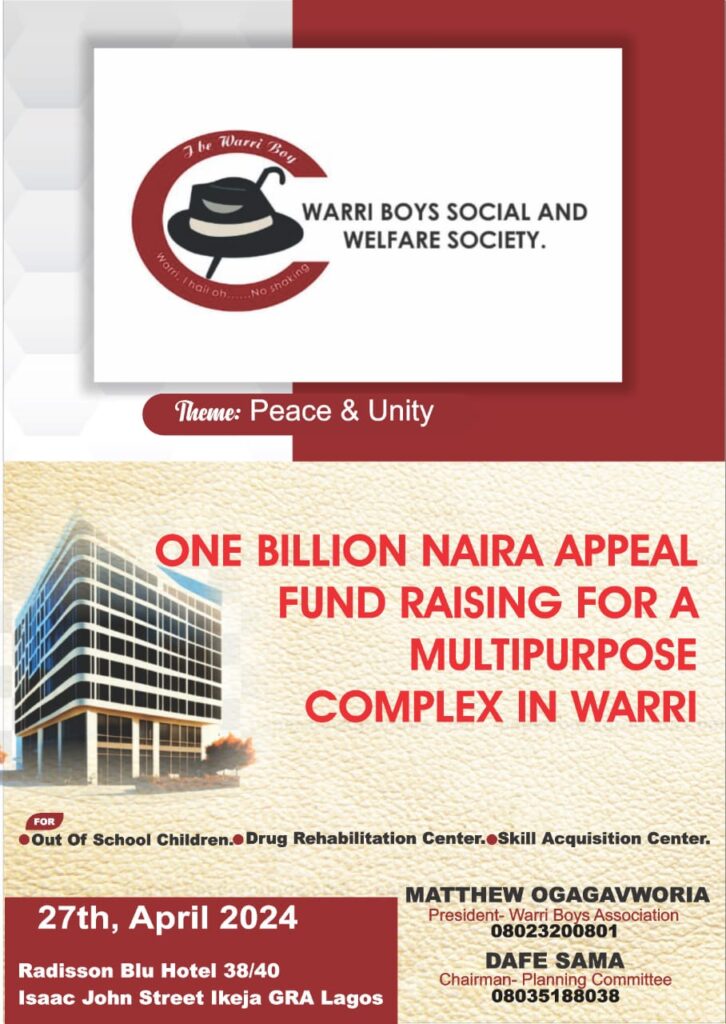
Amongst the numerous ways of finding solution to this grave problem that has been affecting the Nigerian society, an event is being held to curb this problem and some other issues affecting Nigeria at large.
Warri Boys Association
On the 27th April, 2024, Warri Boys Association will be hosting an event to raise one billion naira to help out of school children, rehabilitate drug abusers, skill acquisition and for its multipurpose complex. Location: Radisson Blu Hotel, GRA, Lagos. Call the numbers in the flyer for more info.
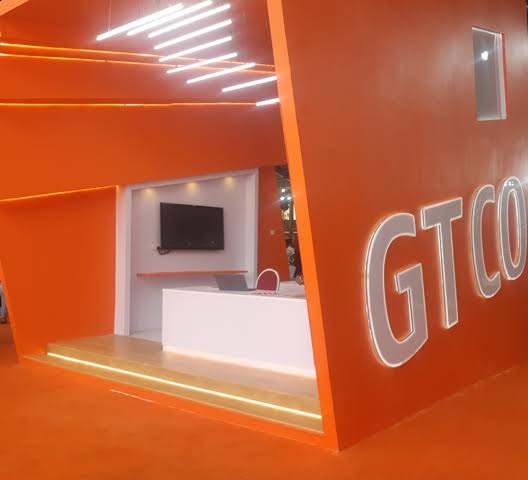
Guaranty Trust Holding Company Plc (GTCO) has announced dates for the 2024 GTCO “Food and Drink Festival,” which is scheduled to take place from Friday, April 26 to Sunday, April 28 at its GTCentre, Oniru, Victoria Island, Lagos. The countdown to the Seventh (7th) edition of the much anticipated culinary festival in Nigeria and Africa at large has begun. The GTCO Food and Drink Festival is widely regarded as the largest food and drink festival on the continent, bringing millions of food enthusiasts and entrepreneurs in a dynamic celebration of flavours, scents, and cultures that honour Africa’s rich and varied culinary tradition.
Through the duration of the three days, guests will be treated to a wide variety of delicious culinary services, ranging from creative global fusion cuisines to classic African food. The festival will also have hundreds of food entrepreneurs displaying an extensive variety of appetizing goods, live culinary demos, and tasting sessions.
Talking about the 2024 GTCO Food and Drink Festival, the Group Chief Executive Officer of Guaranty Trust Holding Company Plc, Segun Agbaje, said, “We are delighted to bring to our customers, exhibitors, and food lovers from across Africa and beyond, another edition of an event that is a celebration of not just food, but of the rich tapestry of cultures and traditions that make African cuisine so unique. Our vision for curating this consumer-focused event is unchanging, particularly in light of the pressures that individuals and businesses are facing at this time. We hope to consistently create memorable moments for everyone, whilst providing a free, vibrant, and commercially viable platform for small food businesses in Nigeria to grow and thrive.”
The GTCO Food and Drink Festival is widely recognized for its family-friendly atmosphere in addition to its gastronomic options. The festival will be a memorable occasion for the whole family thanks to the organizers’ careful selection of kid-friendly events this year. The little ones will be occupied with games, interactive displays, and other activities in a specially created play area. A brand-new, exciting addition to the fair will be a children’s baking workshop. This will provide young, budding cooks a fantastic chance to learn about the pleasures of baking while also encouraging their creativity and self-assurance in the kitchen. In an enjoyable and encouraging setting, kids can let out their inner chef and learn essential cooking skills by creating their own special delicacies or decorating cupcakes and more.