
Why Piracy Remains a Major Threat to Nigeria’s Entertainment Industry

The arrest of Emmanuel Analike (NetNaija founder) on  Wednesday, March 4, at the Federal High Court in Abuja on multiple charges of copyright infringement has again pushed the issue of piracy in Nigeria’s entertainment industry into the national spotlight. While initial reports centred on the arraignment itself, the case has quickly evolved into a wider conversation about copyright protection and the long-standing impact of digital piracy on Nigeria’s creative economy.

For years, NetNaija has remained one of the most widely visited websites in Nigeria for free access to movies, television series, and music. Its popularity among audiences is undeniable, but industry stakeholders have consistently argued that platforms like it undermine the commercial structure that sustains the entertainment business.

According to the Nigerian Copyright Commission, the platform allegedly facilitated the distribution of films and other copyrighted materials without the permission of their creators or rights holders. Authorities say the case is being prosecuted under the Copyright Act 2022, Nigeria’s updated copyright law designed to address intellectual property violations in the digital era.

For many filmmakers in Nollywood, this case is one of the most visible attempts in recent years to confront online piracy.

Piracy has remained one of the industry’s most persistent structural challenges. Film producers often invest millions of naira into production, marketing, and distribution, only for pirated copies of their work to appear online shortly after release. In some cases, illegal copies circulate even before a film reaches cinemas or legitimate streaming platforms.

When that happens, the financial model that supports film production begins to collapse. Revenue that should come from cinema ticket sales, streaming licensing, or digital distribution is instead diverted to illegal platforms offering the same content for free.

The result is not only lost income for producers but also fewer resources for future projects, affecting actors, crew members, distributors, and the wider creative workforce.

The rise of internet distribution has made piracy significantly harder to control. Unlike physical piracy, which once relied on DVDs sold in markets, digital piracy spreads rapidly across websites, social media channels like Telegram, and file-sharing platforms.

The Copyright Act 2022 was introduced partly to address this evolving challenge by strengthening enforcement powers and updating legal protections for digital content.

Over the past decade, streaming services have begun to reshape how audiences watch films and television in Nigeria. Platforms like Netflix, Amazon Prime Video, and regional services such as Showmax (Paused) have expanded their Nollywood catalogues, giving filmmakers new distribution channels.

The case involving NetNaija could also shape how Nigerian authorities approach other websites associated with pirated content. If the prosecution leads to meaningful enforcement under the Copyright Act 2022, it may signal a stronger commitment to protecting intellectual property within the country’s creative industries.

For filmmakers, musicians, and digital creators, the stakes extend far beyond a single website.

The outcome of the case highlights a deeper challenge facing Nigeria’s entertainment industry: how to protect creative work in a digital environment where distribution is instant, global, and difficult to control.
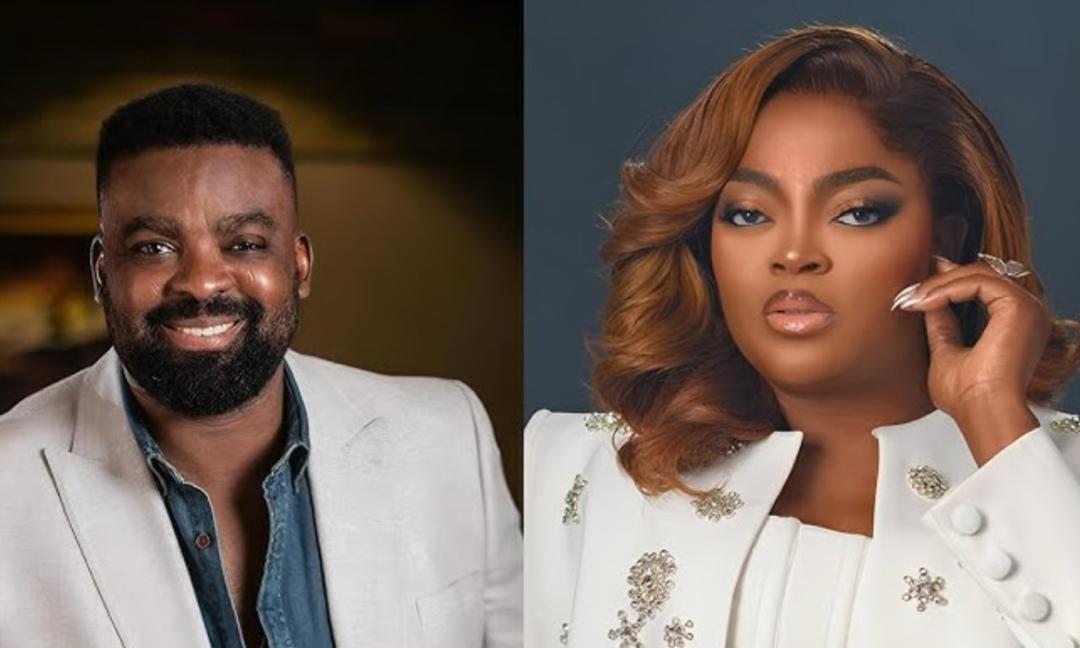
Cinema vs Netflix: What the Funke Akindele–Kunle Afolayan Conversation Says About Nollywood’s Future

The Nigerian film industry is at a crossroads and the recent online conversation involving Funke Akindele and Kunle Afolayan has unintentionally brought that reality into sharp focus.

While social media see the moment as a personal “saga,” between the film makers, the substance of the discussion has little to do with rivalry. Instead, it exposes a fundamental divide in Nollywood’s production and release ecosystem: the growing tension between cinema-led filmmaking and streaming-first distribution, particularly via platforms like Netflix.

Funke Akindele and Kunle Afolayan represent two of Nollywood’s most successful yet structurally different approaches to filmmaking.

Funke Akindele’s recent run has been defined by cinema dominance. Her projects are built to thrive in theatres, relying on strong opening weekends, repeat viewership, and sustained audience attention over several weeks. This cinema-first model places heavy emphasis on visibility, demanding relentless promotion to keep films culturally relevant and commercially viable during their theatrical lifespan.

Kunle Afolayan’s recent body of work, by contrast, has leaned more toward platform-backed production, particularly through Netflix. In this system, films are often greenlit with clearer financial parameters, predefined distribution agreements, and a primary focus on content value rather than box-office optics. Promotion exists, but it is rarely as intense or personal as what cinema releases now demand.

At the centre of the debate is the burden of promotion.

Kunle Afolayan’s comments about the exhaustion that comes with modern film marketing echo a growing sentiment among filmmakers. 

It is draining. I want to make a film if you guarantee me that I don’t have to dance to sell that film

There’s no competition. I don’t want two billion in cinema, or even one billion, if I won’t make ten million from it.

Cinema releases in Nigeria increasingly require creators to act not just as directors or producers, but as full-scale digital entertainers  constantly producing skits, trends, behind-the-scenes content, and viral moments to sustain public interest.

Funke Akindele’s indirect response reframes the issue entirely. Her message is simple: every filmmaker must choose what works for them. Cinema success, in her case, is inseparable from aggressive marketing, audience engagement, and cultural presence. It is not a burden, it is the business.

If you can’t beat them or join them, create your own path. No allow jealousy burn you. The sky is so big for everybody to fly. Eyin Werey jojo!!!”

I’m not the one hindering your progress. Ka rin ka po, yiyeye ni n ye ni.” 

Go ahead and create alternative promotion or marketing strategies for promoting your business, or hire a company to handle it. You can do it! The opportunities are endless, and everyone has their own path. I’m focused on mine, and I have faith in God’s plan for me.” 

One reason this conversation resonates is because cinema and streaming measure success differently.

Cinema success is public and immediate: Ticket sales, Opening-weekend figures, Records broken and Audience turnout.

Streaming success is quieter and less transparent: Licensing value, Global reach, Completion rates and Long-term catalogue relevance.

Netflix productions do not need daily online performances from filmmakers to survive. Cinema films often do.

The Funke Akindele–Kunle Afolayan discourse highlights a larger shift happening across Nollywood. As streaming platforms reassess budgets and cinema costs continue to rise, filmmakers are being forced to make strategic choices earlier in the production process.

Neither path is wrong. But they are no longer the same road.

Nollywood is no longer unified by a single definition of success. The industry has matured into a space where cinema blockbusters and streaming originals coexist  sometimes uneasily under the same umbrella.

The current conversation is not about who is right or wrong. It is about what kind of industry Nollywood wants to be in the next decade.

The Funke Akindele–Kunle Afolayan moment matters because it captures Nollywood in transition. And how filmmakers respond to this divide may shape the future of Nigerian cinema more than any box-office record ever could.

Scroll to Top