Top 3 Must-See Nollywood Movie Releases This February 2026

February 2026 is shaping up to be a month of excitement for Nollywood fans. From heartfelt romance to powerful real-life stories, this month promises films that will entertain, inspire, and spark conversations. Here’s a look at the top three confirmed Nollywood releases you should not miss.

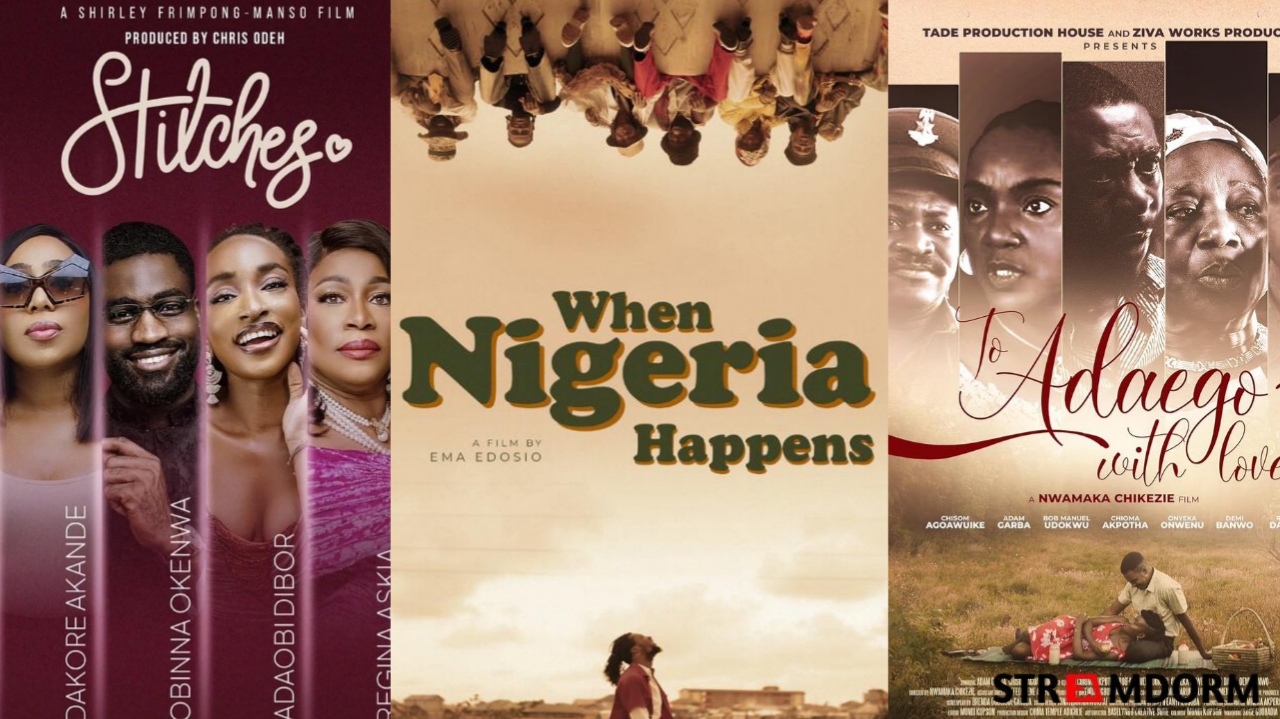
To Adaego With Love

Release Date: February 6, 2026

Genre: Romance / Period Drama

“To Adaego With Love” is one of the most anticipated Nollywood films of the year. Set in post-Civil War Nigeria (1975), the movie tells the story of a soldier and a school teacher from rival communities who fall in love against the backdrop of a society healing from conflict.

The film stars Chisom Agoawuike, Adam Garba, Chioma Chukwuka, Bob-Manuel Udokwu, and includes one of the final screen appearances of the late Onyeka Onwenu, adding a layer of historical and emotional significance. The movie is a perfect mix of romance, drama, and Nigerian history, making it both entertaining and culturally rich.

Viewers can expect a story of forgiveness, unity, and the power of love that transcends barriers. For lovers of romantic dramas with emotional depth, this is a film not to miss.

Love & New Notes

Release Date: February 13, 2026

Genre: Romance / Contemporary Drama

If you are looking for a light, modern romance, “Love & New Notes” is the perfect choice for Valentine’s season. Directed by Kayode Kasum and starring Timini Egbuson, the movie captures the humour, heartbreak, and charm of modern Lagos love stories.

The story combines witty dialogues, relatable relationship moments, and a cast that includes Odunlade Adekola, Eniola Badmus, and Sophie Alakija. Its Valentine’s release date positions it as the go to movie for couples and young adults looking for entertainment that reflects contemporary Nigerian love and life.

For anyone who enjoys romantic comedies with heart and strong performances, this film is set to be a standout of the month.

Mothers of Chibok

Release Date: February 27, 2026

Genre: Documentary / Social Issue

“Mothers of Chibok” is more than just a movie; it is a documentary that tells one of Nigeria’s most important stories. The film focuses on the mothers of the Chibok school girls abducted in 2014, sharing their stories of resilience, courage, and hope.

Directed by Kachi Benson, the documentary is a moving exploration of the human spirit and a reminder of the power of persistence in the face of adversity. It highlights how ordinary people can display extraordinary strength and determination.

This film is ideal for viewers who are drawn to stories that matter, films that educate, and narratives that inspire social awareness and empathy.

From historical romances to contemporary love stories and documentaries that touch the heart, February 2026 offers a diverse Nollywood lineup. Whether you’re a fan of love stories, historical dramas, or real-life social issues, these three films promise to deliver unforgettable experiences on the big screen.

MICHAEL Trailer Arrives, Offering a Grand, Controlled Look at the King of Pop’s Legacy

The long-awaited trailer for MICHAEL, the official biopic of global music icon Michael Jackson, has finally been released, and it signals exactly what kind of film Lionsgate is positioning for audiences worldwide: expansive, reverent, and carefully constructed.

Directed by Antoine Fuqua, the film stars Jaafar Jackson, Michael’s nephew, in the lead role. From the opening frames, the trailer makes one thing clear; MICHAEL is not chasing controversy or spectacle for shock value. Instead, it presents Jackson’s life as a cinematic chronicle of ambition, talent, and cultural impact, framed through music, performance, and intimate moments behind the curtain.

The trailer moves briskly through Michael’s early years with the Jackson 5, capturing the discipline, pressure, and early brilliance that shaped him long before superstardom. As it progresses, the focus shifts toward his transformation into a solo artist, with recreated studio sessions, massive concert scenes, and carefully staged performances that echo defining eras of his career. The production scale is unmistakable, leaning into grandeur without overwhelming the emotional center of the story.

Jaafar Jackson’s performance is the trailer’s most striking element. His physical resemblance, vocal tone, and command of Michael’s signature movements have already sparked widespread conversation online. Rather than feeling like an imitation, the portrayal appears studied and restrained, aiming to reflect Michael’s inner world as much as his public persona. That balance will likely define how audiences ultimately receive the film.

Beyond the performances, MICHAEL positions itself as a legacy project. The trailer emphasizes creativity, isolation, and the cost of global fame, hinting at personal struggles without explicitly dramatizing controversy. This approach suggests a deliberate narrative choice, one that centers Michael Jackson as an artist and cultural force first, while allowing complexity to exist without turning the film into a tabloid reenactment.

The supporting cast, including Colman Domingo as Joe Jackson and Nia Long as Katherine Jackson, adds further weight to the project, reinforcing its intent to ground the story in family, pressure, and legacy rather than sensationalism.

From an industry standpoint, the release of the trailer confirms MICHAEL as one of the most significant music biopics of the decade. The early response underscores sustained global fascination with Jackson’s story and raises expectations for how modern biopics can handle iconic figures whose lives remain deeply debated.

Scheduled for theatrical release on April 24, 2026, MICHAEL arrives at a moment when audiences are increasingly critical of how true stories are adapted for the screen. If the tone of the trailer is any indication, the film is aiming for scale, respect, and long-term cultural relevance rather than short-term buzz.

For now, the trailer does what it needs to do: it reopens the conversation around Michael Jackson; not just as a pop legend, but as a human being whose influence continues to shape music, performance, and global pop culture decades later.

WATCH TRAILER

Ryan Coogler Named Creative of the Year by The Creative Collective

In a move that recognizes one of the most influential voices in contemporary cinema, Ryan Coogler has been named Creative of the Year by The Creative Collective, according to an exclusive report by Variety. This honor is a testament to Ryan Coogler’s remarkable career, which blends commercial success with cultural resonance, and underscores his role as a creative leader shaping the future of storytelling.

Ryan Coogler, a filmmaker who has consistently combined emotional depth with social relevance, first captured global attention with Fruitvale Station (2013), a harrowing, true-story drama about the last day of Oscar Grant’s life. The film premiered at Sundance and immediately established him as a storyteller unafraid to confront systemic injustice while maintaining a deeply human perspective.

He followed this with Creed (2015), a fresh take on the iconic Rocky saga, blending nostalgia with innovation. Creed not only revitalized a beloved franchise but also showcased Coogler’s skill in crafting character-driven narratives that resonate across generations.

Then came Black Panther (2018), a cultural phenomenon that became more than just a superhero blockbuster. Ryan Coogler transformed the Marvel film into a celebration of African heritage and identity, weaving themes of power, responsibility, and community into a narrative that captured hearts worldwide. The film’s success both critically and commercially established his reputation as a director capable of merging blockbuster appeal with profound social commentary.

Most recently, his directed Sinners (2025), which has been praised for its bold storytelling, rich character work, and willingness to explore complex social themes. The film’s creative team, including co-writer and producer Zinzi Coogler and producer Sev Ohanian, has been recognized alongside him for pushing boundaries in filmmaking.

The title of Creative of the Year from The Creative Collective is not just an award, it is a statement about Coogler’s influence. The Creative Collective celebrates individuals who push creative boundaries, redefine their industries, and inspire new ways of thinking. Ryan Coogler’s recognition is particularly significant in a landscape where representation, culture, and storytelling intersect with global influence.

For young filmmakers and creatives around the world, he now represents a model of how vision, cultural consciousness, and collaboration can elevate both art and society. His work is a reminder that commercial success need not come at the expense of authenticity or meaningful storytelling.

Beyond the box office, Ryan Coogler has shaped conversations about representation, identity, and social justice in media. Black Panther sparked global dialogue about African culture and the portrayal of Black excellence in mainstream cinema. His projects often highlight marginalized voices and explore nuanced narratives that challenge stereotypes, giving audiences stories that feel both relatable and revolutionary.

His approach extends to mentoring and collaboration, evident in his work on Sinners, which brought together emerging talent and experienced creatives to produce a film that is as socially engaging as it is artistically ambitious. These efforts reinforce the idea that creativity thrives not in isolation but through community and collaboration.

The Creative Collective is known for celebrating individuals who redefine their industries. Unlike conventional awards, it focuses on impact and innovation, spotlighting creators who influence culture, inspire peers, and push creative boundaries. Coogler’s selection highlights his status not just as a filmmaker, but as a cultural architect, someone shaping the narratives that define our era.

Recognition from such a body also signals the growing importance of filmmakers who balance artistry with social consciousness. In an era dominated by franchises, streaming platforms, and global audiences, creatives like Coogler show that meaningful storytelling still has the power to captivate and influence on a massive scale.

Netflix, Apple, Sony, and Warner Bros. Sit Out Super Bowl Film Marketing — Here’s What That Means

As Super Bowl LX approaches on February 8, 2026, Hollywood’s usual Big Game marketing frenzy looks different this year. Some of the biggest names in film; Netflix, Apple Original Films, Sony, and Warner Bros. etc  are reportedly opting out of traditional Super Bowl advertising for their upcoming releases.

The move is striking because for decades, the Super Bowl has been the ultimate stage to debut movie trailers, with over 100 million viewers tuning in worldwide. Traditionally, a well-timed Big Game spot can spark massive social media buzz, drive trailer views, and generate early ticket sales. But this year, these studios are taking a different path.

Reports confirm that Netflix is skipping Super Bowl ad slots for its upcoming films, while Apple Original Films is also sitting out, favoring other promotional channels. Sony Pictures will not be buying movie ad space during the Big Game, and Warner Bros. is absent as well, despite its history of high-profile Super Bowl campaigns. Instead of spending millions on 30-second TV spots, these studios are focusing on digital-first marketing, using online trailers, social media campaigns, and targeted fan events to reach audiences without the massive price tag.

Not all studios are sitting on the sidelines. Disney, Universal, and Paramount are expected to lead the Super Bowl film marketing charge this year, with trailers for major blockbusters. Fans can anticipate promos for Toy Story 5, The Mandalorian & Grogu, and Super Mario Galaxy, among others. This split shows a strategic divide in Hollywood, with some studios viewing the Super Bowl as an essential launchpad while others are betting on digital-first campaigns and extended hype-building.

Several factors explain the shift. Skyrocketing costs make a 30-second Super Bowl ad increasingly expensive, with average prices hitting $8 million, not including production or talent fees. Digital platforms like YouTube and social media allow studios to reach their audiences more precisely. Meanwhile, many franchises are adopting strategies that favor sustained hype through social campaigns, trailers, and exclusive previews rather than relying on a single broadcast moment.

Even without Netflix, Apple, Sony, and Warner Bros. participating, the Super Bowl will still feature high-profile trailers and teasers. For studios that do advertise, the game remains a chance to set the tone for their biggest releases of the year. The takeaway is clear: Hollywood is experimenting with where, when, and how to reach audiences. The Super Bowl remains important, but it is no longer the automatic marketing must-have for every studio.

The Devil Wears Prada 2 Trailer Debuts at the GRAMMYs: What the Sequel Means for Fashion, Power, and Pop Culture

Nearly two decades after The Devil Wears Prada became a defining film about ambition, fashion, and power, the world finally got its first look at the highly anticipated sequel. The official trailer for The Devil Wears Prada 2 premiered during the 2026 GRAMMY Awards, turning the music industry’s biggest night into a global stage for cinema and signaling that this sequel is positioned as a cultural event rather than a simple continuation of the story.

The decision to debut the trailer during the GRAMMYs was more than a marketing move. The original film thrived at the intersection of fashion, celebrity, and cultural influence, and the sequel’s trailer release in this context highlights how the filmmakers are framing it as a conversation about relevance, legacy, and power in a modern, rapidly changing world. The trailer immediately made clear that the sequel is not just revisiting nostalgia; it is reflecting on what these characters and the world they inhabit have become.

The trailer confirms that the core cast is fully intact. Meryl Streep returns as the formidable Miranda Priestly, Anne Hathaway reprises her role as Andy Sachs, Emily Blunt is back as Emily Charlton, and Stanley Tucci returns as Nigel. Their presence cements the film as a direct continuation of the story rather than a reboot or spin-off. However, the dynamics have shifted. Whereas the original focused on a young assistant navigating the demands of a powerful editor, the sequel appears to explore a reversal of power and perspective. Runway magazine, once untouchable in its dominance, now faces a landscape shaped by declining traditional media, digital transformation, and a new set of challenges. Emily Charlton has evolved from a sharp-tongued assistant into a formidable executive with influence of her own, and Andy Sachs returns not as an outsider but as a seasoned professional who understands the inner workings of the industry she once aspired to join.

In addition to the returning cast, the sequel introduces new faces, including Kenneth Branagh, Lucy Liu, Justin Theroux, and Pauline Chalamet, suggesting a broader exploration of fashion, media, and corporate power beyond the walls of Runway. These characters, though still largely mysterious, hint at fresh tensions and alliances that could redefine the stakes of the story.

What makes this sequel particularly relevant is the timing. The world of fashion media has changed dramatically since 2006. Influence has shifted from editors and magazines to social media algorithms and global digital audiences. Authority is constantly being challenged by relevance. By revisiting these characters now, the film has the opportunity to explore not only personal growth but also how power, ambition, and culture intersect in an industry transformed by technology and shifting societal values.

The Devil Wears Prada 2 is scheduled for a theatrical release on May 1, 2026. Directed by David Frankel and written by Aline Brosh McKenna, the film promises to combine the sharp dialogue and character-driven storytelling that made the original a cultural touchstone with a contemporary lens on ambition and influence.

The trailer’s debut at the GRAMMYs makes one thing clear: this is not a film content to merely look back. By framing its characters as seasoned professionals navigating a new world rather than young assistants climbing a ladder, the sequel positions itself as a reflection on power, adaptation, and the pursuit of relevance in 2026. Miranda Priestly is back, Andy Sachs is back, Emily Charlton is back, and they all carry with them the weight of experience, ambition, and cultural authority. Whether the film fulfills its promise remains to be seen, but for now, the message is unmistakable: the world of The Devil Wears Prada has returned, sharper, smarter, and as stylish as ever.

Cinema vs Netflix: What the Funke Akindele–Kunle Afolayan Conversation Says About Nollywood’s Future

The Nigerian film industry is at a crossroads and the recent online conversation involving Funke Akindele and Kunle Afolayan has unintentionally brought that reality into sharp focus.

While social media see the moment as a personal “saga,” between the film makers, the substance of the discussion has little to do with rivalry. Instead, it exposes a fundamental divide in Nollywood’s production and release ecosystem: the growing tension between cinema-led filmmaking and streaming-first distribution, particularly via platforms like Netflix.

Funke Akindele and Kunle Afolayan represent two of Nollywood’s most successful yet structurally different approaches to filmmaking.

Funke Akindele’s recent run has been defined by cinema dominance. Her projects are built to thrive in theatres, relying on strong opening weekends, repeat viewership, and sustained audience attention over several weeks. This cinema-first model places heavy emphasis on visibility, demanding relentless promotion to keep films culturally relevant and commercially viable during their theatrical lifespan.

Kunle Afolayan’s recent body of work, by contrast, has leaned more toward platform-backed production, particularly through Netflix. In this system, films are often greenlit with clearer financial parameters, predefined distribution agreements, and a primary focus on content value rather than box-office optics. Promotion exists, but it is rarely as intense or personal as what cinema releases now demand.

At the centre of the debate is the burden of promotion.

Kunle Afolayan’s comments about the exhaustion that comes with modern film marketing echo a growing sentiment among filmmakers. 

It is draining. I want to make a film if you guarantee me that I don’t have to dance to sell that film

There’s no competition. I don’t want two billion in cinema, or even one billion, if I won’t make ten million from it.

Cinema releases in Nigeria increasingly require creators to act not just as directors or producers, but as full-scale digital entertainers  constantly producing skits, trends, behind-the-scenes content, and viral moments to sustain public interest.

Funke Akindele’s indirect response reframes the issue entirely. Her message is simple: every filmmaker must choose what works for them. Cinema success, in her case, is inseparable from aggressive marketing, audience engagement, and cultural presence. It is not a burden, it is the business.

If you can’t beat them or join them, create your own path. No allow jealousy burn you. The sky is so big for everybody to fly. Eyin Werey jojo!!!”

I’m not the one hindering your progress. Ka rin ka po, yiyeye ni n ye ni.” 

Go ahead and create alternative promotion or marketing strategies for promoting your business, or hire a company to handle it. You can do it! The opportunities are endless, and everyone has their own path. I’m focused on mine, and I have faith in God’s plan for me.” 

One reason this conversation resonates is because cinema and streaming measure success differently.

Cinema success is public and immediate: Ticket sales, Opening-weekend figures, Records broken and Audience turnout.

Streaming success is quieter and less transparent: Licensing value, Global reach, Completion rates and Long-term catalogue relevance.

Netflix productions do not need daily online performances from filmmakers to survive. Cinema films often do.

The Funke Akindele–Kunle Afolayan discourse highlights a larger shift happening across Nollywood. As streaming platforms reassess budgets and cinema costs continue to rise, filmmakers are being forced to make strategic choices earlier in the production process.

Neither path is wrong. But they are no longer the same road.

Nollywood is no longer unified by a single definition of success. The industry has matured into a space where cinema blockbusters and streaming originals coexist  sometimes uneasily under the same umbrella.

The current conversation is not about who is right or wrong. It is about what kind of industry Nollywood wants to be in the next decade.

The Funke Akindele–Kunle Afolayan moment matters because it captures Nollywood in transition. And how filmmakers respond to this divide may shape the future of Nigerian cinema more than any box-office record ever could.

Bridgerton Season 4 Is Here: Release Details, Cast Updates & Behind the Scenes Secrets

Netflix’s Regency-era romance phenomenon Bridgerton returns with its fourth season, and fans are buzzing. With lavish ballrooms, new love stories, and unforgettable drama, Season 4 promises everything audiences love about the Ton plus some exciting surprises.

Netflix is rolling out Season 4 in two parts, giving fans plenty to anticipate:

  • Part 1 premiered on January 29, 2026, featuring the first four episodes.
  • Part 2 arrives on February 26, 2026, completing the season with the final four episodes.

Season 4 shifts focus to Benedict Bridgerton (Luke Thompson) and his romance with Sophie Baek (Yerin Ha). Inspired by Julia Quinn’s An Offer from a Gentleman, the season blends Regency romance with a classic Cinderella-style twist.

Sophie, a maid with secrets, navigates the glittering world of high society, while Benedict balances duty, desire, and family expectations. Meanwhile, the season explores class divides, forbidden love, and the complicated lives of the Ton’s elite; all against Netflix’s signature lavish set designs. 

  • Returning favorites: Colin Bridgerton and Penelope continue their story as new parents, adding warmth and humor.
  • New faces: Katie Leung as Lady Araminta Gun, Michelle Mao, and Isabella Wei bring fresh energy to the Ton’s social scene.
  • Ensemble highlights: Season 4 balances returning cast members with newcomers, keeping the story fresh without losing its heart.

Behind the Scenes: Making the Ton Come Alive

The Masquerade Ball

One of Season 4’s most anticipated sequences is the masquerade ball, where Benedict and Sophie first meet. Netflix pulled out all the stops:

  • 172 custom costumes and 160 wigs created for the scene.
  • Set designers infused a “Midsummer Night’s Dream” vibe to capture romance and fantasy.

Luke Newton & Cast Insights

While Colin Bridgerton isn’t the romantic lead this season, Luke Newton shines behind the scenes. Interviews reveal:

  • Newton is proud of Colin’s growth, now a supportive and grounded figure in the Ton.
  • On set, the cast enjoys playful camaraderie, helping new members like Yerin Ha feel welcome.
  • Fans can glimpse their chemistry and teamwork in behind-the-scenes videos released by Netflix.

Filming Highlights

  • Cast members shared off-camera moments transitioning from Regency costumes to modern clothes, giving fans a peek behind the curtain.
  • On-set humor, wardrobe mishaps, and shared celebrations reflect the strong bond among the ensemble cast. 

Bridgerton Season 4 delivers more than romance. It explores class, identity, and the human side of high society while keeping viewers invested in the personal growth of beloved characters.

With its lavish production, clever storylines, and behind-the-scenes charm, the season proves why Bridgerton remains Netflix’s most talked-about drama.

Fast Forever: The Final Ride of the Fast & Furious Franchise

The Fast & Furious franchise is officially gearing up for its final lap. Universal Pictures and star Vin Diesel have confirmed that the next and last mainline installment will be titled Fast Forever, hitting theaters on March 17, 2028. Fans worldwide are already buzzing about what promises to be a cinematic finale that closes nearly three decades of high-octane action, family drama, and unforgettable moments.

Since the release of the original The Fast and the Furious in 2001, the franchise has grown from street racing stories into a global phenomenon. Over the years, it has delivered epic car chases, daring heists, and family-centered storytelling that has captured the hearts of millions.

Vin Diesel, who has been the face of the franchise, shared the announcement with a heartfelt tribute to the late Paul Walker, who played Brian O’Conner:

No one said the road would be easy… but it’s ours… And a legacy… lasts forever.”

With Fast Forever, the series aims to honor its long-running storylines, characters, and fans one last time.

Fast Forever follows Fast X (2023), which ended on a cliffhanger, leaving fans eagerly awaiting the ultimate conclusion. Production has faced delays and rescheduling, but now the franchise has a confirmed title and release date, bringing the story full circle after 27 years.

From street races in Los Angeles to globe-spanning adventures, the franchise has constantly pushed the limits of action cinema. Fast Forever is expected to combine adrenaline-pumping stunts with emotional moments that honor the series’ history.

The franchise is known for breaking the rules of physics on the big screen. Expect nothing less in Fast Forever. Long-running character arcs, family dynamics, and the legacy of Brian O’Conner are likely to take center stage.

Fast Forever is more than just another action film; it’s the conclusion of a franchise that has influenced an entire generation of filmmakers and audiences. From its humble street racing beginnings to becoming a global action powerhouse, Fast & Furious has consistently delivered spectacle, heart, and a message about family that resonates beyond the screen.

March 17, 2028, is now marked on fans’ calendars as the day the final chapter races into theaters, promising a fitting and unforgettable farewell.

The Night Manager Season 3 Confirmed by Tom Hiddleston Ahead of Season 2 Finale

Fans of the BBC spy thriller The Night Manager finally have exciting news: the series is officially returning for a third season. Tom Hiddleston, who reprises his role as Jonathan Pine, confirmed the development during a guest appearance on This Morning, just days before the Season 2 finale on February 1, 2026.

The show, which returned after a ten-year hiatus, has been carefully plotted by its creators. Hiddleston revealed that the current season was designed as the first part of a 12-episode overarching story arc, ensuring that the narrative continues seamlessly into future seasons.

For fans worried about another long wait, Hiddleston reassured viewers that the gap between Seasons 2 and 3 will be far shorter than the decade-long pause between the first two seasons. While exact production dates or release timelines for Season 3 have not been announced, the confirmation signals that the spy saga is far from over.

The Night Manager originally gained acclaim for its gripping storytelling, intense performances, and high-stakes espionage. With Season 2 introducing new storylines and expanding the universe, Season 3 is expected to build on this momentum, further exploring Jonathan Pine’s dangerous missions and complex alliances.

As anticipation builds, fans are eager to see how the series will continue to adapt John le Carré’s spy fiction for modern audiences, maintaining the mix of suspense, intrigue, and sharp character drama that made the original so compelling.

With Hiddleston at the helm and the creative team committed to a multi-season arc, The Night Manager Season 3 promises to deliver the spy thriller fans have been waiting for; without a decade-long wait this time.

Euphoria Season 3: HBO’s Hit Drama Returns With a New Era for Rue and the Crew

After years of speculation, production delays, and endless fan theories, HBO’s cultural phenomenon Euphoria is finally returning for Season 3, marking a new chapter for one of television’s most talked-about dramas.

Since debuting in 2019, Euphoria has grown beyond a teen drama into a defining show about addiction, identity, friendship, trauma, and the emotional chaos of growing up in the digital age. Now, with the upcoming season, the series moves its characters beyond high school and into a more uncertain adult world.

And from early details, Season 3 may be the show’s biggest transformation yet.

Fans have waited nearly four years since Season 2 aired in early 2022. Production delays, industry strikes, and scheduling conflicts slowed development, leaving viewers unsure when the show would return.

HBO has now confirmed that Euphoria Season 3 premieres in April 2026, ending one of the longest waits between seasons for a major TV drama in recent years.

The new season is expected to continue the show’s tradition of emotionally intense storytelling and cinematic visuals, elements that helped turn the series into a global pop-culture conversation.

One of the biggest changes coming in Season 3 is a major time jump, moving the story forward several years.

Instead of picking up immediately after Season 2’s events, the characters are now adults dealing with life beyond high school; careers, independence, broken friendships, unresolved trauma, and real-world consequences.

This shift allows the series to evolve alongside its audience, many of whom have also grown since the show first premiered.

For viewers, this means familiar characters facing unfamiliar challenges, with relationships likely to change in unexpected ways.

Most of the main cast members are returning, ensuring continuity for longtime fans.

Expected returning stars include:

  • Zendaya as Rue Bennett
  • Hunter Schafer as Jules Vaughn
  • Sydney Sweeney as Cassie Howard
  • Jacob Elordi as Nate Jacobs
  • Alexa Demie as Maddy Perez
  • Maude Apatow as Lexi Howard
  • Colman Domingo as Ali Muhammed
  • Eric Dane as Cal Jacobs
  • Chloe Cherry as Faye

Several supporting characters are also expected back, while some roles may be reduced or absent due to storyline developments from Season 2.

Season 3 also expands its world with new characters, bringing in fresh energy and new story possibilities.

High-profile additions reportedly include musicians, film veterans, and unexpected celebrity names, signaling HBO’s intent to make the upcoming season feel larger and more ambitious.

New characters often reshape Euphoria’s social landscape, and Season 3 could introduce new alliances, conflicts, and emotional stakes.

Fans are particularly curious about whether Rue finds stability or falls deeper into chaos, a question central to the emotional core of the show.

With the long break between seasons, expectations are extremely high. Some viewers worry the gap may reduce momentum, while others believe the time jump could refresh the show and prevent it from repeating old storylines. Euphoria remains one of HBO’s most anticipated returning series, and its premiere will likely dominate online conversations once again.

Scroll to Top