Netflix has laid off approximately 1,000 employees, representing around 6% of its workforce, in its largest round of job cuts since 2022. The layoffs were announced on October 14, 2026, as the streaming giant looks to streamline its operations and direct more resources towards areas it believes will drive future growth.
The job cuts were communicated in an internal memo from Netflix co-CEOs Ted Sarandos and Greg Peters. The move comes at a time when the company remains profitable but faces growing pressure to maintain audience engagement, attract new subscribers and compete for viewers’ attention in an increasingly crowded entertainment market.
Despite reporting strong financial results in 2025, Netflix is reassessing how it allocates its resources as the streaming industry continues to evolve.
The latest Netflix layoffs primarily affect employees in product, technology, legal and human resources, although reports indicate that other parts of the business, including film and television operations, may also be affected.
In their internal memo, they explained that the company’s ambitions require careful decisions about where its people and resources are deployed.
The executives stressed that Netflix’s business remains strong and growing, adding that the company remains on track to meet its full-year financial forecast for 2026.
They also reaffirmed Netflix’s intention to continue investing in areas that can improve its service, support innovation and generate further growth.
The announcement suggests that the company is seeking to reorganise its workforce around its priorities rather than simply reduce spending across the business. However, the scale of the cuts highlights the difficult decisions facing even established streaming platforms as they adapt to changing audience habits and competitive pressures.
Although Netflix has not attributed the layoffs to a single cause, the decision comes amid concerns about growth, audience engagement and the company’s position in the wider entertainment market.
Netflix has reportedly laid off around 1,000 employees, 6% of its staff
Netflix has built its success on original programming, a global subscription business and its ability to keep viewers returning to the platform. Maintaining that momentum, however, has become increasingly challenging as audiences divide their time across more entertainment services.
Sarandos acknowledged the challenge in late September 2026, saying, “We’re not growing as fast as I want us to.”
The comment reflects the pressure on Netflix to accelerate its growth, even as it remains one of the most influential companies in streaming.
Competition is no longer limited to other subscription services. YouTube, TikTok and other digital platforms offer enormous libraries of content, much of it free to watch, giving audiences more options for how they spend their time.
YouTube, in particular, has strengthened its position in television viewing, challenging the traditional distinction between streaming services and other forms of digital entertainment.
As viewing habits change, Netflix must compete not only for subscriptions but also for the hours audiences are willing to spend watching its content.
Netflix’s latest workforce reduction comes despite a strong financial performance in 2025, when the company generated approximately $45.2 billion in revenue and $11 billion in net income.
Those figures underline an important point: the layoffs do not, by themselves, indicate that Netflix is struggling to remain profitable.
Instead, the company is operating in an environment where financial success does not automatically guarantee faster growth or greater audience engagement.
The company’s next earnings update, expected around October 20, could provide further insight into its financial outlook and strategic direction.
The streaming industry has become a broader contest for attention, with Netflix competing against services that operate under very different business models.
YouTube benefits from a vast supply of creator-led videos, livestreams and other content, while TikTok has built a large audience around short-form entertainment. Both platforms compete for time that viewers might otherwise spend watching films, series and other long-form programming.
For Netflix, this creates a challenge that extends beyond adding subscribers. The company must also give existing users compelling reasons to keep watching, return for new releases and maintain their subscriptions.
The pressure is particularly significant as streaming markets mature and consumers become more selective about the services they pay for.
The company has faced questions about its growth prospects, content spending and ability to deliver major hits consistently. Its unsuccessful pursuit of Warner Bros. Discovery assets has also formed part of the wider debate about its future content strategy and opportunities for expansion.
The company’s stated approach is to prioritise the people and resources needed to advance its most important goals. In practice, that means balancing its established film and television business with newer opportunities that could strengthen its position in the evolving entertainment market.
Netflix’s decision to eliminate around 1,000 jobs is a significant development for the company and the wider entertainment industry. It is the largest workforce reduction Netflix has undertaken since 2022.
When we talk about AI products, we often focus on what the technology can do. How intelligent is it? How accurate is it? How quickly can it respond? How much work can it automate?
But as AI becomes a more common interface between companies and their customers, I think we need to ask another question: what is it like to interact with the AI?
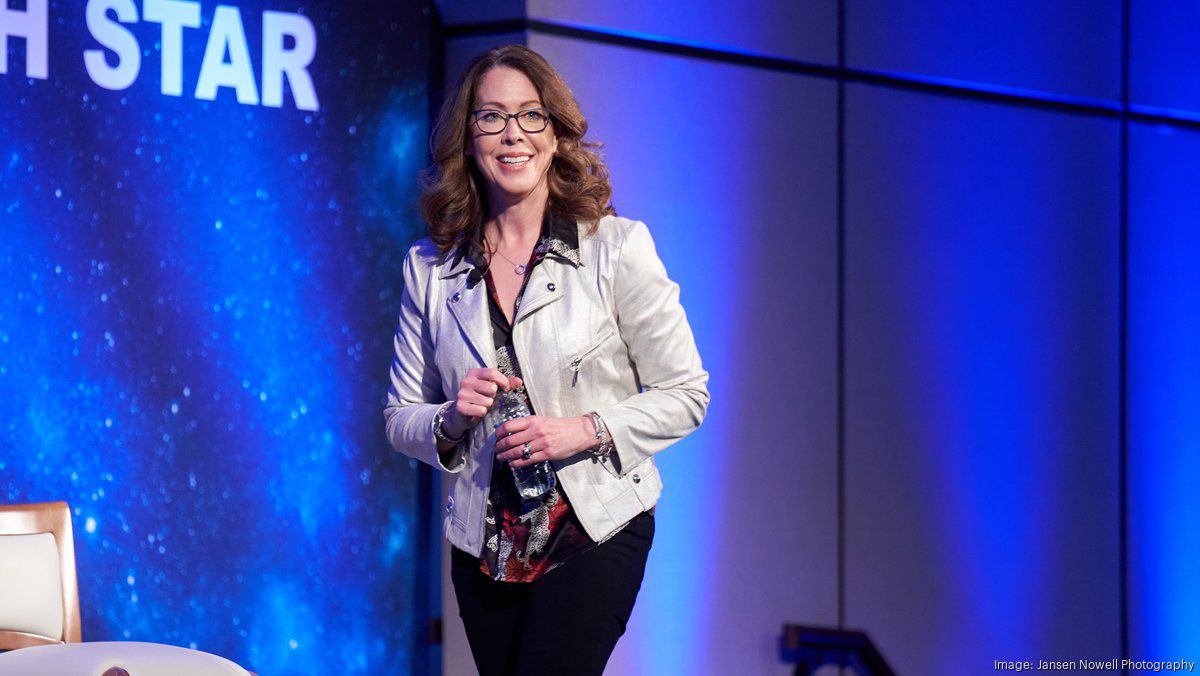
I am Amara Awana, a Conversational AI Designer. I design and build AI conversational systems. My work sits at the intersection of conversation design, AI product experience, branding and marketing. My background in English and Literary Studies, alongside my interests in scriptwriting, filmmaking and brand strategy, has shaped the way I think about conversations between people and machines.
Designing AI conversational systems is a branding and marketing decision not only a technical decision, not only a product decision, not only a UX decision.
Because when an AI becomes one of the ways people experience a company, the way that AI communicates becomes part of the experience. And the experience becomes part of the brand. That is where I think conversational AI gets particularly interesting.
I Think About AI Through Character
My interest in this started with storytelling. Think about a character in a film that you really love. You probably remember more than what happened in the story you remember the character: their personality, their mannerisms, their reactions and, especially, the way they speak. Sometimes you can recognise a character from a single line because you already know how that character talks. There is an identity there, and that identity makes the character both recognisable and memorable.
I started wondering what this could mean for AI. What happens when we deliberately design an AI conversational system with a recognisable identity? Not because we are pretending the AI is human, but because we have made intentional decisions about how it communicates: its voice, its tone, its personality, its conversational behaviour, its responses to different situations, its relationship with the user.
Imagine two AI products that can perform essentially the same task. Both are accurate, useful and fast. But one feels generic, while the other has a distinctive conversational identity that fits the product. You may use both, but you might remember one. You might even talk about it: “I love this AI.”
That interests me, because now the user is not remembering only what the product did they are remembering the experience of interacting with it. And that experience can become part of the brand.
The Conversation Is Part of the Brand
We often think about branding through visual elements: the logo, the colours, the typography, the website, the packaging, the social media presence. But people do not experience brands only through visual identity. They experience them through interactions.
If an AI is one of the ways a customer interacts with a company, then that conversation is part of the brand experience. Think about what happens when a customer asks an AI a question. The system has an opportunity to communicate something about the company through that interaction. It can feel warm or cold, playful or serious, formal or conversational, direct or overly cautious, distinctive or completely interchangeable. Those choices affect the interaction, and the interaction contributes to how the user experiences the product.
This is why I keep coming back to a simple idea: everything is brand. The conversation is part of the experience. The experience is part of how people perceive the product. And the personality of the AI can become part of what people remember about the product. That makes conversational design more than an interface decision it becomes a brand decision.
Duolingo Shows What This Can Look Like
One company that has understood the power of personality particularly well is Duolingo. Duolingo is not simply a language learning product with a green owl attached to it. The personality of Duo, the company’s mascot, has become deeply connected to the way people experience the brand: the humour, the exaggerated reactions, the playful threats, the tone of its notifications, the way the brand communicates on social media. These are not separate from the product’s identity they reinforce it.
Imagine extending that principle beyond a mascot or marketing campaign and into an AI interaction. If a user is talking to an AI tutor, the AI does not have to communicate like a generic educational chatbot. It could reflect the same personality principles that make the wider product recognisable. That does not mean every response needs to contain a joke, or that the AI should constantly perform a character. It means the interaction can have an intentional point of view: encouraging without sounding artificial, playful without becoming distracting, direct without becoming cold, supportive when the user struggles, celebratory when they make progress.
The important thing is consistency. The personality should feel like it belongs to the product. That is where branding and conversational design begin to overlap.
This Is Where Marketing Comes In
I think conversational AI can become one of the most interesting marketing touchpoints for an AI product. Not because the AI should constantly sell something that is not what I mean. I mean that every interaction is an opportunity to reinforce what the product represents.
If a company says its brand is friendly, but its AI communicates like a cold instruction manual, there is a disconnect. If a product is built around creativity, but every interaction feels robotic and generic, there is another disconnect. If a company has spent years developing a distinctive brand voice, but its AI sounds exactly like every other AI product, that is an opportunity being missed.
The AI is communicating with the customer. So why should that communication feel disconnected from the brand? For me, that is a marketing question. And it is a design question.
The interaction itself can carry the brand in the way a system welcomes someone, asks a question, or handles frustration.
The interesting part is that this does not require the AI to advertise anything. The interaction itself can carry the brand: the way the system welcomes someone, the way it asks questions, the way it explains something, the way it handles frustration, the way it responds when it does not know something, the way it guides someone through a task. All of these are moments in which the user is experiencing the product. That is why I think conversational design deserves a place in the marketing conversation.
Designing Personality Is Not Just Making AI Fun
There is a tendency to think that giving an AI personality means making it quirky: give it a funny name, add jokes, make it use emojis, give it an avatar. That is not what I mean by personality.
Personality needs to be designed intentionally. How does this AI speak? How direct is it? What does it value? How does it respond when the user is frustrated? How does it handle uncertainty? What does it do when it cannot fulfil a request? How does it disagree? How does it guide the user? What kinds of language does it repeatedly use? What should the interaction feel like? These are conversational design decisions, and they can influence the identity of the product.
A memorable AI does not necessarily have to be loud or entertaining. It can be quiet. It can be serious. It can be extremely direct. It can be warm. It can be sophisticated. The point is not to make every AI quirky the point is to make the AI recognisable, appropriate and intentional. Its personality should make sense for what the product is and the experience the company wants people to have.
Conversation Is More Than Generating a Response
This is another reason my background influences how I approach conversational AI. I studied English and Literary Studies, which gave me an interest in language, pragmatics, discourse and turn taking. I also write, work with scripts and have an interest in filmmaking. So when I look at a conversation between a person and an AI, I naturally think beyond the individual response.
I think about the interaction. What happens before the response? What does the user expect? What should happen next? When should the system ask a question? When should it stop talking? How should it recover when something goes wrong? How should one turn influence the next? How does the conversation feel as a whole?
In scriptwriting, dialogue is not simply a collection of sentences. Dialogue moves something forward. It reveals character. It communicates information. It creates tension. It establishes relationships. It changes the direction of a scene. I think there is something valuable in bringing that way of thinking into conversational AI design.
We are designing conversations. So we should care about how those conversations work. An AI response should not only be evaluated by whether it is correct. We should also ask whether it is appropriate for the moment, whether it moves the interaction forward and whether it contributes to a coherent experience.
What Makes an AI Product Feel Like Its Own?
This becomes increasingly important as AI products become more common. Many products will have access to powerful underlying models. Many will be able to answer questions, summarise, generate, recommend and automate. The technology behind them may become increasingly accessible. So I think another question becomes important: what makes your AI experience yours?
Part of the answer may be the technology. But part of it can also be the experience built around the technology: the personality, the conversational behaviour, the voice, the way the system interacts with people, the way it handles uncertainty, the way it responds to different situations, the way it represents the brand.
This is where I see conversational AI design becoming strategically important. The underlying model may not be what differentiates one product from another the experience built around that model might. Two companies could use similar AI models and still create completely different products, because the model is only one part of the experience. What happens around it matters too. The conversation matters. The interaction matters. The personality matters. The brand matters.
What I Am Interested in Designing
This is the space I am exploring through my work. I design and build AI conversational systems. I am interested in how we can design systems that understand their purpose, communicate intentionally and create experiences that people enjoy and remember.
I am interested in the relationship between conversation and product experience, between personality and brand, between dialogue and user experience, between AI systems and the people who interact with them. I am particularly interested in what happens when we stop thinking about conversational AI as simply a way for users to get answers and start thinking about it as a designed experience.
Because sometimes, the most memorable thing about a product may not be what the product did. It may be the experience of interacting with it. The way it spoke. The way it responded. The personality it consistently presented. The small details that made the interaction feel different from another product.
And that is why I believe conversational AI design deserves a place in conversations about product, branding and marketing. The future of AI products will not only be about what their systems can do. It will also be about how those systems communicate, how those interactions shape the product experience and what people remember after the interaction ends.
Not AI that simply works. AI that creates an experience worth remembering.
ABOUT THE AUTHOR
Amara Awana is a Conversational AI Designer who designs and builds AI conversational systems.
Her work sits at the intersection of conversation design, interaction design, AI product experience, branding and marketing. With a background in English and Literary Studies and interests spanning scriptwriting, filmmaking and brand strategy, she approaches conversational AI through the lens of language, dialogue, interaction and experience.
She is interested in designing AI systems that do more than provide information systems that communicate with intention, express a distinctive identity and create experiences people can remember.
Based in Africa and working at the intersection of AI, interaction design, marketing and branding, Amara is exploring what comes next for conversational interfaces, including embodied AI and conversational robotics. Her broader ambition is to help shape how people experience AI, not simply through what these systems can do, but through how they communicate, behave and interact with us.
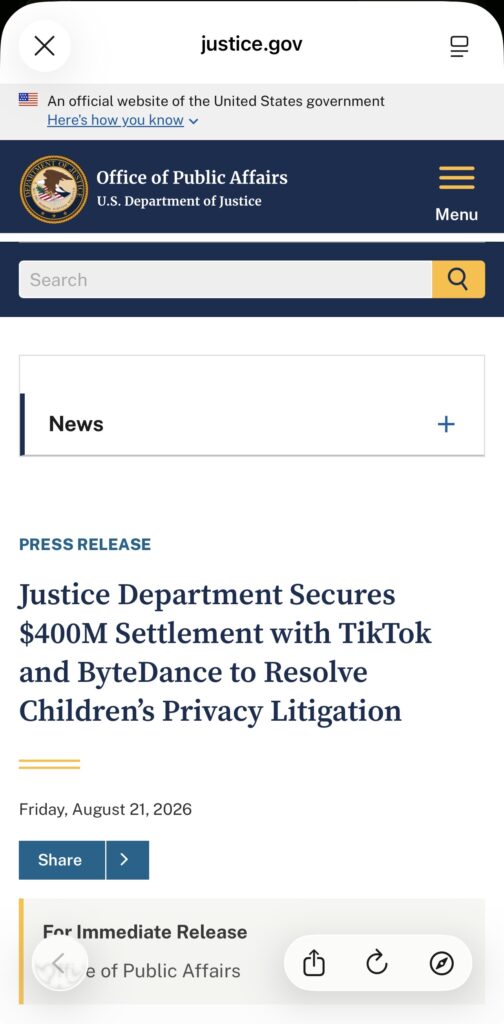
TikTok and its parent company, ByteDance, have agreed to pay $400 million to resolve a U.S. Justice Department lawsuit alleging that the platform violated federal children’s privacy protections by collecting and retaining personal information from users under 13 without the required parental consent.
The settlement, announced by the U.S. Department of Justice on Friday, August 21, is described by the department as one of the largest recoveries ever obtained in a case involving the Children’s Online Privacy Protection Act (COPPA).
The lawsuit stems from a 2024 complaint filed by the Justice Department on behalf of the Federal Trade Commission (FTC) against TikTok, ByteDance and affiliated companies.
The government alleged that TikTok knowingly allowed millions of children under 13 to use the platform despite its minimum age requirement, and that the company collected and used their personal information without first providing the required notice to parents or obtaining verifiable parental consent.
The allegations went beyond ordinary TikTok accounts. Federal regulators also accused the company of collecting children’s information through TikTok’s Kids Mode, a version of the service designed with younger users in mind.
According to the FTC’s complaint, TikTok collected information about children’s activities on the platform and persistent identifiers that could be used to build profiles. The complaint also alleged that some information from Kids Mode users was shared with third parties, including Facebook and marketing analytics company AppsFlyer, for a practice TikTok called “retargeting less active users.”
The FTC further alleged that TikTok had difficulty identifying and removing underage accounts and that parents often faced unnecessary hurdles when trying to have their children’s accounts and data deleted.
One of the more significant allegations in the 2024 complaint concerned accounts TikTok classified as “age unknown.”
The FTC alleged that children could bypass TikTok’s age gate by using credentials from third-party services such as Google and Instagram, allowing them to create accounts without providing their age or obtaining parental consent. According to the complaint, these “age unknown” accounts eventually numbered in the millions.
The FTC complaint also alleged that between February 2019 and July 2022, TikTok collected more than 300,000 problem reports from Kids Mode users that contained children’s email addresses and retained those addresses longer than reasonably necessary.
The settlement is structured in two parts.
$300 million will be paid immediately.
The remaining $100 million will be paid after a court enters an order vacating a previous consent decree involving TikTok’s predecessor, Musical.ly.
That earlier matter dates back to 2019, when Musical.ly agreed to a settlement with the FTC over allegations that it had collected personal information from children under 13 without obtaining the required parental consent.
The company agreed to pay $5.7 million at the time.
TikTok acquired Musical.ly in 2017 and subsequently integrated the service into TikTok.
The Justice Department said TikTok has undergone significant changes to its ownership, management, compliance operations and privacy practices since the 2024 lawsuit was filed.
The department specifically pointed to measures intended to strengthen safeguards for younger users, improve age-related controls and increase parental oversight.
Recent reporting also indicates that TikTok’s U.S. operation has strengthened its age-assurance systems, requires users to provide their birth dates when creating accounts and has employees trained to identify and remove users believed to be under 13.
The Justice Department said these changes contributed to its decision to resolve the case rather than continue with prolonged litigation.
Despite the size of the settlement, it is important to note that the settlement is not a judicial finding that TikTok or ByteDance violated the law.
The Justice Department explicitly stated that the claims resolved by the settlement are allegations only and that there has been no determination of liability.
The agreement allows the government to secure a substantial financial recovery while bringing the 2024 litigation to an end.
Note: This report is based on filings and statements from the U.S. Department of Justice and Federal Trade Commission, alongside corroborating reporting from Reuters and other major outlets. The allegations described above were not judicially determined as part of the settlement.
From David Ellison’s Paramount Skydance perspective, the Warner Bros. deal is a few hurdles from the finish line, but somehow it keeps getting further. As governments, organizations, and coalitions fight against the Paramount Skydance/Warner Bros. Discovery merger. David Ellison must find a way to please everyone.
To avoid any complications with the EU, Paramount Skydance Corp plans to sell some of its children’s TV network assets to help win approval with the union.
Some of their Kids Network assets include the following: Nickelodeon Group, Avatar Studios, kids’ IPs and more. Though they hope to avoid selling any, they need the $110 billion acquisition of Warner Bros. Discovery to be approved by sacrificing some of their kids’ channels.
As to if or when, we can’t confirm, but the company is working towards submitting a formal solution on or before its July 7 deadline by the European Commission, which they plan to clear or launch an in-depth review.
The EU is investigating how the combined force of Paramount, Skydance and Warner Bros. Discovery affects the movie industry and creates a monopoly. Paramount, on the other hand, argues its merger won’t create a monopoly and instead will benefit the entertainment industry.
David Ellison must also prove the merger to a coalition of US states, the California Department of Justice, the UK’s Competition and Markets Authority, the Coalition of State Attorneys General, the US House of Representatives, the DOJ and many more.
Meta CEO Mark Zuckerberg has sparked fresh Big Tech debate after criticizing Apple during a viral resurfaced clip from his appearance on The Joe Rogan Experience (#2255).
In the widely circulated segment, Zuckerberg argued that Apple has not delivered meaningful breakthrough innovations in years, suggesting the company has largely relied on the success of the iPhone era while tightening control over its ecosystem.
Zuckerberg acknowledged the iPhone as one of the most important inventions in modern tech history, but claimed Apple’s momentum has slowed significantly since then.
He stated that Apple has “kind of been sitting” on the iPhone legacy for nearly two decades, arguing that most updates in recent years have been incremental rather than revolutionary.
He also questioned Apple’s growth trajectory, suggesting iPhone sales may be flattening or declining as users hold onto devices longer due to minimal upgrade incentives.
A major point of criticism was Apple’s tightly controlled ecosystem.
Zuckerberg argued that Apple has made it difficult for competitors to build comparable integrations with iPhones, especially in areas like accessories and connected devices. While he praised products like AirPods for their seamless experience, he claimed the company’s closed system limits broader innovation.
He also revisited long-standing industry criticism of Apple’s App Store policies, describing its commission structure as a way of “squeezing people” as hardware growth slows.
The comments also reflected the broader competitive tension between Meta and Apple, particularly in emerging technologies.
Zuckerberg positioned Meta as more aggressive in next-generation innovation, highlighting its work in artificial intelligence, mixed reality, and smart wearables through products like Quest headsets and Orion AR glasses. He contrasted this with Apple’s more controlled and closed ecosystem approach.
The resurfaced clip, originally from a long-form conversation aired in early 2025, was reposted on X (formerly Twitter) by @cptdankkk on May 24, 2026. It quickly gained millions of views, reigniting debate around whether Apple has lost its innovative edge or simply matured into a more ecosystem-driven company.
Mark Zuckerberg says Apple's lack of innovation since the iPhone will lead to its decline
"They haven't really invented anything great in a while. Steve Jobs invented the iPhone, and now they're kind of sitting on it 20 years later"
Spotify and Universal Music Group (UMG) have announced a licensing agreement that will allow users to create AI-generated covers and remixes using officially licensed music from participating artists.
The partnership marks one of the music industry’s biggest moves toward integrating artificial intelligence into mainstream streaming while ensuring artists and rights holders are compensated for the use of their work.
According to reports, the new feature will be introduced as a paid add-on for Spotify Premium subscribers. Users will be able to generate alternate versions of songs, including AI-assisted remixes and covers, using music from UMG artists who choose to opt into the program. Artists who do not wish to participate will reportedly have the option to opt out.
Spotify said the initiative is built around the principles of “consent, credit, and compensation,” emphasizing that artists and songwriters involved in AI-generated creations will receive royalties from derivative works created on the platform.
The agreement signals a major shift in the entertainment industry’s approach to AI music. Rather than aggressively removing fan made AI content from online platforms, record labels and streaming services are now exploring ways to legally monetize and regulate the technology through official licensing systems.
The deal also reflects growing demand for interactive music experiences among streaming audiences, especially younger listeners who frequently engage with remix culture and user-generated content online.
However, the announcement has sparked debate across the music industry. While some artists and fans see AI tools as a new creative opportunity, others remain concerned about the long-term impact of artificial intelligence on originality, artistic identity, and the value of human creativity.
AI integration into Music 🤔 Naija at its forefront again.
— Music on Streamdorm 🎧 (@Streamdorm) May 22, 2026
X, the social media platform owned by Elon Musk, has begun rolling out a new feature called Custom Timelines, renewing a significant shift in how users discover and interact with content on the platform.
The update allows users to pin up to 75 topics directly to their Home tab, creating multiple dedicated feeds tailored to specific interests such as sports, entertainment, technology, or finance. Each pinned topic functions as its own timeline, offering a more structured alternative to X’s traditional “For You” feed.
At the core of the feature is Grok, the AI system developed by xAI. Grok analyzes posts across the platform, categorizes them by subject, and curates content streams based on a user’s activity and engagement patterns. As users interact with posts through likes, reposts, and replies, the system refines each timeline to better match their preferences over time.
The feature is currently being rolled out as early access to Premium subscribers on iOS devices, with support for Android expected in a future update. There is no confirmed timeline yet for a broader public release, as other latest reports will also be reported by us.
Custom Timelines represents an evolution of existing features like Lists, combining them with AI-driven recommendations and deeper personalization. Instead of relying on a single algorithmic feed, users can now navigate between multiple interest based streams within the same interface.
The update also signals X’s continued investment in AI-powered discovery tools, as the platform looks to increase user engagement and content relevance. In addition to Custom Timelines, X is reportedly testing tools that would allow users to temporarily mute or “snooze” specific topics from appearing in their feeds.
Ladies and gentlemen, today we're launching one of our biggest changes to 𝕏
Introducing Custom Timelines
This feature allows you to pin a specific topic to your home tab. With support for over 75 topics, you can dive deep into your favorite niche on X.
MTN Nigeria has suspended its airtime and data borrowing services, widely known as XtraTime and XtraByte, cutting off a widely used fallback option for millions of subscribers across the country.
The move, which quietly took effect this week, has triggered reactions among users who depend on the service for urgent calls, messages, and data access, especially in moments when immediate cash is not available.
At the center of the decision is a new regulatory position introduced by the Federal Competition and Consumer Protection Commission (FCCPC), which now classifies airtime and data borrowing as a form of digital lending.
This reclassification changes the nature of the service entirely. What was once seen as a telecom convenience is now being treated as a financial product, requiring telecom operators to meet stricter legal and consumer protection standards. As a result, companies like MTN must secure proper licensing and demonstrate compliance with lending regulations before continuing the service.
Existing borrowed balances, however, remain valid and will still be deducted whenever users recharge their lines, ensuring that prior usage is not erased by the suspension.
MTN maintains that the suspension is temporary, positioning it as a compliance step rather than a permanent discontinuation. The expectation is that the service will return once regulatory approvals are secured and operational adjustments are completed.
MTN’s move is unlikely to exist in isolation. Other telecom operators are expected to follow similar compliance paths, suggesting that this is not just a company-specific decision but an industry-wide transition.
The Federal Competition and Consumer Protection Commission serves as Nigeria’s primary consumer protection authority, established to regulate fair business practices and safeguard users from exploitative systems across industries.
In 2025, the commission introduced a sweeping framework targeting digital and non-traditional lending. Under this regulation, any service that provides value upfront and recovers payment later is now legally defined as a loan. This includes not just cash lending platforms, but also telecom-based services like airtime and data borrowing.
By bringing these services under formal lending laws, the FCCPC is requiring providers to operate with the same level of transparency and accountability expected of financial institutions. This means clear disclosure of charges, defined repayment structures, proper user consent, and stricter data protection standards.
YouTube has introduced a new feature that gives users greater control over their viewing experience, allowing them to effectively remove Shorts from their feed entirely.
The update, which is being rolled out gradually, introduces a “Shorts feed limit” setting that can be adjusted within the app. By setting the limit to zero minutes, users can stop Shorts from appearing on their homepage, recommendations, and overall browsing experience.
Unlike previous options that only allowed users to temporarily hide or reduce Shorts content, this new setting functions as a more permanent solution. Once activated, the Shorts shelf disappears from the homepage, and the platform stops pushing short form videos into the user’s feed.
While the Shorts tab itself may still exist within the app, attempting to engage with it will trigger a notification indicating that the user has reached their set limit.
This marks a significant shift for YouTube, which has heavily promoted Shorts in recent years as its response to short-form video platforms like TikTok and Instagram Reels.
The introduction of this feature appears to respond directly to growing user feedback around content fatigue and digital wellbeing. By allowing users to fully opt out, YouTube is becoming a platform that prioritizes flexibility and personalization.
The structure of the internet is undergoing a major shift and not because of human users.
According to Kate Johnson, CEO of Lumen Technologies, artificial intelligence bots now account for more than 50% of all internet traffic worldwide. The revelation highlights how rapidly machine-driven activity is beginning to dominate the digital ecosystem.
Kate Johnson made the disclosure while speaking on the growing impact of AI infrastructure, noting that what was once a human-centered internet is increasingly being shaped by autonomous systems.
At the center of this transformation are what Johnson described as “autonomous workers” AI systems designed to perform tasks online without direct human input. These include: AI chatbots and virtual assistants, Automated data scrapers, Algorithmic trading systems and AI-powered customer service agents.
Unlike traditional internet users, these systems operate continuously, exchanging massive volumes of data in real time. As a result, they generate significantly more traffic than individual human activity.
For a company like Lumen, which operates critical global internet infrastructure, the data provides a rare look into how traffic flows at the backbone level. The implication is clear: the internet is no longer dominated by people but by machines interacting with other machines.
Despite the scale of AI traffic today, she emphasized that the industry is still in its early stages. The current surge is being driven by increased adoption of generative AI tools, automation platforms, and enterprise-level AI systems.
This suggests that the 50% threshold may only be the beginning, with AI-generated traffic expected to grow even more rapidly in the coming years.
The rise is also fueled by companies integrating AI into everyday operations from customer support to logistics leading to a constant stream of machine-to-machine communication.