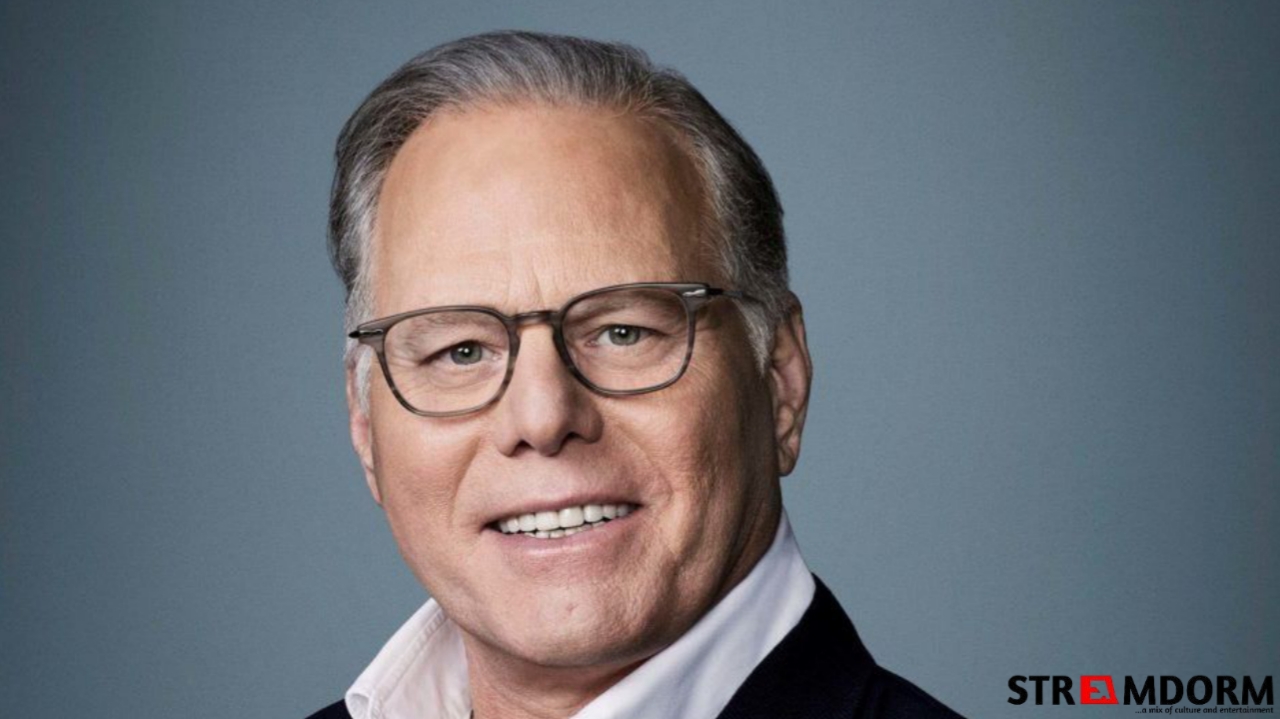
David Zaslav’s $800M+ Pay Package Is Stealing Attention From the Warner Bros. and Paramount Merger Deal

David Zaslav is set to receive a compensation package that could exceed $800 million in connection with the proposed merger between Warner Bros. Discovery and Paramount Global.

The figure, based on company filings and multiple financial reports, has drawn attention due to its scale and structure. Some estimates circulating online place the total closer to $887 million, depending on how stock awards, executive benefits, and tax reimbursements are calculated.

The projected payout is not a fixed salary but a combination of financial components tied to the merger agreement:

  • Cash severance payments triggered by the transaction
  • Stock awards and equity incentives, both vested and performance-based
  • Long-term incentive compensation linked to post-merger performance
  • A tax reimbursement provision, commonly referred to as a “golden parachute”

Taken together, these elements place the total value of the package at over $800 million, with the high-end estimates ($887 million) including unvested stock and the full tax gross-up.

David Zaslav is a veteran media executive and the current President and CEO of Warner Bros. Discovery, one of the world’s largest entertainment conglomerates.

He is widely known for his long-standing influence in the global media industry, particularly across television and streaming.

Zaslav’s career cuts across decades, with several defining roles and decisions that have shaped modern entertainment.

He became CEO of Discovery in 2006, transforming the company into a global television powerhouse with an expansive portfolio of lifestyle and factual programming.

He later played a central role in the 2022 merger that combined Discovery with WarnerMedia, forming Warner Bros. Discovery. The deal brought together major assets including HBO, CNN, and Warner Bros., significantly expanding the company’s global reach.

Under his leadership, the company has continued to grow its influence across film, television, and streaming, positioning itself as a key competitor in the evolving media landscape.

Since the formation of Warner Bros. Discovery has also become associated with aggressive cost-cutting and restructuring efforts, including content cancellations and strategic changes aimed at reducing debt and improving profitability.

Zaslav’s experience in managing large-scale media operations and complex corporate mergers is a key factor in his expected role in the proposed deal between Warner Bros. Discovery and Paramount Global.

The scale of the compensation package has generated discussion within the media and financial sectors.

While executive payouts of this nature are often tied to large-scale corporate transactions, the size of the package has raised questions about executive compensation, particularly amid ongoing cost-cutting measures across the industry.
Netflix Warns of $6 Billion in Potential Job Cuts if Paramount Buys Warner Bros. Discovery

Hollywood is in the midst of one of its biggest shake-ups in years. As Netflix and Paramount battle to acquire Warner Bros. Discovery (WBD), industry insiders are sounding alarms over potential job losses, cost-cutting strategies, and the future of one of the world’s most influential media empires. This isn’t just about streaming wars or box office dominance.

The stage is set for a high-stakes showdown. Netflix has a pending deal to acquire Warner Bros. Discovery for around $83 billion, including its studio assets and the HBO Max streaming platform. Regulatory approval is still in process, with the U.S. Department of Justice reviewing the acquisition for antitrust concerns. Paramount Skydance, however, launched a hostile $108.4 billion cash bid, positioning itself as a competitor willing to pay more to secure WBD. Paramount claims its approach will create the largest media conglomerate in the world. Warner Bros. Discovery’s board has so far rejected Paramount’s offers, citing financial risk and job uncertainty, while Netflix continues to emphasize stability and gradual integration.

A recent statement from Netflix’s Chief Global Affairs Officer, Clete Williams, has drawn attention. He warned that if Paramount’s bid succeeds, it could trigger massive layoffs across Warner Bros. Discovery, highlighting Paramount’s own projection of $6 billion in “synergies.” Williams explained, “Paramount’s plan focuses heavily on cost-cutting and efficiency, which could translate into widespread job losses across the company.

In corporate acquisitions, “synergies” refer to cost savings from merging two companies, often achieved by reducing duplicate roles, departments, or operational expenses. Analysts say that a $6 billion target could correspond to thousands of layoffs, affecting studio production, streaming operations, and corporate teams. Netflix, in contrast, has indicated it expects $2–3 billion in annual savings through technology and licensing efficiencies, which it claims would result in fewer workforce disruptions.

The potential fallout has Hollywood insiders on edge. Thousands of production, marketing, and administrative jobs could be at risk if Paramount’s $6 billion synergy target is implemented. Executives, unions, and employees are closely watching, as the bidding war could redefine the media landscape. Lawmakers and regulators are also involved, with the DOJ’s antitrust review exploring whether Netflix’s deal would harm competition or reduce jobs. Industry analysts emphasize that while the $6 billion figure is real, it does not mean Paramount has announced layoffs yet. It reflects potential cost reductions if the merger occurs.

Hollywood has changed dramatically in the past decade. Streaming services, blockbuster franchises, and media consolidation have reshaped the industry. The Netflix vs. Paramount fight is more than a financial story, it’s a warning about the human cost of corporate consolidation. For employees, studios, and creators, the stakes are high. For the public and investors, the battle signals a new era of mergers and acquisitions, where billions in “synergies” could reshape an entire industry.

Netflix’s warning about potential $6 billion job cuts isn’t speculation; it’s grounded in Paramount’s own cost-saving projections. How many jobs will actually be affected remains uncertain, pending the outcome of regulatory reviews, board decisions, and shareholder input. What is certain is that Hollywood’s landscape could change dramatically, and this acquisition battle will be one of the most closely watched stories in 2026.

Netflix Switches to $82.7B All-Cash Deal for Warner Bros. Discovery to Beat Paramount

Netflix has officially revised its high-profile acquisition offer for Warner Bros. Discovery (WBD), switching from a stock-and-cash proposal to an all-cash deal valued at $82.7 billion. The amended offer sets the price at $27.75 per share, covering WBD’s studios, HBO, Max, DC, Harry Potter, and Game of Thrones libraries, among other key assets.

This move is seen as a strategic maneuver by Netflix to provide greater certainty to WBD shareholders while fending off a competing bid from Paramount.

Originally, Netflix’s bid included a mix of stock and cash. However, in high-stakes mergers, the uncertainty of stock-based offers can create hesitation among shareholders, especially when competing offers are on the table. By moving to a 100% cash offer, Netflix ensures that WBD shareholders receive a guaranteed payout, strengthening the appeal of their proposal.

The amended cash offer provides certainty and maximizes value for Warner Bros. Discovery shareholders,” WBD’s board stated.

In comparison, Paramount’s rival bid, reportedly up to $30 per share, has intensified the competition, forcing Netflix to rethink its strategy to retain a competitive edge.

The assets included in the acquisition are a significant addition to Netflix’s content library:

  • Warner Bros. Studios: Access to decades of film and television production.
  • HBO & Max: Premium streaming content, including iconic series like Succession, Euphoria, and Game of Thrones.
  • DC Universe: Superhero franchises including Batman, Superman, and Wonder Woman.
  • Harry Potter Franchise: The lucrative Wizarding World of movies and spin-offs.
  • Game of Thrones Library: One of the most popular television franchises globally.

Netflix vs Paramount: The Streaming Rivalry

Paramount’s interest in WBD escalated the bidding war. While details of Paramount’s offer vary, reports indicate the company is also pursuing an all-cash deal, intensifying the race to acquire one of the most valuable media libraries in the world.

Netflix’s cash-only strategy reduces uncertainty for WBD shareholders, giving it an advantage over offers that mix stock, which may fluctuate in value depending on market conditions.

If completed, the deal would mark a historic consolidation in the media and streaming sector. Netflix would gain a massive library of films, series, and franchises, dramatically expanding its content offerings and subscriber appeal.

For WBD, the deal provides a cash exit for shareholders, allowing the company to settle its operations with certainty amid growing competition in streaming.

Netflix’s switch to an all-cash $82.7B deal for Warner Bros. Discovery highlights the streaming giant’s commitment to content dominance in an increasingly competitive market. With Paramount also in the race, the coming months are set to define the future of global streaming, possibly giving Netflix unprecedented control over some of the most valuable media franchises in history.

Warner Bros Has Rejected Paramount’s First Bid to Buy the Company

About a month ago, Hollywood was shaken when the announcement was made that the Ellison family backed Paramount Skydance’s plans to purchase Warner Bros. Discovery. If the deals go through, Paramount ($18.6B) and David Ellison will become the kings of Hollywood, sitting on Warner Bros.’ ($42.3B) valuable IP.

In the early hours of October 12, it was reported that Warner Bros. had rejected Paramount Skydance’s acquisition price, stating it was too low per share.

According to Bloomberg, Paramount’s initial bid of $20 per share was not attractive to Warner Bros. Discovery despite its stock price being around $17 on Friday’s market close.

David Ellison will allegedly re-evaluate his bid, looking for additional funds and backing while taking his bid directly to WBD shareholders.

This will be Ellison’s second big move in Hollywood this year. Earlier this year, David Ellison’s Skydance completed its merger with Paramount at $8 billion. Skdance Media is now the parent company to Nickelodeon, MTV, CBS and more, including properties like Teenage Mutant Ninja Turtles and Star Trek.

Warner Bros. Discovery is expected to split into two companies (Warner Bros. the Studio and Discovery Global for all the TV properties); companies like Paramount, Skydance, and Netflix are in a bidding war to acquire all of its properties, with more expected to announce their interest in the coming months.

Showtime Streaming Service Is Shutting Down at the End of April

Starting April 30th, subscribers to Paramount Media Networks‘s Showtime streaming app, which was launched in 2015, will no longer be able to access its streaming service.

If you use Showtime or enjoy its content, all hope is not lost. To access Showtime services, opt into the Paramount+ With Showtime subscription plan.

According to Showtime’s Help Center Page: “Now that subscribers can access their favourite Showtime programs on Paramount+ by subscribing to the Paramount+ with Showtime plan, the Showtime streaming service will shut down on April 30, 2024Current Showtime streaming subscribers will continue to have access to the Showtime streaming service until it is shut down on April 30, 2024.”

The Showtime cable channel is still available but has Paramount+ With Showtime since January. The Showtime streaming app has been in existence for almost 9 years. The Paramount+ With Showtime ad-free streaming package was launched in June 2023, alongside a price hike from $9.99 to $11.99 per month.

The move with Paramount’s Showtime is not the first; Warner Bros. Discovery had a similar experience. When Max was launched, it merged with HBO to become HBO Max and killed off services like HBO Now and HBO Go; it was later rebranded as Max in 2023.

Scroll to Top