UEFA to Review VAR Use at End of Season: What Fans Should Expect

European football’s governing body, UEFA, has officially announced a review of Video Assistant Referee (VAR) usage at the end of the 2025/26 season. The move comes amid growing debates about how VAR is applied in big matches and whether it sometimes interrupts the flow of the game. 

VAR was originally introduced to correct clear and obvious mistakes on the pitch, such as offsides, mistaken identity, and disputed goals. Its purpose was to support referees without taking over the game. However, UEFA’s head of refereeing, Roberto Rosetti, has expressed concern that VAR may now be overused, particularly in subjective decisions like handballs or fouls. He warns that the system risks becoming too “microscopic,” focusing on minor details rather than major, match-changing incidents. 

Roberto Rosetti explained that interventions in minor situations can slow down matches and frustrate players, coaches, and fans. While factual calls like offsides are generally handled accurately, subjective decisions often lead to inconsistency and debate, reducing trust in the system.

UEFA plans to conduct a formal review at the end of the season, focusing on streamlining VAR interventions, concentrating on clear and obvious errors, and ensuring consistency across European competitions. The review will also look at improving training and protocols for VAR officials. This could reshape how referees and video officials work together, affecting both domestic leagues and UEFA tournaments like the Champions League and Europa League.

VAR has undoubtedly improved fairness in football by correcting major errors. Yet, when overused, it can disrupt the flow of the game and take away from the excitement that fans expect. UEFA’s review signals that change may be coming, aiming to balance accuracy with the natural rhythm and drama of football. For fans, the key takeaway is clear: expect fewer interruptions for minor incidents and a stronger focus on decisions that truly affect match outcomes.

NAFDAC Says “The Ban Stays,” Dismisses Reports of FG Order to Suspend Sachet Alcohol Enforcement

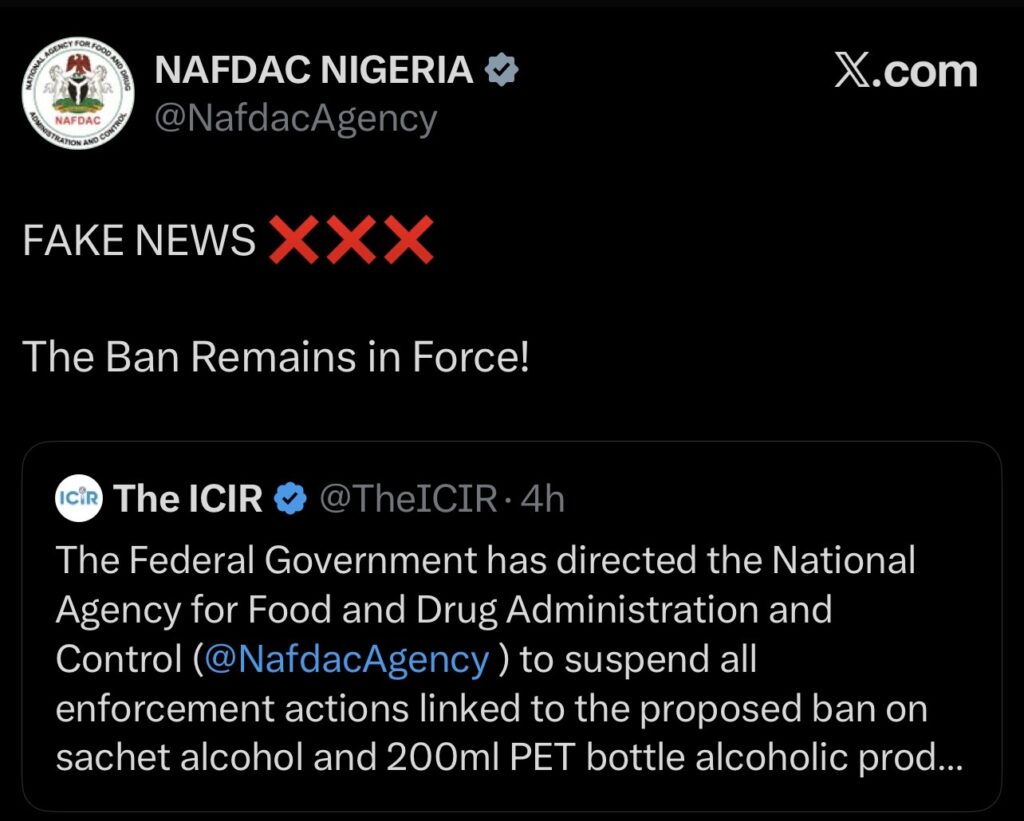
Just hours after reports circulated claiming the Federal Government had directed a pause on the sachet alcohol ban, the National Agency for Food and Drug Administration and Control (NAFDAC) has pushed back strongly, insisting that no such directive has been officially communicated and that the policy remains in force.

In a public statement released Wednesday, NAFDAC described the suspension claims as “false and misleading,” clarifying that it has not received any formal order instructing it to stop enforcement of regulations affecting alcohol sold in sachets and small-volume containers, including 200ml PET bottles.

The agency’s response comes amid growing confusion following earlier reports suggesting that federal authorities had asked regulators to suspend enforcement while broader consultations and policy reviews were underway. NAFDAC’s latest position introduces a direct contradiction, highlighting a widening gap between media reports and the agency’s official stance.

According to NAFDAC, any change in enforcement procedures would be communicated through formal government channels and verified agency platforms. Until then, regulatory activities will continue under existing laws and approved policy frameworks.

Screenshot

The sachet alcohol ban has remained one of Nigeria’s most contentious regulatory issues in recent years. Public health advocates have backed strict enforcement, arguing that cheap, widely accessible alcohol contributes to addiction risks, youth consumption, and broader social harm.

Industry stakeholders and labour groups, however, have warned that abrupt enforcement could threaten thousands of jobs and destabilise supply chains in the beverage and retail sectors. The debate intensified after enforcement actions reportedly affected factories and distribution networks in early 2026.

The disagreement over whether enforcement has been suspended also raises broader questions about communication and authority within Nigeria’s regulatory structure. Civil society organisations have already initiated legal challenges around government involvement in enforcement decisions, arguing that regulatory agencies must operate within clearly defined statutory boundaries.

As conflicting narratives continue to circulate, industry players, retailers, and consumers are left navigating uncertainty over compliance and future policy direction.

Earlier Reports

FG Orders NAFDAC to Suspend Enforcement of Sachet Alcohol Ban Amid Policy Review

Nigeria’s Federal Government has directed the National Agency for Food and Drug Administration and Control (NAFDAC) to immediately suspend enforcement of the controversial ban on sachet alcohol and small-pack alcoholic beverages, marking a significant policy pause in one of the country’s most debated public health regulations.

The directive halts ongoing enforcement activities, including factory shutdowns and warehouse sealings tied to alcoholic products packaged in sachets and containers below 200ml. The order was issued following consultations involving the Office of the Secretary to the Government of the Federation and national security authorities, who raised concerns about economic disruption and the absence of a fully harmonised national alcohol policy guiding implementation.

NAFDAC had begun enforcing the ban as part of a broader push to reduce alcohol abuse, particularly among young Nigerians and vulnerable populations. Regulators argued that low-cost sachet alcohol products made consumption more accessible and contributed to rising public health concerns.

However, the Federal Government’s intervention signals that enforcement may have moved ahead of broader policy coordination. Officials stated that the suspension would remain in place while the government reviews legislative, economic, and social implications of the ban and considers how it fits into a comprehensive National Alcohol Policy framework.

The decision does not cancel the ban outright but pauses enforcement pending further directives.

The sachet alcohol policy has been controversial since its early stages. Public health advocates have consistently supported strict regulation, arguing that cheap and widely available alcohol products contribute to addiction, social instability, and increased health risks.

Industry stakeholders and labour unions, however, have pushed back strongly. Manufacturers and distributors warned that a sudden ban could lead to widespread job losses, disrupt supply chains, and damage small businesses that rely heavily on low-cost alcohol products for income. Protests and public demonstrations had intensified in recent weeks as enforcement actions began affecting production and distribution networks.

Read our previously published article on earlier reports of the ban.

France Move to  Ban Social Media for Under 15s from September 2026

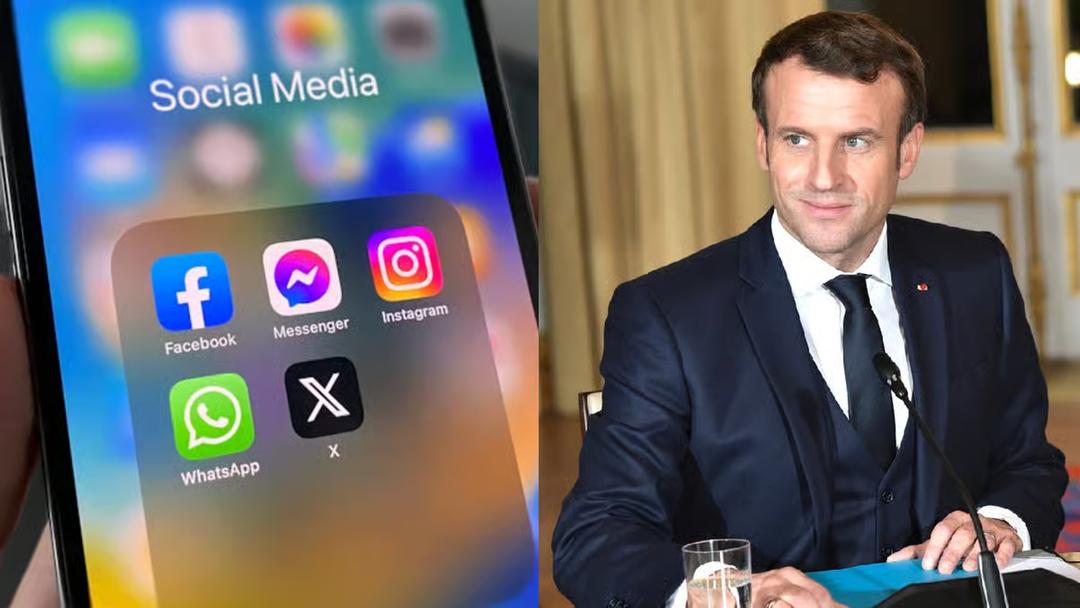
In one of the most significant digital policy moves in Europe, France is preparing to ban children under the age of 15 from using social media starting September 1, 2026. The proposal, backed by President Emmanuel Macron, aims to protect young people from online harms ranging from excessive screen time to cyberbullying and inappropriate content. 

The draft legislation will be formally submitted for legal review in early January 2026 before being debated in Parliament; a necessary step before it becomes law. But if approved, it would dramatically reshape how millions of French children interact with digital platforms. 

France’s government says the ban is about protecting youth well-being in an era of pervasive digital content. Officials have cited several concerns:

  • Excessive Screen Time: Growing evidence suggests long hours on social media can disrupt sleep and reduce attention span. 
  • Mental Health Risks: Social networking platforms have been linked to anxiety, self-esteem issues, and depression among teens. 
  • Online Harms: Exposure to inappropriate content, cyberbullying, and addictive algorithms are among the specific dangers lawmakers want to curb. 

President Macron and other supporters say that setting a minimum age will help ensure that children reach a level of maturity before being exposed to the complex social dynamics and pressures of online communities. 

The draft bill includes two major changes: 

  1. Social Media Ban for Under-15s

Social media companies would be legally barred from allowing users under 15 to access their platforms. That means popular services like TikTok, Instagram, Snapchat and others could not open accounts for children below this age if the law is passed. 

  1. Expanded Mobile Phone Restrictions

France already bans mobile phones in primary and middle schools. The new law would extend that restriction into high schools, meaning older teens would also face limits on phone use during school hours. 

The audiovisual and digital regulator, known as Arcom, would be responsible for enforcing the social media rules once they take effect. 

Scroll to Top