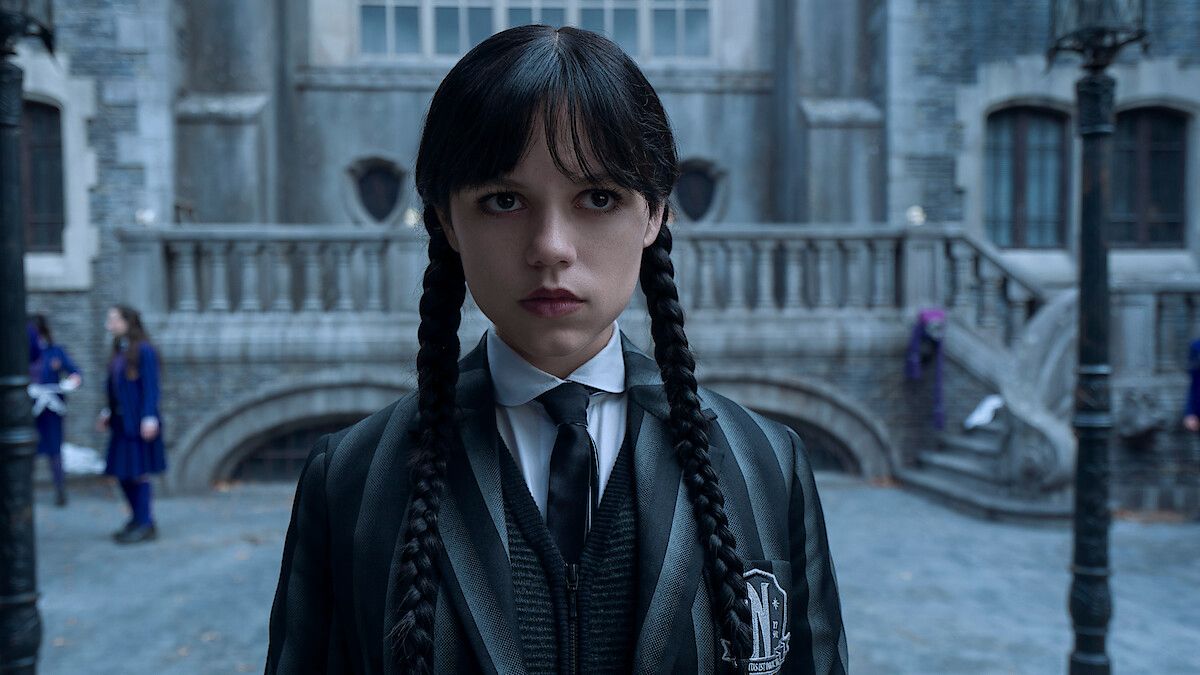
Cameras are officially rolling on Wednesday Season 3 in Ireland, marking the next phase of one of Netflix’s most valuable global franchises. Production has commenced this week, with principal photography underway across Irish locations that previously helped redefine the show’s gothic visual identity.
For a series that quickly became a cultural force, the start of filming is more than routine industry news. It signals expansion.
After relocating production to Ireland in Season 2, the series has kept the country as its long-term creative base. The decision is strategic. Ireland’s atmospheric landscapes enhance the show’s dark tone, while its historic architecture naturally aligns with Nevermore’s gothic aesthetic. The country also offers large-scale studio infrastructure capable of supporting an effects-heavy production.
Over time, Ireland has evolved into part of the show’s visual DNA. The fog, forests, and brooding estates elevate the tone without relying excessively on digital environments. Maintaining the same production base also suggests creative stability. Season 3 is building on a world that already feels defined rather than reinventing it.
A 2026 production start indicates a lengthy shoot ahead. Given the scale of the series; elaborate set design, creature effects, stunt choreography, and complex post-production layering, a 2027 release window appears likely. Netflix has not announced an official premiere date, but the beginning of filming confirms that development is well advanced and that the franchise remains a priority within the company’s global slate.
While no formal casting announcement has accompanied the production update, core members are widely expected to return, including Jenna Ortega, whose performance transformed Wednesday Addams into a generational anti-hero. Ortega’s portrayal, emotionally restrained, razor-sharp, and psychologically layered became central to the show’s breakout success. Season 3 now carries the responsibility of evolving that character without softening her defining traits.
When Wednesday debuted, it functioned as more than a reboot. It repositioned the Addams Family mythology for streaming-era audiences; stylized, culturally resonant, and narratively ambitious. The series balanced gothic horror, satire, teen mystery, and character-driven drama with surprising precision.
Season 3 represents a critical phase in that evolution. The mystery framework must continue to expand without becoming repetitive. The world may need to stretch beyond Nevermore while maintaining tonal consistency. The mythology must deepen without losing accessibility.
Nevermore’s gates are open again. And this time, expectations are even higher.
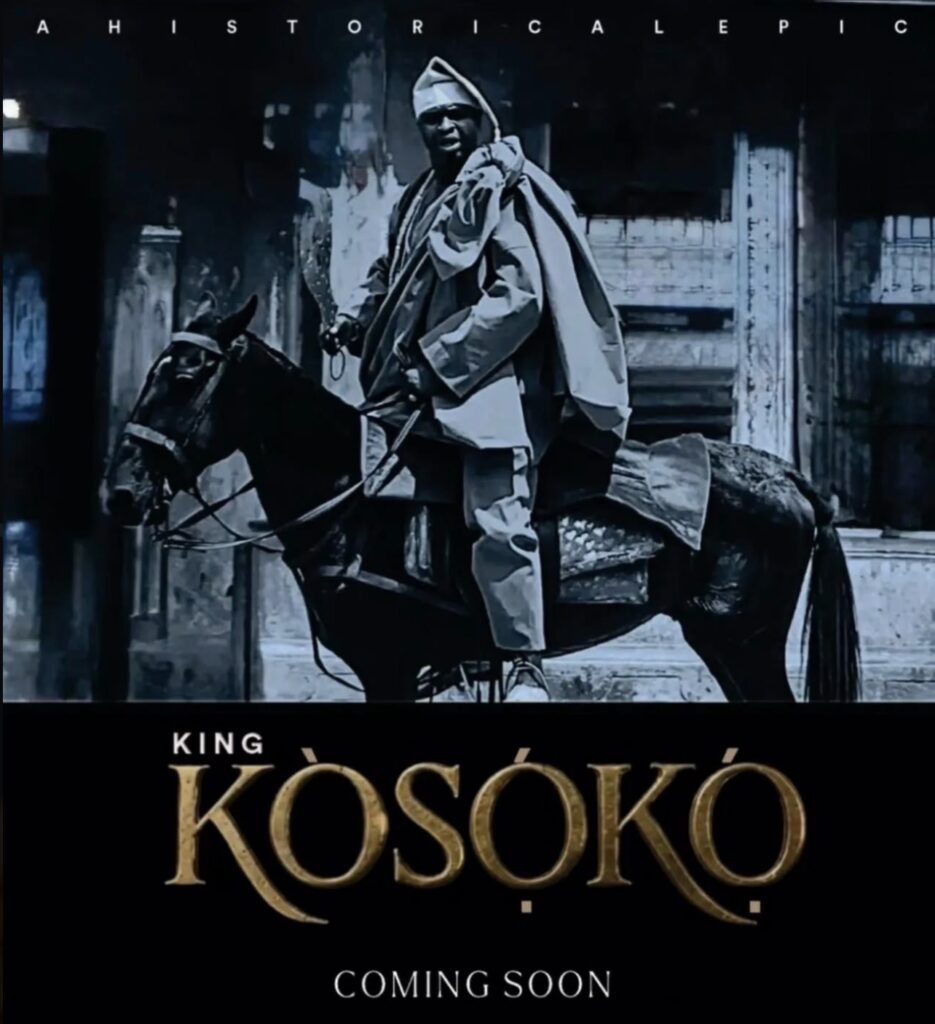
Nollywood’s historical renaissance is showing no signs of slowing down. With large-scale productions increasingly revisiting Nigeria’s pre-colonial and early colonial past, a new epic is now commanding attention: King Kosoko: The Battle for Lagos.
Set for release in 2026, the film dramatizes the turbulent reign of Oba Kosoko, who ruled Lagos between 1845 and 1851. His leadership unfolded during one of the most decisive moments in the city’s history; a period marked by political rivalry, resistance, and eventual confrontation with British colonial forces.
Historically, Oba Kosoko’s reign was defined by internal succession disputes and mounting tensions with the British, who sought to expand their influence along the West African coast.
The 1851 bombardment; often linked to what is known as the “Salt Water War” (Ogun Olomiro), became a turning point in Lagos history. The confrontation ultimately paved the way for increased British intervention and would later influence the eventual annexation of Lagos in 1861.
By bringing this chapter to the screen, the filmmakers are revisiting a defining moment in Nigeria’s historical trajectory, one that continues to spark scholarly and cultural discussion.
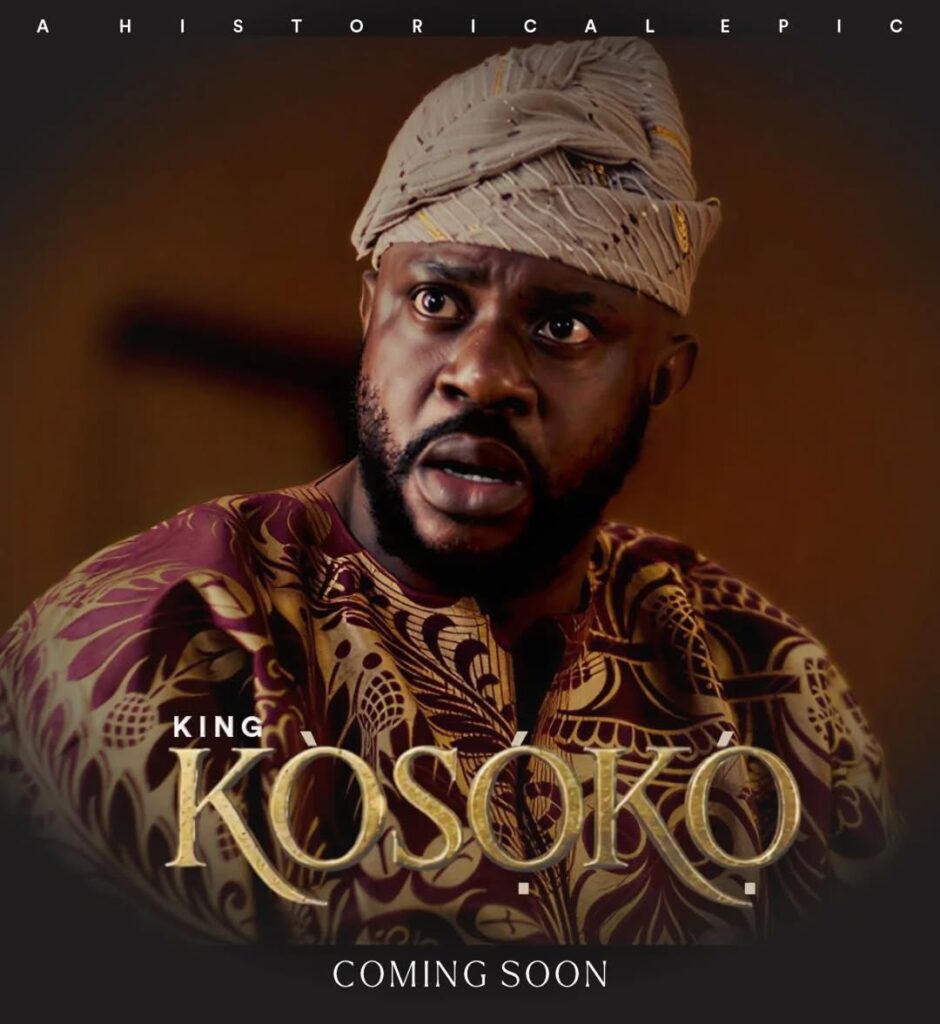
Award-winning actor Femi Adebayo leads the project in the title role. Known for his commanding screen presence and emotional range, Femi Adebayo’s casting signals the scale and seriousness of the production.
Early promotional materials suggest a performance grounded in authority and intensity; a portrayal likely to balance royal dignity with political defiance.
Joining him is a heavyweight ensemble cast that reflects Nollywood’s upper tier:
Jide Kosoko
Femi Branch
Faithia Williams
Gabriel Afolayan
Odunlade Adekola (in a key supporting role)
The film is directed by Adebayo Tijani, a filmmaker associated with large-scale Yoruba historical storytelling. His previous works include Jagun Jagun and Olori Ogun, both noted for elaborate costuming, stylized battle sequences, and strong cultural detailing.
Producers Ayo Ajayi and Segun Olojo Kosoko are attached to the project, with the latter’s surname drawing attention due to its historic ties to the Kosoko lineage; a detail that has fueled conversations about authenticity and cultural consultation.
King Kosoko: The Battle for Lagos arrives amid a renewed appetite for Nigerian historical epics. Films like Jagun Jagun and Lisabi: A Legend Is Born have demonstrated that audiences are eager for stories rooted in indigenous history, folklore, and resistance narratives.
This resurgence marks an important evolution in Nollywood’s storytelling identity. For decades, contemporary dramas and comedies dominated the industry. Now, filmmakers are investing in: Cultural reclamation, Pre-colonial political narratives, Traditional aesthetics and language and Higher production value
For Nollywood, it represents something bigger: a growing confidence in telling African stories with epic scale and historical depth.
If executed with the care and ambition suggested by its early details, King Kosoko: The Battle for Lagos could become one of 2026’s defining Nigerian films.
Streamdorm will continue to update this story as trailers, confirmed release dates, and additional production details emerge.
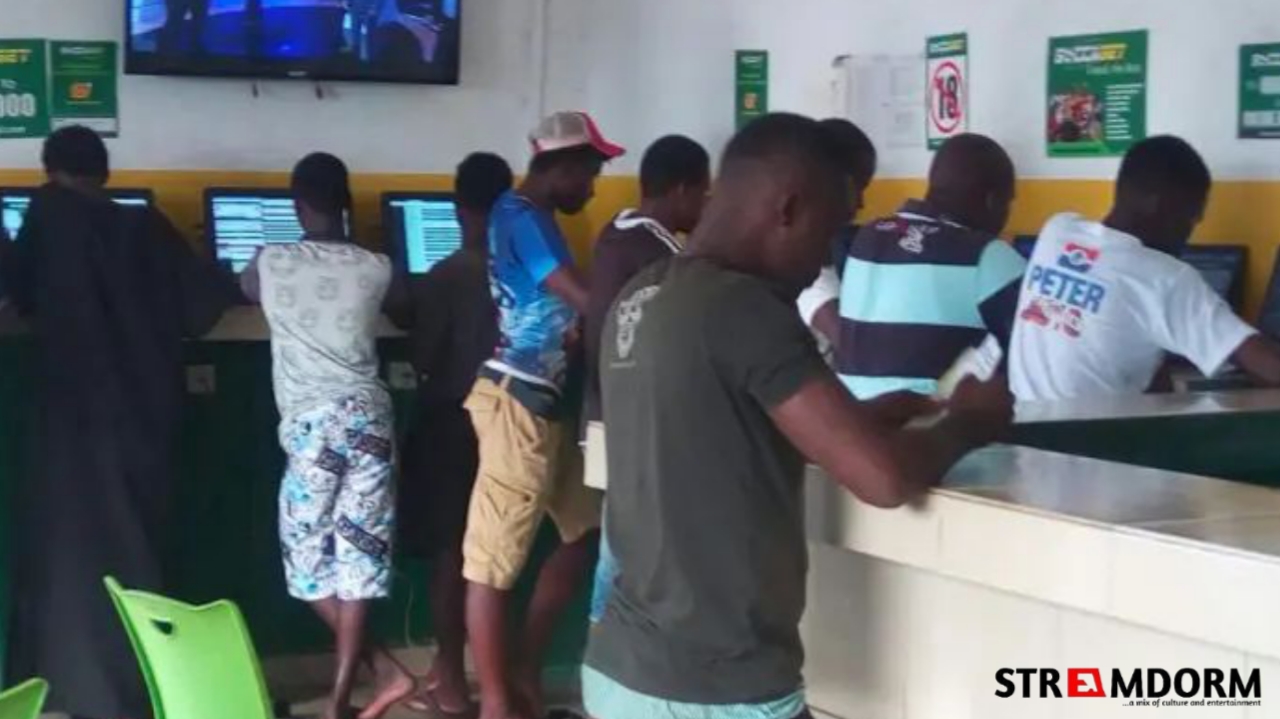
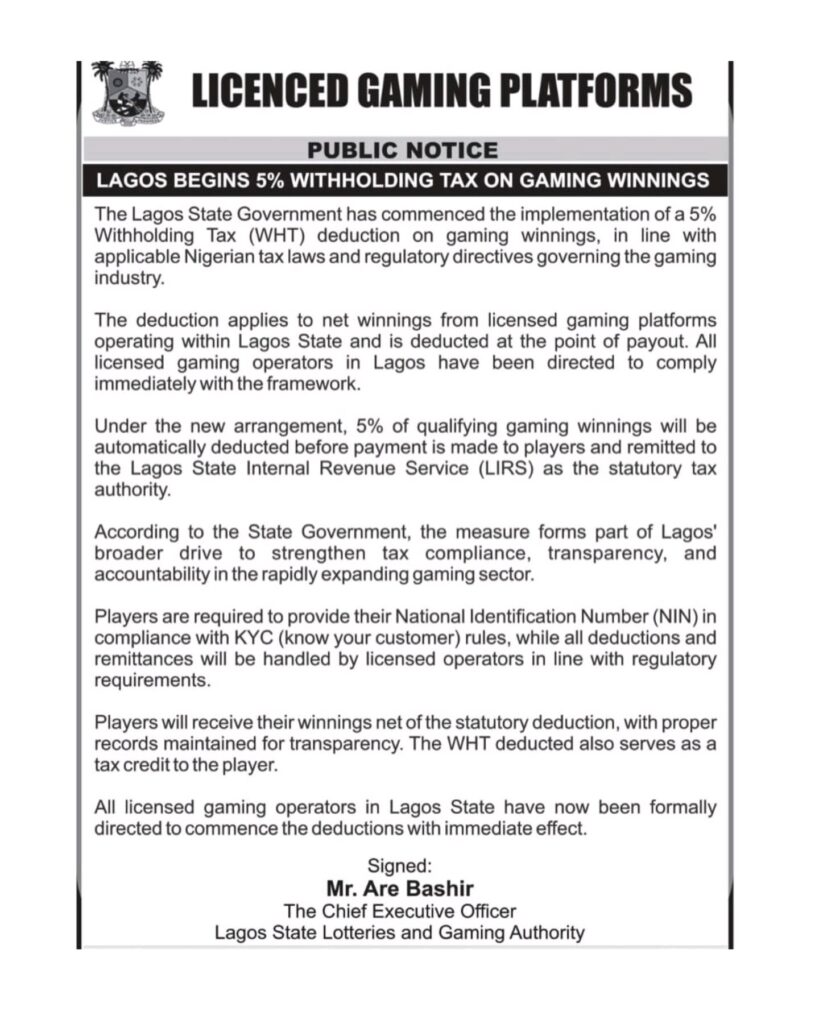
The Lagos State Government has officially begun enforcing a 5% withholding tax on winnings from licensed gaming and betting platforms, marking a major development in Nigeria’s digital gaming sector. The tax is applied to net payouts, meaning players now receive winnings after the deduction.
The move comes as Lagos experiences rapid growth in online sports betting and gaming activities. Millions of bettors participate daily, prompting the government to formalize taxation and ensure the sector contributes fairly to public revenue. The Lagos State Internal Revenue Service (LIRS) has positioned this measure as part of a broader strategy to enhance compliance, transparency, and oversight of digital financial activities.
Under the new rule, licensed operators automatically deduct 5% from all net winnings before payouts. For instance, a bettor who wins ₦100,000 will now receive ₦95,000. Some platforms may also require a National Identification Number (NIN) for identity verification in line with KYC regulations.
The impact is felt across the sector. Licensed operators must update systems to comply with the deduction, while players see reduced payouts but can use the withheld tax as a credit toward personal tax obligations. The government stresses that only licensed operators are affected, leaving unregulated platforms outside the formal tax system.
Industry reactions are mixed. Advocates say the tax formalizes and strengthens the gaming industry, while critics worry it could push bettors toward unlicensed operators. Nevertheless, the Lagos Government maintains that the measure will provide a sustainable revenue stream and improve regulatory oversight.
As Nigeria’s gaming sector continues to grow, the 5% tax highlights Lagos State’s commitment to regulating the industry, ensuring transparency, and capturing revenue from a digital economy that shows no signs of slowing.
There is a quiet exhaustion that has settled over many young Nigerians, and it rarely announces itself as a crisis. It appears casually in conversations, disguised as humour or sarcasm, but beneath the surface lies something far more structural than a difficult week or a demanding boss. Increasingly, the phrase “I’m tired” is not about physical fatigue. It is about the cumulative weight of economic instability, digital comparison, social expectation and relentless ambition colliding all at once.
In 2026, this exhaustion feels less like an individual struggle and more like a generational condition.
What makes it dangerous is not its intensity but its normalisation. Burnout has become so woven into daily life that it is often mistaken for adulthood itself.
For over a decade, hustle culture has shaped how young Nigerians understand success. The rise of entrepreneurship, personal branding and digital opportunity created a new blueprint for achievement, one that prioritised speed, visibility and constant output. Platforms like Instagram and TikTok amplified this shift by transforming productivity into performance. Success was no longer something quietly built; it was something curated, displayed and measured in real time.
The cultural message was clear: if you are not building, you are falling behind.
In many ways, this mindset unlocked innovation. It encouraged ownership and expanded the idea of what was possible beyond traditional employment. Nigeria’s tech ecosystem, media startups and creative industries have benefited from this surge in self-driven ambition.
However, hustle culture rarely addresses sustainability. When productivity becomes identity, rest begins to feel like a threat rather than a necessity. When ambition is constant, recovery feels indulgent. Over time, this creates a subtle but dangerous equation: worth equals output.
Layered onto this cultural expectation is a challenging economic environment. Rising inflation, increasing food and transportation costs, and currency instability have altered the financial reality for millions of young Nigerians. For many professionals, wages have not kept pace with the cost of living, which creates an ongoing sense of vulnerability.
This vulnerability operates quietly. It shows up in the constant recalculation of expenses, in anxiety about rent renewals, and in uncertainty about long-term savings. Even moments that should feel restful are often interrupted by financial concern.
Social media intensifies this tension by turning success into a daily spectacle. Scrolling through feeds on platforms like Instagram exposes users to curated milestones that appear continuous and effortless. Relocation announcements, startup launches, brand partnerships and property purchases are presented without the full context of debt, failure or emotional strain.
Algorithms reward aspiration, not nuance. They highlight visible wins and compress complex journeys into digestible triumphs.
As a result, comparison becomes less of a conscious choice and more of a psychological reflex. Even individuals who are progressing steadily can begin to feel stagnant when surrounded by amplified success stories. This perception gap drains motivation and reframes normal career timelines as delays.
The widespread desire to relocate has added another layer of emotional complexity. For many young Nigerians, “japa” is no longer framed as a personal aspiration but as a strategic necessity. Stories of migration to Canada, the United Kingdom or Germany circulate widely and often emphasise improved stability and opportunity.
Yet relocation is rarely simple. It involves financial sacrifice, cultural adjustment and professional uncertainty. Even the preparation process can be expensive and emotionally taxing. When staying feels risky and leaving feels uncertain, young people find themselves navigating high-stakes decisions under significant pressure.
This constant evaluation of escape routes contributes to a broader sense of instability. Burnout, in this context, is not simply about overwork; it is about carrying too many life-altering possibilities at once.
Nigeria’s expanding creator economy has opened new pathways for income and influence. However, visibility comes with labour. Content creation requires strategic planning, consistent engagement and ongoing adaptation to platform algorithms. Income streams can be unpredictable, particularly when monetisation systems remain uneven.
For creators, stepping away from digital platforms can feel professionally risky. Momentum is fragile, and relevance often depends on consistency. As a result, rest is frequently postponed or transformed into another calculated decision.
The same tools that promise freedom can create new forms of pressure. Without boundaries, creative ambition easily slides into digital exhaustion.
Perhaps one of the most telling cultural shifts is the redefinition of weekends and downtime. Increasingly, rest is repackaged as optimisation. Time off becomes an opportunity to plan, learn or network. Even self-care is framed as performance enhancement.
The reluctance to label this collective fatigue as burnout reflects lingering stigma around mental strain. Many young Nigerians continue to function outwardly while feeling internally depleted. Because exhaustion is widespread, it is often dismissed as normal.
The burnout crisis among young Nigerians is not rooted in laziness or lack of discipline. It is emerging from the intersection of economic volatility, digital hyper-visibility and societal expectation to achieve early and visibly.
While the challenges facing young Nigerians are structural, there are ways to respond meaningfully and sustainably. Redefining success on personal terms is the first step; prioritizing mental health, financial stability, skill growth, and relationships over public perception helps reduce the pressure to constantly compete. Developing intentional digital habits, such as limiting social media time, curating feeds, and setting offline hours, can alleviate comparison fatigue and cognitive overload.
Financial resilience is equally important; budgeting, building emergency savings, diversifying income streams, and understanding currency risks provide a measure of stability in an unpredictable economy.
Mental health awareness and access through therapy/counselling (which many Nigerians really need), mindfulness, or stress management routines, further strengthen emotional resilience. Intentional rest, consistent sleep routines, physical activity, and lifestyle practices that replenish energy are vital for long-term sustainability.
By combining personal strategies with social support and systemic change, young Nigerians can navigate ambition with clarity, endurance, and balance, ensuring that success does not come at the cost of wellbeing.
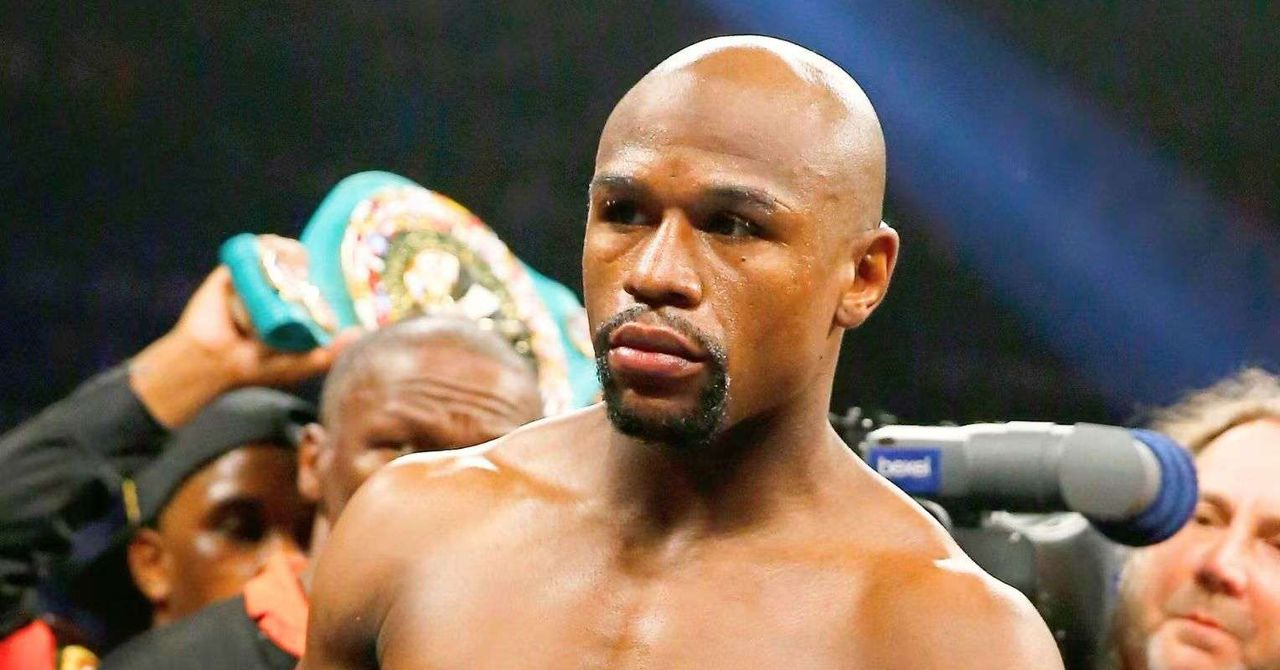
Undefeated boxing icon Floyd Mayweather Jr. has confirmed that he will come out of retirement once again; marking what would be the fourth return of his storied career.
The former five-division world champion revealed that he intends to resume professional boxing later this year, following his upcoming exhibition bout against heavyweight legend Mike Tyson.
Mayweather, who officially retired in 2017 with a flawless 50-0 professional record, has remained active through lucrative exhibition fights across the globe. However, this latest announcement signals something different: a return to sanctioned professional competition.
This would not be the first time Mayweather has reversed a retirement decision. Throughout his career, the 49-year-old has stepped away from the sport multiple times, only to return for high-profile bouts that generated massive global attention.
His last professional fight came in August 2017, when he defeated UFC star Conor McGregor via TKO, extending his perfect record to 50-0 surpassing Rocky Marciano’s long-standing 49-0 benchmark.
Since then, Mayweather has focused primarily on exhibition events, positioning himself as both a fighter and promoter while maintaining his commercial drawing power.
Before stepping back into the professional ranks, Mayweather is scheduled to face Tyson in a highly anticipated exhibition clash. While exhibitions do not affect official records, the matchup between two of boxing’s most recognizable figures has already generated significant buzz.
Mayweather indicated that once the Tyson event concludes, he plans to pursue another officially sanctioned contest. Specific opponents, dates, and venues have not yet been announced.
Over the years, Mayweather has built a reputation not only for defensive mastery and ring intelligence but also for his unmatched ability to sell fights. Even in retirement, he has remained one of boxing’s biggest commercial attractions.
For now, Mayweather appears confident that he still has more to offer inside the ring and the boxing world will be watching closely.
More details are expected in the coming months as promotional plans take shape.
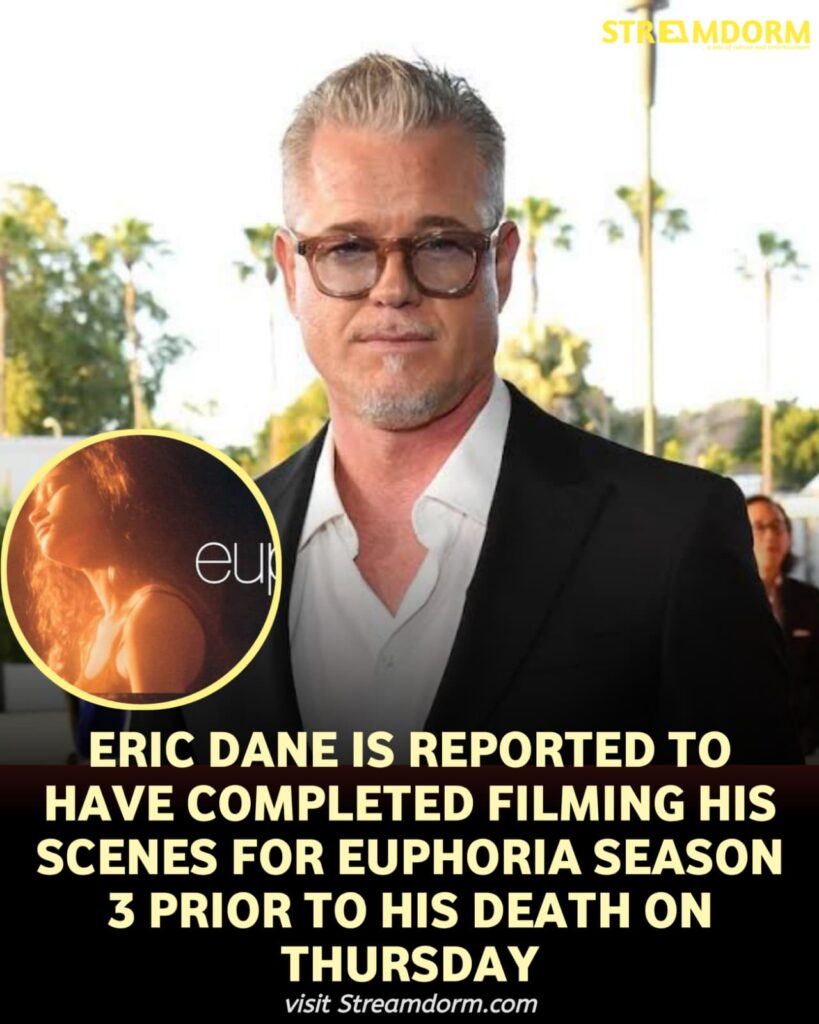
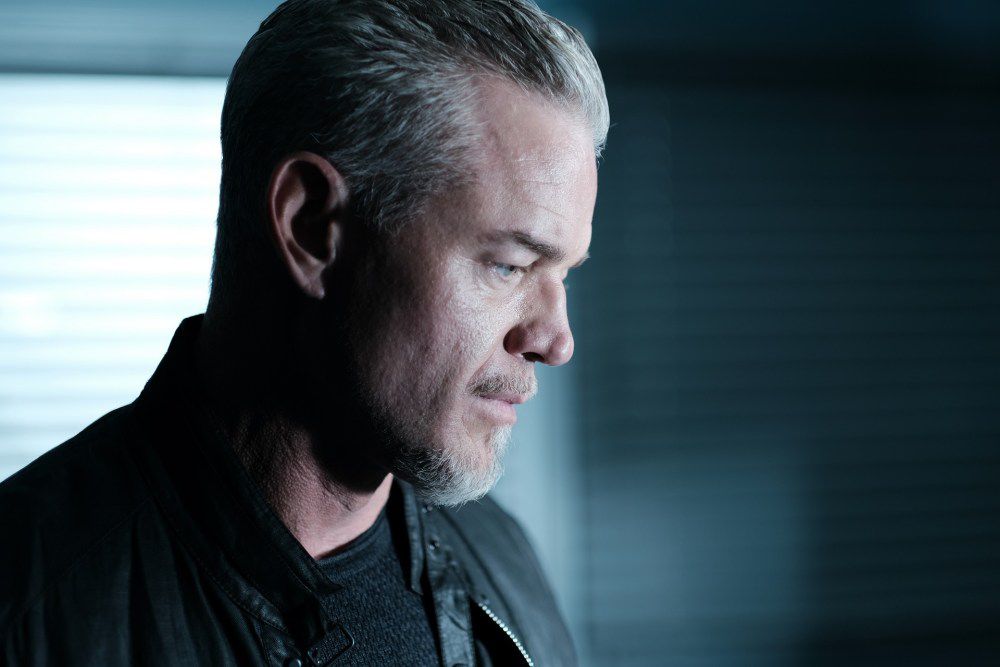
Eric Dane reportedly completed filming his scenes for Season 3 of Euphoria before his death on Thursday, February 19, 2026. He was 53.
Multiple outlets have confirmed that the actor had wrapped production on the upcoming season of the HBO drama prior to his passing, meaning audiences will see his final performance when the new season premieres.
Dane, widely known for his role as Dr. Mark Sloan on Grey’s Anatomy, played Cal Jacobs on Euphoria; the complex and deeply flawed father of Nate Jacobs. His portrayal of Cal was one of the show’s most layered performances, exploring themes of repression, masculinity, and identity across the series’ first two seasons.
Nearly a year before his death, Dane publicly revealed that he had been diagnosed with amyotrophic lateral sclerosis (ALS), a progressive neurodegenerative disease that affects motor neurons. Despite his diagnosis, he continued working, determined to fulfill his professional commitments.
Season 3 of Euphoria is scheduled to premiere in April 2026. HBO and members of the cast and crew have since paid tribute to Dane, describing him as a dedicated actor and a generous collaborator whose presence shaped the tone of the series.
His appearance in the forthcoming season will now stand as a final chapter in a career that spanned television, film, and stage and one last performance for fans who followed his journey from Grey’s Anatomy to Euphoria.
On February 20, 2026, BLACKPINK officially crossed a milestone no other musical act had achieved before: 100 million subscribers on their official YouTube channel. This historic moment, confirmed by the group on their official X (formerly Twitter) account, reinforces BLACKPINK’s status as a global powerhouse in digital music and fan engagement.
Within hours, fans known as BLINKs flooded the platform with reactions, memes, and tributes to the group’s unprecedented achievement.
BLACKPINK’s feat is even more remarkable considering the scale of their discography: around 33 songs and just 13 music videos. Despite this, their subscriber growth has surpassed that of major Western acts and fellow K-pop groups, making them the most-subscribed music act on YouTube.
This landmark qualifies BLACKPINK for YouTube’s exclusive Red Diamond Play Button, awarded only to channels that reach the 100 million subscriber threshold. They are the first musical act to receive this honor.
BLACKPINK’s journey began with their 2016 debut under YG Entertainment, with early hits like Boombayah, Whistle, and DDU-DU DDU-DU; the latter becoming the first K-pop music video to surpass 2 billion views. Subsequent releases, including How You Like That, Lovesick Girls, and Pink Venom, consistently shattered viewership records, often within hours of release.
Today, BLACKPINK’s channel has accumulated over 41 billion total views, and their videos regularly rank among YouTube’s most-watched. Beyond the numbers, what sets BLACKPINK apart is the coordination and loyalty of BLINKs, who turn streaming, voting, and sharing into global campaigns. This digital fan mobilization has been central to their unprecedented success.
The milestone comes just days before the release of BLACKPINK’s third mini-album, DEADLINE, scheduled for February 27, 2026. Fans speculate that the timing was strategic, building momentum for the comeback while celebrating the 100 million subscriber milestone.
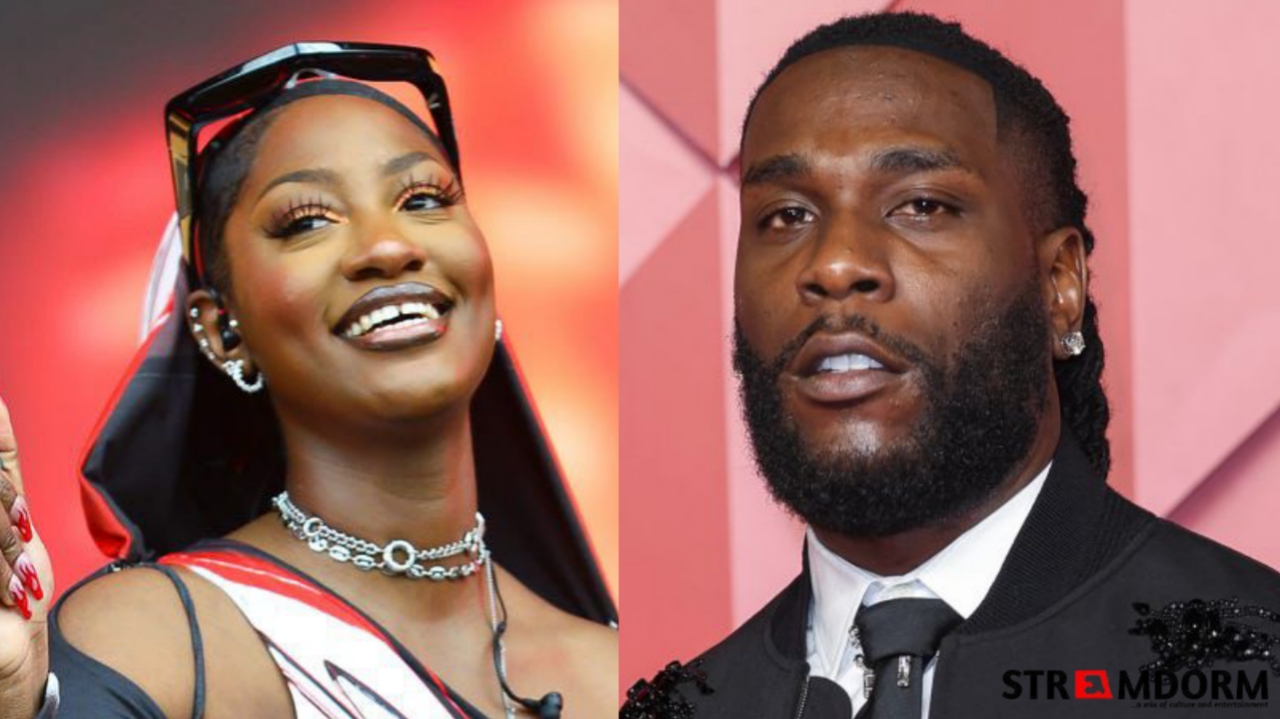
Nigerian global stars Burna Boy and Tems have earned nominations at the 2026 Music Week Awards, in a time where Afrobeats’ growing influence not just on the charts, but within the global business of music is ever increasing.
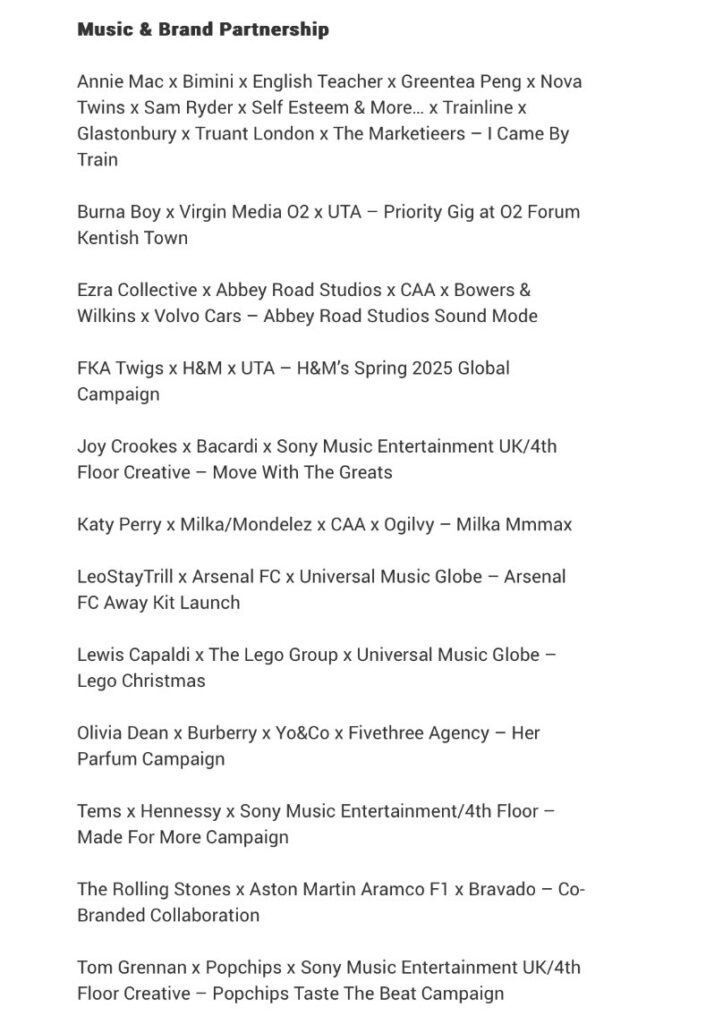
Both artists were recognized in the Music & Brand Partnerships category, a segment that celebrates standout collaborations between musicians and major brands.
Burna Boy received a nomination for his partnership with Virgin Media O2, tied to a Priority gig at London’s O2 Forum Kentish Town. The collaboration blended live music experiences with brand-driven audience engagement, positioning the Grammy-winning artist at the center of a campaign designed to reward and connect with loyal customers.
Tems, on the other hand, was nominated for her work with Hennessy on the “Made For More” campaign, a creative partnership that spotlighted ambition, cultural identity, and artistic excellence. The campaign aligned with Tems’ global image as one of Africa’s most influential contemporary voices, reinforcing her brand power beyond streaming numbers and touring milestones.
The nominations were announced as part of the 2026 edition of the Music Week Awards, an annual event organized by Music Week to recognize excellence across the UK and international music business. Unlike fan-voted award shows, the Music Week Awards focus on industry achievements, from marketing and live events to label strategy and brand innovation.
For Burna Boy, this marks another milestone in a career that has consistently expanded Afrobeats’ global footprint, particularly in the UK market. For Tems, the nomination underscores her continued crossover appeal and growing influence in the luxury and lifestyle branding space.
The winners of the 2026 Music Week Awards are expected to be announced at the official ceremony scheduled to take place on Thursday, May 7, 2026 in London, United Kingdom. The event will be held at JW Marriott Grosvenor House and will bring together key figures from the global music business to celebrate excellence in industry achievement
For the first time ever, two full Qur’an recitation albums are currently charting on the Nigeria Apple Music Top 40 Albums chart, marking a rare moment where spiritual audio sits alongside mainstream music releases.
According to the latest Nigeria rankings on Apple Music, the following albums are charting:
At #22 — The Holy Quran by Saad El Ghamidi
At #33 — The Holy Quran (Complete) by Abdul Rahman Al-Sudais
Both projects are complete audio recitations of the Qur’an in Arabic and have been available on streaming platforms for years. However, this is the first recorded instance of two Qur’an recitation albums simultaneously appearing within Nigeria’s Top 40 Albums chart; a space typically dominated by Afrobeats, hip-hop, gospel, and international pop releases.
Saad El Ghamidi and Abdul Rahman Al-Sudais are among the most recognized Qur’an reciters globally. Their recordings are widely streamed during religious seasons such as Ramadan and other spiritually significant periods, often seeing noticeable spikes in listenership.
The development highlights how streaming platforms are increasingly reflecting not just entertainment trends, but also faith-based and devotional listening habits among Nigerian users.
While Apple Music’s charts update regularly and positions may shift, the current appearance of both albums in the Top 40 signals strong demand for religious audio content on mainstream music platforms especially in this Ramadan season.
If sustained, this could mark a notable moment in Nigeria’s digital listening culture; where devotion is charting alongside pop.
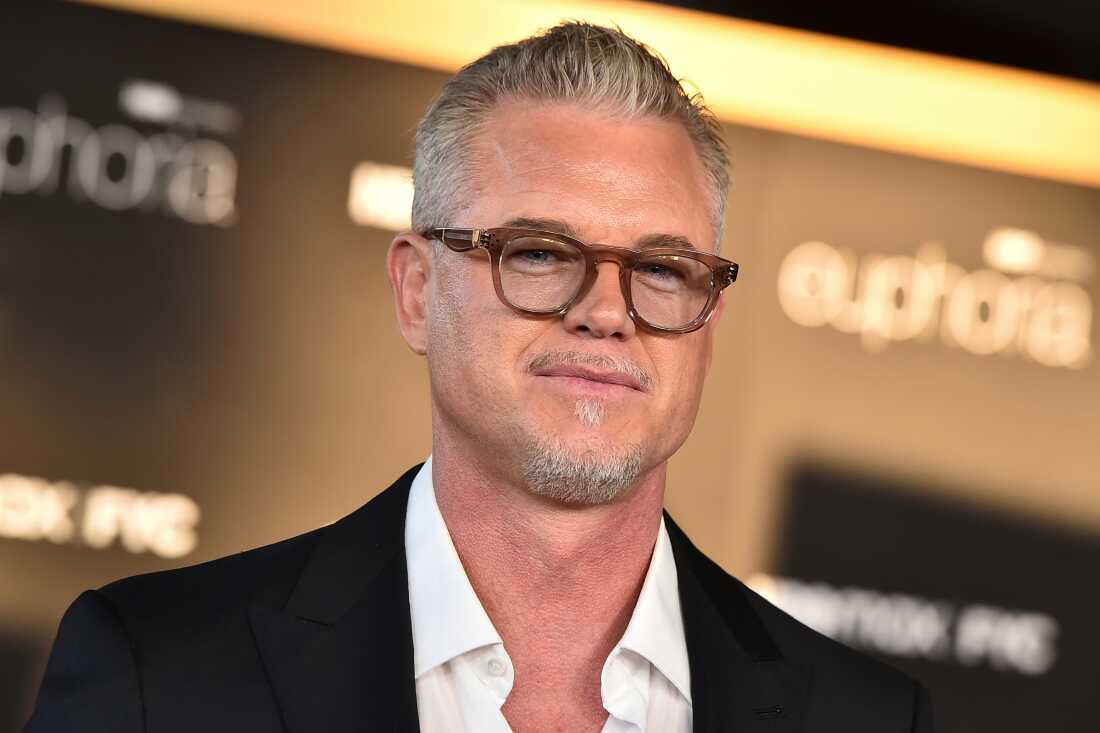
American actor Eric Dane, widely known for his role as Dr. Mark “McSteamy” Sloan on Grey’s Anatomy, has died at the age of 53 following a battle with amyotrophic lateral sclerosis (ALS).
According to multiple international reports, Dane passed away on February 19, 2026, nearly a year after publicly revealing his ALS diagnosis. His family confirmed that he died surrounded by loved ones.
Dane announced in April 2025 that he had been diagnosed with ALS; a progressive neurodegenerative disease that attacks motor neurons in the brain and spinal cord. The condition gradually weakens muscles and affects voluntary movements, including walking, speaking, swallowing, and breathing. There is currently no known cure.
Best known for his breakout role on Grey’s Anatomy, Dane joined the long-running ABC medical drama in 2006 and quickly became a fan favourite for his charismatic portrayal of the confident plastic surgeon, earning the nickname “McSteamy.” He remained on the series until 2012 and reprised the role in later appearances.
Beyond Grey’s Anatomy, Dane built a diverse career in both television and film. He starred as Cal Jacobs in the HBO drama Euphoria, appearing alongside a new generation of actors and introducing himself to younger audiences. His film credits include roles in X‑Men: The Last Stand and Marley & Me.
Following news of his death, tributes poured in from colleagues and fans across the entertainment industry, with many remembering him as a talented performer and devoted family man.
ALS, sometimes referred to as Lou Gehrig’s disease, is a fatal condition that progressively destroys nerve cells responsible for muscle movement. While treatments can help manage symptoms, the disease continues to worsen over time.
Dane is survived by his wife and children.
His passing marks the loss of a television icon whose impact on medical drama and contemporary television spanned nearly two decades.