Your Sports Bets May Be Costing You More Than Money—Here’s the Truth

Sports betting has exploded into one of Nigeria’s most dominant forms of entertainment. From Bet9ja to SportyBet, BetKing, and 1xBet, millions of Nigerians log in daily to place wagers, mostly on football matches. On the surface, betting is marketed as fun, thrilling, and rewarding. Yet beneath the flashy adverts and quick payouts lies a growing crisis: sports betting is silently eroding mental health, financial stability, and social wellbeing across the country.

A Nation of Bettors

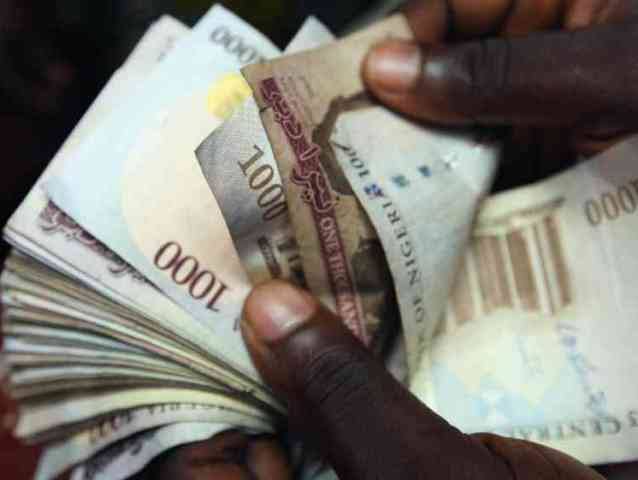
The numbers reveal the scale of the boom. Studies estimate that over 60 million Nigerians between 18 and 40 years old actively participate in betting. On average, they spend ₦3,000 daily, amounting to nearly ₦730 billion annually. In fact, Nigeria is now considered one of Africa’s largest betting markets, with betting shops and mobile apps dominating both urban and rural landscapes.
What makes this rise even more striking is the context: a nation where over 40% of the population lives in poverty is also home to one of the highest rates of gambling participation in the world.

The Impact on Mental Health

The thrill of betting is tied to brain chemistry. Each wager triggers dopamine; the same chemical linked to pleasure and reward. But this excitement can quickly spiral into addiction.
Many bettors report mood swings, sleepless nights, and constant anxiety. Losing streaks bring feelings of guilt and despair, while the urge to “chase losses” only deepens the cycle. A growing number of Nigerian psychologists now warn that sports betting has become a major driver of depression, anxiety, and even suicidal thoughts.
In one heartbreaking case, a university student in Ilaro took his own life after losing his school fees to betting. In another, a man in Lagos ended his life after losing ₦2.5 million on virtual games. These stories, though shocking, are far from isolated.

Financial Ruin Disguised as Fun

The financial toll of sports betting is devastating. For many Nigerians, especially young men, betting is seen as a potential escape from unemployment and hardship. But instead of financial freedom, it often results in deeper poverty.

Research shows that:

  • 62% of addicted bettors in Lagos borrow money to fund gambling.
  • 28% fail to meet essential payments such as rent or school fees.
  • Some lose millions of naira within weeks, selling assets or borrowing heavily in the process.

The painful truth is that bookmakers always have the edge. Wins are temporary, but losses accumulate—leaving countless Nigerians trapped in debt cycles.

Social and Emotional Strain

Sports betting does not only harm individuals, it reshapes relationships. Families often suffer when breadwinners divert money meant for food, rent, or education into betting. Friends drift apart as shame and secrecy build.
Among students, the impact is equally alarming. Studies show that 14% of Nigerian university students already suffer problem gambling, and nearly half of those who bet regularly display addictive behaviours. Academic performance suffers as money, time, and focus are swallowed by betting apps.

The Role of Betting Apps

Modern betting companies have perfected the art of addiction. Platforms like Bet9ja, SportyBet, NairaBet, 1xBet, and BetKing employ strategies designed to keep players hooked:

  • 24/7 accessibility: With apps on smartphones, betting is available anytime, anywhere.
  • Flashy promotions: Welcome bonuses, odds boosts, and “free bets” encourage more spending.
  • Fast-play features: Virtual games and live betting deliver instant results, fueling compulsive behavior.
  • Psychological hooks: Near misses, bright visuals, and celebratory alerts simulate victory even in loss.

These features transform betting from occasional fun into compulsive daily habits, making it one of the fastest-growing addictions in Nigeria.
Why Betting Feels Unescapable

Experts describe sports betting in Nigeria as a perfect storm:

  • Economic desperation: With limited job opportunities, betting feels like a shortcut to wealth.
  • Passion for football: Tying wagers to beloved sports makes it socially acceptable.
  • Aggressive advertising: From billboards to Instagram feeds, betting brands flood media with success stories, rarely showing the ruin that follows.

One bettor who lost ₦10 million in two weeks described it bluntly: “It’s like a sect. Once you’re in, it’s extremely difficult to leave.”

Protecting Wellbeing

While sports betting is legal and often positioned as harmless entertainment, its impact on wellbeing is undeniable. To address this crisis:

  • Public awareness campaigns are needed to highlight the risks.
  • Limits and regulations should be enforced on betting advertisements and promotions.
  • Financial literacy and job creation must be prioritized to reduce dependence on gambling.
  • On a personal level, individuals must set strict betting limits, avoid chasing losses, and seek help when betting becomes uncontrollable.

Sports betting in Nigeria is no longer “just a game.” It is a powerful industry feeding off economic hardship, passion for football, and human vulnerability. While some may enjoy it casually, for millions it has become a trap—undermining mental health, draining finances, and tearing at the fabric of relationships.
In the end, the question remains: is the thrill of a potential win worth the silent cost to wellbeing?

I await your comments 

Subscribe to our newsletter for more articles like this.

Dangote Group and the Burden of Truck-Related Accidents in Nigeria

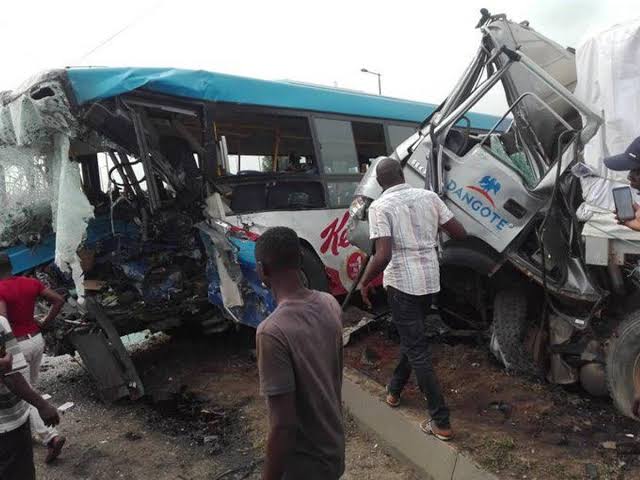
The Dangote Group, Africa’s largest conglomerate and a dominant force in Nigeria’s manufacturing and logistics sectors, has built a vast network of cement, sugar, salt, and flour operations. However, alongside its industrial successes, the company’s heavy-duty truck operations have frequently made headlines for tragic reasons road accidents involving Dangote-branded vehicles. Over the years, these incidents have sparked national debate on corporate responsibility, road safety, and regulatory enforcement.

This article examines some of the most notable truck-related accidents linked to the Dangote Group, including the recent case involving a relative of a popular Nigerian reality TV star, and assesses the company’s responses over time.

The Recent Auchi Incident – August 2025

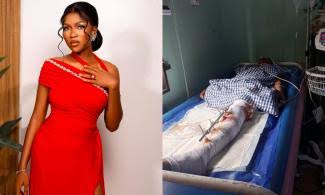
The most recent case involves Ruth Otabor, younger sister of BBNaija Season 7 winner, Ijeoma Josephina Otabor (popularly known as Phyna). On August 13, 2025, a Dangote truck struck Ruth in Auchi, Edo State, causing severe injuries that led to the amputation of one leg.

Following public outcry, the Dangote Group issued a statement pledging comprehensive medical care and appropriate compensation under its welfare policies. Senior company representatives, accompanied by insurance officials, visited both the accident site and Ruth’s family at the Irrua Specialist Teaching Hospital.

Talks are still ongoing on social media as users are still commenting and reacting to the issue and calling out the company. Even a popular X influencer, has called out for people who have been affected in the past by these accidents to come online to share their experiences and proof of the harms Dangote Group trucks has done in the past.

Ruth Otabor

Some Past Cases of Dangote Truck Accidents

Kogi State – February 2017

In early 2017, tragedy struck on the Lokoja–Abuja Highway when a Dangote truck collided head-on with a motorcycle carrying two young men, Caleb Idakwoand Prosper Ojodale. Both victims died instantly. The incident was further compounded by delayed emergency intervention due to a doctors’ strike in the state. The police impounded the truck while investigations were carried out.

Lagos–Ibadan Expressway (Arepo) – April 2017

Later that year, another Dangote truck made headlines when its driver, allegedly driving against traffic, ran over and killed three pedestrians near ItoriComprehensive High School in Arepo. The driver fled the scene but was apprehended by local residents before being handed over to the police.

Abuja–Lokoja Expressway – November 2017

A devastating crash involving a Dangote truck and a vehicle transporting cattle traders at Jamata village in Kogi State resulted in sixteen fatalities. The Dangote Group eventually provided ₦500,000 to each bereaved family, after an initial sum of ₦50,000, bringing the total payout to ₦8 million.

(Daily Trust, 2017: https://dailytrust.com/families-of-dangote-truck-accident-victims-get-n500-000-each/)

Umuchu, Anambra – 2018

In 2018, a Dangote cement truck lost control and plowed into the bustling Afo Ibughubu Market in Umuchu, Anambra State. The collision claimed at least three lives and injured seven others. Through its insurer, NEM Insurance Plc, the company paid ₦10 million in compensation to victims and their families.

(ThisDay, 2019: https://www.thisdaylive.com/index.php/2019/06/09/dangote-compensates-victims-of-anambra-truck-accident/)

Lagos–Abeokuta Expressway (Toll-Gate, Sango–Ota) – May 2020

A brake failure in a Dangote truck led to a chain collision involving multiple vehicles and motorcycles, killing two people and injuring seven others. The driver escaped the scene, while police and emergency agencies worked to prevent a mob from setting the truck ablaze.

Ota, Ogun State – February 2020

Just months earlier, another cement-laden Dangote truck was involved in a high-casualty crash on the Lagos–Abeokuta Expressway in Ota, Ogun State. The incident left seven people dead and ten injured. Enraged residents set the truck on fire before emergency responders arrived. Preliminary reports pointed to brake failure and excessive speeding as contributing factors.

Agbor, Delta State – April 2019

A pedestrian lost his life after being struck by a fully loaded Dangote truck along the Lagos–Asaba Expressway near Agbor. In retaliation, a mob burnt the truck to ashes before authorities could intervene.

Mosinmi–Sagun Road (Ogun State) & Lagos – August 2020

On the Mosinmi–Sagun Road in Ogun State, a Dangote truck ran over and killed a motorist and a female pedestrian. Around the same period in Lagos, another Dangote vehicle was involved in a separate fatal crash. No formal compensation was publicly reported for these incidents.

Adekunle Ajasin University, Ondo State – January 2021

A particularly harrowing incident occurred when a Dangote truck, reportedly experiencing brake failure, rammed into shops near the university gate in Akungba-Akoko. Eight students lost their lives. In response, the company provided ₦500,000 to each bereaved family and pledged additional support.

(Premium Times, 2021: https://www.premiumtimesng.com/news/top-news/445735-dangote-group-compensates-ondo-accident-victims-officials.html)

Patterns, Concerns, and Public Reaction

An analysis of these incidents reveals recurring factors:

  • Mechanical faults, particularly brake failure, feature prominently.
  • Driver behavior, including overspeeding and dangerous driving, has been cited repeatedly.
  • Public anger is a frequent outcome, with multiple instances of mobs destroying Dangote trucks after accidents.
  • Compensation policies appear inconsistent — ranging from no public acknowledgment to substantial payouts, often influenced by media coverage and public pressure.

Corporate Responsibility and the Road Ahead

The Dangote Group’s swift response in some cases, such as the Auchi incident and the Anambra market crash, shows a willingness to take responsibility. However, the persistence of such accidents raises questions about fleet maintenance, driver training, and enforcement of road safety standards.

Suggestions that could mitigate these tragedies by:

1.​Implementing stricter vehicle maintenance protocols.
2. ​Expanding driver safety training programs.
3. ​Introducing onboard vehicle monitoring systems to track speed and mechanical health.
4. ​Collaborating with government regulators to enforce higher safety standards for heavy-duty transport.

Given the Dangote Group’s prominence and influence in Nigeria’s economy, its approach to road safety could set the standard for other logistics-intensive companies. The hope is that the lessons from these repeated tragedies and the public scrutiny they attract will translate into long-term, systemic safety reforms.

Why Gen Z Is Rethinking Marriage and Long-Term Love in 2025

Marriage, once considered the hallmark of adulthood and stability, is being redefined by Generation Z, the most educated, digitally connected, and socially conscious demographic to date. In 2025, the attitudes of Gen Z Nigerians and the world as a whole toward marriage and long-term relationships reflect a cultural shift rooted in self-awareness, economic reality, and emotional intelligence. This is not a rejection of love—but a clear recalibration of how commitment is understood and pursued.

Marriage Is No Longer the Default Life Path

Unlike previous generations, Gen Z does not view marriage as a compulsory milestone. A 2024 report by The Future Africa Research Institute revealed that only 42% of urban Gen Z Nigerians aged 20–28 see marriage as a priority before age 30, compared to 70% of millennials at the same age range a decade ago.

This change is driven by:

  • Higher education levels among young Nigerians (with 60% enrollment increase in tertiary institutions between 2010 and 2023 — NUC data),
  • Greater global exposure through social media, and
  • A growing belief in personal fulfillment before partnership.

Marriage is increasingly seen as a choice, not a life requirement.

Economic Uncertainty Is Delaying Commitments

Gen Z is coming of age during one of the most volatile economic periods in Nigeria’s history. With youth unemployment at 33.6% as of Q1 2025 (NBS) and inflation driving up the cost of living, many young Nigerians are simply not in a position to consider marriage or child-rearing.

A wedding in urban Nigeria now averages ₦2.8 million, while setting up a home requires significant investment. As a result:

  • More couples are choosing long-term dating over legal marriage.
  • Cohabitation is quietly on the rise, even though culturally sensitive.
  • “Soft life” goals—financial freedom, travel, self-care—are taking precedence.

This isn’t fear of marriage. It’s financial realism.

Emotional Intelligence Is Non-Negotiable

Another defining trait of Gen Z is their emphasis on mental health and emotional clarity. This generation is more likely to seek therapy, practice mindfulness, and openly discuss emotional trauma.

Unlike older generations that often viewed relationship endurance as a virtue; regardless of emotional harm—Gen Z prefers healthy relationships over long ones.

Key trends include:

  • Increased relationship breakups when emotional needs aren’t met
  • Greater acceptance of boundaries and therapy as part of dating
  • Online discourse centered around healing and emotional literacy

The Role of Technology and Non-Traditional Relationships

Tech is another game-changer. Dating apps like Tinder, Badoo, and Bumble have normalized virtual dating and non-monogamous arrangements, creating more diverse relationship models.

Many Gen Z Nigerians are:

  • Open to long-distance and online relationships
  • Choosing non-traditional structures like open relationships, “talking stages,” or polyamory (still niche, but growing)
  • Using tech to build emotionally meaningful connections without societal pressure

These dynamics are part of a broader trend—flexibility over formality.

Redefining the Purpose of Marriage

It’s important to note that Gen Z is not necessarily discarding the idea of marriage altogether. Instead, they’re redefining its purpose.
Today’s Gen Z Nigerian wants:

  • Partnerships built on equality, not traditional gender roles
  • Transparent financial expectations (e.g., conversations about joint income, bills, and personal goals)
  • The freedom to choose if, when, and how they want to start a family (including child-free marriages or adoption)

Surveys conducted by She Leads Africa in 2024 showed that 61% of Gen Z women in Nigeria said they would only marry someone who supports their career and personal autonomy—a demand that reflects deep-rooted shifts in expectations.

Gen Z is not afraid of love. They’re simply more intentional, informed, and introspective than previous generations. With eyes wide open to the realities of modern life, they’re choosing relationships that reflect their values, support their growth, and respect their individuality and it goes for both male and female.

In 2025, marriage is no longer a finish line. For Gen Z, it’s just one of many ways to love; and only if it truly aligns with who they are becoming.

References

  • The Future Africa Research Institute (2024). ‘Youth and Marriage in Urban Nigeria’ – National Attitude Survey.
  • National Bureau of Statistics (2025). ‘Labour Force Report: Q1 2025’.
  • Nigerian Universities Commission (NUC). Tertiary Enrollment Growth Reports, 2010–2023.
  • She Leads Africa (2024). ‘Women, Work & Love: Aspirations of the Nigerian Gen Z Woman’ – Social Trends White Paper.
  • X (formerly Twitter), TikTok Nigeria Trends, Instagram Nigeria Explore Feed – 2024/2025 Social Media Observation.
  • Nigerian Wedding Cost Survey (2025). ‘Urban Wedding Planning Statistics in Lagos and Abuja’.
  • Online Dating & Relationship Trends Nigeria (2024). A Report by TechLife Weekly Nigeria.
What to Expect at the 2025 Bole Festival: Food, Music, Culture & Commerce

Each year, the city of Port Harcourt transforms into a colourful playground of taste, sound, and street-style celebration and it’s all thanks to the Bole Festival. What started as a small food fair in 2016 has become one of Nigeria’s most anticipated cultural events. And in 2025, the Bole Festival returns even bigger, brighter, and bolder.

Whether you’re a first-timer or a long-time attendee, here’s everything you need to know about the 2025 edition of the Port Harcourt Bole Festival — from the food and music to the cultural vibes and commercial impact.

When and Where?

The 2025 Bole Festival is set to take place on August 30–31 at the Yakubu Gowon Stadium, Elekahia, Port Harcourt — a venue now synonymous with the Bole spirit. With over 35,000 guests expected, the stadium will once again become a hub of culinary explosions, music stages, art zones, and vendor booths.

The Food: Bole and Beyond

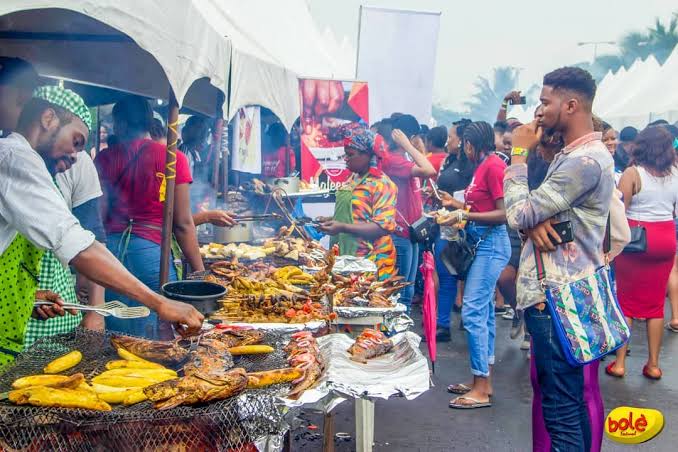
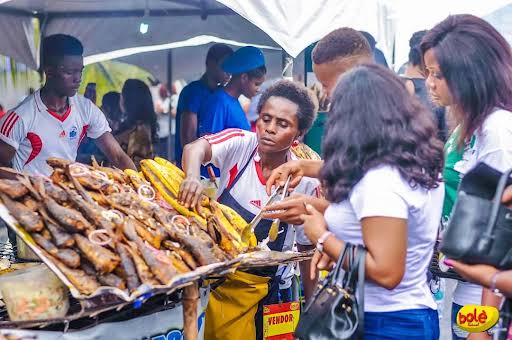
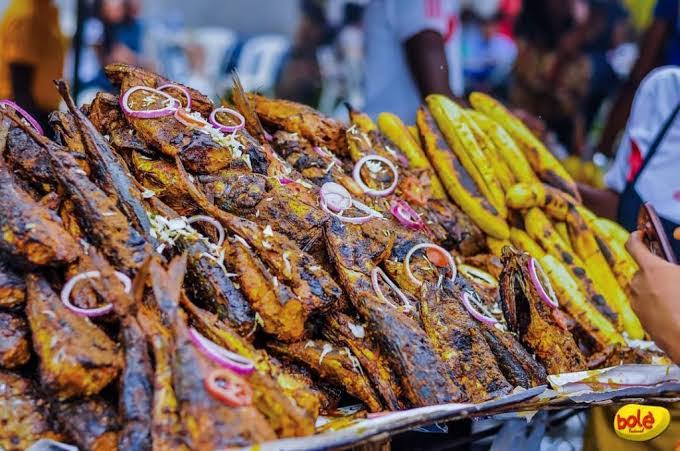
At the heart of the festival is Bole — roasted plantain, often served with spicy pepper sauce, roasted fish, yam, or potatoes. But the food lineup doesn’t stop there. You’ll find:
– Creative twists on bole — think plantain tacos, bole burgers, grilled suya wraps
– Local delicacies — from Rivers-style native soup to ukodo and nkwobi
– Snacks & sweets — chin chin, puff puff, local candy, palm wine
– Refreshing drinks — zobo cocktails, chapman, and cold brews
Whether you’re a foodie or a curious explorer, the Bole Festival offers a plate (or two) for everyone.

Image from previous Bole Festival

The Music: Live Vibes and Amapiano Heat

In true Port Harcourt fashion, music at the BolèFestival is loud, live, and unapologetically Nigerian. Over the years, stars like Ruger, Cavemen, and Nasboihave graced the stage. For 2025, expect:
– Top-tier Nigerian artists
– Rising Port Harcourt talents
– Live bands & DJs
– Dance battles and crowd contests
From Afrobeats to Amapiano, and highlife to street hop — the energy never dips.

The Culture & Commerce: More Than Just a Festival

Beyond food and music, the Bolè Festival has evolved into a cultural marketplace — a place where commerce meets creativity:

  • 100+ Small Vendors: Food vendors, artisans, clothing brands, skincare startups, and creatives showcase and sell their work.
  • Cultural Showcases: Indigenous dance troupes, street artists, spoken word poets, and fashion parades.
  • Community Vibes: Face painting, body art, kids’ games, DIY crafts, and local folklore storytelling.
  • Corporate Brand Experiences: From branded chill zones to drink lounges and interactive games hosted by sponsors like MTN, Tecno, La Casera, and Budweiser.

It’s a one-stop shop for expression, entrepreneurship, and entertainment.

What Should You Wear?

Come as you are, but come to slay. Expect to see streetwear drip, bold Ankara fits, and plenty of fashion statements. The Bolè Festival is an open runway — and Port Harcourt always delivers style with substance.

The Bolè Festival is more than just a food event — it’s a celebration of Southern Nigerian identity. It shines a spotlight on Port Harcourt’s vibrant street culture, supports local businesses, gives small vendors a platform to thrive, and offers youth an inclusive space to express themselves through food, fashion, music, and art.

In a country full of festivals, the Bolè Festival has carved its own lane — authentic, energetic, and proudly rooted in local flavour.

Visa-Free African Countries You Can Visit in 2025

One of the biggest travel headaches for Nigerians is the visa application process — long queues, embassy drama, hidden costs, and, sometimes, heartbreaking rejections. But guess what? Things are changing fast, and for the better.

In 2025, a growing number of African countries are throwing their borders wide open for fellow Africans. If you’ve got your green passport, there are now over 20 African countries you can visit without needing a visa beforehand.

From vibrant cities to scenic coastlines, here’s your ultimate guide to where you can go visa-free, hassle-free, and full of vibes.

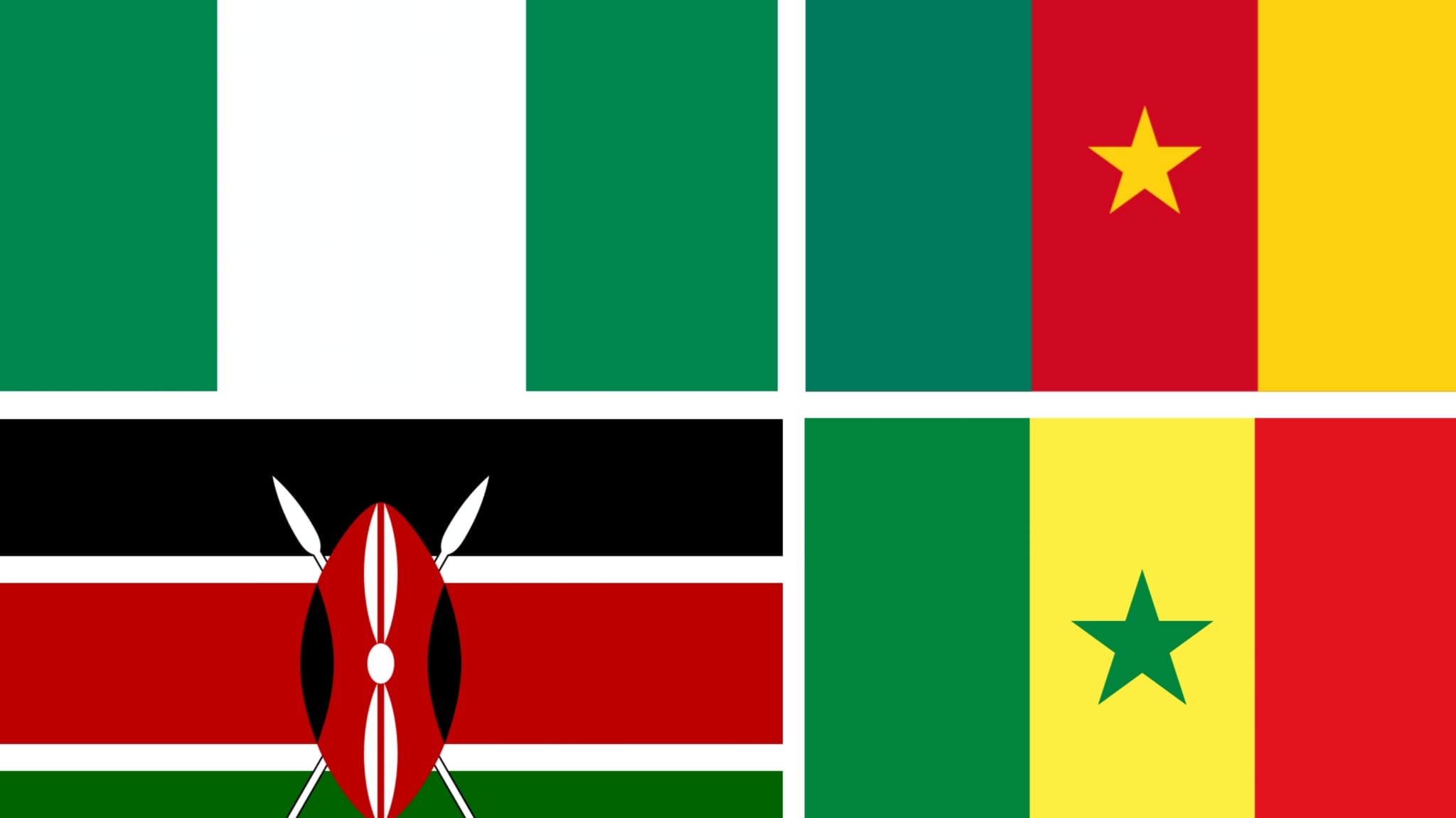
Kenya

Kenya made a bold move at the start of 2024 by scrapping visa requirements for all African citizens. For Nigerians, this means all you need is an online Electronic Travel Authorization (eTA), and you’re good to go.

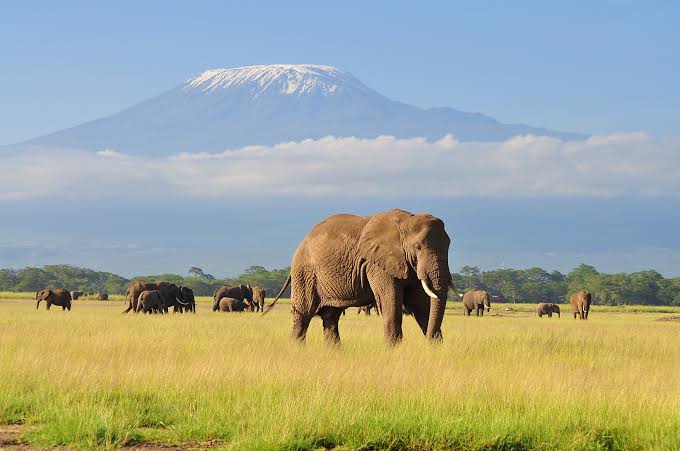
What to expect? From watching lions in Maasai Mara to sipping cocktails on Diani Beach, Kenya is full of jaw-dropping experiences. Nairobi gives Lagos a run for its money when it comes to nightlife and culture.

Travel tip: Apply for your eTA at least 3–5 days before your flight. Make sure your passport has at least 6 months validity left.

Rwanda

Rwanda joined the visa-free league in early 2024, opening its gates to all African nationals. So yes, your Nigerian passport works just fine.

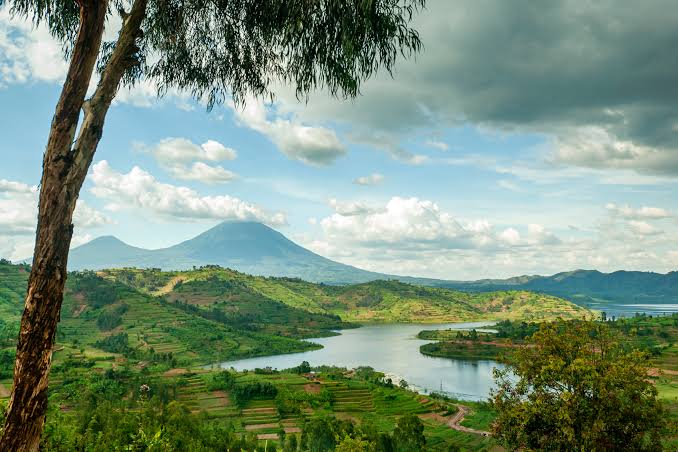
Why visit? Kigali is believed to be one of the cleanest cities in Africa. It’s a great spot to unwind, with beautiful hills, art galleries, and calm vibes. Go gorilla trekking in Volcanoes National Park for a once-in-a-lifetime adventure.

Stay duration: You can stay for up to 90 days without stress.

Ghana

Ghana officially removed visa requirements for African citizens in April 2025, and Nigeria’s ECOWAS connection already gives us visa-free access for up to 90 days.

What’s hot? Accra is a vibe! Art, fashion, music, food — it’s got it all. Visit historic places like the Cape Coast Castle, walk the Kakum canopy bridge, or just enjoy beach parties.

The Gambia

As of January 1, 2025, The Gambia allows visa-free entry to all African Union citizens — including Nigerians.

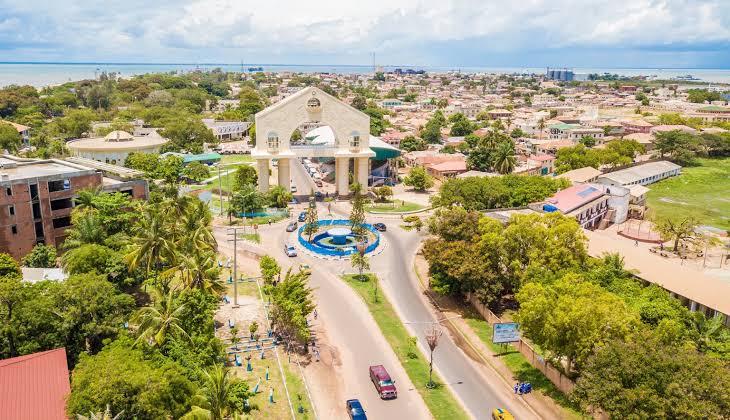
What to do there? This tiny West African country is full of surprises. Chill by the Atlantic, take a river cruise, or explore traditional villages.

Heads-up: There’s a small entry fee (around $20), even though it’s visa-free. So keep some cash handy.

Senegal

Senegal offers visa-free access to Nigerians for up to 90 days — thanks to ECOWAS. Dakar is where Afrobeats meets mbalax, and the energy is unmatched.

Don’t miss: The stunning Pink Lake (Lac Rose), the historic slave-trade site at Gorée Island, and bustling local markets.

Cameroon

Cameroon is another ECOWAS member that welcomes Nigerians for 90 days visa-free.

What’s popping? From the buzzing city of Douala to hiking Mount Cameroon and chilling in Limbe — there’s nature, nightlife, and culture wrapped in one.

Bonus: It’s one of the cheapest international trips you can take from Nigeria.
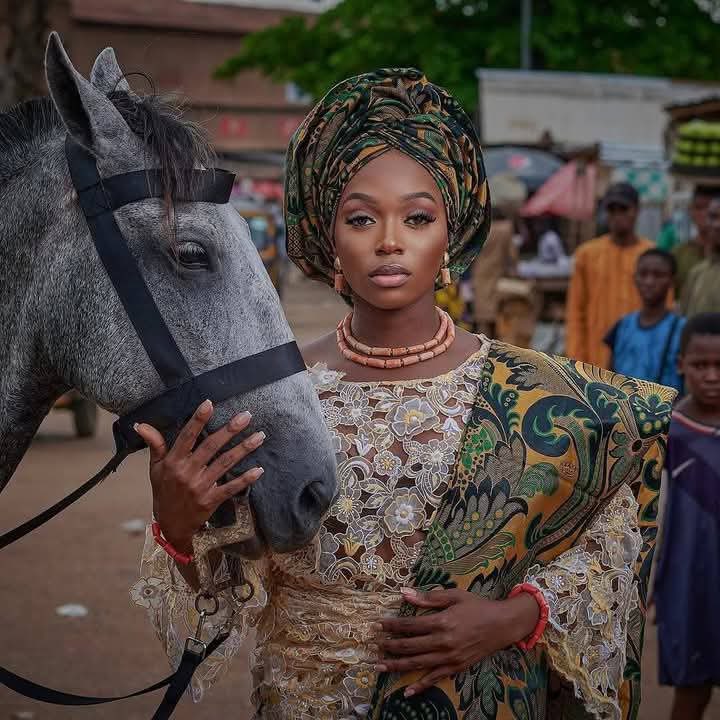
Other ECOWAS Countries: No Visa, Just Vibes

Thanks to the ECOWAS Free Movement Protocol, Nigerians can travel visa-free for up to 90 days in:
– Togo
– Sierra Leone
– Liberia
– Senegal
– Guinea
– Mali
– Burkina Faso
– Côte d’Ivoire
– Niger
– Cape Verde
– Chad
– Guinea-Bissau
Each destination has its own story to tell — from cultural festivals to natural wonders and beach getaways.

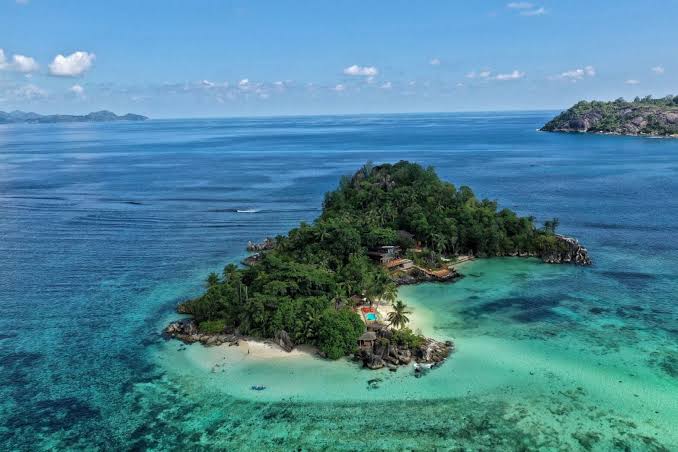
Seychelles: Island Bliss

Seychelles offers Nigerians visa-free entry for up to 30 days (you’ll be issued a visitor’s permit on arrival).

What to love? Think white-sand beaches, turquoise waters, and peaceful island life. It’s perfect for couples’ vacation or solo recharge trips.

Be aware: There have been mixed reports about Nigerian travelers facing entry restrictions. Check with the airline or Seychelles immigration before booking.

Before You Pack…

  • Make sure your passport is valid for at least 6 months from your travel date.
  • Some countries might ask for proof of accommodation or return tickets.
  • Even visa-free doesn’t always mean free — you might need to pay small entry or airport fees.
  • Double-check with each country’s embassy or official travel site before booking — just to be sure.

This movement is bigger than tourism. It’s about Pan-African unity, and economic empowerment. So, if you’ve been itching to travel, 2025 might just be your year.

Most Instagrammable Places to Visit in Nigeria – July 2025 List

Let’s face it: in 2025, if you didn’t take a picture, did it even happen? Nigeria is bursting with scenic gems that are just waiting to light up your Instagram feed,whether you’re a content creator, travel blogger, or just someone who loves sharing good vibes with your followers. From cultural landmarks to natural wonders, this country is a playground for anyone looking to capture beauty, colour, and authenticity.

If you’re looking for Instagrammable spots that are trending right now, especially this July 2025, I’ve rounded up the best places where your phone (and your followers) will thank you. Ready to explore? Let’s dive into this unforgettable list.

Nike Art Gallery – Lagos

Step into a world of colour, creativity, and culture at Nike Art Gallery, one of the largest art galleries in West Africa. It’s a go-to spot for art lovers, culture enthusiasts, and influencers alike. The moment you walk in, you’re surrounded by stunning textile patterns, traditional paintings, sculptures, and even handmade jewelry.

But it’s not just the art. The building itself is an aesthetic wonder. From the bold white exteriors to the spiral staircase and the beautifully curated African-themed decor, it’s impossible not to snap a photo.

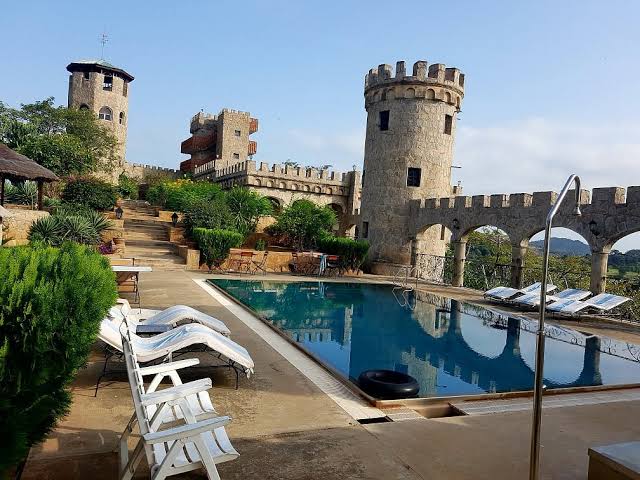
Kajuru Castle – Kaduna

This feels like something out of a storybook. Built in the 1980s in the style of a medieval European castle, Kajuru Castle is nestled among the mountains of Kaduna. It has dramatic stone towers, a crocodile pit, and a pool that overlooks miles of untouched landscape.

If you’re going for a luxury-meets-escapism aesthetic, this is it. It’s peaceful, private, and gives serious Game of Thrones kind of energy, only with Naija sunshine instead of snow.

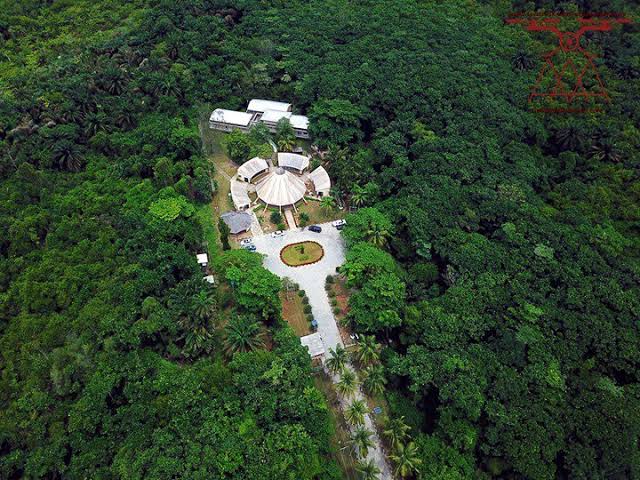
Lekki Conservation Centre – Lagos

For nature lovers and adventure seekers, Lekki Conservation Centre is a must. It’s home to Africa’s longest canopy walkway, and the views from the top are something else. Think lush green treetops, light filtering through the leaves, and a perfect mix of serenity and thrill.

Zuma Rock – Niger State

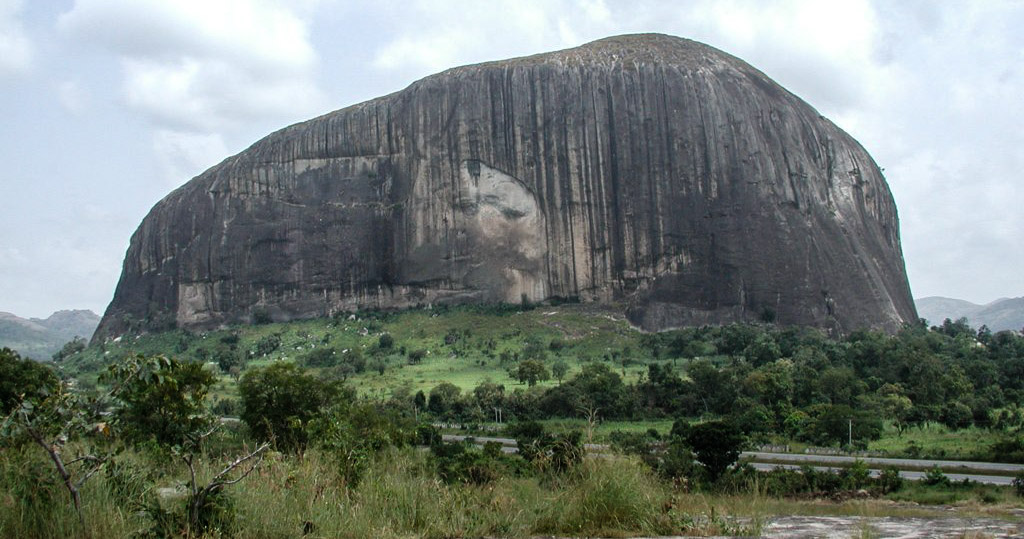
Standing tall along the Abuja-Kaduna expressway, Zuma Rock is more than just a rock, it’s a natural wonder with a human-like face carved by nature. In 2025, more travelers are visiting not just for the view but for its cultural symbolism.

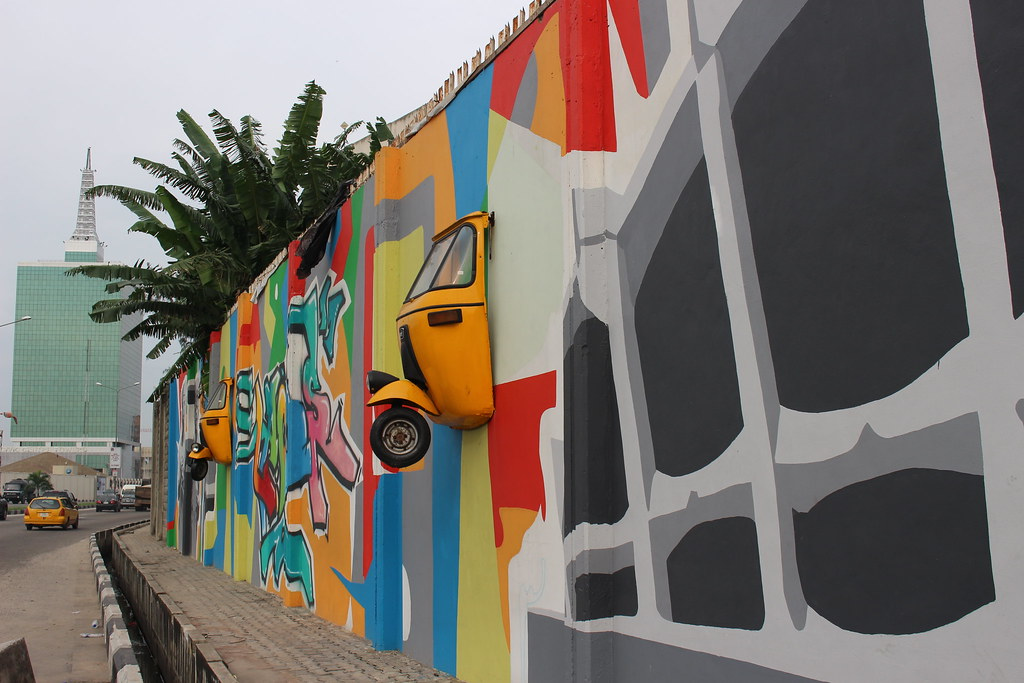
Wuse Market Murals – Abuja

Street art is taking over Abuja in 2025, especially around Wuse Market, which has become a spontaneous outdoor gallery. Artists are turning once-plain walls into vibrant murals that reflect modern Nigerian life, culture, and fashion.

Erin Ijesha Waterfalls – Osun State

Also known as Olumirin Waterfalls, this multi-level cascade is one of Nigeria’s most magical natural attractions. Every level offers unique views and natural pools surrounded by greenery.

Lagos Boardwalk – Victoria Island

Opened earlier this year, the Lagos Boardwalk is one of the city’s trendiest new hangouts. Located by the Atlantic, it features wooden paths, cozy spots, and incredible sunset views.

Jabi Lake Rooftop – Abuja

Jabi Lake Mall’s rooftop offers an unbeatable view of Abuja’s skyline and the calm lake below. Great for content creators who want that elevated, classy vibe.

Nigeria is full of magic, beauty, and style — and as more people explore, they’re realizing that this country is a content haven. Whether you’re chasing waterfalls, murals, castles, or city views, these spots will leave you with not just stunning photos, but unforgettable memories.

So grab your phone, charge your power bank, and hit the road — your next viral photo might just be waiting in one of these Instagrammable corners of Nigeria.
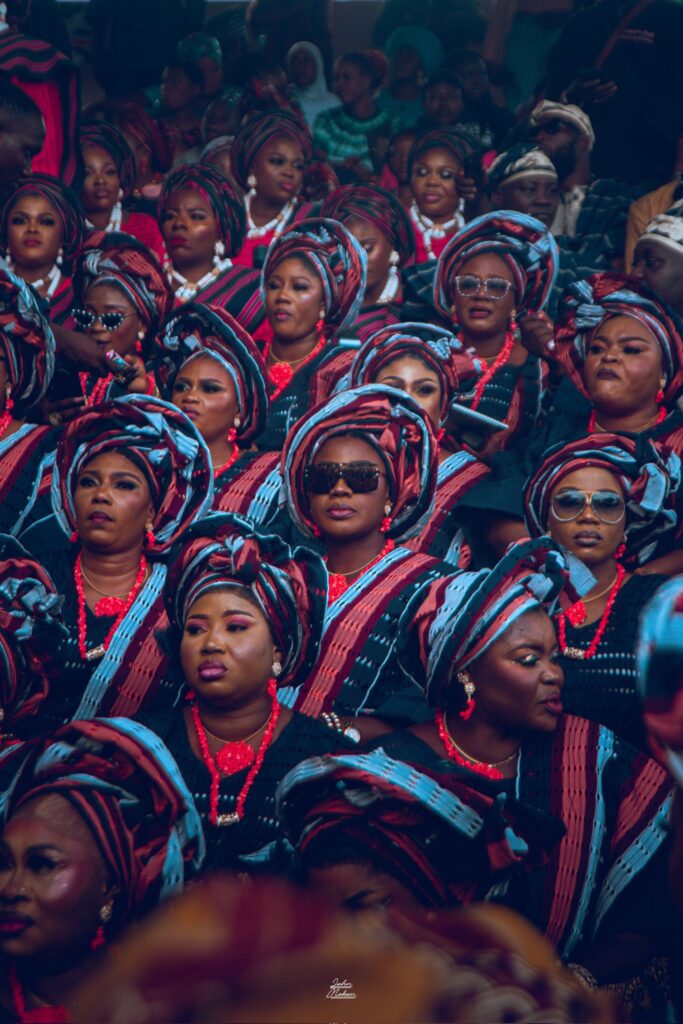
Ojude Oba 2025: Ijebu-Ode Comes Alive in a Dazzling Display of Culture and Royalty

The Ojude Oba Festival stands as a monumental celebration of the Ijebu people’s rich cultural heritage, blending Islamic traditions with Yoruba customs. Held annually in Ijebu-Ode, Ogun State, Nigeria, this festival is a vibrant display of unity, tradition, and community spirit.

Origins and Evolution

Ojude Oba, meaning “King’s Forecourt” in Yoruba, traces its origins to the late 19th century. It began as a Muslim religious observance where adherents paid homage to the Awujale, the traditional ruler of Ijebuland, expressing gratitude for religious freedom and protection. Over time, the festival evolved to include people of various religious backgrounds, transforming into a unifying cultural event that celebrates the rich heritage of the Ijebu people.

The 2025 Celebration

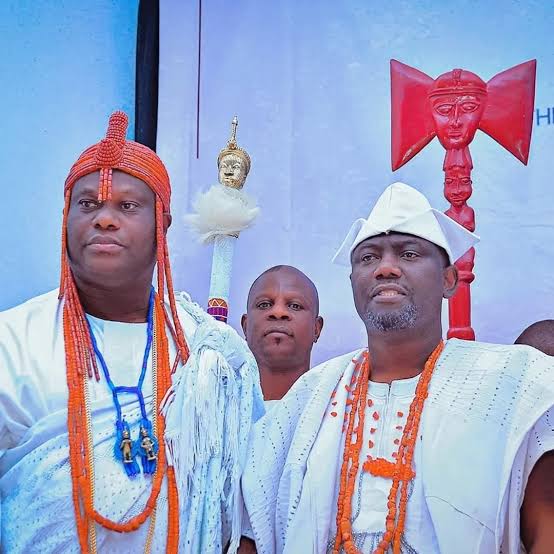
Today, the ancient town of Ijebu-Ode in Ogun State was transformed into a breathtaking arena of color, music, fashion, and cultural pride as thousands gathered for the 2025 Ojude Oba Festival. Held just two days after Eid-el-Kabir, this year’s edition lived up to its legacy as one of Nigeria’s most celebrated cultural events and perhaps the most spectacular in recent memory.

  1. The Regberegbe Parade – Unity in Generations

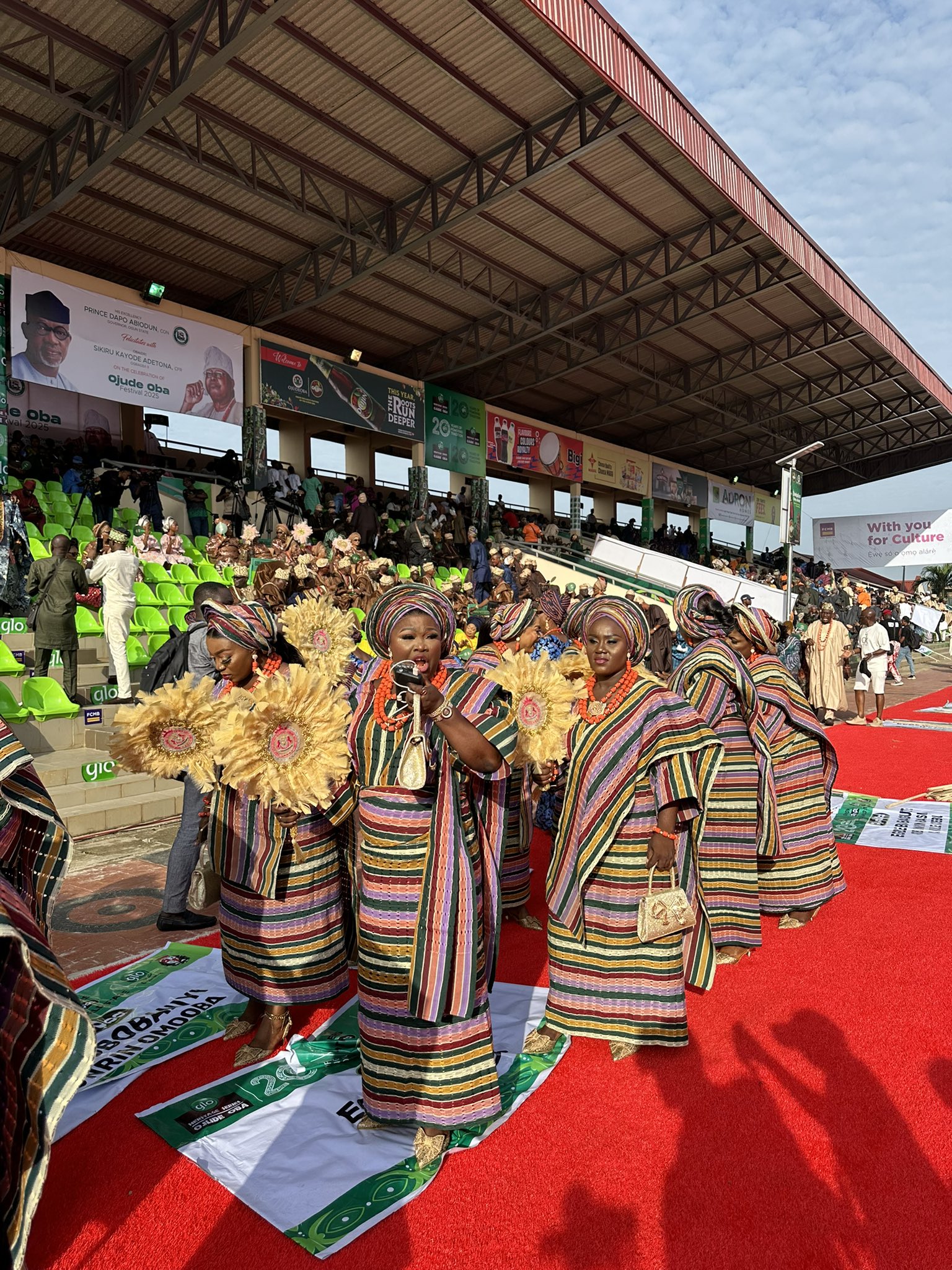
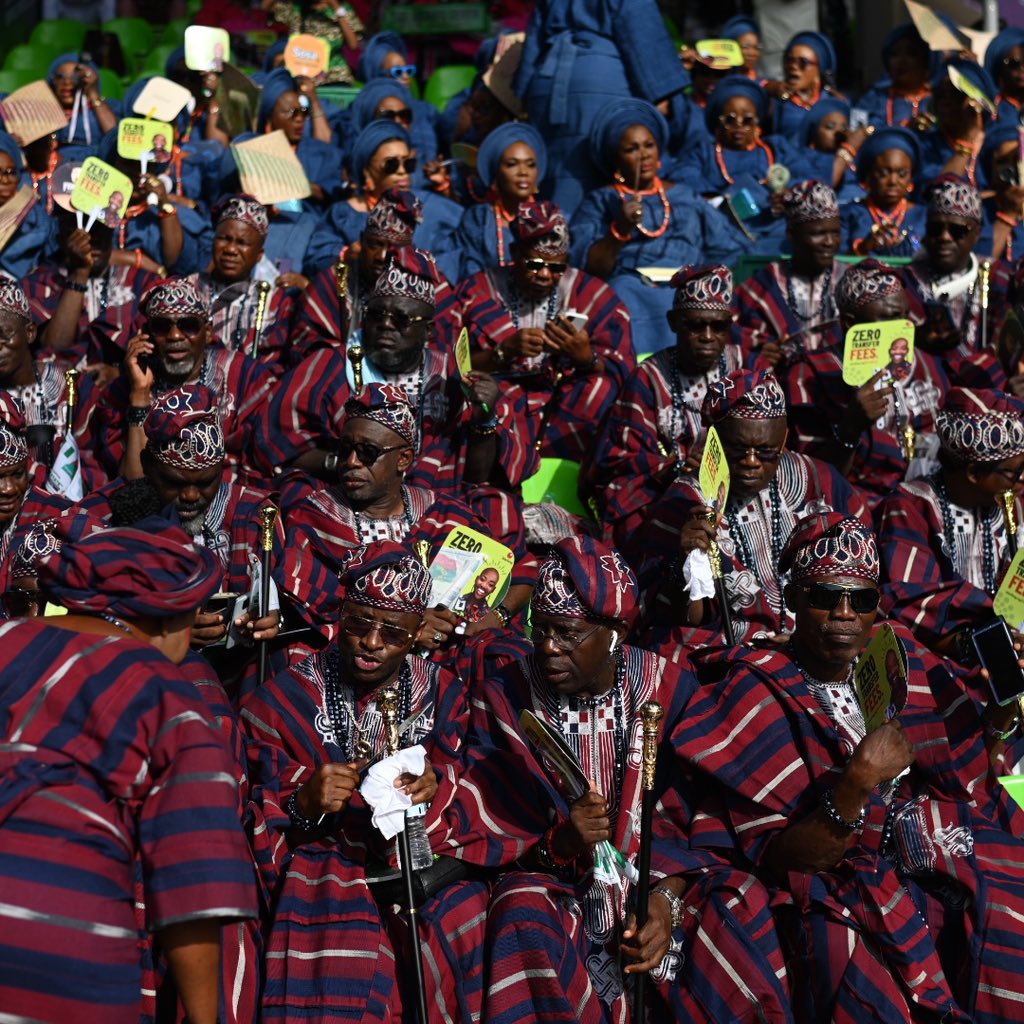
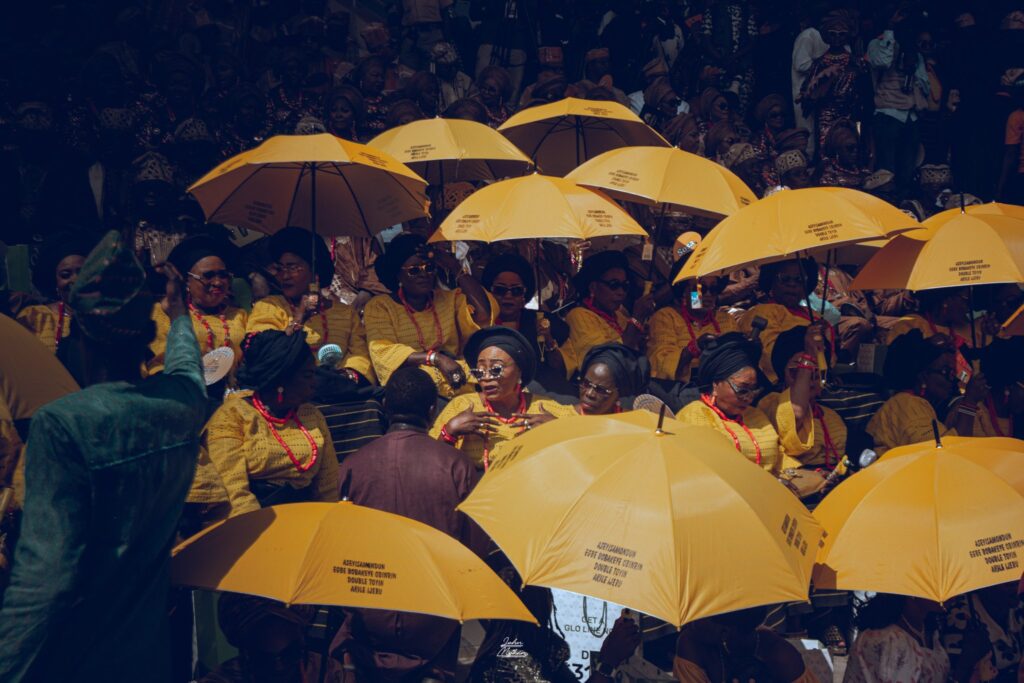
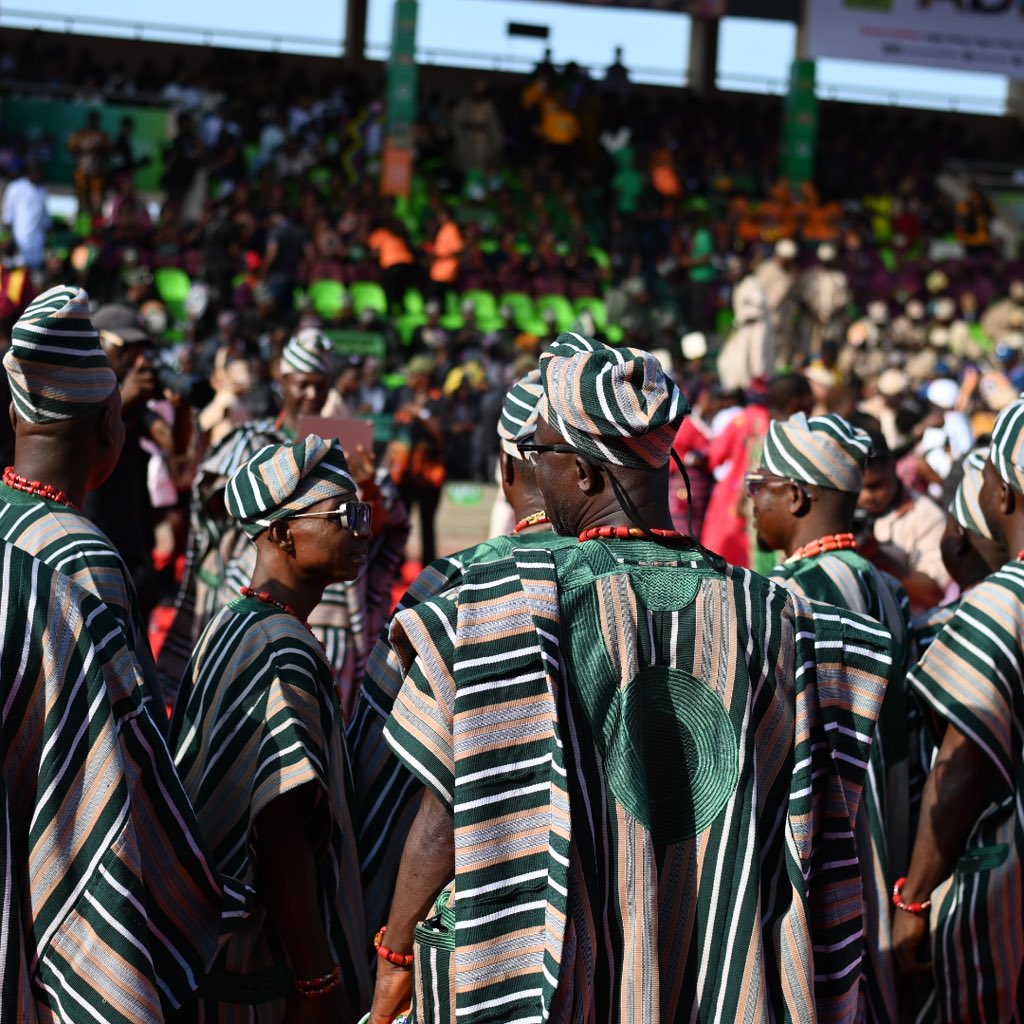
As tradition dictates, age-grade groups known as Regberegbe took center stage. Dressed in luxurious matching fabrics, each group showcased coordinated dances, chants, and fashion statements in a bid to honor the Awujale, Oba Sikiru Kayode Adetona. The performances were not only vibrant but symbolic—representing the continuity and strength of the Ijebu social structure.

  1. Dazzling Horsemanship by the Balogun Families

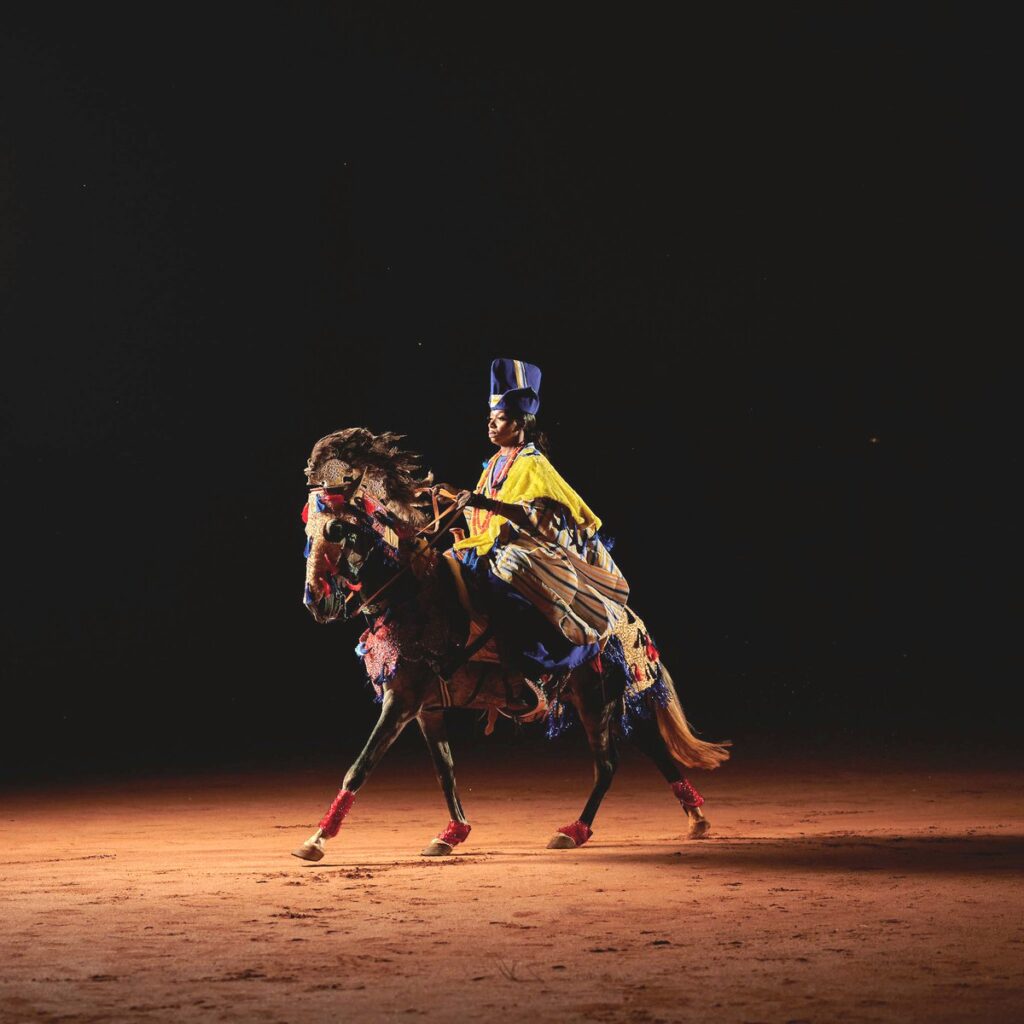
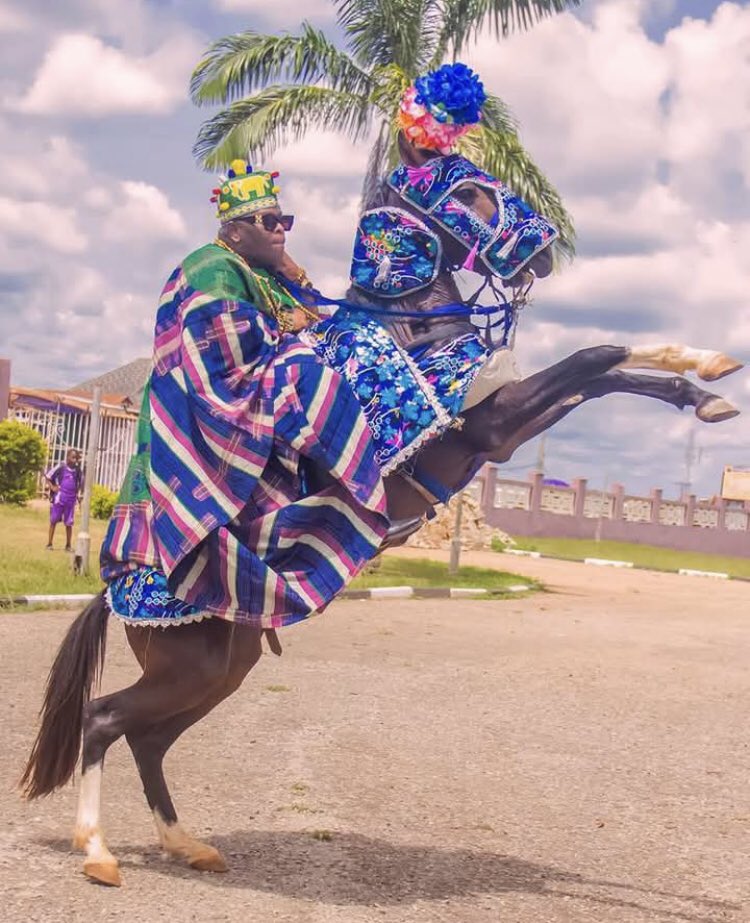
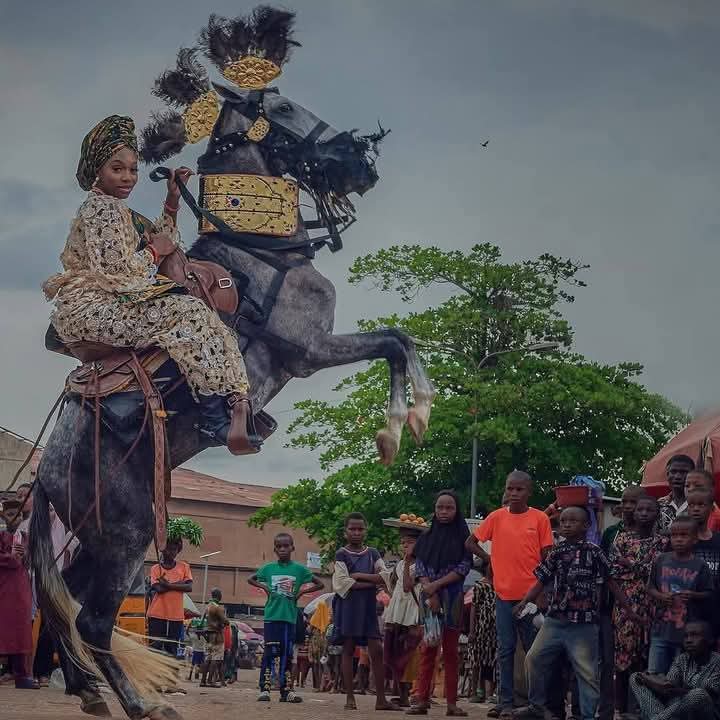
Crowds roared as horse riders from the prominent Balogun families charged through the arena in full regalia. Their skillful displays, accompanied by drummers and gun salutes, evoked the warrior spirit of Ijebu ancestors and added a regal tone to the event.

  1. Music, Dance and Cultural Energy

Traditional drumming and Yoruba folk music filled the air, while cultural troupes performed captivating dances to the delight of the audience. The beat of the Gangan and the flair of traditional attire created an immersive cultural atmosphere that defined the day.

  1. A Fashion and Culinary Showcase

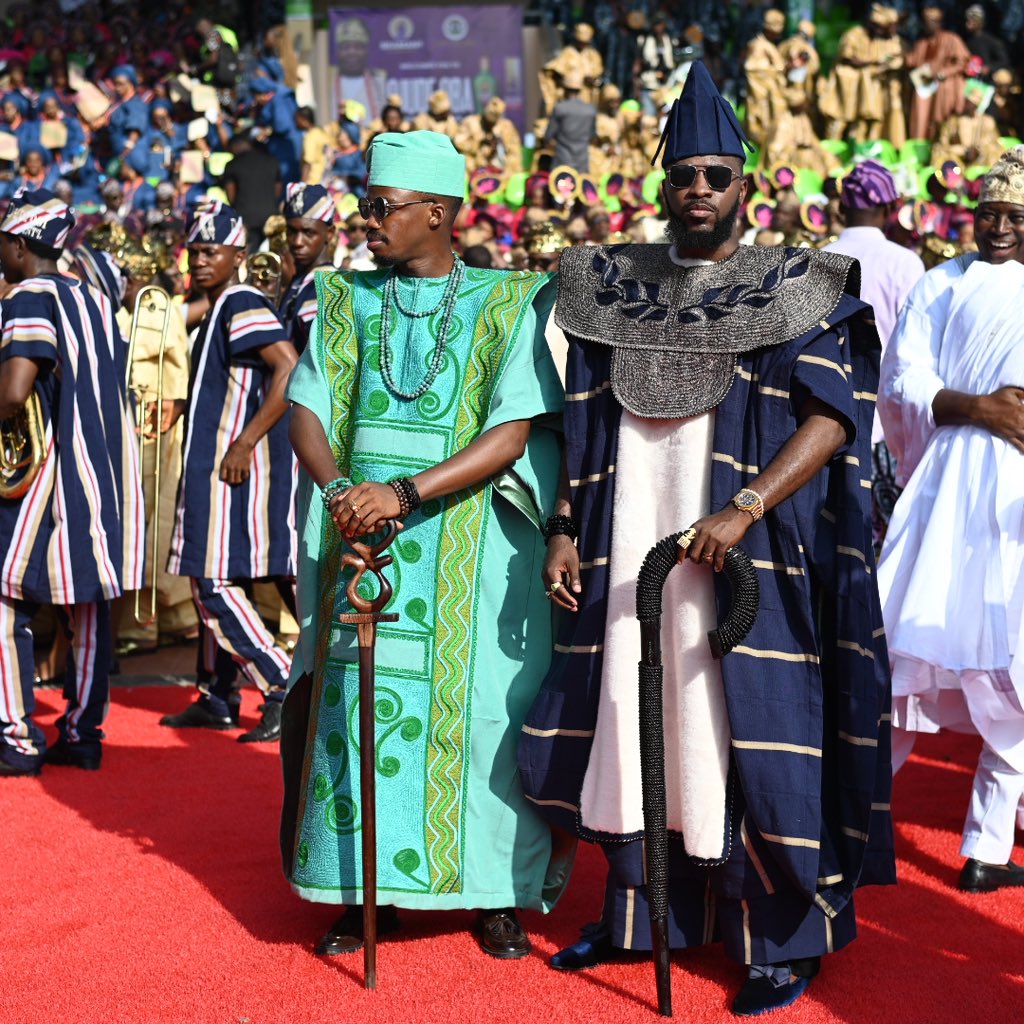
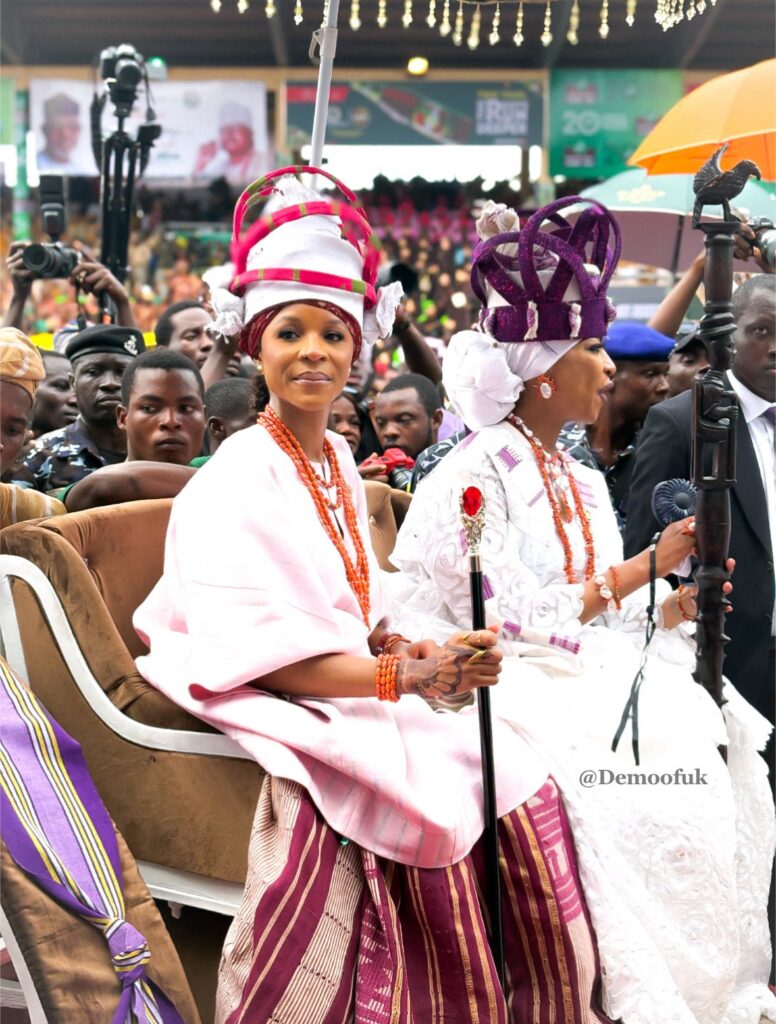
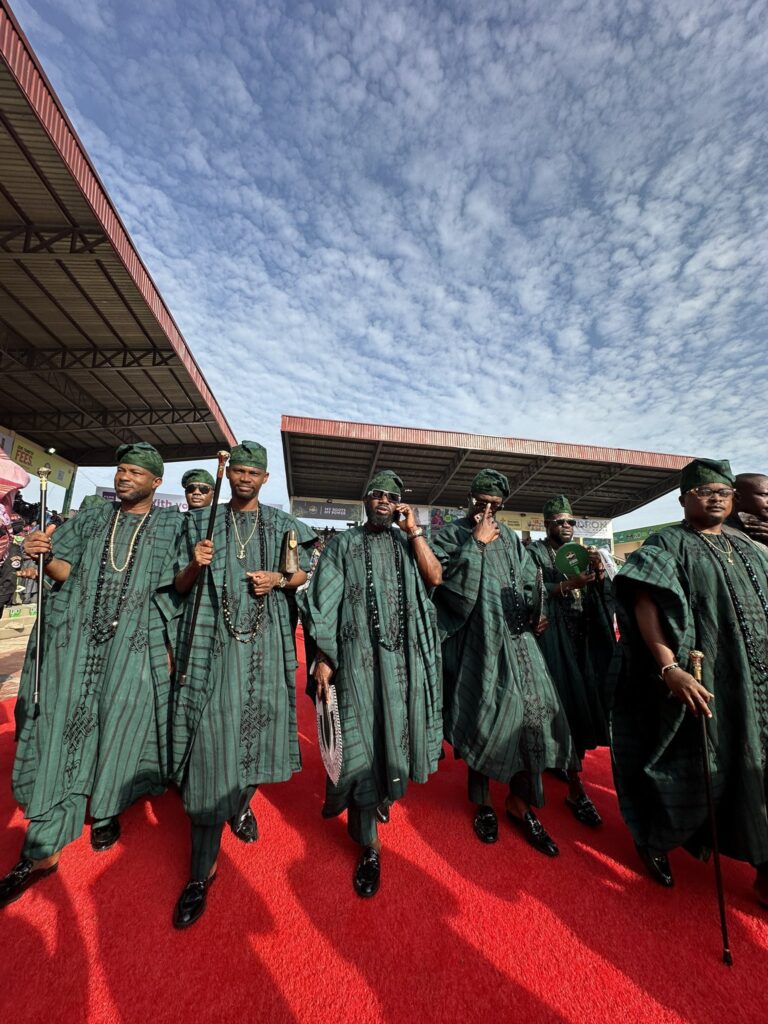
As always, Ojude Oba doubled as a runway of indigenous fashion. Attendees—royals, celebrities, dignitaries, and locals alike—dressed in exquisite aso ebi, creating a tapestry of color across the festival grounds. Meanwhile, stalls offered local delicacies like ofada rice, suya, moin moin, and pounded yam, ensuring that the celebration was as flavorful as it was festive.

A Boost for Local Economy and Culture

Today’s festival drew a large number of visitors, providing a major boost to the local economy. Hotels were fully booked, transport services saw increased patronage, and local vendors thrived. The 2025 event reaffirmed Ojude Oba’s status as not just a cultural treasure but an economic engine for Ijebu-Ode and Ogun State at large.

PHOTO HIGHLIGHT FROM OJUDE OBA 2025

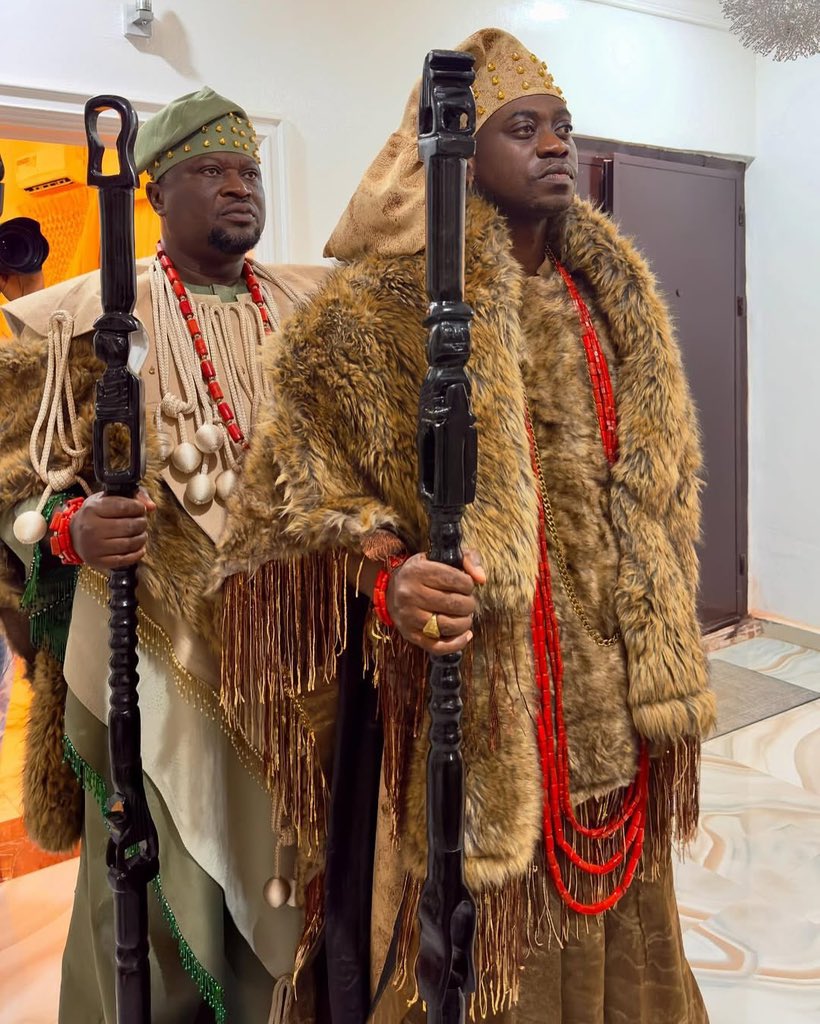
Actors Femi Branch and Adedimeji Lateef for Ojude Oba 2025
Farooq Oreagba

10 Most Spoken Languages in Africa

Africa is a continent renowned for its cultural and linguistic diversity, with over 2,000 languages spoken across its 54 countries. These languages are not just modes of communication but also carriers of history, culture, and identity. While some are spoken by millions across multiple nations, others are specific to individual communities. In this article, we delve into the 10 most spoken languages in Africa, their origins, significance, and the regions where they dominate.  

Swahili (Kiswahili)

Swahili, also known as Kiswahili, is the most widely spoken language in Africa, with over 200 million speakers. It is a Bantu language with significant Arabic influence due to historical trade connections between East Africa and the Arab world. Swahili is recognized as a lingua franca in many East African countries and is one of the official languages of the African Union (AU).  

Primary Regions: Kenya, Tanzania, Uganda, Democratic Republic of Congo, Rwanda, Burundi, Mozambique, Comoros  

Significance: Swahili is not only a means of communication but also a unifying language in East Africa, used in politics, education, and media.  

Example Phrase: “Hakuna Matata” (No worries).  

Arabic

Arabic is one of the most influential languages in Africa, spoken by over 150 million people. It is a Semitic language that serves as the official language in many North African countries. Arabic’s influence extends to religion, as it is the language of the Quran and central to Islamic practices.  

Primary Regions: Egypt, Sudan, Algeria, Morocco, Tunisia, Libya, Mauritania  

Significance: Beyond communication, Arabic is integral to cultural, religious, and historical narratives across North Africa.  

Example Phrase: “As-salamu alaykum” (Peace be upon you).  

Hausa

Hausa is one of the most spoken indigenous languages in Africa, with over 50 million native speakers and an additional 30 million using it as a second language. It is a Chadic language that has become a lingua franca in West Africa, especially in trade and communication.  

Primary Regions: Nigeria, Niger, Ghana, Cameroon, Chad  

Significance: Hausa is widely used in Islamic education and is a major language in African media, including international broadcasters like BBC Hausa.  

Example Phrase: “Sannu” (Hello).  

Yoruba

Yoruba is a tonal Niger-Congo language spoken by over 40 million people, primarily in Nigeria. It is also used in parts of Benin and Togo. Yoruba has a rich literary tradition and is central to the culture, religion, and identity of the Yoruba people.  
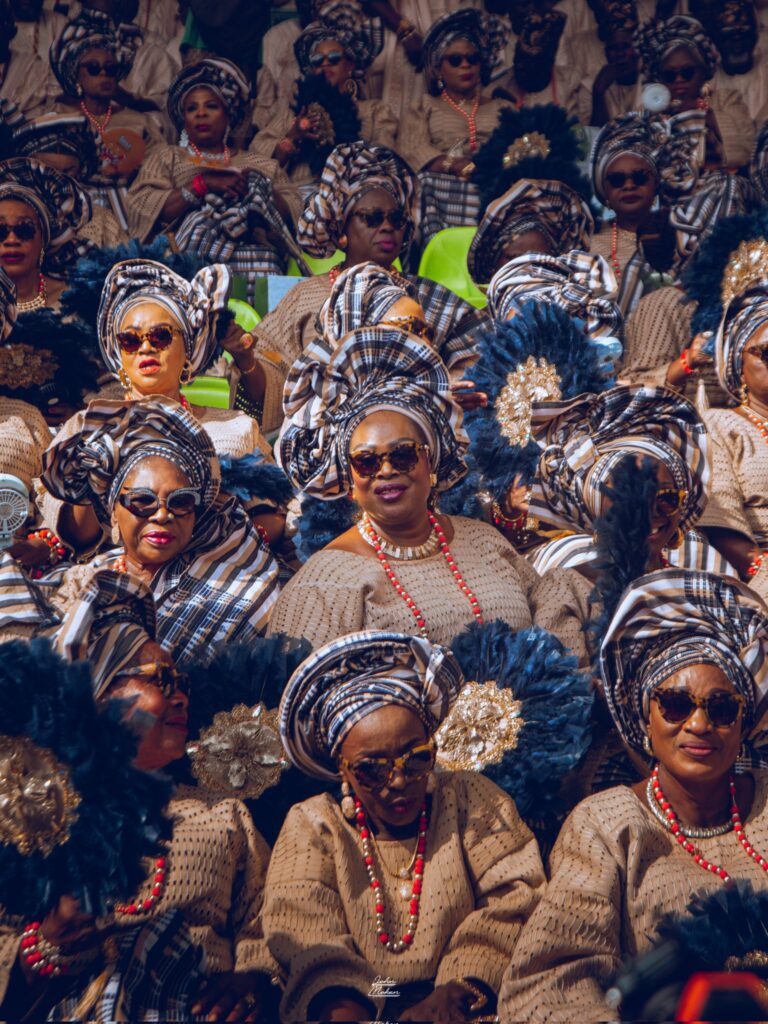
Primary Regions: Nigeria, Benin, Togo  

Significance: Yoruba is deeply tied to traditional beliefs and practices, including Ifá divination, which has influenced cultures in the Americas, especially in Brazil and Cuba.  

Example Phrase: “Bawo ni?” (How are you?).  

Igbo

Igbo, another major Niger-Congo language, is spoken by over 30 million people in south-eastern Nigeria and beyond. Known for its complex tonal system, Igbo plays a vital role in the cultural and economic life of the Igbo people.  

Primary Regions: Nigeria, Equatorial Guinea  

Significance: Igbo is associated with entrepreneurial spirit and innovation, and it has a rich oral and written tradition.  

Example Phrase: “Kedu?” (How are you?).  

Amharic

Amharic, the official language of Ethiopia, is spoken by over 30 million people. It is a Semitic language with its own unique script, Ge’ez, which is one of the oldest writing systems in the world.  

Primary Regions: Ethiopia  

Significance: Amharic is central to Ethiopian identity, culture, and governance, serving as the working language of the federal government.  

Example Phrase: “Selam” (Hello).  

Zulu (isiZulu)

Zulu is one of South Africa’s 11 official languages and is spoken by over 28 million people, with 12 million being native speakers. It is a Bantu language known for its rich oral traditions and expressive tones.  

Primary Regions: South Africa, Lesotho, Eswatini  

Significance: Zulu is central to the cultural and political life of South Africa, with a strong presence in media and education.  

Example Phrase: “Sawubona” (Hello).  

Shona

Shona is the most widely spoken language in Zimbabwe, with over 15 million speakers. It belongs to the Bantu family and is known for its rich vocabulary and vibrant cultural expressions.  

Primary Regions: Zimbabwe, Mozambique, Botswana  

Significance: Shona is used in education, literature, and traditional ceremonies, and it plays a key role in preserving Zimbabwean culture.  

Example Phrase: “Mangwanani” (Good morning).  

Xhosa (isiXhosa)

Xhosa, another official language of South Africa, is spoken by about 19 million people. It is notable for its click consonants, which make it phonetically unique. Xhosa is closely related to Zulu but remains distinct.  

Primary Regions: South Africa  

Significance: Xhosa has a strong literary tradition and is one of the cultural cornerstones of South Africa, with notable speakers like Nelson Mandela.  

Example Phrase: “Molo” (Hello).  

Berber (Tamazight)

Berber, or Tamazight, is a collection of closely related languages spoken by the Berber people in North Africa. It has millions of speakers across the Maghreb and is an official language in Morocco and Algeria.  
Primary Regions: Morocco, Algeria, Tunisia, Libya, Mali, Niger  

Significance: Berber has gained recognition in recent years, symbolizing the cultural and political resurgence of the Berber identity.  
Example Phrase: “Azul” (Hello).  

Africa’s linguistic landscape reflects its rich history and cultural diversity. These top 10 languages are not just tools for communication but also vital elements of identity and heritage for millions of people. While some languages, like Swahili and Arabic, unite multiple nations, others, like Zulu and Yoruba, reinforce ethnic pride and cultural continuity. As Africa continues to grow and develop, these languages remain at the heart of its vibrant societies.

Rotten Tomatoes’ Golden Tomato Awards Winners (Full List)

At the Golden Tomato Awards, Shōgun and Dune: Part Two were big winnersShōgun won four awards in categories like Best New Series and Best TV Series, and Dune: Part Two won three, including Best Movie of 2024 and Best Wide Release.

Check out the full list of winners:

Best Movies of 2024
Dune: Part Two – WINNER
Anora​
Challengers
Furiosa: A Mad Max Saga​
Hit Man
Inside Out 2
Love Lies Bleeding
The Substance
Wicked
The Wild Robot

Best Wide Release Movies of 2024
Dune: Part 2 – WINNER
Anora​
Challengers
Conclave
Furiosa: A Mad Max Saga​
Inside Out 2
Love Lies Bleeding
The Substance
Wicked
The Wild Robot

Best Limited Release Movies of 2024
All We Imagine As Light – WINNER
The Brutalist​
A Different Man
Ghostlight
Girls Will Be Girls​
Good One
Nowhere Special
The Promised Land
Robot Dreams
Sing Sing

Best Streaming Movies of 2024
Hit Man – WINNER
Fancy Dance​
His Three Daughters
The Imaginary
Música
Orion and the Dark
The Piano Lesson
Rebel Ridge
Wallace & Gromit: Vengeance Most Fowl
Woman of the Hour

Best TV Series of 2024
Shōgun – WINNER
Arcane: League of Legends: Season 2​​
Baby Reindeer​
Fallout​
Mr. & Mrs. Smith​
Pachinko: Season 2
The Penguin​
Slow Horses: Season 4
True Detective: Night Country
X-Men ’97​

Best New Series of 2024
Shōgun – WINNER
Batman: Caped Crusader​​
Black Doves
English Teacher
Fallout​
Matlock
Mr. & Mrs Smith​
Nobody Wants This
Supacell
X-Men ’97​

Best Returning Series of 2024
Slow Horses: Season 4 – WINNER
Arcane: League of Legends: Season 2​​
Colin From Accounts: Season 2
Evil​: Season 4
Girls5eva: Season 3
Hacks: Season 3
Heartstopper: Season 3
Industry: Season 3
Pachinko: Season 2
Somebody Somewhere: Season 3

Best Anthology or Limited Series of 2024
The Penguin​ – WINNER
Baby Reindeer​
Fantasmas​
Fight Night: The Million Dollar Heist​
Mary & George
One Day
Ripley​
Say Nothing
The Sympathizer
True Detective: Night Country

Fan Favorite Movies
Wicked – WINNER
Bad Boys: Ride or Die​
Deadpool & Wolverine​
Dune: Part Two
Godzilla x Kong: The New Empire
Inside Out 2
It Ends With Us
Reagan
Twisters
The Wild Robot

Best Action & Adventure Movies
Monkey Man – WINNER
Deadpool & Wolverine​
The Fall Guy
Rebel Ridge
Twisters

Best Animated Movies
The Wild Robot – WINNER
Flow
Inside Out 2
Memoir of a Snail
Robot Dreams

Best Comedy Movies
Hit Man – WINNER
Hundreds of Beavers
My Old Ass
Kneecap
Thelma

Best Documentaries
Will & Harper – WINNER

Dahomey
Daughters
Jim Henson: Idea Man
Super/Man: The Christopher Reeve Story

Best Drama Movies
A Real Pain – WINNER

All We Imagine As Light
Ghostlight
His Three Daughters
Sing Sing

Best Fantasy Movies
Beetlejuice Beetlejuice – WINNER
Problemista
Timestalker
Tuesday
The Vourdalak

Best Horror Movies
The Substance – WINNER
A Quiet Place: Day One
Heretic
Late Night with the Devil
Longlegs

Best Music Movies
Wicked – WINNER
Beatles ’64
The Greatest Night in Pop
I Am: Celine Dion
Music by John Williams

Best Mystery & Thriller Movies
Conclave – WINNER
A Different Man
Civil War
Love Lies Bleeding
Strange Darling

Best International Movies
All We Imagine As Light – WINNER
Kneecap
Oddity
The Promised Land
Robot Dreams

Best Romance Movies
Anora – WINNER
Girls Will Be Girls
Música
The Idea of You
We Live in Time

Best Sci-Fi Movies
Dune: Part Two – WINNER
Alien: Romulus
Furiosa: A Mad Max Saga
Molli and Max in the Future
Kingdom of the Planet of the Apes

Best Sports Movies
Challengers – WINNER
Backspot
The Beautiful Game
The Fire Inside
Young Woman and the Sea

Best Animated Series
X-Men ’97 – WINNER
Arcane: League of Legends: Season 2
Batman: Caped Crusader
Creature Commandos
Terminator Zero

Best Comedy Series
Hacks: Season 3 – WINNER
English Teacher
Girls5Eva: Season 3
Only Murders in the Building: Season 4
Shrinking: Season 2

Best Docuseries
Wise Guy: David Chase and the Sopranos – WINNER
American Nightmare
Jerrod Carmichael: Reality Show
In Restless Dreams: The Music of Paul Simon
Steve! (Martin)

Best Drama Series
Shōgun – WINNER
Baby Reindeer
Industry: Season 3
Matlock
Pachinko: Season 2

Best Drama Series
Shōgun – WINNER
Baby Reindeer
Industry: Season 3
Matlock
Pachinko: Season 2

Best Fantasy Series
Dead Boy Detectvies – WINNER
Agatha All Along
House of the Dragon: Season 2
The Lord of the Rings: The Rings of Power: Season 2
Renegade Nell

Best Horror Series
Evil: Season 4 – WINNER
Hysteria!
Interview with the Vampire: Season 2
Teacup
The Walking Dead: The Ones Who Live

Best Mystery & Thriller Series
The Penguin – WINNER
Mr. & Mrs. Smith
Ripley
Slow Horses: Season 4
True Detective: Night Country

Best Romance Series
Heartstopper: Season 3 – WINNER
Colin from Accounts: Season 2
My Lady Jane
Nobody Wants This
One Day

2024 Puerto Rico Critics Association Awards Winners (Full List)

The Substance won big at the 2024 Puerto Rico Critics Association Awards, followed by the horror thriller, Nosferatu.

This year’s award winners include big names like Demi Moore and Colman Domingo, who won Best Actress and Actor in their respective categories. Bill Skarsgård and Margaret Qualley won Best Supporting Actor and Actress in their respective categories.

Here is the full list of tonight’s winners:

Best Action Film
Deadpool & Wolverine (Runner Up)
Dune: Part Two
Furiosa: A Mad Max Saga (WINNER)
Gladiator II
Monkey Man
Rebel Ridge

Best Horror Film
Alien: Romulus
The First Omen
Longlegs
Nosferatu (Runner Up)
Smile 2
The Substance (WINNER)

Best Comedy/Musical
Anora (Runner Up)
A Different Man
Hundreds of Beavers
The Substance
Wicked (WINNER)
Your Monster

Best Documentary
Dahomey
Frida
Jim Henson: Idea Man
No Other Land (WINNER)
Super/Man: The Christopher Reeve Story (Runner-Up)
Will & Harper

Best Animated Feature
Flow (Runner Up)
Inside Out 2
Memoir Of A Snail
Transformers One
Wallace & Gromit: Vengeance Most Fowl
The Wild Robot (WINNER)

Best First Film
Didi
The First Omen
Monkey Man (WINNER)
No Other Land
Problemista (Runner Up)
Thelma

Best Director
Sean Baker – Anora
Coralie Fargeat – The Substance (WINNER)
Rose Glass – Love Lies Bleeding
Payal Kapadia – All We Imagine As Light
RaMell Ross – Nickel Boys
Denis Villeneuve – Dune: Part Two (Runner-Up)

Best Original Screenplay
Anora
Babygirl
The Brutalist
Challengers (Runner Up)
A Real Pain
The Substance (WINNER)

Best Adapted Screenplay
Conclave (WINNER)
Dune: Part Two
I’m Still Here
Nosferatu (Runner Up, Tie)
Queer (Runner Up, Tie)
Wicked

Best Actor
Adrien Brody – The Brutalist
Daniel Craig – Queer
Colman Domingo – Sing Sing (WINNER)
Ralph Fiennes – Conclave (Runner Up)
Josh Hartnett – Trap
Sebastian Stan – The Apprentice

Best Actress
Lily-Rose Depp – Nosferatu
Cynthia Erivo – Wicked
Angelina Jolie – Maria
Mikey Madison – Anora
Demi Moore – The Substance (WINNER)
Fernanda Torres – I’m Still Here (Runner Up)

Best Supporting Actor
Yura Borisov – Anora
Nicolas Cage – Longlegs (Runner Up)
Bill Skarsgård – Nosferatu (WINNER)
Jeremy Strong – The Apprentice
Stanley Tucci – Conclave
Denzel Washington – Gladiator II

Best Supporting Actress
Ariana Grande – Wicked (Runner Up)
Felicity Jones – The Brutalist
Katy O’Brian – Love Lies Bleeding
Margaret Qualley – The Substance (WINNER)
Isabella Rossellini – Conclave
Zoe Saldaña – Emilia Pérez

Best Original Score
Challengers (WINNER)
Conclave
Dune: Part Two (Runner Up)
Furiosa: A Mad Max Saga
Nosferatu
The Wild Robot

Best Film Editing
Challengers (WINNER)
Conclave
Dune: Part Two
Furiosa: A Mad Max Saga
Nickel Boys
The Substance (Runner Up)

Best Cinematography
The Brutalist
Conclave
Dune: Part Two (Runner Up)
Nickel Boys
Nosferatu (WINNER)
The Substance

Best Visual Effects
Alien: Romulus
Dune: Part Two (Runner Up)
Furiosa: A Mad Max Saga
Kingdom Of The Planet Of The Apes
Nosferatu
The Substance (WINNER)

Best Sound
Alien: Romulus
Civil War
Dune: Part Two (WINNER)
Furiosa: A Mad Max Saga
Nosferatu
The Substance (Runner Up)

Best Production Design
The Brutalist
Conclave
Dune: Part Two
Gladiator II
Nosferatu (Runner Up)
Wicked (WINNER)

Best Hair & Makeup
A Different Man
Furiosa: A Mad Max Saga
Nosferatu (Runner Up)
Smile 2
The Substance (WINNER)
Wicked

Best Costume Design
Conclave
Dune: Part Two
Furiosa: A Mad Max Saga
Gladiator II
Nosferatu (Runner Up)
Wicked (WINNER)

Best Original Song
‘Leash’ – Babygirl
‘Compress / Repress’ – Challengers (Runner Up)
‘Vaster Than Empires’ – Queer
‘Like a Bird’ – Sing Sing
‘Out of Oklahoma’ – Twisters
‘Kiss the Sky’ – The Wild Robot (WINNER)

Scroll to Top