4 Must-Watch Psychological Thrillers in 2026 That Will Leave You Asking Questions

If you love stories that mess with your head, twist your expectations, and make you think about characters long after the credits roll, this list has four great picks for you. Three are series you can binge, one is a movie that still holds up years later.

 First up on the list is the series 56 Days. This is an American thriller that premiered on Amazon Prime Video in early 2026. The show is based on a novel and follows two people, Ciara and Oliver, who meet by chance and dive into a fast-burning, intense relationship.

The twist is that 56 days after they first meet, a dead body is found in their apartment. The story jumps back and forth in time, showing both the build-up of their relationship and the police investigation into the murder.

The series has eight episodes and is designed to be binge-watchable. It combines psychological tension with crime elements and dark romance, making you question how well you can really know someone. You can stream all episodes on Amazon Prime Video. 

Next is His & Hers, a six-episode mystery thriller from Netflix. This series is adapted from a popular novel and stars Tessa Thompson and Jon Bernthal. It centers on a puzzling case that blurs the lines between truth and deception. As secrets unfold about what really happened in the past, relationships and motives are questioned.

The show is that kind of watch that keeps you guessing about each character’s role in the central mystery. It is a drama filled with psychological twists, and all episodes are available on Netflix. 

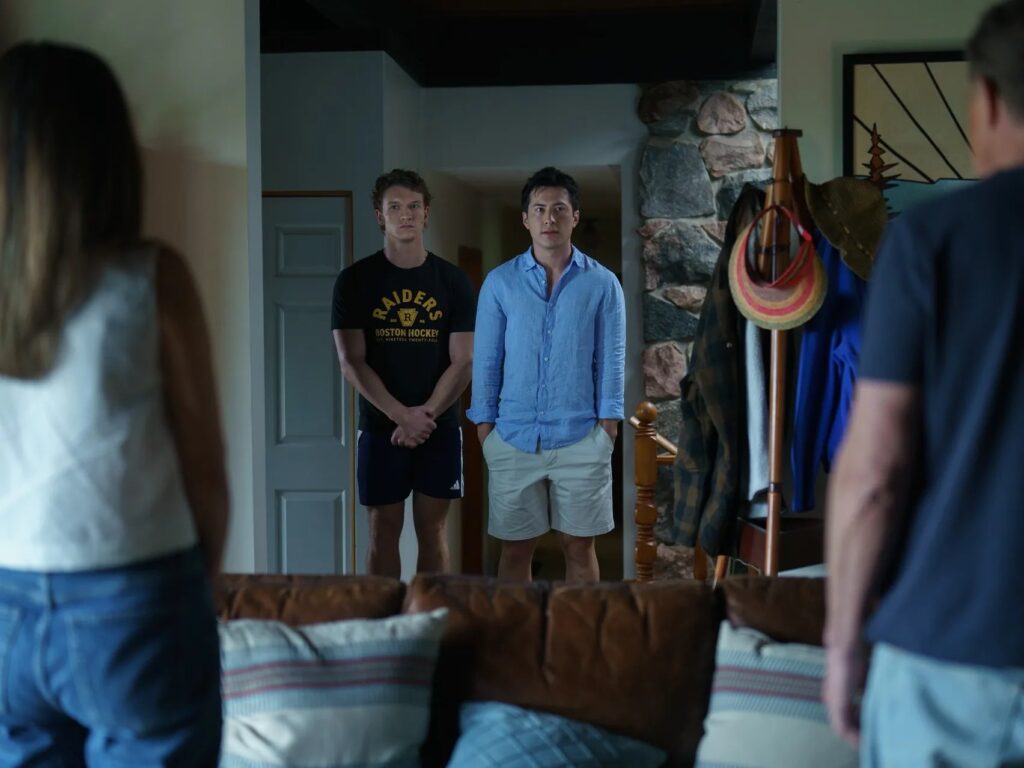
Another excellent series to watch is We Were Liars. This is a psychological thriller available on Amazon Prime Video that first aired in mid-2025. It’s based on E. Lockhart’s bestselling novel and follows the chaotic life of Cadence Sinclair Eastman, a teenager from a wealthy family who returns to her family’s private island after a mysterious accident left her with memory loss.

As she tries to piece together what happened, the story reveals emotional secrets, complicated friendships, and family tension. The series plays with memory, guilt, and truth in a way that keeps you hooked. All eight episodes dropped at once on Prime Video, so it’s easy to binge. 

Then there is Gone Girl, a movie that has become a modern classic of the psychological thriller genre. Directed by David Fincher and based on Gillian Flynn’s bestselling book, this film stars Ben Affleck and Rosamund Pike. It tells the story of Nick Dunne, whose wife Amy goes missing on their fifth wedding anniversary. What starts as a disappearance quickly turns into a media circus and a deep dive into secrets, lies, and manipulation.

The story plays with perception, truth, and character motives in a way that keeps you guessing until the very end. It is stylish, unsettling, and one of the most talked-about thrillers of the last decade. You can find Gone Girl on several streaming platforms, including YouTube TV, and you can rent or buy it on services like Amazon Video and Apple TV Store. 

All four of these titles explore different corners of the psychology thriller world. 56 Days and His & Hers lean more into crime and mystery with strong serialized narratives. We Were Liars adds emotional depth and family secrets to the mix. And Gone Girl remains a tightly wound standalone film that will keep your mind turning long after it ends.

Whether you like slow burn tension, character-driven mysteries, or full-on twist endings, these four picks have something that should pull you in and refuse to let you go until you know the whole story.

Written by Favour Awana

Federal Government Bans Roadblocks for Tax and Levy Collection Nationwide

The Federal Government has taken a decisive step to eliminate unauthorized revenue collection on Nigerian highways by banning the use of roadblocks, checkpoints, and road stickers for tax and levy collection across the country. The directive, issued by the Joint Revenue Board (JRB), aims to strengthen tax administration, improve the ease of doing business, and curb harassment of motorists and transporters. 

The announcement followed the conclusion of the JRB’s 158th meeting, held on December 9–10, 2025, at the Transcorp Hilton in Abuja. According to the communiqué released at the end of the session, the board has outlawed the collection of road taxes, levies, rates and related charges at checkpoints, whether mounted by state actors or non‑state groups. Early reports today March 3, 2026 stated that formal implementation has began.

The board’s communique emphasized the outright abolition of road stickers and similar instruments that have been used to extract payments from road users. Such practices have long been criticised for contributing to multiple taxation, extortion, and disruptions to commercial transport activities. 

“The Board restates its commitment to eradicating the menace of non‑state actors in the nation’s revenue administration value chain,” the JRB said, urging Nigerians to refuse payment of levies at unauthorized checkpoints and to report offenders to the relevant security agencies. 

To ensure compliance with the ban, the JRB has called on key security bodies, including the Office of the National Security Adviser (ONSA) and the Nigeria Police Force to dismantle illegal roadblocks erected along major transport corridors and take action against those responsible for unlawful revenue collection. 

The ban aligns with the broader 2025 tax reform agenda of the Federal Government, which is introducing new tax laws and revenue administration frameworks intended to modernise Nigeria’s tax system. These reforms emphasise digital payments and structured collection mechanisms, reducing reliance on informal and arbitrary methods. 

The JRB also encouraged state governments to fast‑track the passage of the Harmonised Taxes and Levies (Approved List for Collection) Bill into law. This measure is expected to ensure greater uniformity in tax practices nationwide and eliminate overlapping taxes that undermine economic activity. 

This article is based on multiple verified reports from Nigerian news outlets.

Apple Unveils MacBook Air M5 With Fela Kuti’s 1971 Classic “Let’s Start” Featured in Launch

Apple has officially unveiled a new generation of the MacBook Air powered by its latest M5 chip, introducing upgraded performance and expanded base storage to its most popular laptop line.

The new MacBook Air comes equipped with Apple’s M5 processor, delivering improved CPU and GPU performance over the previous generation. The company confirmed that the device maintains its fanless design while offering enhanced efficiency and extended battery life of up to 18 hours, depending on usage. Apple has also increased the base storage configuration to 512GB, doubling the previous entry-level capacity.

The laptop retains its slim aluminum build and Liquid Retina display and will be available in both 13-inch and 15-inch models. Pre-orders begin shortly after the announcement, with retail availability following days later in select markets.

During promotional materials and launch visuals tied to the unveiling, Apple featured “Let’s Start,” the 1971 Afrobeat track by Fela Kuti. The song was originally performed by Fela and his band Africa ’70 and appeared on the live album Live! released in 1971. The track is widely regarded as one of the early recordings that helped define the Afrobeat genre.

“Let’s Start” is known for its extended instrumental structure and rhythmic arrangement, characteristic of Fela’s early 1970s sound. Its inclusion in the MacBook Air M5 launch marks a notable intersection between global technology branding and African musical heritage.

The inclusion of a foundational Nigerian record in a global product unveiling comes at a time when Nigeria’s digital and cultural markets are expanding their international footprint.

Nigeria remains one of Africa’s largest smartphone markets, with recent rebounds in device shipments and sustained demand in the premium segment despite broader price sensitivity. While mass-market brands dominate by volume, premium devices  including Apple products maintain strong aspirational appeal among urban and affluent consumers. At the same time, Nigeria’s youthful population and mobile-first economy continue to drive high levels of app usage, digital content creation, and online engagement.

Culturally, Nigerian music and film have become major global exports. Afrobeat, once niche, is now mainstream worldwide. Featuring “Let’s Start” in the MacBook Air campaign situates the product within that broader cultural momentum.

Apple has not issued a specific statement explaining the selection of the song. However, the timing aligns with Nigeria’s growing relevance in global technology consumption and its expanding influence across music, media, and digital culture.

Anifa Mvuemba Pauses Hanifa Production After Nearly 15 Years, Citing Creative and Personal Reflection

Renowned fashion designer Anifa Mvuemba has announced that she is pausing production at her fashion brand Hanifa after nearly 15 years in the industry. In a statement, Mvuemba said she does not want to “rush just to prove resilience” or “pretend everything is fine just to keep momentum.”

Founded in 2008, Hanifa became known for its bold, innovative designs and inclusivity. The brand gained global attention for its digital fashion shows and creative use of social media, establishing Mvuemba as a trailblazer in the fashion industry. Hanifa has consistently showcased unique silhouettes, vibrant colors, and collections that cater to a diverse customer base.

The decision to pause production comes after a series of challenges for the brand, including manufacturing delays and fulfillment issues. A major annual sale saw delayed shipments, which led to public frustration and criticism on social media. Mvuemba took responsibility for resolving these issues, including offering refunds and personally addressing customer complaints.

Mvuemba emphasized that the pause is not a closure but a period for reflection and creative recalibration. She highlighted the importance of mental health and personal well-being in her decision, stating that she does not want to compromise her vision or the integrity of Hanifa by rushing production.

Hanifa’s production pause reflects broader challenges in the fashion industry, including the pressures designers face to maintain output and the importance of sustainable practices. Mvuemba’s transparency has been widely discussed among fans and industry insiders as a sign of accountability and commitment to long-term creative excellence.

Instagram Debuts ‘Secret Friends’ Feature for Selena Gomez, Benny Blanco and Lil Dicky in Podcast Promotion Strategy

In the early hours of March 3, 2026, Instagram introduced a new Stories variation labeled “Secret Friends” and it did not roll out quietly.

The feature appeared exclusively on the accounts of Selena Gomez, Benny Blanco, and Lil Dicky, marked by a distinct yellow ring around their profile pictures. The timing was precise: the activation coincided with the promotional push for Friends Keep Secrets, the newly launched video podcast hosted by Blanco, Lil Dicky (Dave Burd), and Kristin Batalucco.

At first glance, the feature resembles Instagram’s existing Close Friends tool. In practice, however, it functions very differently.

Unlike the standard Close Friends list where users manually select who can view certain Stories, the Secret Friends version appears to operate as a mass-access promotional layer.

Key observations:

The Stories are highlighted with a yellow ring instead of green.

Followers do not need to be added to a curated list.

Anyone visiting the profiles can access the content.

The Stories directly funnel viewers toward Friends Keep Secrets.

The psychology is intentional. A different color ring signals scarcity. Scarcity triggers curiosity. Curiosity drives taps.

Instagram has not released a formal statement confirming whether the feature will expand to other creators. Early indications suggest this is a limited, campaign-specific activation, not a platform-wide product update.

Friends Keep Secrets positions itself as an intimate, multi-camera, conversational show filmed inside the hosts’ Los Angeles home. Produced in partnership with Jay Shetty’s media network Perfect Strangers, the podcast aims to blur the line between casual hangout and celebrity interview.

Early guest appearances reportedly include Ed Sheeran, Gwyneth Paltrow, Paul Rudd, and Selena Gomez herself.

In one of the first Secret Friends Stories, Gomez addressed viewers directly:

Hey guys, welcome to my Secret Friends. If you want more secrets, go here.”

The message was brief. The call-to-action was clear. The conversion funnel was seamless.

Instagram is no longer merely a distribution channel for celebrity promotion. In this case, the platform appears to have provided a customized storytelling mechanic designed to amplify a media product launch.

Reaction across social media has been mixed but engaged.

Some fans celebrated the perceived exclusivity:

Others questioned why the feature is restricted to only three accounts.

A few users dismissed it entirely, asking why it matters.

If expanded, Secret Friends could become a new tier of creator tools, positioned between Close Friends and subscription-based exclusives. It could offer brands and high-profile creators a controlled environment for limited-time campaigns.

Tonto Dikeh Drops ‘King’ Persona, Embraces Faith-Driven Rebrand as “Evangelist Tonto”

For over a decade, Tonto Dikeh built one of Nollywood’s most defiant personal brands. The “King Tonto” identity was bold, controversial, and intentionally disruptive, a symbol of female authority in an industry that rarely handed women the crown.

In a video shared on March 2, 2026, the actress publicly announced that she will no longer answer to “King Tonto Dikeh,” describing the decision as an act of spiritual obedience.

In obedience to the Holy Spirit, I will no longer be addressed as ‘King Tonto Dikeh.’ You can call me ‘The Woman of God,’ ‘Evangelist Tonto.’ I’m going from a mess to a message.

She added that “Tonto Dikeh” or “Auntie Tonto” are also acceptable but the royal moniker that once defined her public image has officially been laid to rest.

When Dikeh adopted the “King” title around 2011, it wasn’t random branding. It became a statement.

Through marriage headlines, divorce battles, co-parenting disputes, political ambition, mental health conversations, and frequent online controversies, the “King” persona functioned as armor. It projected dominance in moments when public scrutiny was at its peak.

But in 2026, she is repositioning herself not as a symbol of resistance, but as a vessel of ministry.

Unlike some celebrity conversions that appear abrupt, Dikeh’s shift has been building publicly since late 2025.

She recently completed a discipleship program at Streams of Joy International, describing it as a foundational step in deepening her spiritual walk. She has also shared testimonies about financial restoration, claiming what she called “mega money” blessings after recommitting herself to Christian discipline.

Her Instagram presence has noticeably changed. Prayer sessions. Bible reflections. Invitations to worship and “speak in tongues” during live broadcasts. Language centered on healing, obedience, and divine reconstruction.

Dikeh has not announced retirement from Nollywood. However, her public language suggests ministry may take precedence. Whether that translates into gospel media projects, church leadership, faith-based films, or a complete pivot away from mainstream entertainment is still unclear.

She continues to operate the Tonto Dikeh Foundation, which focuses on philanthropy and advocacy.

If there is one constant in Tonto Dikeh’s career, it is reinvention.

From controversial actress to political aspirant, from “King” to now “Evangelist,” she has consistently reshaped her narrative in public view. Whether “Evangelist Tonto” becomes a permanent identity or another chapter in an evolving public story will unfold over time. But as of March 2, 2026, one of Nollywood’s most polarizing figures has clearly chosen a new spotlight and it’s spiritual.

Tom Holland and Zendaya Are Married — Law Roach Reports “The Wedding Has Already Happened”

Tom Holland and Zendaya are reportedly married, following a surprise revelation from Zendaya’s longtime stylist and creative partner, Law Roach, at the 2026 Actor Awards.

Speaking on the red carpet, Roach stunned fans when he said:

The wedding has already happened — you missed it!

When asked to clarify whether he was serious, Roach reportedly responded:

It’s very true.

The comments immediately sparked widespread speculation online, with fans and entertainment outlets scrambling to confirm what would be one of the most low-key celebrity weddings in recent memory.

Tom Holland and Zendaya first met in 2016 while filming Spider-Man: Homecoming, where they played on-screen love interests. For years, the two dismissed romance rumors, maintaining that they were close friends.

It wasn’t until 2021 after paparazzi photos surfaced that their relationship was publicly acknowledged.

Since then, the pair have carefully guarded their privacy. Unlike many celebrity couples, they rarely post about each other on social media and almost never discuss the relationship in detail during interviews.

Speculation about a possible engagement intensified in 2025 when Zendaya appeared at the Golden Globes wearing a noticeable diamond ring. Neither she nor Holland addressed the rumors at the time, further fueling the belief that they prefer to keep major life moments off the record.

If Law Roach’s comments are accurate, the marriage may have followed the same discreet path; intimate, controlled, and far from the public spectacle that typically surrounds A-list weddings.

As at the time of this report, neither Zendaya nor Tom Holland has officially confirmed the marriage. Their management has also not issued a statement.

However, Roach’s proximity to Zendaya makes his words particularly significant. As the stylist behind many of her most iconic red carpet moments, he is considered part of her inner creative circle, not an outsider speculating from afar.

Rema Nominated for ‘Most Handsome Man Alive 2026’ by Netizens’ Choice Magazine

Divine Ikubor, better known by his stage name Rema, has added another milestone to his ever-growing list of achievements.

The Nigerian Afrobeats star has been officially nominated for the “Most Handsome Man Alive 2026” title by Netizens’ Choice Magazine, earning recognition that extends beyond music and into global pop-culture influence.

Over the past few years, Rema has evolved from a fast-rising Nigerian act into one of Africa’s most internationally visible artists. His 2022 smash hit Calm Down became a global phenomenon, dominating charts across multiple continents and introducing millions to Afrobeats.

But beyond the numbers, Rema has cultivated a distinct identity: bold fashion choices, confident stage presence, and an aesthetic that resonates strongly with Gen Z audiences worldwide.

The “Most Handsome Man Alive” list typically celebrates male public figures who command attention not just through their work, but through charisma, influence, and style. Rema’s inclusion signals how far his image now travels beyond music.

Rema isn’t alone in representing Nigeria. British-Nigerian actor Damson Idris also made the nomination list, highlighting the continued global visibility of African entertainers across industries from music to film.

Together, their nominations reflect a growing shift: African creatives are no longer niche exports. They are central to global conversations in entertainment, fashion, and youth culture.

Public perception, online influence, and cultural visibility now shape celebrity status just as much as awards or chart positions. Rema’s nomination is proof of that swift change. 

Sniper, Hypo and Household Chemicals: The Deadly Risks Behind Common Substances in Nigeria

In recent times, several disturbing incidents involving the ingestion of harmful household substances have surfaced online in Nigeria, sparking conversations around mental health, social media pressure, and the accessibility of toxic chemicals.

A few weeks back, a TikTok user known as Mirabel made headlines after a distressing video surfaced in which she claimed to have consumed Sniper, a popular insecticide brand in Nigeria. Authorities later intervened, and the situation triggered widespread debate online about misinformation, emotional distress, and online sympathy campaigns.

Similarly, reports have been circulating on social media about media personality King Mitchy allegedly ingesting bleach (“hypo”) during a live session following an online dispute. As of publication, some claims surrounding that incident remain unverified as her management has confirmed that she’s dead and at the same time the hospital where the management claimed she died has come out to say she was never even admitted at their hospital. 

While the details of these cases continue to be debated online, what is not in doubt is the danger posed by these substances.

Long before these viral incidents, there have been multiple documented reports across Nigeria involving harmful substance ingestion.

These reports span different regions and age groups, suggesting the issue goes beyond isolated viral moments.

1. Sniper and Organophosphate Insecticides

Sniper is one of the most recognizable insecticide brands in Nigeria. Some formulations contain Dichlorvos, a chemical designed to kill insects by shutting down their nervous systems.

The problem is that the same mechanism that makes it effective against pests makes it extremely dangerous to humans.

Organophosphates interfere with enzymes that regulate nerve signals in the body. When ingested or inhaled in significant amounts, they can overwhelm the nervous system, leading to breathing difficulties, muscle paralysis, seizures, and in severe cases, organ failure. Exposure in poorly ventilated spaces increases the risk dramatically.

Over the years, Nigerian hospitals have treated multiple pesticide poisoning cases, prompting regulatory conversations about restricting high-toxicity insecticides. The danger lies not only in deliberate misuse but also in improper storage and unsafe indoor spraying.

Sniper is not just a household product. It is a potent chemical compound that must be treated with extreme caution.

2. Hypo and other Household Bleach

Household bleach, commonly referred to as hypo, is another product many Nigerians use almost daily. It typically contains Sodium hypochlorite, a strong disinfectant trusted for cleaning and sanitizing.

But bleach is not harmless simply because it is common.

Sodium hypochlorite is corrosive. When swallowed, it can burn the mouth, throat, and stomach lining. The damage is chemical, not mechanical meaning tissues can be destroyed from the inside. Even inhaling concentrated fumes in a closed environment can irritate the lungs and airways.

The risk becomes even more serious when bleach is mixed with acidic cleaners. That combination can release Chlorine gas, a dangerous vapor that can cause severe respiratory distress.

The familiarity of bleach has created a false sense of safety. In reality, it is a powerful chemical disinfectant that demands responsible handling.

3. Acid-Based Toilet Cleaners and Industrial Cleaning Agents

Many toilet cleaners and heavy-duty cleaning products contain strong acids such as Hydrochloric acid. These substances are formulated to dissolve stubborn stains, mineral deposits, and grime.

Acid-based cleaners can cause immediate burns upon contact with the skin. If splashed into the eyes, they may result in serious injury. When swallowed, they can severely damage internal organs within minutes.

Emergency units frequently handle cases of chemical burns resulting from improper handling of such products. The packaging may look like ordinary cleaning liquid, but chemically, these substances are highly reactive and corrosive.

The danger is not always visible until it is too late.

4. Kerosene and Petrol

Kerosene and petrol are deeply integrated into daily life in many Nigerian households. They power generators, fuel lamps, and support cooking in certain houses.

If swallowed, kerosene or petrol can enter the lungs and cause chemical pneumonia; a dangerous inflammation triggered not by infection but by toxic exposure. Vapors can also affect the brain and nervous system when inhaled in confined spaces.

One recurring public health concern involves storing kerosene in soft drink bottles, making it easy for children to mistake it for water or juice. Such accidents are tragically preventable.

These fuels may be routine household staples, but medically, they are hazardous substances.

5. Automotive Fluids and Battery Acid

Automotive maintenance products present another overlooked risk. Car batteries contain Sulfuric acid, a highly corrosive compound capable of causing severe burns.

Other automotive fluids, including antifreeze and brake fluids, contain toxic chemicals that can damage the kidneys, liver, and nervous system if ingested.

Unlike food or drink products, these substances are not designed for human contact. Yet in homes where they are improperly stored or handled without protective gear, the risk of exposure increases.

The recurring reports of harmful substance ingestion, whether accidental or tied to emotional distress, reveal a deeper public health challenge. These chemicals are easily accessible, affordable, and often poorly regulated at the retail level.

At the same time, conversations about mental health support in Nigeria remain ongoing. When emotional crises intersect with easy access to highly toxic substances, the consequences can be severe.

Awareness is not about sensationalism. It is about prevention.

They are not safe because they are common.

And they are not forgiving when misused.

Understanding their effects is the first step toward protecting lives.

Disclaimer

This article is intended for educational and awareness purposes only. It does not provide instructions for the misuse of any substances. The chemicals discussed, including Sniper insecticide, bleach (hypo), and other household products, are highly toxic and can cause serious injury or death if ingested or misused. If you or someone you know is experiencing emotional distress or considering self-harm, please seek immediate help from qualified professionals or contact local support services.

God’s Plan Surpasses 3 Billion Spotify Streams, Marking Another Career Peak for Drake

Drake’s 2018 anthem “God’s Plan” has officially crossed 3 billion streams on Spotify, becoming the second song in his catalogue to reach the landmark figure. In an era where viral moments come and go. 

When “God’s Plan” dropped in January 2018, it didn’t just debut at No. 1 on the Billboard Hot 100, it stayed there for 11 weeks. The track, initially released as part of the Scary Hours EP and later included on Scorpion, quickly became one of the defining songs of the late 2010s.

Crossing 3 billion streams places “God’s Plan” in an elite category occupied by only a small number of global records. These aren’t just hits,  they are songs that have become part of everyday listening culture worldwide.

Drake’s first entry into the 3 billion club was One Dance, his 2016 global smash featuring Wizkid and Kyla. That song remains one of the most-streamed tracks in Spotify history, comfortably sitting above 4 billion streams.

With “God’s Plan” now reaching the same milestone tier, Drake stands among the few artists with multiple songs surpassing 3 billion streams on Spotify.

The music video, where Drake gave away nearly $1 million to individuals and families in Miami amplified its cultural weight. It wasn’t just a promotional rollout; it became a global moment.

Years later, the record continues to generate millions of streams weekly, fueled by playlists, algorithmic discovery, and a new generation of listeners discovering Drake’s catalogue.

Scroll to Top