
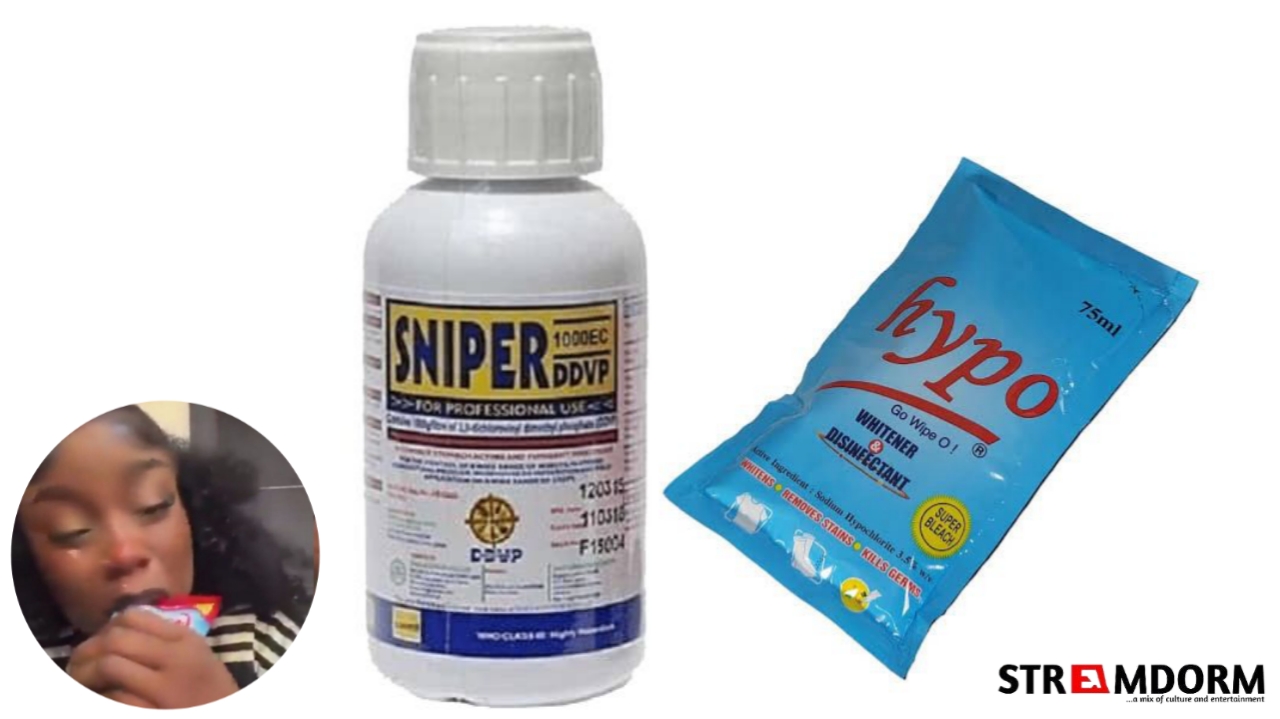
In recent times, several disturbing incidents involving the ingestion of harmful household substances have surfaced online in Nigeria, sparking conversations around mental health, social media pressure, and the accessibility of toxic chemicals.
A few weeks back, a TikTok user known as Mirabel made headlines after a distressing video surfaced in which she claimed to have consumed Sniper, a popular insecticide brand in Nigeria. Authorities later intervened, and the situation triggered widespread debate online about misinformation, emotional distress, and online sympathy campaigns.
Similarly, reports have been circulating on social media about media personality King Mitchy allegedly ingesting bleach (“hypo”) during a live session following an online dispute. As of publication, some claims surrounding that incident remain unverified as her management has confirmed that she’s dead and at the same time the hospital where the management claimed she died has come out to say she was never even admitted at their hospital.
While the details of these cases continue to be debated online, what is not in doubt is the danger posed by these substances.
Long before these viral incidents, there have been multiple documented reports across Nigeria involving harmful substance ingestion.
These reports span different regions and age groups, suggesting the issue goes beyond isolated viral moments.
1. Sniper and Organophosphate Insecticides
Sniper is one of the most recognizable insecticide brands in Nigeria. Some formulations contain Dichlorvos, a chemical designed to kill insects by shutting down their nervous systems.
The problem is that the same mechanism that makes it effective against pests makes it extremely dangerous to humans.
Organophosphates interfere with enzymes that regulate nerve signals in the body. When ingested or inhaled in significant amounts, they can overwhelm the nervous system, leading to breathing difficulties, muscle paralysis, seizures, and in severe cases, organ failure. Exposure in poorly ventilated spaces increases the risk dramatically.
Over the years, Nigerian hospitals have treated multiple pesticide poisoning cases, prompting regulatory conversations about restricting high-toxicity insecticides. The danger lies not only in deliberate misuse but also in improper storage and unsafe indoor spraying.
Sniper is not just a household product. It is a potent chemical compound that must be treated with extreme caution.
2. Hypo and other Household Bleach
Household bleach, commonly referred to as hypo, is another product many Nigerians use almost daily. It typically contains Sodium hypochlorite, a strong disinfectant trusted for cleaning and sanitizing.
But bleach is not harmless simply because it is common.
Sodium hypochlorite is corrosive. When swallowed, it can burn the mouth, throat, and stomach lining. The damage is chemical, not mechanical meaning tissues can be destroyed from the inside. Even inhaling concentrated fumes in a closed environment can irritate the lungs and airways.
The risk becomes even more serious when bleach is mixed with acidic cleaners. That combination can release Chlorine gas, a dangerous vapor that can cause severe respiratory distress.
The familiarity of bleach has created a false sense of safety. In reality, it is a powerful chemical disinfectant that demands responsible handling.
3. Acid-Based Toilet Cleaners and Industrial Cleaning Agents
Many toilet cleaners and heavy-duty cleaning products contain strong acids such as Hydrochloric acid. These substances are formulated to dissolve stubborn stains, mineral deposits, and grime.
Acid-based cleaners can cause immediate burns upon contact with the skin. If splashed into the eyes, they may result in serious injury. When swallowed, they can severely damage internal organs within minutes.
Emergency units frequently handle cases of chemical burns resulting from improper handling of such products. The packaging may look like ordinary cleaning liquid, but chemically, these substances are highly reactive and corrosive.
The danger is not always visible until it is too late.
4. Kerosene and Petrol
Kerosene and petrol are deeply integrated into daily life in many Nigerian households. They power generators, fuel lamps, and support cooking in certain houses.
If swallowed, kerosene or petrol can enter the lungs and cause chemical pneumonia; a dangerous inflammation triggered not by infection but by toxic exposure. Vapors can also affect the brain and nervous system when inhaled in confined spaces.
One recurring public health concern involves storing kerosene in soft drink bottles, making it easy for children to mistake it for water or juice. Such accidents are tragically preventable.
These fuels may be routine household staples, but medically, they are hazardous substances.
5. Automotive Fluids and Battery Acid
Automotive maintenance products present another overlooked risk. Car batteries contain Sulfuric acid, a highly corrosive compound capable of causing severe burns.
Other automotive fluids, including antifreeze and brake fluids, contain toxic chemicals that can damage the kidneys, liver, and nervous system if ingested.
Unlike food or drink products, these substances are not designed for human contact. Yet in homes where they are improperly stored or handled without protective gear, the risk of exposure increases.
The recurring reports of harmful substance ingestion, whether accidental or tied to emotional distress, reveal a deeper public health challenge. These chemicals are easily accessible, affordable, and often poorly regulated at the retail level.
At the same time, conversations about mental health support in Nigeria remain ongoing. When emotional crises intersect with easy access to highly toxic substances, the consequences can be severe.
Awareness is not about sensationalism. It is about prevention.
They are not safe because they are common.
And they are not forgiving when misused.
Understanding their effects is the first step toward protecting lives.
Disclaimer
This article is intended for educational and awareness purposes only. It does not provide instructions for the misuse of any substances. The chemicals discussed, including Sniper insecticide, bleach (hypo), and other household products, are highly toxic and can cause serious injury or death if ingested or misused. If you or someone you know is experiencing emotional distress or considering self-harm, please seek immediate help from qualified professionals or contact local support services.