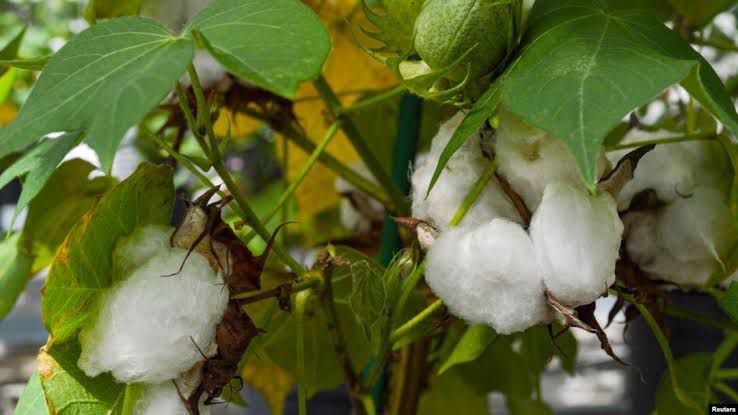
Despite Backlash and Past Setbacks, FG Moves Ahead With New GMO Cotton Seeds

Nigeria’s Federal Government has pushed ahead with the rollout of genetically modified (GM) cotton seeds, launching two new varieties; Mahyco C567 BGII and Mahyco C571 BGII despite lingering backlash and the mixed performance of earlier GMO cotton initiatives.

The move signals a renewed commitment to biotechnology as a solution to Nigeria’s struggling cotton and textile industry, even as farmers, civil society groups and environmental advocates continue to question its long-term impact.

The new GM cotton varieties were unveiled through the National Agricultural Seeds Council (NASC) in partnership with Mahyco Nigeria. According to officials, both Mahyco C567 BGII and C571 BGII are engineered with Bt (Bacillus thuringiensis) technology, designed to protect cotton plants against bollworm infestations, one of the crop’s most destructive pests.

Government representatives say the seeds are capable of delivering significantly higher yields, estimating production levels of 3.5 to 4.4 tonnes per hectare, compared to Nigeria’s current average of under 1.5 tonnes per hectare using conventional cotton varieties.

Other promised benefits include:

  • Reduced pesticide use
  • Lower production costs
  • Improved fibre quality for textile manufacturing

Officials argue that widespread adoption could help revive dormant ginneries, support local textile mills and create jobs across the cotton value chain.

Nigeria’s renewed push for GM cotton comes against the backdrop of earlier GMO trials that failed to meet expectations.

In 2018, Nigeria approved commercial cultivation of Bt cotton, also developed by Mahyco. At the time, the seeds were promoted as a breakthrough that would transform cotton farming. However, several years later, industry stakeholders reported that yields remained low and that farmers saw limited economic improvement.

Critics argue that the government’s current approach risks repeating past mistakes by focusing heavily on seed technology while ignoring structural problems.

Beyond performance issues, the new GM cotton rollout has reignited broader debates around genetically modified organisms in Nigeria.

Civil society organisations and environmental groups have raised concerns about: Farmer dependence on proprietary seeds that cannot be replanted, Long-term environmental and biodiversity risks, Transparency in biosafety approvals and Insufficient independent impact assessments.

Some advocacy groups have called on lawmakers to suspend or restrict GMO approvals until stronger regulatory safeguards and long-term studies are made public.

The government, however, maintains that the seeds have passed biosafety reviews and insists that biotechnology is essential to achieving food security and agricultural competitiveness.

Nigeria once had a thriving cotton sector that supported a robust textile industry. Today, most textile mills operate far below capacity, while cotton production remains fragmented and underfunded.

The introduction of Mahyco C567 BGII and C571 BGII represents another attempt to reverse that decline. Whether these new varieties will deliver better results than earlier GMO cotton and whether farmers will see sustainable gains remains uncertain.

For now, Nigeria’s cotton revival strategy rests once again on genetically modified seeds, even as the debate over their effectiveness, safety and long-term impact continues.

Burkina Faso Suspends Bill Gates’ GM Mosquito Project Amid Safety and Ethical Concerns

Burkina Faso has suspended the Target Malaria project, halting the release of genetically modified mosquitoes. Here’s why the decision was made, how the technology works, and what it means for Africa’s malaria fight.

Burkina Faso Suspends GM Mosquito Project

Burkina Faso has suspended all activities of the Target Malaria project, a Bill & Melinda Gates Foundation–backed initiative that was testing genetically modified (GM) mosquitoes to curb malaria transmission.

The Ministry of Higher Education, Research, and Innovation issued the suspension order on August 18, 2025, halting trials and sealing off facilities where GM mosquitoes were being bred. Remaining insects are set to be destroyed under biosafety protocols.

This move is seen as a major setback for biotechnology’s role in malaria control, especially as Africa continues to account for more than 95% of global malaria deaths each year.

What Is the GM Mosquito Project?

The GM mosquito project is a scientific effort to fight malaria by altering mosquito populations. There are two main strategies:

  1. Sterile or self-limiting males (non–gene drive): Male mosquitoes are engineered with a genetic trait that prevents female offspring from surviving. Over time, this reduces the mosquito population.
  2. Gene drive mosquitoes (still in development): Using CRISPR gene editing, scientists insert traits that spread quickly through wild populations. These traits could make mosquitoes resistant to malaria parasites or cause female infertility, breaking the cycle of transmission.

African Countries Testing GM Mosquitoes

While Burkina Faso was a pioneer, it is not the only African country exploring genetically engineered mosquitoes:

  1. Burkina Faso: First release in 2019 of sterile Anopheles gambiae males under Target Malaria.
  2. Djibouti (2024–2025): Pilot release of Oxitec’s “Friendly™” Anopheles stephensi mosquitoes to combat urban malaria outbreaks.
  3. Ghana and Uganda: Ongoing lab research under Target Malaria, but no field releases yet.
  4. Tanzania: Transmission Zero project preparing future gene drive trials.

Why Did Burkina Faso Suspend the Project?

Despite initial regulatory approvals, Burkina Faso pulled the brakes for several reasons:

  • Public Opposition: Civil society groups argued there was a lack of transparency and genuine community consent.
  • Scientific Concerns: Independent studies raised issues about genetic stability, hybridization with wild species, and potential unintended ecological impacts.
  • Ethical Questions: Critics said the project offered no immediate health benefits to communities and risked using them as experimental grounds.

The suspension underscores the need for caution, independent review, and stronger community engagement before advancing such high-risk biotechnology in Africa.

What This Means for Malaria Control in Africa

Burkina Faso’s decision puts Africa at a crossroads. While countries like Djibouti continue to test GM mosquitoes, the suspension raises questions about safety, ethics, and public trust.

As malaria remains one of Africa’s deadliest diseases, the challenge is finding the right balance between innovation and precaution. Whether genetically modified mosquitoes become part of the continent’s malaria toolkit will depend on how governments, scientists, and communities navigate these concerns in the years ahead.

Scroll to Top