

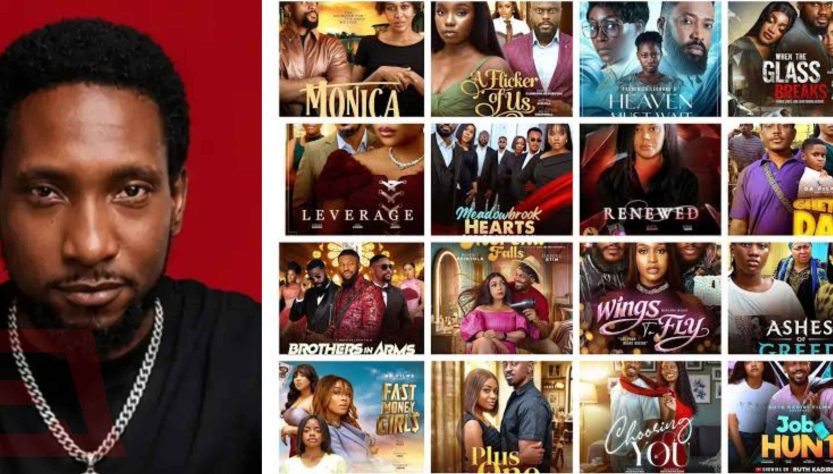
Nollywood has gained considerable international recognition over the years, with Nigerian films reaching audiences across different territories and platforms. However, increased visibility has not necessarily translated into the financial structures, distribution networks and sustainable business models required to support the industry’s long-term growth.
For actor and writer Seun Kentebe, Nollywood is approaching a defining moment, one that requires the industry to look beyond global recognition and concentrate on building the structures necessary to sustain its creative output.
Having spent years working across theatre, television and film, Kentebe has experienced different sides of the Nigerian entertainment industry. His journey began with school and university stage productions before he found wider recognition through the television sitcom Twilight Zone, a Cypress Associates production.
That early experience helped shape his understanding of the adaptability required of actors working in Nollywood. He believes every director brings a different creative approach, making preparation and an open mind essential to delivering a good performance.
Beyond acting, his experience as the creator of the television sitcom Squatterz and one of the writers behind Saro the Musical has also given him an understanding of the industry from a storytelling and production perspective.
But as Nollywood continues to evolve, Kentebe believes its biggest challenge is no longer convincing the world that African stories deserve attention. The priority now is ensuring that the industry can finance, distribute and sustain those stories.
YouTube and Nollywood’s changing distribution landscape
One of the most significant changes in Nollywood’s distribution landscape has been the growing reliance on YouTube. With films increasingly finding audiences on the platform, it has become an important destination for filmmakers seeking wider reach and alternative revenue opportunities.
Kentebe, whose recent feature film Finding Balance and short film Caged Bird are available on YouTube, believes the platform currently offers considerable advantages to Nigerian filmmakers.
He points to the revenue sharing arrangements associated with traditional cinema distribution, which he considers unfavourable to producers, alongside what he describes as the abrupt exit of Netflix and Prime Video, as factors contributing to YouTube’s growing importance.
“At this point, YouTube is the holy grail for Nollywood filmmakers,” he said.
He considers the platform a win-win situation, allowing filmmakers to make their work freely accessible while generating revenue once they meet the required watch-hour thresholds.
“Why fix what isn’t broken?” he added.
His position reflects the appeal of a distribution model that gives filmmakers another route to reach audiences without depending entirely on traditional cinema releases or streaming acquisitions.
However, the growing importance of YouTube also raises broader questions about Nollywood’s distribution infrastructure and whether the industry can develop a wider range of sustainable platforms and revenue channels.
Why Nollywood needs structured investment
For Kentebe, the industry’s next phase must begin with a more deliberate approach to financing.
He believes investors need to recognise Nollywood as a business with long-term potential rather than treating it solely as a creative venture. This, in his view, requires structured investment, transparent financial systems, proper budgeting and sustainable funding models.
Importantly, he argues that financial support should not be restricted to production alone.
Development, post-production, marketing and distribution also require adequate funding. Without these elements, even a well-produced film may struggle to recover its investment if it cannot reach the right audience.
He also wants emerging filmmakers to receive greater opportunities, rather than having funding concentrated around established industry names.
This approach, he suggests, would create room for fresh ideas while strengthening the industry’s overall creative and commercial capacity.
Adanne and the realities of independent filmmaking
The challenges surrounding Nollywood’s financing structures are also reflected in the experiences of independent filmmakers working to bring their stories to the screen.
For Gold & Lotanna, Adanne, their first feature film under Melon House Production, represents years of personal investment and a filmmaking process shaped by independence. In their production statement to Streamdorm, the filmmakers revealed that developing the screenplay took over a year, followed by more than a year of pre-production. They also spent three years saving from their day jobs to finance the project, without institutional backing or external funding.
The filmmakers described the process as one driven by a personal belief in the story, which explores three generations of Igbo women and how history repeats itself within families.
That commitment extended beyond financing. Before filming began, the production team engaged cast and crew in conversations about why the story needed to exist, grounding the film in shared lived experiences and shaping its emotional honesty.
Despite careful planning, the shoot encountered lost locations, community conflicts and logistical breakdowns, requiring resilience and constant adaptation.
For Gold & Lotanna, this independence ultimately became part of the film’s creative identity. As they explained, the performances, silences and intimacy of the camera reflect a process rooted in belief rather than convenience.
The experience offers another perspective on Kentebe’s call for structured investment in Nollywood. While independent filmmaking can create opportunities for distinctive stories and creative freedom, the personal sacrifices required to finance and complete such projects also highlight the need for funding systems that can support filmmakers beyond their immediate personal resources.
Distribution must go beyond acquiring films
Kentebe also believes distributors have an important role to play in determining Nollywood’s next phase of growth.
Rather than concentrating solely on acquiring films, he wants distributors to invest in improving access to audiences across different markets.
He identifies stronger distribution networks, wider cinema penetration, strategic streaming partnerships, international sales representation and better marketing across territories as important areas requiring attention.
He also highlights intellectual property protection and fair returns for filmmakers as essential parts of the process.
“Invest in access, not just acquisition,” he advised distributors.
For him, releasing a film should not mark the end of a distribution strategy. Instead, filmmakers and distributors must approach distribution as a deliberate process of reaching audiences and generating revenue across multiple platforms and markets.
The Global Audience and Nollywood’s responsibility
While investors and distributors have significant roles to play, Kentebe believes international audiences also have a part in Nollywood’s growth.
He wants global viewers to engage with Nigerian films beyond an initial curiosity about African culture, encouraging them to watch, recommend, discuss and support the films through legitimate channels.
He also believes Nigerian stories deserve the same openness and attention audiences extend to productions from Hollywood, Bollywood and other established film industries.
According to him, Nollywood already possesses stories with universal themes, including love, ambition, family, identity, sacrifice and survival. The challenge is creating the conditions that allow those stories to compete and thrive internationally without losing their cultural authenticity.
However, he does not place the responsibility entirely on external stakeholders.
Kentebe acknowledges that industry practitioners must also continue improving their storytelling, technical standards, professional ethics, production management and understanding of the global marketplace.
For Nollywood to achieve sustainable growth, creative ambition must be matched by stronger industry practices and business discipline.
Beyond recognition: Building an Industry that can sustain itself
Kentebe’s assessment ultimately points to a distinction between Nollywood’s growing international visibility and the structures needed to sustain that progress.
The industry has demonstrated that Nigerian stories can travel beyond the country’s borders. The next challenge is ensuring that the financial and distribution systems supporting those stories are strong enough to create lasting opportunities for filmmakers and other industry professionals.
The experience of independent productions such as Adanne further illustrates what is at stake. Behind every film is a process of development, financing, collaboration and production that requires more than creative ambition. Without sustainable support, filmmakers risk continuing to shoulder the financial burden of bringing their stories to life.
Kentebe believes Nollywood needs greater investment, infrastructure, collaboration and business discipline to match its creative potential.
“Our next level will not be achieved by global recognition alone, but by building the structures that turn that recognition into sustainable revenue, stronger careers and lasting influence,” he said.
He further argues that the ambition should extend beyond having Nigerian films watched internationally.
“The goal should not simply be for Nollywood to be watched by the world; it should be for Nollywood to become an industry in which the world is willing to consistently invest, partner and grow.”
For Kentebe, that is the distinction between an industry that attracts global attention and one capable of converting that attention into sustainable growth. And for filmmakers like Gold & Lotanna, it is also the difference between making films through years of personal sacrifice and working within an industry equipped to sustain the stories it wants to tell.
