
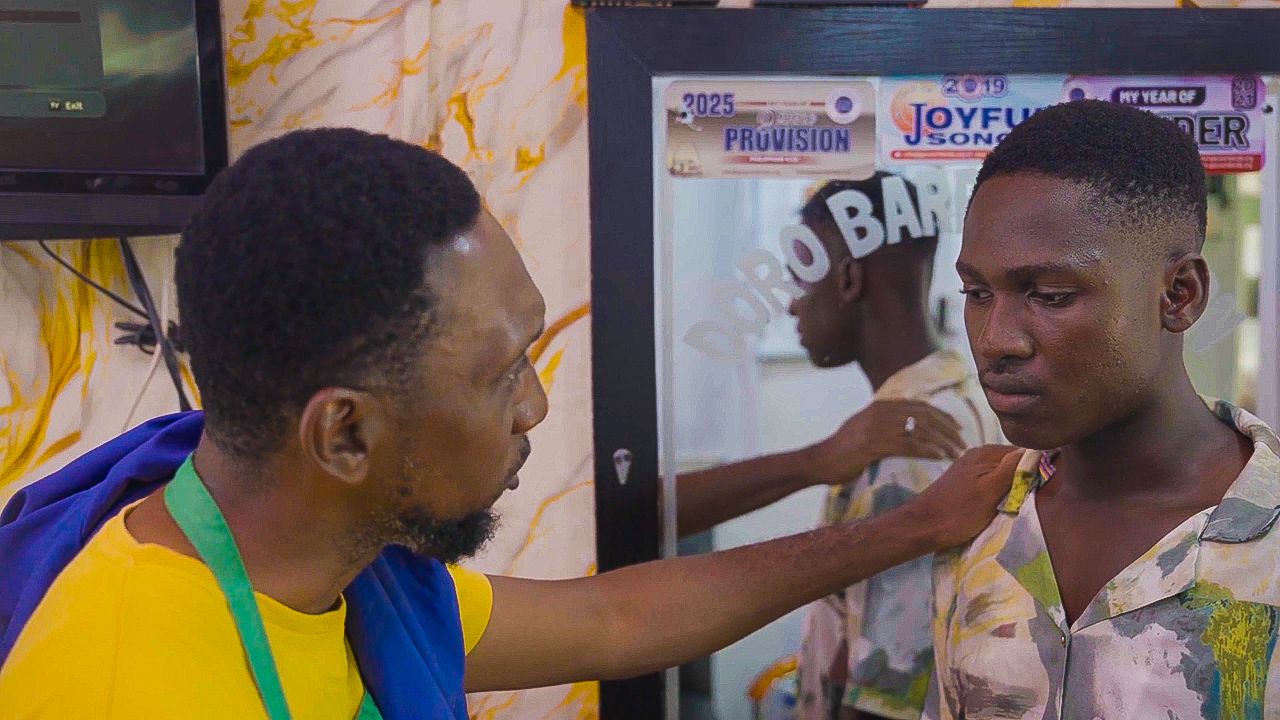
Today’s Nigerian youths of today find it difficult to be hopeful in the country; every four years we get what many describe as “the worst leaders yet”, but that doesn’t stop anyone from working for a better tomorrow. Writer and director Idiagi Ernest Eromosele is among many brave Nigerians fighting and sharing the message of hope, and he continues that mission with ‘Caged Bird’.
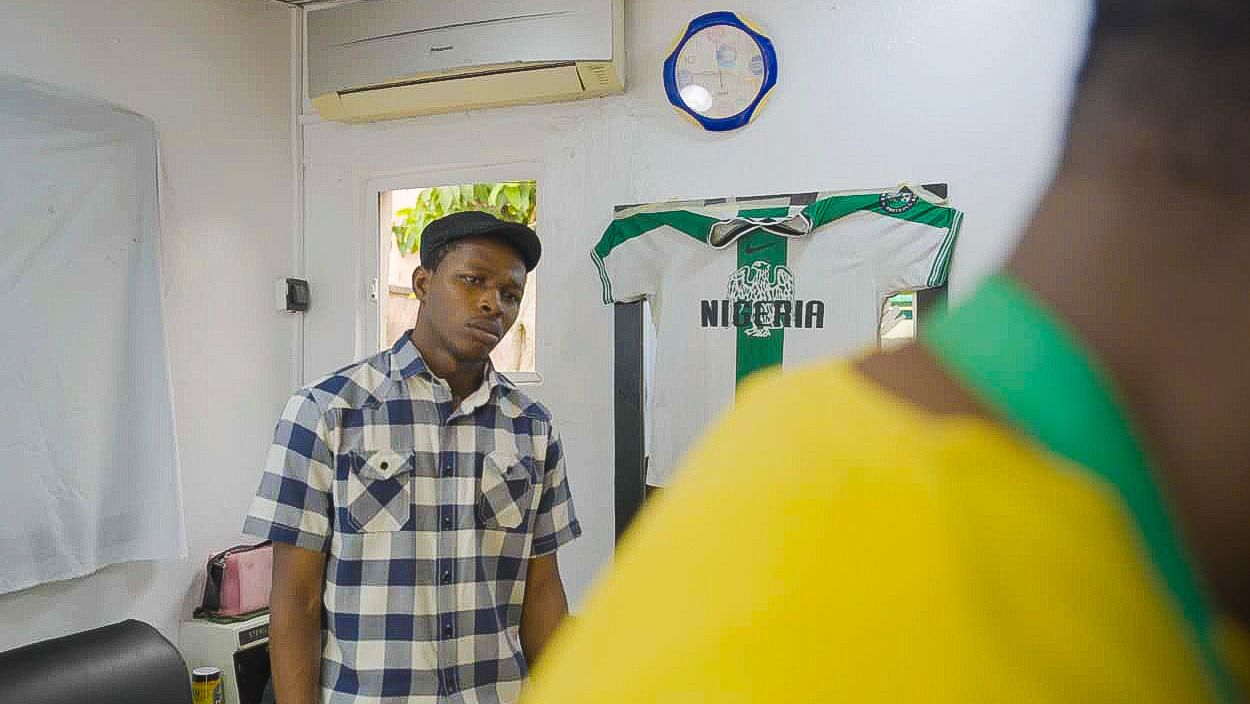
Caged Bird follows Odion, a young football enthusiast, and Pa Joel, an experienced barber whose story about Nigeria’s legendary Atlanta ’96 Dream Team sparks a conversation about dreams, hope, and believing in what seems impossible. Released on Nigeria’s independence day, with a runtime of 8 minutes 46 seconds, Caged Bird not only delivers visually but also delivers in writing.
We had an exclusive interview with Ernest, talking about the film, the inspiration, and the message:
Adedayo: Now more than ever, Nigerians are losing faith in the nation, its leaders and its system, but you decided to make a film about hope. Why?
Ernest: I think hope is important precisely because of the moment we’re in. There is a lot of frustration, disappointment and uncertainty around us, and it’s easy to become cynical. But I don’t think giving up is the answer.
For me, Caged Bird isn’t saying that everything is fine. It’s saying that despite the circumstances around us, we still have the right to dream and to believe that our lives can become something different.
That’s also at the heart of what Rebel Films represents. The name “Rebel” comes from the idea of refusing to give up on your vision simply because the circumstances make it difficult. We want to tell stories about people who keep moving, keep fighting and keep believing.
So Caged Bird is a story about hope, but more importantly, it’s a story about not giving up on the dream.
Adedayo: You wrote and directed Caged Bird. What was the inspiration that led you to develop this story?
Ernest: The starting point was actually very simple: I wanted to tell a story about a young person who has a dream and the people who influence the way he sees that dream.
Football felt like a natural language for that story because of what it means to Nigerians. Almost every generation has a football memory that connects them to something bigger than themselves.
That’s where Atlanta ’96 came in.
I was interested in the relationship between someone like Pa Joel, who experienced that generation and remembers what the Dream Team represented, and someone like Odion, who is still trying to figure out what his own dream means.
The barbershop also gave me an intimate setting. It isn’t a stadium or a huge football environment. It’s just two people having a conversation, but that conversation becomes much bigger than football.
And that’s what I wanted the film to be: a small story carrying a bigger idea.
Adedayo: It takes a lot of skill to compress such an incredible story into nine minutes. What challenges did you face in getting everything right, from cast to crew to visuals?
Ernest: The biggest challenge was probably knowing what to leave out.
When you’re making a nine-minute film, every scene has to earn its place. You don’t have the luxury of spending five minutes establishing something that could be communicated in thirty seconds.
We had to be very intentional about the relationship between Odion and Pa Joel, because their conversation carries almost the entire film. The performances had to feel natural, and visually, I wanted the barbershop to feel like a real place rather than a set.
We also had to make the Atlanta ’96 story feel important without allowing it to overshadow Odion’s own story.
From a production standpoint, it was also an independent production, so there were the usual limitations that come with working without a huge budget. You have to be creative with your locations, your equipment, your time and your people.
But I’ve always believed that limitations can also force you to become more inventive.
Caged Bird is part of that learning process for me and for Rebel Films. We’re building with what we have, learning from every project and trying to make the next one better.
Adedayo: What message do you hope viewers will receive after watching Caged Bird?
Ernest: I hope people leave with the feeling that their dreams are still worth pursuing.
That’s really the simplest message.
It doesn’t mean every dream will happen exactly the way you imagine it. It doesn’t mean there won’t be obstacles. But I think there’s something powerful about refusing to stop believing simply because the circumstances aren’t ideal.
And I hope people also think about the people who have encouraged them along the way.
Pa Joel is important because sometimes you don’t need someone to solve your problems. Sometimes you just need someone to tell you, “I believe you can do this.”
That’s what I want the film to leave people with.
And for the people who already know Rebel Films and identify as Rebels, I want Caged Bird to feel like a reflection of what that community stands for: keep dreaming, keep creating, keep moving. Don’t give up.
Adedayo: Do you see yourself tackling any other genre and visual style, and what are you working on?
Ernest: Definitely.
I don’t want to be restricted to one genre or one visual language. I enjoy drama, but I’m also very interested in crime, psychological stories, social commentary and stories with strong genre elements.
What I really care about is the story first. The visual style should come from the world of that particular story.
Caged Bird is intimate and restrained because the story requires that. Something else I’m working on might demand a completely different visual language.
At the moment, I’m developing several projects through Rebel Films, and I’m particularly interested in building stories that can grow beyond a single short film.
We’re also developing the feature-film version of the Caged Bird story.
Adedayo: Is there any feature film on the docket?
Ernest: Yes. We’re currently developing the feature film that expands on the world and themes introduced in Caged Bird.
The short is intentionally a small, contained story, but there is a much bigger story behind it that we’re developing for the feature.
We’ve already had conversations with football brands about the project, and those discussions are progressing. We’re working towards getting the project into production soon.
I don’t want to reveal too much about the feature yet, but the short film is essentially an introduction to the kind of story we’re trying to tell and the world we’re building.
For me, that’s one of the exciting things about Caged Bird. It’s not the end of the journey. It’s the beginning.
And that’s also what Rebel Films is about.
We’re rebels because we refuse to give up on the dream.
Caged Bird is one expression of that idea. The feature will take it much further.