
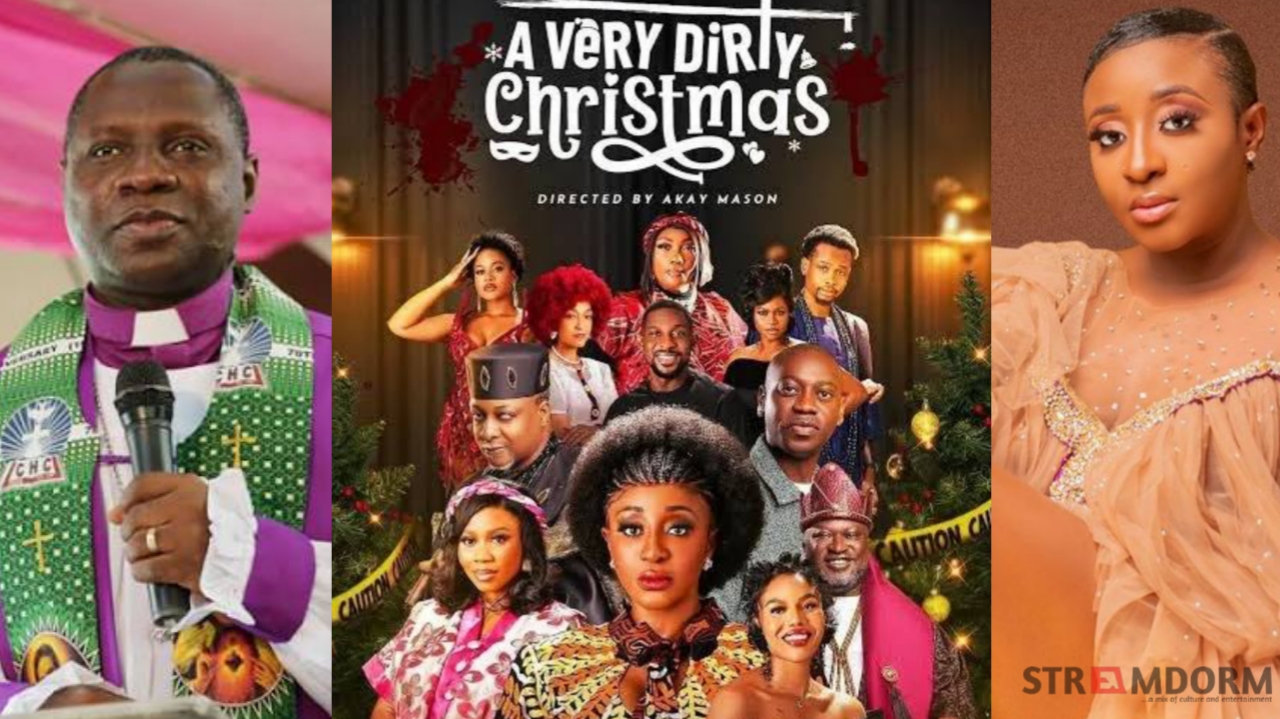
Nollywood actress and producer Ini Edo recently released a new movie titled A Very Dirty Christmas. The film, which premiered in cinemas nationwide on December 16, 2025, immediately attracted widespread attention; not only for its story but for its provocative title.
The Christian Association of Nigeria (CAN) condemned the title, describing it as offensive and disrespectful to the Christian faith. CAN argued that linking the sacred celebration of Christmas with the word “dirty” diminishes its spiritual significance and could mislead or offend viewers.
CAN’s Strong Criticism
In an official statement, CAN President Archbishop Daniel Okoh said:
“The Christian Association of Nigeria is deeply troubled by the title of the movie: ‘A Very Dirty Christmas’, which it considers offensive and disrespectful to the Christian faith. Christmas is a sacred season that marks the birth of Jesus Christ and represents purity, peace, love and redemption. Linking such a holy celebration with the word ‘dirty’ diminishes its spiritual meaning and reduces a solemn religious observance to something crude and sensational.”
CAN also called for a public apology from the film’s producers and urged the Nigerian film industry to handle religious themes with sensitivity. The body emphasized that creative freedom must be exercised responsibly in Nigeria’s multi-religious society.
Federal Government / NFVCB Response
The National Film and Video Censors Board (NFVCB), the government agency responsible for approving and classifying movies has clarified its position.
Director-General Dr. Shaibu Husseini stated:
“The film was approved and classified after undergoing the established censorship and classification process, during which the Film Censorship Committee examined the work within its narrative and thematic context. The approval of the title was not intended to disparage or trivialise the Christian faith or the significance of Christmas. The title was considered part of fictional and creative expression.”
Dr. Husseini also addressed public concerns:
“We have heard the concerns raised by CAN, and in light of this, NFVCB has formally engaged the producers of the film and requested a modification of the title. Our aim is to respect religious sensitivities while supporting creative expression.”
Ini Edo Defends her Film
Speaking publicly, Ini Edo defended the film and its title, explaining that it is metaphorical and meant to reflect human struggles beneath festive appearances.
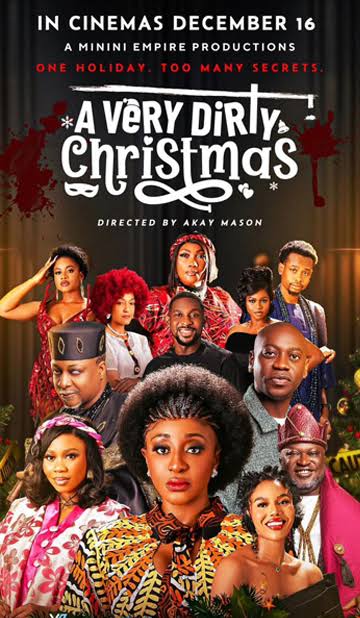
She stated:
“Art, at its highest form, is meant to provoke thought, spark conversation, and reflect the complexities of human experience. It is in this spirit that A Very Dirty Christmas was created.”
She added:
“At no time was there any intention to demean, ridicule, or dishonour Christianity, the Christmas season, or the values held dear by millions of Nigerians. All legal and regulatory requirements governing motion pictures in Nigeria were fully complied with, including securing the appropriate approval from the NFVCB.”
The controversy has sparked heated discussions on social media. Supporters defend the film as a work of art and metaphorical storytelling, while critics maintain that the title is offensive to Christians.
Industry watchers note that this is not the first time Nollywood films have faced religious criticism, and the ongoing debate highlights the need for balance between creative freedom and cultural/religious sensitivity.
While A Very Dirty Christmas continues to play in cinemas, the controversy remains unresolved. The NFVCB has not banned the film but has requested the producers consider a title modification to reduce potential offense. Ini Edo maintains that the film reflects artistic expression and human realities, not an attack on Christianity.