
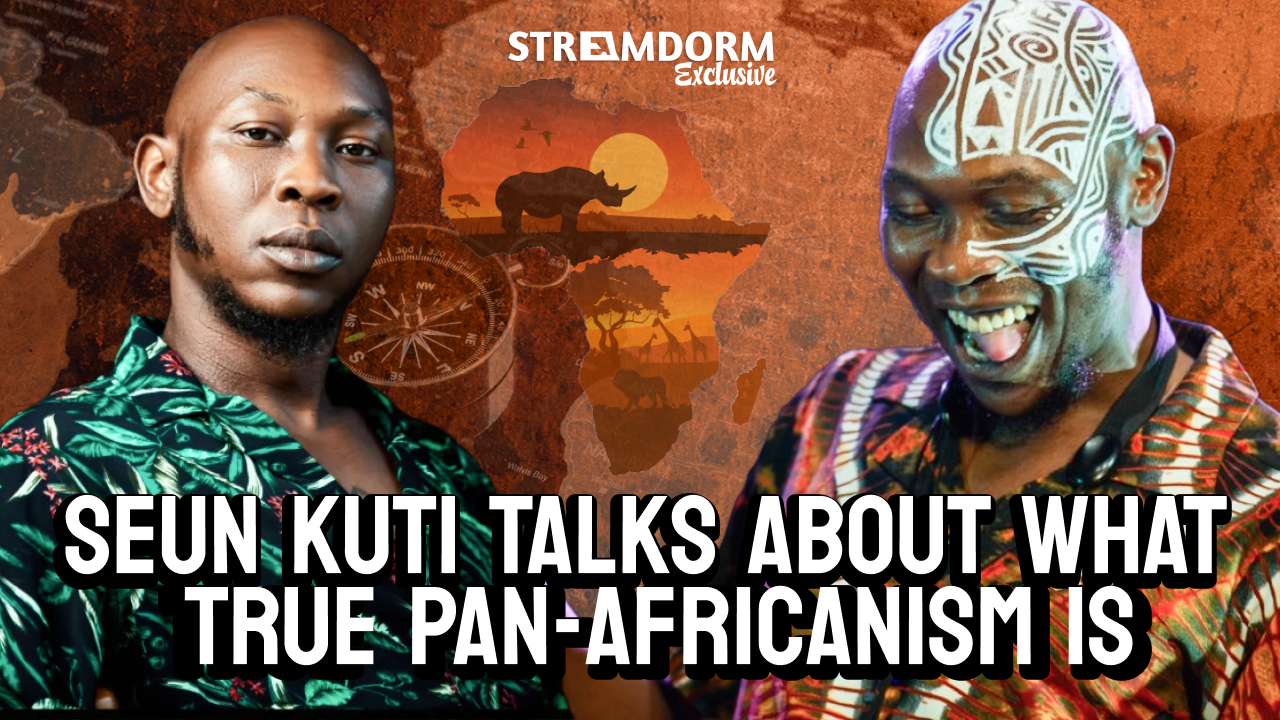
Afrobeat musician and outspoken Pan-African thinker Seun Anikulapo Kuti has never been one to shy away from difficult conversations. In an exclusive interview with Streamdorm, the artist opened up about African identity, political consciousness, the problems with today’s social media culture, and the mission behind his new long-form podcast with Bro Diallo.
Seun Kuti delivered his trademark clarity and unfiltered honesty reminding listeners that for him, art and activism remain inseparable.
“We Are Africans Because Africa Is Born in Us”
Asked to define what it truly means to be African, Seun Kuti referenced the words of Kwame Nkrumah, the Former President of Ghana:
“We are not Africans because we are born in Africa. We are Africans because Africa is born inside of us.”
Seun Kuti emphasized that African identity goes deeper than skin colour or nationality. For him, being African is rooted in consciousness, history, and the values one chooses to embody.
“Anybody can be born in Africa or have black skin,” he said. “But it is the amount of Africa inside you that makes you African.”
Nigeria at 65: “We Are Far From Where We Need to Be”
The conversation soon shifted to Nigeria’s challengespolitically, socially, and economically. Seun Kuti made it clear that the nation’s struggles are not accidental:
“We’re a bit removed from where we need to go. We need to organize ourselves to remove power from those currently with it and replace them with people who will build the Africa we talk about.”
He added that questions about governance and Nigeria’s long-standing structural failures should be directed at those in political office, not just artists.
Social Media and the Decline of Intellectual Discourse
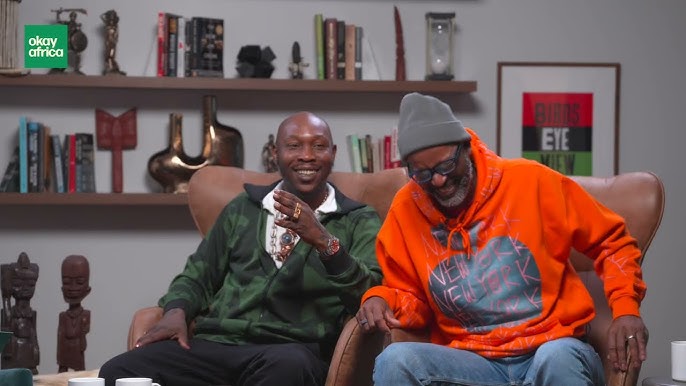
In today’s digital age, serious political conversations are often overshadowed by trends, hashtags, and viral noise. For Seun Kuti, this reinforces why long form, intentional platforms like his podcast Bird’s Eye View are necessary.
He clarified that the goal wasn’t to “reclaim”intellectual space, but to create and elevate it:
“There are intellectual African podcasts out there. They’re just not in the mainstream conversation because most platforms capturing the attention of Africans don’t lead them to such messages.”
Why He Created the New Podcast with Bro Diallo
The partnership between Seun Kuti, Bro Diallo, and Okay Africa is no coincidence. According to SeunKuti, the podcast serves one core mission:
“To raise the consciousness of the people.”
He believes African liberation is impossible without a shift in consciousness and that grounded, scientific, radical analysis is missing from many Pan-African spaces today.
The podcast aims to fill that gap.
“There’s too much emotional rhetoric, financial hustle rhetoric, or ‘give me your money, I’ll show you liberation.’ We want grounded radical analysis no clownish ideas.”
He also revealed that Bro Diallo is his political mentor, making their collaboration natural and necessary.
Music vs. Podcasting: Which Is More Powerful?
Seun’s music has always been a weapon of resistance, but does podcasting offer a stronger platform?
He believes both serve unique purposes:
“Every medium has its own power. Through art, there is meaning. Through analysis, there is information. I’m trying to do the same thing with both lead people toward liberation.”
In essence, music inspires, and podcasting informs.
What’s Next for Seun Kuti?
With the release of the critically praised EP “Big Bird and the Viper”, fans are eager to know what’s coming next.
Seun kept it simple: “Expect more great music and analysis on my podcast as long as the ancestors allow us.”
This interview reinforces what we already know: Seun Kuti is one of the most uncompromising voices in modern African thought.
Whether through music or podcasting, Seun Kuti continues to push for a more informed, conscious, and liberated African society one conversation at a time.